
PreSonus Temblor T10 Powered Studio Sub Review: The Ultimate Low-End Workhorse for Your Studio?
We have all been there. You spend twelve hours meticulously crafting a track on your 5-inch or 8-inch studio monitors. It sounds punchy, clear, and professional in your chair. But the moment you take that export to your car or a club system, the bottom end vanishes, or worse, it becomes an incoherent, muddy mess that drowns out the vocals. This “guessing game” in the low frequencies is the single biggest hurdle for independent producers and engineers. Without an accurate representation of what is happening below 60Hz, you are essentially mixing in the dark. Solving this isn’t just about “more bass”; it is about precision. Failure to address the sub-bass region leads to tracks that lack professional weight and translation across different playback systems. This is why we decided to put the PreSonus Temblor T10 Powered Studio Sub to the test—to see if it truly provides the “accuracy defined” experience it promises.
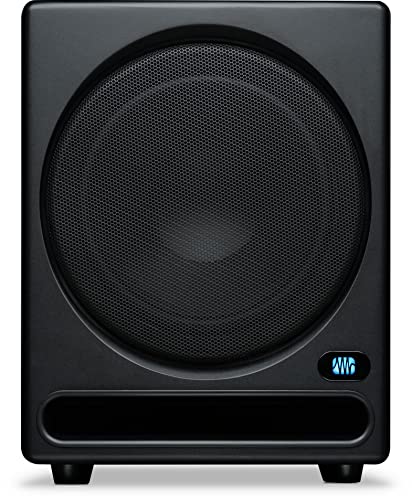
- 10-Inch glass-composite low-frequency transducer
- 250 Watt, class AB amplification; power: 100-120V 50/60 Hz or 220-240V 50/60 Hz
What to Consider Before Investing in a Professional Studio Subwoofer
A Studio Subwoofer is more than just an item; it’s a key solution for bridging the gap between a “bedroom demo” and a commercial-grade production. While standard speakers focus on the mids and highs, a dedicated sub like the PreSonus Temblor T10 Powered Studio Sub handles the heavy lifting of the low-end, allowing your main monitors to operate more efficiently. By offloading the bass frequencies, you often find that your main speakers suddenly have more “breath” and clarity in the midrange because their woofers aren’t struggling to move massive amounts of air for sub-frequencies.
The ideal customer for this type of product is someone facing translation issues—where their mixes don’t sound consistent across different systems—or producers in genres like Hip-Hop, EDM, and Film Scoring where sub-information is critical. However, it might not be suitable for those in extremely small, untreated rooms (under 100 square feet) where the low-end energy could create massive standing waves and acoustic nightmares. In those cases, a smaller 8-inch model or high-end mixing headphones might be a safer bet.
Before investing, consider these crucial points in detail:
- Dimensions & Space: Low-frequency waves are physically long. You need enough physical space to let these waves develop, and you must consider where the sub will sit. At over 40 pounds, the PreSonus Temblor T10 Powered Studio Sub is a substantial piece of gear that requires a solid floor or a dedicated isolation pad to prevent it from rattling your entire desk setup.
- Capacity/Performance: Look at the wattage and driver material. A 250-watt Class AB amplifier provides enough headroom to ensure that the bass stays “fast” and responsive rather than “slow” or “boomy.” Glass-composite drivers are preferred because they are rigid enough to maintain their shape under high pressure, resulting in less distortion.
- Connectivity & Crossover: A professional sub must have balanced inputs (XLR or TRS). If you are looking to see its full feature set and user reviews, you will notice the T10 offers a wealth of I/O options. The ability to adjust the crossover frequency is vital for matching the sub perfectly to your specific main monitors.
- Ease of Use & Maintenance: Features like a bypass footswitch are often overlooked but are essential for A/B testing your mix with and without the sub. Additionally, look for a ground lift switch, as subwoofers are notorious for picking up 60Hz hum from electrical loops in a studio environment.
While the PreSonus Temblor T10 Powered Studio Sub is an excellent choice, it’s always wise to see how it stacks up against the competition. For a broader look at all the top models, we highly recommend checking out our complete, in-depth guide:

- 8inch bass-reflex powered subwoofer


- HONEST. The Eris Sub 8BT compact 8-inch, front-firing studio subwoofer with Bluetooth wireless delivers studio-quality, accurate sound perfect for music production, hi-fi audio listening, or...

- 10" glass aramid composite woofer
First Impressions: Unboxing the PreSonus Temblor T10 Powered Studio Sub
When the PreSonus Temblor T10 Powered Studio Sub arrived at our studio, the first thing we noticed was the sheer weight of the box. At roughly 40 pounds, this is not a toy. Unboxing it reveals a sleek, professional-looking cabinet with a front-firing 10-inch glass-composite driver and a front-firing bass reflex port. The “multicolor” designation in the official name is a bit of a misnomer; it is a classic, professional matte black that fits perfectly in any studio aesthetic.
The build quality feels exceptionally rugged. The enclosure is reinforced to minimize resonance, and the back panel is a masterclass in studio connectivity. Unlike many home theater subs that only offer RCA, the T10 provides balanced XLR and 1/4” TRS inputs and outputs. This makes it the “central hub” of your monitoring setup. Before you even plug it in, you can check the latest price and availability to see why this is considered a “virtual bargain” compared to high-end boutique brands that offer similar specs for double the price.
Key Benefits We Loved
- Incredible power with 250W Class AB amplification that feels effortless.
- Professional balanced connectivity (XLR/TRS) that integrates with high-end interfaces.
- Included momentary footswitch for instant sub-bypass—a total game-changer for mixing.
- Continuously variable low-pass filter and switchable high-pass filter for perfect monitor matching.
Limitations to Consider
- The output is so high that it can easily overpower small or medium-sized rooms if not calibrated.
- The manufacturer’s warranty policy requires the customer to pay for shipping for repairs, which can be expensive given its weight.
Deep Dive: Why the PreSonus Temblor T10 Powered Studio Sub Rules the Low-End
The Power of Integration: Connectivity and the Crossover Hub
One of the most impressive aspects of the PreSonus Temblor T10 Powered Studio Sub is how it transforms your entire monitoring chain. We didn’t just plug it in; we used it as the brain of our system. By running our interface outputs into the T10 and then using the XLR outputs to feed our main monitors, we were able to utilize the built-in 80Hz high-pass filter. This is a crucial benefit: it removes the low-frequency burden from your main speakers, allowing them to focus on the 80Hz to 20kHz range. We found that even our high-end monitors sounded “faster” and more detailed once the T10 took over the heavy lifting.
The variable input gain control (ranging from -30 dB to +6 dB) is another feature that really sets it apart. In our testing, we found that setting the gain to about 12 o’clock was often too much for a standard 12×15 room. The granularity of the control allowed us to dial it back until the sub “disappeared”—meaning we couldn’t localize where the bass was coming from, it just felt like our main monitors had magically gained another two octaves of range. This level of integration is what separates a “pro” sub from a consumer “bass box.”
Performance & Sonics: Tight, Responsive, and Terrifyingly Powerful
We put the PreSonus Temblor T10 Powered Studio Sub through a gauntlet of tests, from cinematic orchestral swells to modern trap productions. The 10-inch glass-composite driver is the star here. Unlike cheaper paper-cone woofers that can become “wooly” or “sloppy” when pushed, the T10 remains incredibly tight. When a kick drum hits, the sub responds instantly and stops just as quickly. There is no lingering “overhang” that blurs the notes. This “accuracy defined” approach is exactly what we need when trying to decide if a 40Hz synth bass is clashing with a 50Hz kick tail.
The 250 watts of Class AB power provides massive headroom. In our experience, Class D amps in cheap subs can sometimes feel “choked” during transient peaks, but the T10’s Class AB design feels robust and linear. As one user noted, this sub “will certainly shake the paint off the walls” if turned up, but for the professional, the real value is in the low-volume performance. Even at whisper-quiet mixing levels, the T10 provides a full spectrum of deep, distinct bass notes. You can learn more about the driver technology here to see why it maintains such high fidelity.
The Footswitch Advantage: A Critical Workflow Tool
We cannot overstate how useful the included momentary footswitch is. In a professional mixing environment, you must constantly verify that your mix works on “full range” systems as well as limited ones. By tapping the footswitch, the PreSonus Temblor T10 Powered Studio Sub instantly bypasses itself, removes the high-pass filter from the main monitors, and sends the full-range signal directly to your speakers. This allows for instant A/B comparisons.
During our sessions, we used the footswitch to check if the “weight” of the bass was translating or if we were simply being fooled by the “feel” of the sub. This prevents the common mistake of making the bass too quiet because the sub makes it feel so powerful in the room. This workflow efficiency is something you usually only find in subwoofers costing three times as much. For anyone serious about their craft, this footswitch alone makes the T10 worth the investment.
Calibration and Room Management: Taming the Beast
Because the PreSonus Temblor T10 Powered Studio Sub is so powerful, room placement and calibration are vital. We spent several hours performing the “subwoofer crawl” to find the optimal spot where the phase was correct. Speaking of phase, the T10 includes a 0°/180° phase switch. In our setup, flipping this switch to 180° actually brought the low-end into focus, eliminating a nasty null at 60Hz. This level of control is essential for professional results.
We also appreciated the ground lift switch. In one of our test environments, we encountered a 60Hz hum—a common issue when connecting multiple powered devices. Engaging the ground lift on the T10 immediately silenced the hum, a feature that we found missing on several competing 8-inch models. If you are worried about noise in your signal chain, you should read the technical specs regarding its shielding and grounding. It is designed for the rigors of a high-EMI studio environment.
What Other Users Are Saying
The general consensus among the pro-audio community is that the PreSonus Temblor T10 Powered Studio Sub is a “virtual audio bargain” that punches way above its weight class. Producers using high-end monitors like the Adam A7X or Genelec 8010As have found the T10 to be a perfect companion, noting that once the crossover is “nailed,” it becomes a versatile tool that allows for mixing late at night without sacrificing a solid sound balance. Many users highlight that it doesn’t just add “boom,” but rather “crisp, sharp punch” that helps their main monitors “breathe” better.
However, the feedback isn’t without its warnings. Several users mentioned that the T10 is “way too powerful” for small rooms, with some having to turn the gain almost all the way down to avoid “uncontrolled explosions” of sound. This reinforces our expert finding that room treatment and careful calibration are non-negotiable. Additionally, one user reported a failure after eight months of light use and expressed frustration that the manufacturer does not cover shipping for warranty repairs. While failures happen in electronics, the cost of shipping a 40-pound unit can be a significant drawback if you are unlucky enough to receive a unit with a faulty internal amp.
Comparing the PreSonus Temblor T10 Powered Studio Sub to the Competition
While we are big fans of the T10, it’s important to see how it compares to other heavy hitters in the studio world. Depending on your room size and connectivity needs, one of these alternatives might be a better fit.
1. JBL LSR310S Studio Monitor Subwoofer
- This patented JBL port design works in concert with the LSR310S low frequency driver for deep, dynamic bass response at all playback levels. The double-flared shape of the port is precisely calculated...
- A JBL first, the XLF setting activates a specially-engineered tuning that emulates the ample bass tuning used in today's dance clubs. When producing a dance track, the XLF setting will inspire you and...
The JBL LSR310S is the primary rival to the T10. It features a down-firing driver and a unique “XLF” (Extended Low Frequency) setting designed to mimic club environments. While the T10 feels a bit tighter for surgical mixing, the JBL is legendary for its “room-filling” quality. If you primarily produce club music and want to feel the “air” move in a specific way, the JBL is a fantastic alternative. However, it lacks the bypass footswitch that makes the PreSonus so versatile for general engineering tasks.
2. PreSonus Eris Sub 8 Compact Studio Sub

- 8-inch, front-firing, paper-composite transducer with high-elasticity rubber surround delivers smooth low-frequency transients.Waterproof : No
- 100W Class AB amplifier (50W RMS) gives robust output with minimal distortion.
If you find the T10 to be “too much bass” for your small bedroom setup, the Eris Sub 8 is the logical choice. It offers the same PreSonus “voice” but in a much more manageable 8-inch form factor. You lose the massive 250W headroom and the balanced XLR outputs (it uses TRS and RCA), but for a small desk setup, it provides a much smoother integration without the risk of overwhelming your space. It is the better choice for those on a strict budget who don’t need the extreme SPL of the T10.
3. Mackie CR-X 8-Inch Multimedia Subwoofer
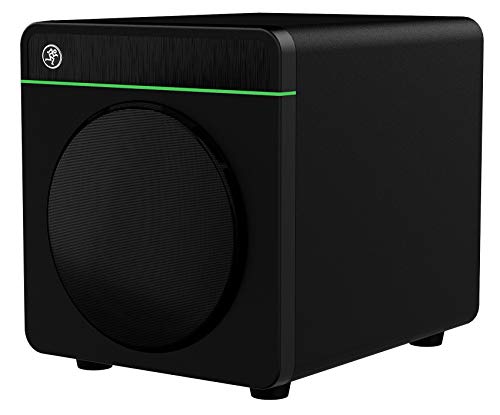
- Professional studio-quality sound
- Adds Bluetooth streaming to any studio monitors
The Mackie CR-X is geared more toward the “prosumer” and content creator market. It includes Bluetooth connectivity and a desktop volume control, making it much more convenient for casual listening, gaming, and basic video editing. While it doesn’t offer the same level of “accuracy defined” frequency response as the PreSonus Temblor T10 Powered Studio Sub, it is a great all-rounder for someone who uses their studio for both work and entertainment. If you are a hardcore mix engineer, stick with the T10; if you are a YouTuber or streamer, the Mackie is likely more your speed.
Final Verdict: Is the PreSonus Temblor T10 Powered Studio Sub Right for You?
After weeks of testing and comparing, our verdict is clear: the PreSonus Temblor T10 Powered Studio Sub is one of the best investments you can make for a mid-to-large sized home studio. Its combination of raw power, surgical precision, and professional features like the bypass footswitch and high-pass filter make it a standout performer. It successfully solves the “low-end guessing game,” allowing you to produce mixes that translate with confidence to the real world. While it may be “overkill” for a tiny bedroom, its ability to scale and integrate into a professional signal chain is unmatched at this price point.
If you are ready to stop guessing and start hearing the full picture of your music, we highly recommend adding this unit to your arsenal. The build quality, connectivity, and sheer sonic impact are exactly what you need to take your productions to the next level. You can check the latest price and see if it’s currently in stock here, and we suggest grabbing it while it’s still available at this “audio bargain” price. Don’t let your mixes suffer from a lack of low-end clarity any longer—the T10 is the solution your studio has been waiting for.
Last update on 2026-10-16 / Affiliate links / Images from Amazon Product Advertising API