
POGOLAB Saxophone Adjustable Strap Review: An Honest In-Depth Assessment of Comfort, Build, and Sizing Realities
If you have spent any significant length of time rehearsing with a heavy tenor or baritone saxophone—or even holding up a weighty alto for a three-hour gig—you know the agonizing toll a standard single neck strap takes on your cervical spine. Traditional neck straps concentrate the full load of a brass instrument directly onto the back of your neck, compressing vertebrae and causing severe muscle tension that can distract you from your musical performance. Finding a solution that transfers that burden away from the delicate neck muscles onto the sturdy structure of your shoulders and back is essential for longevity as a woodwind musician. Ignoring this physical discomfort doesn’t just ruin practice sessions; it can lead to long-term postural problems and muscular strain. The search for relief leads many musicians to explore dual-shoulder harnesses, and we decided to put the POGOLAB Saxophone Adjustable Strap through its paces to see if it truly delivers ergonomic comfort at an accessible price point.
What to Consider Before Buying Woodwind Instrument Straps
A Woodwind Instrument Strap is more than just a simple accessory; it is a vital ergonomic interface between your body and your horn that directly influences your posture, breathing capability, playing technique, and physical stamina. When you are supporting several pounds of metal, the right strap design transforms an awkward load into a weightless playing experience, while a poor choice can cause chronic pain or restrict instrument maneuverability.
The ideal customer for a shoulder harness strap is an adult or serious student player performing on heavier horns like tenor or baritone saxophones, or players recovering from neck and spinal strain who require maximum ergonomic load distribution. However, harness-style straps might not be suitable for casual soprano players, young students with very small frames, or musicians who frequently switch between multiple instruments mid-performance and require rapid, unrestricted horn movement. Those seeking total mobility without shoulder structure might prefer traditional high-density neoprene neck collars instead.
Before investing in a sax strap, consider these crucial points in detail:
- Dimensions & Body Fit: Pay close attention to overall strap lengths, shoulder pad width, and adjustment ranges. Harness systems rely on specific anatomical fit points; if the main cord or adjustment mechanism is sized too long or too short for your torso, your horn won’t sit at the proper mouth height, forcing you to slouch or strain forward.
- Capacity & Weight Distribution: Evaluate how the design handles heavier instruments like tenor or baritone saxophones. A high-performing strap uses broad shoulder support structures, internal flex beams, or chest bridges to split the instrument’s total weight across large muscle groups like the traps and upper back rather than pulling down on the neck.
- Materials & Durability: Look for reinforced synthetic or genuine leathers, high-grade climbing cords, and metal hardware. Faux leather outer shells offer decent aesthetics and resistance to sweat, while internal structural elements like aluminum strips or flexible cores provide custom moldability to match your shoulder contours.
- Ease of Use & Adjustment Mechanics: Consider how easily you can adjust height on the fly and secure the horn clip. Smoothly gliding sliders, locking cord adjusters, and 360-degree rotating swivels are essential for rapid positioning, while soft protective rubber sleeves on hooks prevent metal-on-metal wear on your saxophone’s hook ring.
Understanding these fundamental criteria allows you to make an educated selection tailored to your specific physical dimensions and horn layout. Before making a final choice, you can check the latest price and availability on this harness to see if it fits your current budget.
While the POGOLAB Saxophone Adjustable Strap is a budget-friendly option worth investigating, it is always wise to see how it stacks up against the competition. For a broader look at all the top models on the market today, we highly recommend checking out our complete, in-depth guide:
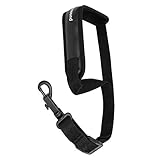
- Upgraded Length: We updated length with suitable for players of all ages and sizes, and easily adjusts from 17"–22.8" (43,2cm–58cm).

- All-Day Comfort with Neoprene Padding: Soft, durable neoprene cushions the neck and absorbs movement, reducing bounce and fatigue during practice, rehearsals, or long performances.

- Comfortable Neoprene Support: Padded neoprene design distributes weight evenly across the shoulders to reduce neck and back strain during long rehearsals or performances.
First Impressions & Key Features of the POGOLAB Saxophone Adjustable Strap
When unboxing the POGOLAB Saxophone Adjustable Strap, the overall visual appeal is surprisingly sleek for an entry-level harness. Out of the package, you are met with solid black faux leather shoulder pads, a central gold-plated Y-shaped metal beam, black climbing cords, and a heavy-duty metal hook mechanism. The unit feels fairly substantial in hand, weighing in at approximately 6.4 ounces, which provides a sense of structural integrity without adding unnecessary bulk to your gig bag.
Upon initial inspection, the highlight of the design is the inclusion of internal aluminum strips embedded within the shoulder pads, allowing you to physically shape and bend the harness to match the unique slope of your shoulders. The gold-accented metal chest beam gives the rig an upscale aesthetic, and the zinc alloy hook features a thick rubberized sleeve designed to keep your saxophone’s attachment point scratch-free. However, initial assembly and sizing adjustments reveal that getting the fit right takes work, requiring hands-on bending, cord manipulation, and patience.
Pros
- Noticeably shifts instrument weight away from the neck onto the back and shoulders.
- Internal aluminum strips allow custom hand-bending to fit individual shoulder contours.
- Durable zinc alloy snap hook equipped with a protective plastic sleeve to prevent instrument scratching.
- Attractive visual styling featuring faux leather pads and a gold-plated metal Y-beam.
Cons
- Factory cord length is often too long for alto and soprano players, placing the horn too low even at maximum tightness.
- Requires tedious manual setup, re-stringing, or tying off knots to achieve proper playing height for average height players.
Deep Dive Performance Analysis of the POGOLAB Saxophone Adjustable Strap
Ergonomic Weight Distribution and Shoulder Molding
The primary reason musicians turn to a dual-shoulder harness system is to eliminate cervical spine compression, and in this regard, the overall concept behind the POGOLAB Saxophone Adjustable Strap succeeds in shifting load dynamics. Traditional neck straps pull straight down on the back of your neck, pulling your head forward and straining your upper traps. During our evaluation, placing this harness over the shoulders immediately relieved all direct pressure on the neck vertebrae, redirecting the gravitational pull of the horn down the front of the chest frame and across the broader shoulder blades.
What makes this system unique in its price category is the inclusion of flexible internal aluminum strips within the main shoulder pads. Straight out of the box, rigid harnesses can feel awkward or press unevenly into your collarbones. With this model, we were able to firmly grip the padded arch support and manually mold the metal core around the natural curve of our shoulder caps. This customizable flex capability allows the faux leather padding to sit flush against the body, maximizing contact area and preventing hot spots during extended play. For players suffering from chronic neck pain, this mechanical load redistribution provides immediate physical relief, making it worth taking a closer look at how you can customize this strap for maximum neck relief during long rehearsal sessions.
Build Materials, Hardware Quality, and Aesthetics
Examining the structural components of the harness reveals a thoughtful blend of functional materials mixed with budget-conscious finishes. The exterior padding is crafted from smooth faux leather (polyurethane), which offers a clean, modern aesthetic while remaining impervious to sweat and moisture—a major advantage over genuine untreated leather that can absorb perspiration and develop odors over time. The stitching along the perimeter of the pads is clean and tight, showing no immediate signs of fraying under load stress.
At the center of the harness sits the Y-shaped gold-plated metal beam. This beam serves as a critical junction point, separating the dual shoulder drop lines to prevent the cords from pinching inward against the neck or throat. Attached to the lower suspension loop is a heavy-duty zinc alloy hook with a full 360-degree swivel mechanism. We were impressed by the rubberized protective sleeve applied over the metal clasp; this thick coating eliminates abrasive metal-on-metal contact with the saxophone’s strap ring, ensuring that vintage or gold-lacquered finishes remain pristine. This robust hardware integration is a feature that really sets it apart when comparing durability against cheap plastic clips found on competing entry-level neck straps.
Cord Dynamics, Sizing Flaws, and Modification Requirements
While the upper padding and metal hardware impress, the actual cord geometry and adjustment slider mechanics represent a significant design flaw that buyers must understand. In our practical testing, as well as in feedback from numerous musicians, the standard factory climbing cord is far too long for standard playing positions—especially when paired with an alto or soprano saxophone. Even when pulling the small metal slider adjustments as tight and high as they can go, the hook hangs anywhere from 2 to 4 inches too low for an adult player of average height (around 5’9″ to 5’11”).
When the horn rests too low, you are forced to hunch over or angle your head downward to reach the mouthpiece, completely undermining the posture-correcting purpose of an ergonomic harness. Furthermore, sliding the metal length adjusters down toward the hook creates an obstruction that impedes the upward movement of the hook mechanism itself. To make the POGOLAB Saxophone Adjustable Strap functional for an alto sax, we had to disassemble the lower cord harness, pull the climbing rope through the rear anchor points, manually tie off secure figure-eight knots to shorten the overall cord loop, and re-thread the hardware. While this modification is simple enough for a DIY-minded musician, it is a frustrating requirement straight out of the box. Buyers should be prepared to modify cord lengths if they intend to play anything smaller than a large tenor or baritone horn.
Playing Dynamics, Horn Maneuverability, and Gig Comfort
Once you properly customize the shoulder flex and modify the cord length to position your mouthpiece at eye level, the actual experience of playing with the strap is liberating for your upper spine. During long home practice sessions and standing ensemble playing, the total absence of neck pull allows for freer diaphragm expansion and reduced shoulder fatigue. The Y-beam chest structure maintains an open posture, keeping the cords wide enough that they do not constrict your breathing ribcage.
However, because the dual-shoulder design anchors the lift points higher and wider than a single neck line, sideway maneuverability is somewhat more constrained. Swapping from a centered playing position to swinging the horn off to your right side (a common posture for sitting tenor sax players) requires adjusting to the fixed cord angle. Additionally, the back alignment adjuster—a small faux leather plate meant to hold the rear crossing straps in place—can sometimes arrive misaligned or threaded upside down from the factory, requiring you to completely unthread and restring the rear harness to allow smooth width adjustments across your back. Once fine-tuned, however, the harness stays firmly anchored without slipping off the shoulders.
What Other Users Are Saying About the POGOLAB Sax Strap
A survey of real-world user experiences reveals a distinct consensus regarding the POGOLAB Saxophone Adjustable Strap: while players praise its build quality, material aesthetic, and incredible neck relief, nearly everyone acknowledges the sizing and assembly oversights from the factory.
On the positive side, satisfied customers frequently highlight the excellent price-to-quality ratio and speedy delivery. Users appreciate the sturdy zinc alloy snap hook and the thick shoulder padding, noting that once set up properly, it provides instant relief from neck strain during long gigs. Reviewers often state that the metal Y-beam and overall construction look far more expensive than its modest price point suggests, making it a reliable workhorse once customized.
Conversely, critical feedback consistently centers on the factory cord length and assembly quality control. Multiple players, including those around 5’11”, reported that with an alto or soprano sax, the hook hangs several inches too low even on the shortest possible adjustment setting. Others noted that the rear body-shape leather adjuster arrived assembled 180 degrees upside down, requiring complete disassembly and rethreading. Some players found the manual bending process confusing or opted for higher-priced brand alternatives like JazzLab. However, for those willing to spend ten minutes tying off the cord and bending the internal aluminum frames, the general opinion is that it becomes a functional, highly comfortable strap for a fraction of the cost of premium competitors. If you want to test your luck with an affordable option, you can order the POGOLAB strap directly here.
Comparing the POGOLAB Saxophone Adjustable Strap to Top Alternatives
1. D’Addario Padded Sax Neck Strap

- PADDED SAX STRAP - Padded memory foam provides extra comfort on your neck.
- BREATHABLE - Breathable athletic material is comfortable and stays dry.

The D’Addario Padded Sax Neck Strap takes a classic single-strap collar approach rather than a full shoulder harness layout. Crafted with breathable memory foam padding and a smooth quick-adjust slide mechanism, this strap is exceptionally easy to slip on and off mid-gig. Unlike the POGOLAB harness, which requires manual bending and potential cord re-tying, the D’Addario is ready to use out of the box and provides instant height adjustments suitable for alto and soprano players. However, because all the weight remains concentrated entirely on your neck, it cannot match the ergonomic neck-stress relief offered by the double-shoulder design of the POGOLAB harness when holding heavy tenor saxophones.
2. Neotech Soft Saxophone Neck Strap
- All-Day Comfort with Neoprene Padding: Soft, durable neoprene cushions the neck and absorbs movement, reducing bounce and fatigue during practice, rehearsals, or long performances.
- Adjustable Fit for Most Players: Easy slide adjuster provides a custom fit for youth and adult musicians—ideal for alto and tenor saxophone players in concert or marching settings.
The Neotech Soft Saxophone Neck Strap is a industry-standard favorite that utilizes patented neoprene padding with a control-stretch internal support system. This elastic stretch absorbs shock and dampens the bouncing weight of the horn while walking or moving on stage. While it is far easier to fit and adjust for players of all body sizes compared to the POGOLAB strap, some musicians feel the neoprene rebound can make the horn feel “bouncy” during rapid technical passages. Furthermore, while Neotech cushions the neck exceptionally well, it still places the load on the cervical spine, making the POGOLAB harness a better choice for players with severe pre-existing neck injuries.
3. Rayzm Universal Sax Strap

- The shoulder straps combine strong split cowhide leather with soft sheepskin for comfort. The harness design spreads the saxophone’s weight across both shoulders to reduce neck and back...
- The upgraded heavy-duty metal swivel snap hook is far more durable than earlier versions and now provides a secure, reliable hold for your saxophone with no risk of it falling. It is partially covered...
The Rayzm Universal Sax Strap is a direct direct competitor to POGOLAB, featuring a dual-shoulder leather harness layout designed to distribute load across the back. The Rayzm offers thick genuine leather shoulder pads with plush velvet lining, which feels slightly softer against the skin than POGOLAB’s synthetic leather. However, POGOLAB holds an edge in structural flexibility due to its internal bendable aluminum core and rigid Y-shaped metal beam, which holds the harness open wider at the chest. Both straps suffer from similar cord length quirks requiring manual adjustment for smaller saxophones, but Rayzm offers slightly thicker padding overall.
Final Verdict on the POGOLAB Saxophone Adjustable Strap
The POGOLAB Saxophone Adjustable Strap is a functional, highly affordable double-shoulder harness that offers legitimate relief for saxophonists struggling with neck strain and upper spine fatigue. Its internal aluminum strips allow for custom shoulder shaping, its gold-plated Y-beam keeps chest pressure minimal, and its rubber-sleeved zinc alloy hook protects your instrument from damage. While factory cord oversights mean average-sized alto and soprano players will likely need to re-string or tie off the cord to achieve proper horn height, its budget price makes this minor modification easily acceptable.
If you are looking for a plug-and-play strap that requires zero setup out of the box, you may prefer standard padded neck straps. However, if you are a hands-on musician playing heavy tenor or baritone horns on a budget, this harness provides exceptional mechanical support once dialed in. To transform your playing posture and eliminate performance neck strain today, we recommend you check out the POGOLAB Saxophone Adjustable Strap here and give your body the support it deserves.
Last update on 2026-10-19 / Affiliate links / Images from Amazon Product Advertising API