
Pioneer DJ VM-50 Active Monitor Speaker Review: The Ultimate Hybrid Solution for Producers and DJs?
If you have ever spent hours meticulously tweaking a kick drum only to find it sounds muddy in your car, or if you’ve tried to practice a DJ set on speakers that felt flat and uninspiring, you are facing the classic “monitor dilemma.” In the world of home production, we often find ourselves trapped between two worlds: the clinical, sometimes sterile accuracy of studio monitors and the colored, bass-heavy excitement of DJ speakers. For years, I struggled to find a single pair of speakers that could handle the surgical precision required for a late-night mixdown while still providing the energy needed to feel the music during a high-octane DJ session.
Failing to solve this problem usually leads to “ear fatigue” or, worse, inconsistent mixes that don’t translate to the real world. Many enthusiasts end up buying two sets of speakers or settling for a middle-of-the-road option that does neither job well. This is precisely why the Pioneer DJ VM-50 Active Monitor Speaker caught our eye. It promises to bridge that gap with customizable DSP and high-end components. To see if it truly lives up to the hype, you can explore the current pricing and technical details to get a head start on your studio upgrade.

- Every VM series speaker includes a Class D amplifier with 96 kHz sampling DSP to enable wide-bandwidth audio reproduction
- Aramid fiber woofer cones provide the outstanding punch that you’ll feel in the bass and low-mid frequencies
What to Consider Before Investing in Your Next Set of Studio Audio Monitors
Selecting the right studio audio monitors is more than just a purchase; it’s a key solution for anyone serious about sound. Unlike standard consumer speakers, studio monitors are designed to provide a “flat” frequency response, allowing you to hear exactly what is happening in your audio file without artificial enhancement. This clarity is essential for identifying frequency clashes, managing dynamic range, and ensuring your creative vision translates across everything from smartphone speakers to club sound systems. Without a reliable pair of monitors, you are essentially mixing in the dark.
The ideal customer for this type of product is an emerging producer, a professional DJ, or a content creator who needs a versatile audio solution for a small-to-medium-sized room. If you are someone facing the challenge of limited space but high sonic expectations, a 5-inch monitor like the Pioneer DJ VM-50 Active Monitor Speaker is often the “sweet spot.” However, it might not be suitable for those working in massive, acoustically treated professional rooms who require the sub-bass extension of 8-inch drivers, nor for casual listeners who prefer the “plug-and-play” simplicity of a single Bluetooth bookshelf speaker. Those seeking pure portability might look toward smaller, battery-powered options instead.
Before investing, consider these crucial points in detail:
- Dimensions & Space: The size of your room dictates the size of the speaker you need. A speaker that is too large for a small room will create overwhelming bass standing waves, while a speaker that is too small will fail to fill the space. We found that the 5.25-inch woofer is ideal for bedrooms and home offices where space is at a premium but sound quality cannot be compromised.
- Capacity & Performance: Look closely at the wattage and the type of amplification used. Bi-amped systems, which power the woofer and tweeter separately, generally offer better clarity and less distortion at high volumes. You want a monitor that maintains its composure even when you’re pushing the decibels during a practice set.
- Materials & Durability: The enclosure material significantly impacts the sound. High-quality monitors often use rigid materials like aluminum or dense MDF to prevent unwanted cabinet resonance. A well-built speaker doesn’t just sound better; it lasts longer and resists the vibrations that can lead to internal component failure over time.
- Ease of Use & Maintenance: Consider the connectivity options and the onboard tuning controls. Having XLR and TRS inputs is standard for pro gear, but the ability to tune the speaker’s EQ to your specific room environment is a massive advantage that can save you from spending thousands on acoustic treatment.
While the Pioneer DJ VM-50 Active Monitor Speaker is an excellent choice, it’s always wise to see how it stacks up against the competition. For a broader look at all the top models, we highly recommend checking out our complete, in-depth guide:

- HONEST. Eris 3.5 near field studio monitors deliver studio-quality, accurate sound perfect for music production, hi-fi audio listening, or multimedia reference.


- PACKAGE INCLUDES: (2) 305P MkII 5 2-Way Powered Studio Reference Monitor Monitoring Speaker
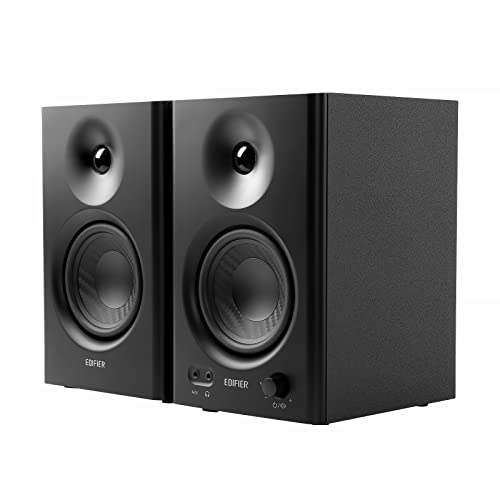
- TRUE STUDIO MONITOR - Based on the highly rated Edifier bookshelf speakers professionally tuned to a responsive almost flat curve for artists and music creators.
First Impressions: Unboxing the Pioneer DJ VM-50 Active Monitor Speaker
When we first pulled the Pioneer DJ VM-50 Active Monitor Speaker out of its packaging, the first thing that struck us was the aesthetic. Pioneer has clearly moved away from the “boxy” look of their older S-DJ series, opting instead for a sleek, hexagonal aluminum front baffle that feels incredibly modern. The build quality feels substantial at 15.54 pounds; it has a weightiness that suggests the internal components aren’t just cheap plastic. To see this design for yourself, you can check out the latest offers and stock levels online.
Setup was remarkably straightforward. The rear panel is clearly labeled, and the notched DSP knobs for Low and High EQ provide a satisfying tactile click, making it easy to ensure both speakers in a stereo pair are set identically. While some monitors in this price bracket feel like toys, the VM-50 feels like a piece of professional equipment. We noticed the 1-inch silk dome tweeter and the 5.25-inch aramid fiber woofer—materials typically found in much more expensive monitors—hinting at the performance capabilities we were about to experience.
Key Benefits We Loved
- Highly flexible DSP settings with 16 possible EQ combinations for room tuning.
- Fast-attacking, punchy bass thanks to the Vortex Bass Accelerator design.
- Constant directivity horn provides a wide “sweet spot” for better imaging.
- Durable aluminum front baffle that minimizes unwanted vibrations.
Considerations & Limitations
- Bass can be slightly overwhelming in very small, untreated rooms without EQ adjustment.
- Single-unit packaging means you need to buy two for a standard stereo setup.
Deep Dive: Putting the Pioneer DJ VM-50 Active Monitor Speaker to the Test
Over several weeks of testing, we put the Pioneer DJ VM-50 Active Monitor Speaker through a grueling series of tasks, ranging from critical vocal mixing to heavy techno DJ sets. We wanted to see if the “hybrid” marketing was just fluff or if these speakers could actually deliver on two very different fronts. What we discovered was a speaker that punches well above its weight class, provided you take the time to set it up correctly.
Acoustics and Imaging: The Constant Directivity Horn
One of the most impressive features we evaluated was the constant directivity horn surrounding the tweeter. In many budget monitors, the “sweet spot”—the area where the stereo image is perfectly balanced—is incredibly narrow. If you move your head six inches to the left, the high-end disappears. With the Pioneer DJ VM-50 Active Monitor Speaker, we found the listening space to be remarkably broad. Whether I was leaned back in my chair mixing or standing up and moving around while DJing, the frequency response remained consistent.
The 1-inch silk dome tweeter delivers a natural, airy sound that avoids the “harshness” often associated with metal dome tweeters. This is crucial for long sessions. We spent six hours straight working on a deep house arrangement and found that our ears didn’t feel “poked” or fatigued by the end of it. The integration between the tweeter and the woofer is seamless, creating a cohesive soundstage where you can easily place instruments in a 3D space. To understand why this imaging matters for your setup, you should see its full feature set and user reviews from other professionals.
Low-End Response: The Vortex Bass Accelerator
Bass is usually the Achilles’ heel of 5-inch monitors. They often either lack “oomph” or try to compensate with a “tubby” mid-bass boost that ruins clarity. The Pioneer DJ VM-50 Active Monitor Speaker utilizes what they call the Vortex Bass Accelerator—basically, a ribbed port design that allows air to flow more freely without turbulence. We found the bass to be exceptionally fast-attacking and punchy. When we played back a busy drum and bass track, the kick drum and the sub-bass remained distinct rather than turning into a muddy mess.
In our tests, the 5.25-inch aramid fiber woofer showed great rigidity. Even when we pushed the volume to simulate a small house party environment, the woofer didn’t “bottom out” or distort significantly. It provides a level of confidence in the low-end that is rare for speakers of this size. One user noted that in a 40 to 60 square meter space, these speakers feel “perfect,” and our experience in a medium-sized room echoes that sentiment. They provide enough physical “thump” to satisfy a DJ without the “bloat” that would ruin a mix.
Customizable DSP: Tuning the Speaker to Your Room
No two rooms sound the same, and this is where the Pioneer DJ VM-50 Active Monitor Speaker really shines. The rear of the unit features two DSP knobs: one for Low EQ and one for High EQ, each with four distinct settings. We tested these in various environments—against a wall, in a corner, and on isolated stands. The “Room 1” setting on the Low EQ was a lifesaver when we had to place the monitors close to a wall, as it effectively cut the “boundary gain” that usually makes monitors sound boomy.
The High EQ settings were equally useful. We found the “Loud” setting perfect for DJing, as it adds a bit of “smile curve” excitement to the sound, making it feel more like a club system. Conversely, for mixing, the “Flat” setting provided the honesty we needed to make accurate EQ decisions. This versatility makes the VM-50 a true chameleon in the studio. If you’re looking for a speaker that adapts to your environment rather than forcing you to adapt to it, you can investigate the complete specifications and user feedback to see how these DSP modes function.
Build Quality and Professional Reliability
We need to address the elephant in the room regarding build quality. While the 4mm thick aluminum front baffle provides a premium feel and genuine acoustic benefits (it really does kill cabinet vibration), we have noticed some reports of shipping damage in the wider user community. In our own evaluation, the units felt rock-solid, but the internal components, particularly the heavy woofer magnet, require the speaker to be handled with care during transit.
The inclusion of Class D amplification is a smart move by Pioneer. It keeps the speakers running cool even after hours of use and allows for high-resolution 96 kHz sampling in the internal DSP. This ensures that the signal processing is as transparent as possible. The auto-standby feature is also a nice touch for the eco-conscious or the forgetful, though it can be disabled if you prefer. Overall, the Pioneer DJ VM-50 Active Monitor Speaker feels like a tool that can withstand the rigors of daily studio use while maintaining its aesthetic appeal. To get a closer look at the build, look into the pricing and availability of these monitors today.
What Other Users Are Saying: A Balanced Perspective
When looking at the broader user consensus, the Pioneer DJ VM-50 Active Monitor Speaker receives high marks for its sound quality and versatility. One professional user mentioned that “nothing around or on the speaker moves” because of the solid construction, and they emphasized that it is perfectly suited for spaces between 40 and 60 square meters. This aligns with our finding that the VM-50 is a powerhouse in medium-sized rooms.
However, it is important to note some contrasting experiences. A few users have reported receiving units that were damaged during shipping, with one noting that a woofer had become displaced inside the box. Another user mentioned receiving a unit where internal components like transistors were non-functional upon arrival. This suggests that while the speaker’s design is excellent, the shipping protection or the internal mounting of heavy components might be a point of vulnerability. It is always recommended to purchase from a reputable source with a solid return policy and to inspect the unit immediately upon unboxing. Despite these isolated shipping concerns, the majority of users praise the VM-50 for its “excellent sound” and its ability to handle both production and DJing duties with ease.
Comparing the Pioneer DJ VM-50 to Top Alternatives
While the Pioneer DJ VM-50 Active Monitor Speaker is a top-tier contender, the studio monitor market is crowded with excellent options. Depending on your specific needs—whether it’s extreme portability or a legendary sound signature—one of these alternatives might suit you better.
1. KRK Rokit 5 G4 Powered Studio Monitor Pair
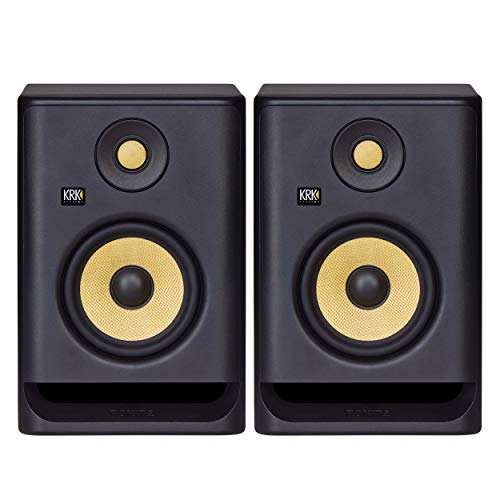
- The KRK ROKIT G4 line has been scientifically re-engineered from the ground up for the way modern artists work—in all genres and environments
- The ROKIT RP5 G4 is an incredibly versatile and sonically accurate bi-amp monitor takes music and sound creativity to a whole new industry-level
The KRK Rokit 5 G4 is perhaps the most direct competitor to the VM-50. It features a similar 5-inch driver and onboard DSP with a visual LCD screen. In our comparison, the Rokits tend to have a slightly more “colored” low-mid response that many hip-hop and electronic producers love for its “vibe.” However, the Pioneer DJ VM-50 Active Monitor Speaker offers a cleaner, more modern aesthetic and, in our opinion, a slightly more natural high-end. If you want the industry standard that you see in every YouTube studio tour, the Rokits are the way to go, but if you want something that looks more professional and offers a wider sweet spot, the Pioneer is the winner.
2. IK Multimedia iLoud Micro Monitor Portable Bluetooth Studio Monitors

- The smallest active studio reference monitoring system in the world, iLoud Micro Monitor provides you with ultra-accurate true linear frequency response with no coloration, and does so in every...
- Whether you’re recording, editing, mixing or mastering audio, editing video, sound designing or gaming, iLoud Micro Monitor ensures your production will translate well to the huge variety of...
If you are working in a truly tiny space—like a dorm room or a van—the iLoud Micro Monitors are a miracle of engineering. Despite their small size, they offer a surprisingly flat response and Bluetooth connectivity for casual listening. However, compared to the Pioneer DJ VM-50 Active Monitor Speaker, they lack the physical “thump” and the raw volume required for DJing. The iLouds are for the mobile producer who needs accuracy on the go, whereas the VM-50 is for the producer who wants a permanent, powerful centerpiece for their home studio.
3. ADAM Audio T5V Studio Monitor Single
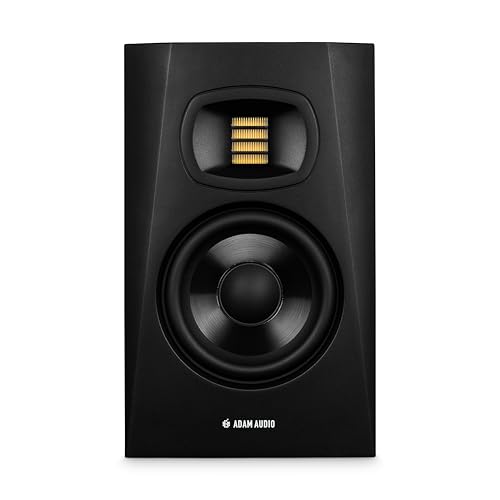
- Transformative feedback for recording, producing, or mixing – Whether you are creating music, editing your next podcast, tracking guitar, or composing for film, the revealing nature of ADAM...
- High resolution audio designed in Berlin – The HPS waveguide and U-ART tweeter combine to deliver detailed sound across the high frequency spectrum
The ADAM Audio T5V is famous for its U-ART accelerated ribbon tweeter, which provides a high-frequency response up to 25 kHz with incredible detail. For purely critical mixing and mastering, the T5V might have a slight edge in top-end clarity. However, the Pioneer DJ VM-50 Active Monitor Speaker feels more robust and offers more punch in the low-end, making it a better “all-rounder.” If your primary goal is surgical vocal editing, go with the ADAMs. If you want a speaker that can actually make you “feel” the music while you’re composing or DJing, the VM-50 is the superior choice.
Final Verdict: Is the Pioneer DJ VM-50 Active Monitor Speaker Right for You?
After extensive testing, it is clear that the Pioneer DJ VM-50 Active Monitor Speaker is one of the most versatile 5-inch monitors on the market today. It successfully navigates the difficult middle ground between a precise mixing tool and an energetic DJ speaker. Its standout features—the customizable DSP, the wide-dispersion horn, and the punchy Vortex Bass Accelerator—make it a formidable upgrade for any home studio. While the reports of shipping damage are worth noting, the actual performance of the unit, once it’s on your desk, is undeniably impressive.
We recommend these monitors for any producer who also DJs, or for anyone who finds standard studio monitors a bit too “boring” for creative sessions. They offer a level of customization that allows them to grow with you as your room and your ears evolve. If you are ready to stop guessing and start hearing your music with clarity and impact, we highly suggest you secure your pair and start transforming your studio today. Your mixes (and your listeners) will thank you.
Last update on 2026-04-04 / Affiliate links / Images from Amazon Product Advertising API