
Peavey PVI-10 Speaker Enclosures Review: Is This Compact Workhorse Worth Your Rig?
If you have ever been tasked with setting up sound for a small venue, acoustic gig, house of worship, or backyard event, you know the exact dilemma we constantly face in live sound engineering: lugging around massive, back-breaking speaker cabinets vs. settling for tinny, underpowered portable units. There is nothing worse than arriving at a venue only to struggle with 60-pound cabinets for a room that only seats fifty people. Conversely, relying on budget consumer gear often results in muddy vocals and clipped audio as soon as you push the volume past conversation levels.
When you need vocal clarity, dependable midrange punch, and a footprint that does not swallow your trunk space, passive speaker cabinets remain a go-to tool. We set out to rigorously test the Peavey PVI-10 Speaker Enclosures to determine whether these compact, carpet-covered workhorses deliver genuine live-sound utility or if their modest power ratings hold them back in real-world scenarios.

- Carpet covered
- Metal grille
What to Consider Before Investing in Unpowered Speaker Cabinets
An unpowered speaker cabinet is more than just an item; it’s a key solution for sound engineers and performers who already own a powered mixer or dedicated power amplifier and want full modular control over their signal chain. Unlike active (powered) speakers that feature built-in amplifiers, passive cabinets rely entirely on external amplification. This modularity allows you to scale your system, swap out power heads, and keep overall weight per cabinet remarkably low.
The ideal customer for this type of product is someone facing space constraints who requires clear speech projection, acoustic instrument reinforcement, or vocal monitoring—such as solo performers, houses of worship, public speakers, or outdoor patio hosts. Conversely, it might not be suitable for those who demand chest-thumping sub-bass for electronic dance music or heavy metal live drums without adding a dedicated powered subwoofer, nor is it intended for those seeking all-in-one wireless party speakers.
Before investing, consider these crucial points in detail:
- Dimensions & Space: The physical envelope of a speaker dictates both portability and mounting flexibility. Compact cabinets with trapezoidal designs are far more versatile because they can double as main front-of-house mains on speaker stands or lay flat on their side as wedge stage monitors.
- Capacity & Performance: Always evaluate the difference between RMS (continuous) wattage and peak/program power handling. A 50-watt RMS rating might sound modest on paper, but driver efficiency and horn dispersion often matter far more than sheer wattage when delivering clean output in modest venues.
- Materials & Durability: Live sound gear takes a beating in transport. Heavy-duty black carpet lining absorbs scuffs far better than bare plastic molded cabinets, while full-length powder-coated metal grilles protect internal speaker cones from accidental impacts.
- Ease of Use & Connectivity: Check the input options, transport handles, and stand-mounting capabilities. Having dedicated top or side handles along with built-in pole mount adapters drastically speeds up setup and teardown times during stressful load-ins.
While the Peavey PVI-10 Speaker Enclosures is an excellent choice for targeted live reinforcement, it’s always wise to see how it stacks up against the competition. For a broader look at all the top models, we highly recommend checking out our complete, in-depth guide:
Explore our comprehensive guide to the best passive stage monitors for live performance

- HIGH-POWER PERFORMANCE: Handles 400W peak / 100W RMS output, delivering clear, dynamic audio for DJs, live shows, and small to medium venues.

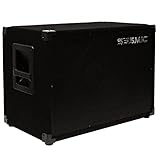
- Guitar Speakers: The quality of sound is only as good as your equipment & this bass guitar cabinet should not be overlooked. Each cabinet has one 15" woofer with a 50 oz magnet & 2.5" Kapton voice...
Unboxing and First Impressions of the Peavey PVI-10 Speaker Enclosures
Unboxing the Peavey PVI-10 Speaker Enclosures reveals a design built strictly around function, utility, and classic pro-audio aesthetics. Peavey has built a legendary reputation over decades for producing practically indestructible gear, and these cabinets immediately communicate that legacy. Weighing in at a reasonable 21 pounds each, the cabinet strikes a comfortable balance between dense, reassuring heft and single-handed portability.
The dark carpet covering feels thick and tightly bonded to the underlying wood frame, offering immediate confidence that it won’t tear easily during vehicle transport. A sturdy, full-length black powder-coated steel metal grille completely covers the face, shielding both the 10-inch woofer driver and the high-frequency horn from stray mic stands or cargo shifting in your trunk. The top-mounted handle is well-balanced, and the integrated pole-mount adapter on the bottom accepts standard speaker stands smoothly. Upon initial setup, you can check current pricing and availability to see why this classic approach remains popular among working musicians.
Advantages
- Exceptional vocal and acoustic instrument midrange clarity
- Versatile trapezoidal enclosure allows use as a mains or floor monitor
- Rugged carpeted wood construction with steel protective grille
- Lightweight 21-pound frame for effortless single-person transport
Limitations
- Limited low-frequency bass extension below 70Hz due to 10-inch woofer size
- Lacks a complex internal crossover network out of the box
In-Depth Performance Evaluation of the Peavey PVI-10 Speaker Enclosures
Acoustic Voicing and Sound Quality Performance
When evaluating unpowered speaker cabinets, raw wattage ratings rarely tell the entire story. The Peavey PVI-10 Speaker Enclosures features a continuous power rating of 50 watts RMS with a 100-watt program capacity into an 8-ohm load. While tech spec enthusiasts accustomed to inflated active speaker figures might pause at 50 watts, real-world acoustics tell a very different narrative. Driven by a clean power source—such as a small 300W to 600W powered mixer running within reasonable gain structure—the sound output is strikingly crisp, direct, and projectable.
The combination of a 10-inch premium woofer and an exponential horn-loaded high-frequency driver concentrates acoustic energy precisely where speech and music live: the critical midrange and high frequencies. Vocals cut through backing tracks or acoustic guitars with exceptional articulation. During testing, spoken words from a dynamic handheld microphone remained crystal clear even across an open room, without the muffled boxiness that plagues many budget molded plastic enclosures. If you are looking to vocalize speech clearly in sanctuaries or meeting halls, you can see its full specifications and details to judge its acoustic profile.
However, physics cannot be cheated. A 10-inch driver inside a compact enclosure naturally rolls off in the deep sub-bass frequencies. Bass kick drums and five-string electric basses will not produce room-shaking rumble through these cabinets alone. High frequencies from the horn driver are bright and direct, though purists seeking ultra-smooth audiophile crossover separation may notice a slight treble bite when driven hard. For general vocal amplification, acoustic sets, or speech reproduction, the sonic balance is remarkably well-tuned for its class.
Build Quality, Cabinet Design, and Portability
The mechanical architecture of the Peavey PVI-10 Speaker Enclosures reflects decades of real-world touring expertise. Built from a combination of wood and high-grade plastic components, the trapezoidal shell is specifically angled to perform double duty. Placed upright on a flat surface or mounted elevated on a 1-3/8 inch speaker stand, it functions as a primary front-of-house loudspeaker. Flipped onto its angled side, it converts seamlessly into a low-profile wedge floor monitor pointing directly up at a seated or standing performer.
At 21 pounds, carrying a pair of these cabinets simultaneously—one in each hand—is entirely realistic for a single performer doing a quick venue load-in. The integrated top handle is deep enough to afford a solid grip, even when wearing gloves during winter setups. The black carpet wrap is not merely decorative; it dampens internal cabinet resonance while resisting the unsightly scratches and scuffs that inevitably scar bare plastic enclosures after a few months on the road.
The full-length powder-coated steel grille is another highlight. Many competitive cabinets use partial grilles that leave high-frequency horns exposed to puncture risks during transit. Peavey covers the entire front surface, backing it up with internal structural support. You can explore user options for the Peavey PVI-10 Speaker Enclosures to evaluate how this durable construction fits your transport setup.
Power Handling, Wiring, and System Integration
Matching passive speakers with appropriate power amplification is fundamental to achieving great sound and avoiding driver burnout. The Peavey PVI-10 Speaker Enclosures operates at a standard 8-ohm nominal impedance. This makes system integration exceptionally easy. Running a pair of these speakers in parallel off a single amplifier channel presents a comfortable 4-ohm load to your amplifier, allowing typical powered mixers to deliver clean head-room without overheating.
During extended performance testing hooked up to a standard 600-watt stereo powered mixer, the driver voice coils handled dynamic transients smoothly. Even when pushed near its operational ceiling, the 10-inch woofer held its structural cone control without mechanical bottoming out. The simple rear jack panel provides standard, reliable ¼-inch input jacks, enabling quick plug-and-play connections with off-the-shelf speaker cables.
It is worth noting that the internal signal routing uses a basic high-pass filter configuration for the horn rather than an elaborate multi-pole board-mounted crossover circuit. While this simple approach keeps signal loss low and reliability high, advanced audio engineers who want razor-sharp frequency division will appreciate that the interior cabinet layout provides ample room for minor custom crossover modifications if desired. For full details on electrical ratings, review the driver specifications here.
Versatility Across Diverse Real-World Applications
What makes the Peavey PVI-10 Speaker Enclosures stand out in a saturated market is its extreme adaptability across diverse audio scenarios. In a house of worship setting, these cabinets excel as choir fill monitors or side-stage reference speakers where clean voice reproduction is paramount and massive visual distraction must be minimized. Their dark, carpeted trapezoidal profile blends discreetly into sanctuary architecture.
For residential or semi-commercial use—such as covered outdoor patios, decks, or garage workshops—these enclosures outperform standard weatherproof outdoor residential speakers by a wide margin. The efficiency of the horn-loaded driver projects sound across open yards without needing thousands of watts of power. While they are not fully waterproof and should never be left out in direct rain, their rugged exterior handles semi-enclosed outdoor installations with ease.
Additionally, solo acoustic performers, podcasters hosting live panels, and mobile presenters will find the lightweight footprint ideal for fast-paced setups. The built-in pole mount socket locks firmly onto standard tripods, elevating the horn to ear level over seated crowds effortlessly. You can check the latest offer online to see how affordable upgrading your portable PA rig can be.
What Other Users Are Saying
User feedback across long-term owners strongly reinforces our hands-on findings regarding the Peavey PVI-10 Speaker Enclosures. Many users frequently highlight the surprising audio punch these compact units deliver relative to their compact footprint. One long-term owner who connected them to a 600-watt powered mixer noted that the output remained “crystal clear” with high functional reliability, granting the clarity and overall performance a full five stars.
Another owner, having used a pair continuously for five years, pointed out that while you cannot expect deep sub-bass from a 50-watt RMS 10-inch driver, installing an inexpensive aftermarket two-way crossover internal module transformed the top-end separation, making an already capable small-room speaker sound significantly more refined. Multiple reviewers who installed these units on covered outdoor patios praised them heavily, emphasizing that they sound vastly superior and significantly louder than standard consumer outdoor speaker systems.
On the critical side, users who attempted to run full-range bass-heavy music without a dedicated subwoofer confirmed that low-end punch is limited, describing the raw low-frequency response as modest. Occasional shipping dent reports on the metal grille were also mentioned, though owners noted the steel grille is pliable enough to easily straighten out. Overall, the consensus echoes our experience: when deployed within their intended frequency band and powered properly, these speakers offer stellar long-term value and rock-solid reliability.
Comparing the Peavey PVI-10 Speaker Enclosures to Top Alternatives
1. Electro-Voice ZLX-12BT Bluetooth Powered Speaker
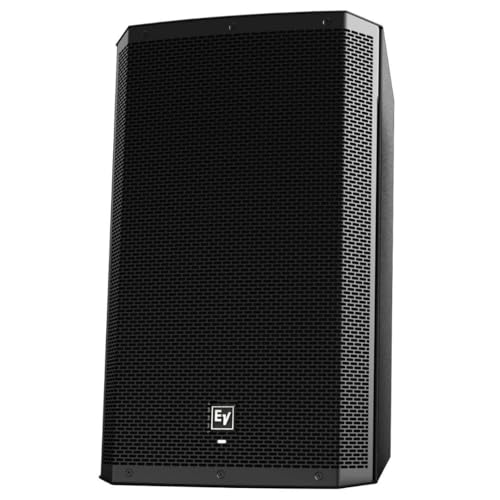
- High‑quality Bluetooth audio streaming for background music or musical accompaniment
- Quick Smart DSP features best‑in‑class processing
The Electro-Voice ZLX-12BT occupies a completely different tier in the active loudspeaker market. Featuring a built-in 1000-watt Class-D power amplifier, 12-inch woofer, onboard DSP with LCD control, and wireless Bluetooth streaming, it is a powerhouse self-contained PA speaker. Users looking for high-power, active plug-and-play operation for large DJ gigs or full band main systems will prefer the EV. However, it comes at a substantially higher price point and greater weight. If you already own an external powered mixer and want lightweight, passive simplicity without paying for internal electronics, the Peavey PVI-10 Speaker Enclosures remains the far more cost-effective choice.
2. Rockville RSG12 3-Way DJ Speaker

- HIGH-POWER SOUND OUTPUT: Delivers 1000 watts peak power with an 8-ohm impedance for clear, dynamic audio, ideal for DJ performances, live music, and large venues.
- 3-WAY FULL-RANGE AUDIO: Features a 12-inch woofer, three piezo bullet tweeters, and one piezo compression horn for full-range sound with clear highs and deep bass.
The Rockville RSG12 is a passive 3-way cabinet equipped with a larger 12-inch woofer, three piezo bullet tweeters, and a high-efficiency piezoceramic horn. With higher power handling (500W RMS / 1000W Peak) and dual SpeakON plus ¼-inch input options, the RSG12 delivers stronger bass impact and overall loudness for mobile DJs working larger party spaces. However, the larger cabinet footprint and heavier build make it less agile than Peavey’s streamlined unit. Performers prioritizing tight vocal clarity, low weight, and compact monitor wedge positioning will find the Peavey PVI-10 Speaker Enclosures much easier to transport and position on small stages.
3. Seismic Audio Dual Speakon Jack Plate
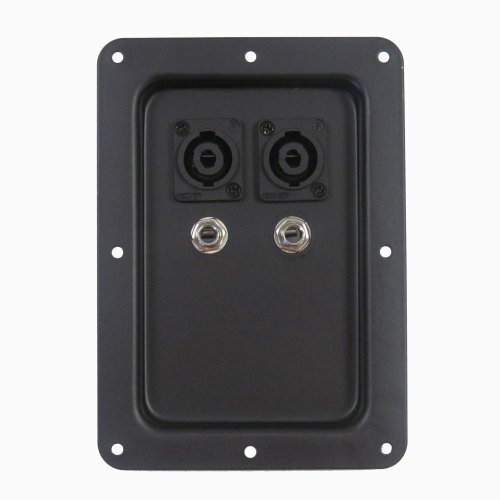
- Metal Jack Plate
- 4.5" x 6.25" Black in color
The Seismic Audio Dual Speakon Jack Plate is not a complete speaker cabinet, but rather a specialized hardware component designed for audio DIYers, custom cabinet builders, or musicians looking to upgrade existing passive enclosures. It features dual SpeakON and dual ¼-inch connectors mounted on a durable metal jack plate. If you love the acoustic housing of the Peavey PVI-10 Speaker Enclosures but wish to upgrade its rear connector options from standard ¼-inch jacks to twist-locking SpeakON connections for professional touring security, pairing Peavey’s cabinet with a retrofitted jack plate like this provides the ultimate custom hardware solution.
Final Verdict: Should You Upgrade to the Peavey PVI-10 Speaker Enclosures?
The Peavey PVI-10 Speaker Enclosures proves that thoughtful acoustic engineering and rugged construction far outweigh flashy gimmicks. While it won’t satisfy those seeking chest-thumping electronic sub-bass without an external subwoofer, it excels masterfully at its core purpose: delivering clean, articulate speech, vocal clarity, and acoustic instrument projection in a portable, practically indestructible package. Its trapezoidal dual-purpose design, lightweight 21-pound frame, and carpeted protective exterior make it an indispensable asset for churches, acoustic performers, patio setups, and mobile presenters alike.
If you need a dependable, road-worthy passive speaker cabinet that punches well above its weight class without draining your gear budget, this system delivers legendary reliability. Take your live sound setup to the next level and grab your pair of Peavey PVI-10 Speaker Enclosures today.
Last update on 2026-09-17 / Affiliate links / Images from Amazon Product Advertising API