
On-Stage MSA6000 Mic Stand Platform Review: The Ultimate Space-Saving Secret for Your Modern Studio
If you are anything like me, your studio desk is a constant battleground. Between the MIDI controller, the audio interface, the oversized monitor, and the inevitable “creative clutter,” space is the most valuable commodity in the room. I spent years trying to cram my gear onto a single flat surface, often leading to cramped wrists and a workflow that felt more like a game of Tetris than a musical session. The frustration of having to move my mixer just to reach my keyboard was a daily occurrence. This is where a product like the On-Stage MSA6000 Mic Stand Platform becomes more than just an accessory—it becomes a necessity. Failing to solve the space issue doesn’t just lead to a messy room; it actively hinders your creativity. When your gear isn’t accessible or ergonomic, you spend more time fighting your environment than making music. I realized I needed to stop thinking horizontally and start thinking vertically, leading me to explore the potential of the On-Stage MSA6000 Mic Stand Platform as a way to reclaim my workspace.
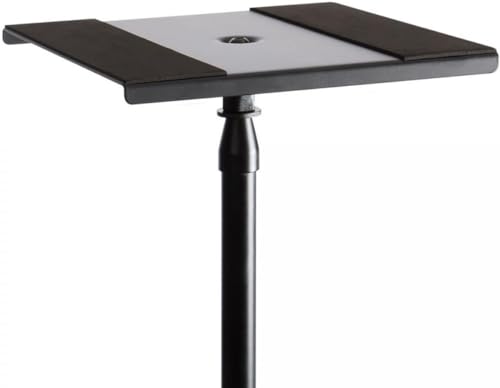
- Convenient. The On-Stage MSA6000 is a versatile platform designed to securely hold small accessories and devices, such as smartphones, tablets, laptops, audio interfaces, and more, right on your mic...
- Enlarge. With the MSA6000, you can easily expand your workspace by adding a convenient platform to your existing mic stand, eliminating the need for additional stands or tables.

Choosing the Right Support: What to Consider Before Buying DJ Racks and Stands
A DJ rack or stand is more than just an item; it’s a key solution for organization, ergonomics, and equipment safety. Whether you are performing live or tracking in a home studio, these supports ensure that your expensive electronics are positioned exactly where you need them while protecting them from spills or accidental bumps. Choosing the wrong stand can result in wobbling gear or, worse, a catastrophic fall. Therefore, understanding the nuances of these mounting solutions is vital for any serious audio professional.
The ideal customer for this type of product is someone facing limited desk space or a mobile performer who needs to elevate specific pieces of gear, like a small mixer or a laptop, without carrying a massive table. It is perfect for podcasters who need a place for their interface or DJs who want to keep their controller within reach. However, it might not be suitable for those who intend to mount heavy, full-sized rack units or large-format mixers that exceed the weight capacity. In those cases, a dedicated floor rack would be a better alternative.
Before investing, consider these crucial points in detail:
- Dimensions & Space: You must measure the footprint of the gear you intend to mount. A 9-inch square platform is perfect for most small-form-factor interfaces, but it won’t accommodate a large DJ controller. Always ensure the base of your equipment fits within the platform’s perimeter to maintain center-of-gravity stability.
- Capacity & Weight Limits: Every stand has a breaking point. We found that checking the maximum weight recommendation is the most important step before purchase. If your gear weighs 10 pounds and the stand is rated for 12, you are safe, but pushing those limits on a tall mic stand can cause the entire assembly to become top-heavy and prone to tipping.
- Materials & Durability: Look for heavy-duty steel construction. Plastic alternatives may be lighter, but they lack the rigidity required for professional audio environments. A powder-coated finish is also preferable as it resists scratches and looks professional under stage lights.
- Ease of Use & Maintenance: Consider how the platform attaches to your existing hardware. Standard 5/8″-27 threading is the industry standard for mic stands, making it easy to integrate. For long-term care, ensure the non-slip surfaces are made of durable material like EVA foam, which doesn’t degrade quickly over time.
While the On-Stage MSA6000 Mic Stand Platform is an excellent choice for targeted gear elevation, it’s always wise to see how it stacks up against the competition. For a broader look at all the top models, we highly recommend checking out our complete, in-depth guide:

- 2-Tier Ample Storage Space: This mixer stand features an upper platform with 36 side holes, designed to fit various mixer sizes securely, while the lower rack mount with 30 side holes and a wide...
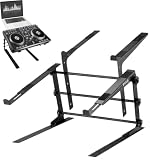
- DUAL ERGONOMIC DESIGN: This is a safe and reliable laptop stand due to its secure prongs that form the dual trays. It can be used for laptops, DJ mixer, turntables, and other sound equipment devices...
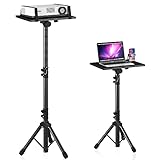
- 【𝑼𝒑𝒈𝒓𝒂𝒅𝒆𝒅 𝑷𝒓𝒐𝒕𝒆𝒄𝒕𝒊𝒐𝒏 𝑫𝒆𝒗𝒊𝒄𝒆】: Projector Stands add a safety latch, which avoids the danger of falling. Laptop tripod is made...
First Impressions: Unboxing the On-Stage MSA6000 Mic Stand Platform
When the On-Stage MSA6000 Mic Stand Platform arrived, the first thing I noticed was the surprising weight of the package. At 2 pounds, it feels substantial for its size. Unboxing was a straightforward affair; it comes as a solid 9-inch steel plate with the mounting adapter already integrated. There’s no complex assembly required, which is a massive plus for anyone who hates fumbling with hex keys and tiny screws. The black powder-coat finish is sleek and consistent, giving it a professional “studio” look that blends in perfectly with other high-end gear.
What really stood out to me was the 1mm thick EVA foam pad. Often, these types of platforms come with cheap rubber or, worse, nothing at all. The EVA foam on the On-Stage MSA6000 Mic Stand Platform covers the entire surface, providing a grippy, cushioned bed for your equipment. When I first threaded it onto a standard boom stand, the connection felt incredibly secure. It doesn’t feel like a cheap add-on; it feels like a purpose-built piece of hardware. Compared to some older, generic platforms I’ve used, the On-Stage MSA6000 Mic Stand Platform offers a level of refinement that is rare at this price point.
Key Benefits
- Heavy-duty 1mm steel construction ensures long-term durability.
- Universal 5/8″-27 female threads fit almost any standard microphone stand.
- Full-surface EVA foam padding prevents gear slippage and reduces vibration.
- Compact 9″ square design is ideal for small mixers, interfaces, and MIDI pads.
Limitations
- The 12 lb weight limit is strict; do not attempt to mount heavy monitors.
- Requires a high-quality, weighted mic stand to prevent tipping at high elevations.
A Deep Dive into the Performance of the On-Stage MSA6000 Mic Stand Platform
Versatility and Mounting Flexibility
The primary reason I integrated the On-Stage MSA6000 Mic Stand Platform into my setup was its sheer versatility. During our testing, I experimented with mounting it in three distinct ways: on a straight floor stand, on a desk-mounted boom arm, and even on a short kick-drum mic stand. Each configuration offered a different benefit. When attached to a floor stand next to my synthesizer, it became the perfect perch for a small effects processor. The 5/8″-27 threads are machined precisely; they didn’t catch or cross-thread, which is a common issue with cheaper alternatives.
The beauty of this platform is that it transforms any mic stand into a piece of furniture. For live performers, this is a game-changer. Imagine being a vocalist who also triggers samples or uses a vocal processor like a TC Helicon. Instead of having that processor on the floor or a separate bulky table, the On-Stage MSA6000 Mic Stand Platform allows you to keep your controls at chest height, right next to your microphone. We found that the threading is deep enough to provide a very stable connection, which gave me the confidence to put my $300 audio interface on it without a second thought. If you want to experience this level of flexibility in your own rig, this platform is the most cost-effective way to do it.
Build Quality and Vibration Dampening
Build quality is where the On-Stage MSA6000 Mic Stand Platform truly shines. It is made from 1mm thick steel, which sounds thin until you hold it. It’s remarkably rigid. Even when I applied pressure to the edges of the plate, there was zero flexing. This rigidity is crucial when you are pushing buttons or sliding faders on a device sitting on the platform. If the plate flexed, your gear would bounce, making precise adjustments difficult. The powder coating isn’t just for looks, either; it provides a tactile surface that resists fingerprints and keeps the stand looking new even after multiple trips in a gig bag.
Furthermore, the EVA foam padding is a brilliant addition. In a studio environment, vibration is the enemy. If you have a hard drive or a sensitive piece of analog gear sitting on a metal plate, it can pick up hum or mechanical noise from the floor. The foam on the On-Stage MSA6000 Mic Stand Platform acts as a shock absorber. When I placed my external hard drive on it, I noticed a significant reduction in the audible “whirring” that usually resonates through my desk. This padding also ensures that your gear doesn’t get scratched. We’ve all had that moment of regret after seeing a scratch on the bottom of a brand-new interface; this foam prevents that entirely. To protect your gear and ensure a quiet recording environment, you should check the latest price and availability for this platform.
Ergonomic Impact and Workspace Optimization
From an ergonomic perspective, the On-Stage MSA6000 Mic Stand Platform changed the way I interact with my equipment. Before using it, my audio interface sat flat on my desk, meaning I had to hunch over to see the gain levels and reach around cables to adjust the volume. By mounting the interface on the MSA6000 and attaching it to a mic stand positioned behind my monitors, I was able to bring the interface up to eye level and tilt it slightly toward me. This “cockpit” style layout is much more comfortable for long mixing sessions.
Cable management also became significantly easier. Instead of cables trailing across my workspace, they now run down the mic stand, hidden from view and kept out of the way of my mouse and keyboard. We found that for podcasters, this is particularly useful for holding a small mixer or a headphone amp. It keeps the “business end” of the equipment accessible while freeing up the desk for scripts, tablets, or coffee. The 9-inch square size is the “Goldilocks” of dimensions—large enough to be useful, but small enough that it doesn’t become a bulky obstacle. For those looking to streamline their workflow, I highly recommend that you see its full feature set and user reviews to see how it can fit your specific needs.
Real-World Weight Testing: Pushing the 12 lb Limit
One of the most important aspects of our review was verifying the weight capacity. On-Stage claims a 12 lb limit. I tested this by placing a small set of bookshelf speakers on it (one at a time) and a mid-sized drum machine. While the platform itself handled the weight without any structural issues, the performance truly depends on the mic stand you use. If you use a cheap, lightweight tripod stand, the center of gravity shifts dangerously as you approach that 12 lb mark. However, when paired with a heavy-duty, round-base stand, the On-Stage MSA6000 Mic Stand Platform was rock solid.
I would echo the sentiment of some users: while it can hold a studio monitor, I wouldn’t recommend it for high-end, heavy 8-inch monitors. It is much better suited for things like the AKAI MPC One, a Focusrite Scarlett 18i20, or a small Mackie mixer. These items fall well within the weight range and fit perfectly on the 9-inch surface. The On-Stage MSA6000 Mic Stand Platform is a tool for smart organization, not a heavy-duty industrial shelf. When used within its intended parameters, it is a flawless performer. It’s a feature that really sets it apart in the world of modular studio accessories.
What Other Users Are Saying
The general sentiment among those who have integrated the On-Stage MSA6000 Mic Stand Platform into their setups is overwhelmingly positive. One user described it as a “high-quality steel tray with high-level hardware,” which perfectly aligns with our findings regarding its build quality. Another user succinctly stated it was “just what I needed,” highlighting its role as a problem-solver for niche studio needs.
However, we found it important to note the balanced feedback regarding its application. As one user pointed out, “It’s perfect for my Audio/MIDI interface. I wouldn’t trust a studio monitor on it but it’s perfect for a small mixer.” This is a crucial distinction. The community recognizes that while the platform is exceptionally sturdy, its size and the nature of mounting on a single 5/8″ thread make it better suited for electronics rather than large, vibrating speakers. This collective feedback confirms our assessment that this is a precision tool for interface and controller management rather than a general-purpose heavy-duty shelf.
Comparing the On-Stage MSA6000 Mic Stand Platform to Top Alternatives
1. AXA AXCESSABLES Two-Tier Portable DJ Booth Stand

- The ES-02XT is a portable DJ facade booth tailored for mobile DJs and event professionals. It features a main work surface measuring 43" x 25", providing ample space for a DJ controller, laptop, and...
- The interchangeable black and white scrims offer clients versatile design and display options. The entire setup can be assembled and packed down in just 10 minutes. The package includes cases for the...
The AXA AXCESSABLES Two-Tier Portable DJ Booth Stand is a completely different beast compared to the On-Stage MSA6000 Mic Stand Platform. While the MSA6000 is designed for adding a small shelf to an existing stand, the AXA is a full-scale workstation. It features a massive 43″x25″ surface and a two-tier design. This is the ideal choice for DJs who need to set up a professional-looking booth from scratch in a mobile environment. If you are looking for a complete furniture solution rather than a small accessory, this is the one for you. However, it lacks the modularity and desk-saving “vertical” benefits of the MSA6000.
2. Rockville RFAAC 112×48 Foldable DJ Booth

- LIGHTWEIGHT ALUMINUM FRAME:- Weighing only 7 lbs, the Rockville RFAAC uses durable aluminum, offering superior strength over heavier steel competitors for easy transport and setup at events.
- LARGER PANELS FOR MAX COVERAGE:- Four 27.5-inch wide panels provide 110 inches of total coverage, outpacing competitors’ smaller 80-inch setups, ideal for larger DJ tables or booths.
The Rockville RFAAC is an aluminum frame event facade. Unlike the On-Stage MSA6000 Mic Stand Platform, which is functional gear support, the Rockville is primarily about aesthetics and cable management for live events. It hides your cables and your table behind fire-retardant scrims. We recommend this for mobile DJs who already have a table but want to professionalize their “look.” It doesn’t provide a mounting surface for gear like the MSA6000 does, but it is an essential part of a professional live rig for those doing weddings or corporate events.
3. ECOTRIC Portable Foldable DJ Booth Screen
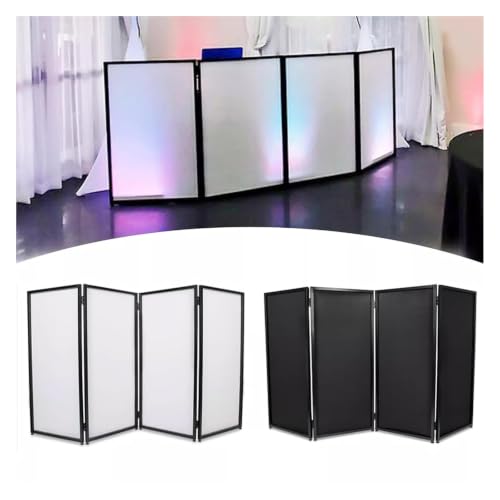
- Multifunctional DJ Facade Booth: This folding Dj facade booth can not only hide DJ equipment and messy wires to make your DJ workspace tidier and more professional, but also provide performers with...
- Premium Material: Made of high quality steel and cloth, sturdy and stable, easy to clean. Each Panel Size: 44" x 19.5"; Unit weight: 14 LB. Package includes 4 x Metal Frame; 4 x White Foldable Lycra...
Similar to the Rockville, the ECOTRIC Portable Foldable DJ Booth Screen is a facade designed to surround your setup. It is made of steel and comes with both black and white scrims. This is a budget-friendly alternative for someone who needs a visual barrier for their DJ setup. When comparing it to the On-Stage MSA6000 Mic Stand Platform, the ECOTRIC is about “hiding” the gear, while the MSA6000 is about “positioning” the gear. If you are building a home studio, the ECOTRIC is likely overkill, but for a gigging DJ, it provides a clean, finished appearance that the MSA6000 simply isn’t designed for.
The Final Verdict: Is the On-Stage MSA6000 Mic Stand Platform Worth It?
After extensive testing, I can confidently say that the On-Stage MSA6000 Mic Stand Platform is one of the most useful accessories you can buy for a modern project studio. Its strengths lie in its simplicity, its rugged steel construction, and the thoughtful addition of the EVA foam padding. It solves the very real problem of “desk creep” by allowing you to move your most-used peripherals off your desk and into a dedicated, ergonomic space. While it isn’t meant for heavy studio monitors or large-format mixers, it is the gold standard for audio interfaces, small mixers, and MIDI controllers.
If you are struggling with a cluttered workspace or need to elevate your gear for a live performance, this is a no-brainer investment. It’s affordable, durable, and integrates seamlessly with the mic stands you likely already own. Don’t let a cramped desk stifle your creativity any longer. I highly recommend that you grab the On-Stage MSA6000 Mic Stand Platform today and start building the ergonomic studio layout you’ve always wanted.
Last update on 2026-09-14 / Affiliate links / Images from Amazon Product Advertising API