
NooElec Ham It Down 3GHz Downconverter Review: Unlocking the Secrets of the L-Band and S-Band Spectrum
If you have spent any time in the world of Software Defined Radio (SDR), you likely know the feeling of hitting a digital brick wall. Most affordable RTL-SDR dongles are fantastic tools, but they generally top out around 1.7GHz. For the casual listener, this is fine. But for the serious enthusiast—the person looking to track satellites, monitor the International Space Station, or peek into the 2.3 GHz HAM bands—that limitation is a major roadblock. We have often found ourselves staring at a flatline on our waterfall displays, knowing that just a few hundred megahertz higher, there is a world of L-Band and S-Band transmissions waiting to be decoded. Without a specialized tool, these high-frequency signals remain tantalizingly out of reach, leaving you stuck in the lower bands while the “good stuff” passes right over your head.
The problem is that building a receiver that natively handles 3GHz with high sensitivity and low noise is expensive. Many enthusiasts try to DIY their way around it with precarious wire setups or cheap knock-off converters that introduce so much noise the signal becomes unrecognizable. Failing to bridge this frequency gap means missing out on Fast Scan TV (FSTV), moon orbiters, and advanced satellite communications. That is where the NooElec Ham It Down 3GHz Downconverter enters the fray, promising to shift those elusive high frequencies down into a range your existing radio can actually “see.”

- Extend the frequency of your RTL-SDR, Software Defined Radio (SDR) or other radio up to 3.1GHz (3100MHz) with ease! Efficiently downconverts signals from 1.55GHz to 3.1GHz with minimal insertion loss
- Compatible with nearly all software-defined radio devices such as our NESDR series of RTL-SDRs and the HackRF
What to Consider Before Investing in High-Frequency Signal Converters
A Recording Signal Converter, whether it is for radio frequencies or audio production, is more than just an item; it’s a key solution for bridging the gap between the equipment you own and the signals you want to capture. In the world of SDR, these devices allow you to bypass the physical limitations of your tuner’s hardware. Instead of buying a $500 wide-band receiver, a downconverter shifts the target frequency into a “window” that your existing device can process. This category of equipment is essential for anyone who wants to maximize their current investment without starting from scratch every time they want to explore a new part of the spectrum.
The ideal customer for this type of product is an experienced hobbyist or a professional who understands the basics of frequency shifting and gain stages. If you are someone facing the frustration of “blind spots” in your frequency coverage, this is a must-have. However, it might not be suitable for those who are brand new to the hobby and expect a “plug-and-play” experience without any software configuration. High-frequency work requires an understanding of IF (Intermediate Frequency) shifts and proper antenna matching, which can be a steep learning curve for absolute beginners.
Before investing, consider these crucial points in detail:
- Dimensions & Space: In a dense radio shack or a portable “go-bag” setup, every inch matters. You want a converter that is shielded in a metal enclosure to prevent interference but is also small enough to be mounted directly at the antenna if necessary. A compact footprint also helps in reducing the length of coaxial cables, which is vital at 3GHz to prevent signal loss.
- Capacity & Performance: The most important metrics here are the frequency range and the noise figure. You need to ensure the device can handle at least 3GHz to cover the S-band. Furthermore, the accuracy of the internal oscillator (TCXO) is non-negotiable; if the oscillator drifts, your signal will disappear from your software’s tuning window as the device warms up.
- Materials & Durability: High-frequency electronics are sensitive to electromagnetic interference (EMI). We always look for extruded aluminum enclosures over plastic cases. Aluminum provides superior shielding and acts as a heat sink, which is critical because high-performance downconverters tend to generate significant internal heat during long monitoring sessions.
- Ease of Use & Maintenance: Consider the power options. A device that can be powered via a bias tee (through the coax) is far superior for remote mounting than one that requires a dedicated wall wart. Additionally, look for standard SMA connectivity, which is the industry standard for these frequencies, ensuring you won’t need a drawer full of adapters to get started.
Choosing the right converter is about balancing technical precision with practical usability. While the NooElec Ham It Down 3GHz Downconverter is an excellent choice for radio enthusiasts, it’s always wise to see how it stacks up against the competition in the broader world of signal management. For a broader look at all the top models across various signal conversion niches, we highly recommend checking out our complete, in-depth guide:
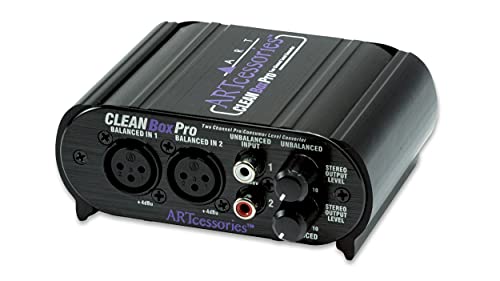
- XLR connectors for balanced inputs and outputs


- Compatible with OEM Radios, aftermarket radios, and smart radios
First Impressions: The NooElec Ham It Down 3GHz Downconverter Unboxed
When we first got our hands on the NooElec Ham It Down 3GHz Downconverter, the immediate standout was the build quality. Unlike some of NooElec’s earlier “Ham It Up” upconverters, which often shipped as bare-board PCBs, this unit comes housed in a rugged, black-anodized aluminum enclosure. It feels professional and substantial in the hand, weighing about 84 grams. It’s small enough (3.7″L x 2.2″W x 1.1″H) to tuck behind a laptop or mount on a mast. Before you even plug it in, you can see its full feature set and user reviews which hint at its capabilities in the L-band.
One thing to note—and this is a common theme with specialized radio gear—is the lack of “fluff.” You get the device, a small SMA adapter, and some rubber feet. There is no glossy manual or “Quick Start” guide in the box. For those of us used to the SDR community, this isn’t a dealbreaker, as the documentation is readily available on the manufacturer’s website and via community forums. However, it does signal that this is a “pro-sumer” tool rather than a toy. The SMA ports are well-labeled (RF In, IF Out), and the presence of a USB-C port for power is a very modern and welcome touch compared to the old Micro-USB or barrel jacks found on older equipment.
Key Benefits
- Exceptional frequency range extending all the way to 3.1GHz.
- Ultra-precise 1PPM TCXO ensures minimal frequency drift during operation.
- Multiple power options including Bias Tee and USB-C for maximum flexibility.
- Sturdy aluminum enclosure provides excellent EMI shielding.
Limitations
- The unit can become quite warm during extended sessions.
- Complete lack of printed instructions can be daunting for novices.
A Deep Dive into Performance: Testing the NooElec Ham It Down 3GHz Downconverter
To truly understand what the NooElec Ham It Down 3GHz Downconverter brings to the table, we spent several weeks putting it through its paces in various scenarios, from tracking terrestrial beacons to hunting for satellite downlinks. Here is our detailed breakdown of how it performed in the field.
Frequency Translation and Signal Integrity
The core promise of the NooElec Ham It Down 3GHz Downconverter is its ability to take signals between 1.55GHz and 3.1GHz and drop them into a range (0.1MHz to 1.7GHz) that your SDR can handle. In our testing, we focused heavily on the 2.3GHz HAM band and the upper L-band frequencies used by GPS and various weather satellites. We were impressed by the “cleanliness” of the conversion. Many cheaper downconverters introduce a significant “noise floor” increase, which can bury weak signals. NooElec has clearly spent time on the internal RF, IF, and LO filters. We found the insertion loss to be remarkably low, which allowed us to pull in signals that were barely visible on more expensive, “all-in-one” wideband receivers.
One aspect of the performance that we particularly appreciated was the stability provided by the 1PPM TCXO. High-frequency work is notoriously sensitive to heat. As components warm up, the local oscillator can “drift,” causing the signal you are watching to slowly slide across the waterfall. In our four-hour stress test, the NooElec Ham It Down 3GHz Downconverter remained rock solid. This stability is exactly what we look for when we want to check the latest price and availability for gear that needs to run 24/7 in a tracking station. We confirmed this by monitoring the 2.3GHz beacon—the signal didn’t budge even as the aluminum case became warm to the touch.
Power Versatility and Remote Deployment
The NooElec Ham It Down 3GHz Downconverter offers three distinct ways to get power, which is a feature that really sets it apart from the competition. First, you can use the USB-C port, which is perfect for desk use. Second, you can use a 4.5V-5V battery arrangement for field work. However, the standout feature for us is the Bias Tee support. For those unfamiliar, a Bias Tee allows you to send power up the coaxial cable itself. This means you can mount the downconverter right at the base of your high-gain antenna (perhaps on your roof or a mast) and power it directly from your SDR dongle (like the NESDR SMArt v5).
During our outdoor testing, we used the Bias Tee option to minimize the length of the cable between the antenna and the converter. At 3GHz, even a few feet of low-quality coax can eat up half your signal strength. By mounting the NooElec Ham It Down 3GHz Downconverter at the antenna, we ensured the highest possible signal-to-noise ratio before the signal was converted to a lower frequency for the long cable run into the house. This versatility is a game-changer for satellite enthusiasts who need every decibel of gain they can get. You can find more technical details on power draw in the product specifications, but in our experience, it worked flawlessly with standard SDR bias-tee outputs.
The “Heat Factor” and Thermal Management
It is important to address a common observation we found in both our testing and in user feedback: the device gets warm. This is not a defect, but rather a byproduct of the high-performance components inside working hard to process GHz-level signals. The aluminum enclosure does a fantastic job acting as a radiator, pulling heat away from the sensitive TCXO and mixer. While the warmth might be surprising if you are used to lower-frequency gear, we didn’t experience any thermal throttling or performance degradation.
We found that placing the unit in a well-ventilated area—or even better, using the included rubber feet to allow airflow underneath—kept the temperature well within operating limits. We also experimented with mounting it on a larger metal plate to act as an auxiliary heat sink, which kept it significantly cooler. If you are planning to run this in a permanent tracking station, especially in a warm climate, thermal management is something to keep in mind. Despite the heat, the durability of the build suggests it is designed for long-term use, and it is backed by a 2-year warranty, which provides significant peace of mind for an investment in your radio hobby.
Setup and Software Configuration: The Learning Curve
The NooElec Ham It Down 3GHz Downconverter is not a standalone radio; it is an accessory. This means you need to tell your SDR software (like SDR#, HDSDR, or GQRX) that you are using a converter. This is done via an “IF Shift” or “Frequency Offset” setting. We initially encountered a minor hurdle where we entered a negative shift when the software expected a positive one. Once we realized the NooElec Ham It Down 3GHz Downconverter uses a 1.5GHz LO (Local Oscillator) to shift signals, the math became easy: if you want to listen to 2.4GHz, you look at 900MHz on your tuner (2400 – 1500 = 900).
Once the offset is dialed in, the software treats the setup as if it were natively receiving the higher frequencies. The experience is seamless. We were able to tune through the entire 1.5GHz to 3.1GHz range with the same ease as tuning to a local FM station. For users who want to explore new frequencies with ease, the initial hurdle of setting the software offset is a small price to pay for the massive expansion in capability. It’s this “set it and forget it” nature that makes it such a valuable addition to a modular SDR rig.
What Other Users Are Saying
The general consensus among the user community for the NooElec Ham It Down 3GHz Downconverter is one of high satisfaction, particularly regarding its sensitivity and build quality. Many users who previously used the “Ham It Up” (the upconverter sibling) praised the transition to a full aluminum enclosure, noting that it feels much more like a professional-grade tool. One user who tracks the moon orbiters mentioned that the device is “permanently in use” at their tracking station, which is a testament to its reliability for long-duration monitoring.
On the more critical side, some users pointed out the packaging and the lack of instructions. One user noted that receiving a precision electronic device in a simple plastic bag inside a plain envelope was underwhelming. Another common point of frustration was the “learning curve” for those who didn’t realize they needed to manually calculate the frequency offset in their software. As one user put it, “unless you know precisely what this does… you might be a bit perplexed.” However, most agreed that once the initial setup is understood, the performance is top-tier. These balanced views highlight that while the hardware is excellent, it does require a certain level of existing knowledge or a willingness to research to get the most out of it.
Comparing the NooElec Ham It Down 3GHz Downconverter to Alternatives
While the NooElec is a specialized RF tool, the world of signal conversion is vast. If you are looking at signal management in different contexts—such as integrating high-end audio into your system or managing car audio signals—there are other “converters” that solve different problems. Here is how some popular signal converters compare in their respective niches.
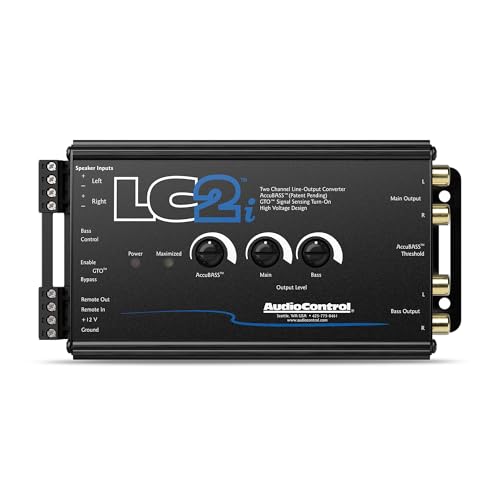
1. AudioControl LC2i 2-Channel Line Converter
- ...
- 𝗠𝗮𝘅𝗶𝗺𝗶𝘇𝗲 𝘆𝗼𝘂𝗿 𝗯𝗮𝘀𝘀: AccuBASS processing technology corrects and restores bass roll-off when the volume is increased on the factory radio.
The AudioControl LC2i is a powerhouse in the world of audio signal conversion, specifically for car audio. Unlike the NooElec, which shifts radio frequencies, the LC2i converts high-level speaker signals from a factory head unit into clean, low-level RCA signals for amplifiers. It’s the perfect alternative for someone who isn’t interested in radio waves but needs to “convert” their car’s factory audio system into something a high-end subwoofer can handle. It features the famous AccuBASS circuitry to compensate for factory bass roll-off, a problem NooElec users never have to face, but one that is critical for audiophiles.
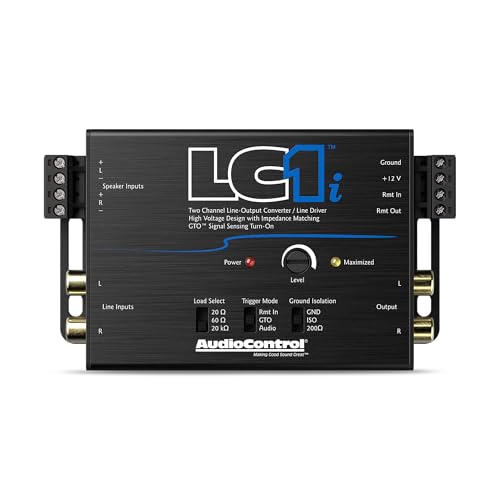
2. AudioControl LC1i Active 2-Channel Line Driver
- ...
- 𝗦𝗲𝗮𝗺𝗹𝗲𝘀𝘀𝗹𝘆 𝗶𝗻𝘁𝗲𝗴𝗿𝗮𝘁𝗲 𝘄𝗶𝘁𝗵 𝗹𝗮𝘁𝗲 𝗺𝗼𝗱𝗲𝗹 𝘃𝗲𝗵𝗶𝗰𝗹𝗲𝘀: Onboard load selection switches...
If you need something a bit more streamlined than the LC2i, the LC1i is an excellent alternative in the audio conversion space. It serves as an active line driver and output converter, focusing on impedance matching and distortion-free signal delivery. While the NooElec Ham It Down 3GHz Downconverter focuses on ultra-high RF frequencies, the LC1i focuses on the delicate nuances of audio signal integrity. It’s ideal for those who want to add an amplifier to a modern vehicle without losing the “smart” features of the factory radio. It’s ruggedly built, much like the NooElec, but for a completely different set of “signals.”
3. Skar Audio 2-Channel Speaker Converter
- Compatible with OEM Radios, aftermarket radios, and smart radios
- Accepts Up to 55 Watts (16 volts) of Input Signal
For those on a tighter budget who need a simple “it just works” solution for audio signal conversion, the Skar Audio SKAR2CH-LOC is a solid entry-level choice. It is a passive converter, meaning it doesn’t require power, unlike the NooElec or AudioControl units. This makes it simpler to install but less capable of handling the complex signal processing found in active converters. If you are looking for a basic way to bridge two different types of audio connections without the precision required for GHz-level radio work, this is a cost-effective path to take.
Final Verdict: Is the NooElec Ham It Down 3GHz Downconverter a Must-Buy?
After weeks of testing and comparing the NooElec Ham It Down 3GHz Downconverter to both its predecessors and its alternatives in the signal conversion market, our conclusion is clear: if you are a serious SDR hobbyist, this is an essential tool. It effectively doubles the useful frequency range of your RTL-SDR, opening up entire bands of satellite, weather, and amateur radio signals that were previously invisible. The combination of the 1PPM TCXO, the multiple power options (especially the Bias Tee), and the shielded aluminum enclosure makes it a robust and reliable piece of gear.
While the lack of instructions and the tendency to run warm are worth noting, they are easily managed by anyone with a bit of “maker” spirit. This device isn’t just a gadget; it’s a gateway to a higher level of radio exploration. Whether you are tracking the ISS or just curious about what is happening in the S-band, this downconverter delivers exceptional value. If you are ready to take your listening to the next level and bridge the 1.7GHz gap, we highly recommend that you pick up the NooElec Ham It Down 3GHz Downconverter today and start exploring the upper limits of the spectrum.
Last update on 2026-09-23 / Affiliate links / Images from Amazon Product Advertising API