
MXR Micro Amp Review: Why This Simple One-Knob Wonder Remains an Essential Industry Standard
We’ve all been there—you’re halfway through a high-energy set, the band is firing on all cylinders, and it’s time for your big solo. You dig in, but your guitar just doesn’t have the presence to jump out over the drums and bass. Or perhaps you’re switching from a thick-sounding Les Paul to a vintage-style Stratocaster and suddenly your amp feels thin and quiet. These are the moments where many of us start chasing expensive new amplifiers or complex rack systems, when the real solution is much simpler and fits right on your pedalboard. I have spent years trying to find the perfect balance between maintaining my core tone and getting that necessary “kick” when it matters most. The struggle is real: how do you add volume or gain without completely muddying your sound? This is where the MXR Micro Amp enters the conversation, promising a transparent solution to a problem as old as the electric guitar itself. Before you overhaul your entire rig, you owe it to yourself to see its full feature set and user reviews to understand why this white box has been a staple for decades.
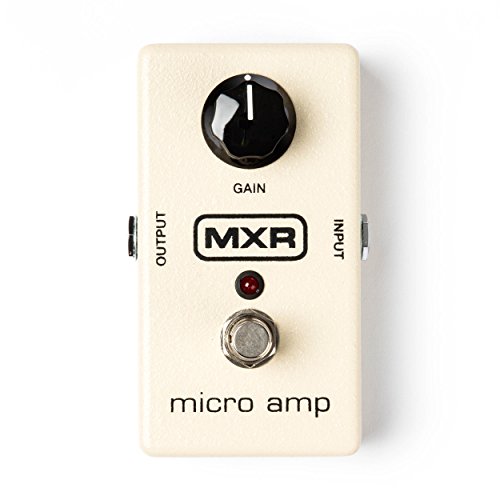
- Adds a preset amount of gain with a single control
- Boost your signal for lead work

What to Consider Before Buying a Clean Boost or Preamp Pedal
A Guitar Distortion & Overdrive Effects unit, specifically a clean boost like this one, is more than just an item; it’s a key solution for signal integrity and dynamic control. When you are building a signal chain, every foot of cable and every true-bypass pedal adds a tiny amount of resistance and capacitance. By the time your signal reaches the amp, it can lose that high-end “shimmer” and punch. A clean boost solves this by providing a low-impedance buffer and a volume lift that restores life to your tone. It’s also the secret weapon for “pushing” a tube amp into natural saturation without needing a dedicated high-gain distortion pedal.
The ideal customer for this type of product is someone facing volume inconsistencies between instruments or someone who loves their amp’s natural tone but wants more of it for lead work. It is particularly effective for players who use long cable runs or large pedalboards where signal drop-off is a recurring nightmare. However, it might not be suitable for those who are looking for heavy, clipping distortion or “fuzz” in a single box. If you want a pedal that radically changes the EQ of your guitar, a dedicated EQ pedal or a mid-hump overdrive might be a better alternative. But for pure, unadulterated gain, you should check the latest price and availability of the industry standard.
Before investing, consider these crucial points in detail:
- Dimensions & Space: Pedalboard real estate is precious. You want a device that is compact enough to squeeze between your tuner and your drive pedals without requiring a massive power supply. Look for the classic “MXR size” which has become the industry benchmark for portability and ease of placement.
- Capacity/Performance: The amount of gain (decibels) a pedal can provide is critical. A good boost should offer enough headroom to significantly jump over a loud drummer while also being subtle enough to act as a “permanent on” preamp for tone enhancement.
- Materials & Durability: Since this is a pedal you will likely be stomping on frequently during the most intense parts of your performance, a heavy-duty metal chassis and a high-quality footswitch are non-negotiable. Plastic housings simply won’t survive the rigors of the road.
- Ease of Use & Maintenance: In the heat of a gig, you don’t want to be menu-diving or adjusting five different small knobs. A single, large, easily reachable control is often the superior choice for live performance adjustments, especially if you can move it with your foot.
Understanding these factors will help you determine if a transparent boost is the missing link in your setup or if you need something more aggressive. While the MXR Micro Amp is an excellent choice, it’s always wise to see how it stacks up against the competition. For a broader look at all the top models, we highly recommend checking out our complete, in-depth guide:

- Overdrive Pedal f Electric Guitar

- Legendary distortion used by guitarists everywhere Since 1978

- JOYO Ultimate Drive gives you rich bordering-on-distortion overdrive, surpassing what a diode tube amp can provide.
First Impressions: The Unboxing of the MXR Micro Amp
When I first pulled the MXR Micro Amp out of its box, I was immediately struck by its utilitarian beauty. It doesn’t try to be flashy. It’s a solid, heavy-duty white metal box with a single, oversized Gain knob and a bright red LED. In an era of pedals with twenty switches and hidden digital menus, there is something deeply reassuring about this design. It feels like a piece of laboratory equipment rather than a toy. Weighing in at just under a pound, it feels substantial enough to stay put on a board but light enough not to be a burden. We found that the included 9V battery access is standard for MXR—accessible through the bottom plate—but most players will likely use a dedicated power supply. The hardware interface is as simple as it gets: 1/4-inch input, 1/4-inch output. It is essentially the “plug and play” ethos distilled into a physical object. If you’re looking for a device that prioritizes function over form, you can see more detailed photos and technical specs here.
Key Benefits
- Incredibly transparent gain that preserves your instrument’s natural character.
- Robust, tank-like construction designed to withstand years of heavy touring.
- Versatile enough to function as a solo boost, a preamp, or a line-level compensator.
- Simple one-knob operation makes it foolproof for live performance adjustments.
Limitations
- Does not offer tone-shaping (EQ) controls for those who want to boost specific frequencies.
- The single knob can be easily bumped if not placed carefully on a crowded board.
Performance Deep Dive: Testing the MXR Micro Amp in the Real World
Unmatched Transparency and Signal Integrity
One of the biggest fears guitarists have when adding a boost pedal is “tone coloring.” We’ve spent years finding the right guitar and the right amp; the last thing we want is a $100 box changing the fundamental EQ of that hard-earned sound. During our extensive testing, we found that the MXR Micro Amp lives up to its reputation for transparency. When the knob is set to unity (around 9 o’clock), the signal is virtually indistinguishable from the bypassed sound, yet it feels “healthier.” It adds a subtle sparkle and depth that is hard to quantify but easy to hear. As you turn the knob up, it simply makes your sound “more.” It doesn’t add a mid-hump like a Tube Screamer, nor does it cut the lows like many treble boosters. It provides a flat-response gain that pushes your amp’s front end in the most natural way possible. We found this especially useful for players using high-quality tube amps who want to maintain the “glassy” cleans while adding enough punch to stand out. It is a tool of precision, and for many, it stays “always on” simply because the signal sounds better with it in the chain.
Versatility Across Different Gear and Genres
I tested the MXR Micro Amp with a variety of setups, including a high-output humbucker-equipped Gibson and a low-output vintage Fender Telecaster. This is where the pedal truly shines as a “utility” tool. If you are a multi-instrumentalist, you know the pain of switching guitars and having to walk back to your amp to adjust the volume. By placing this pedal first in your chain, you can preset the gain to level out your different instruments. With the Telecaster, I could bump the gain to match the output of the Gibson, ensuring my effects chain reacted consistently regardless of which guitar I was holding. Furthermore, we found that it works wonders in an effects loop. If you have a complex series of modulation and time-based pedals that cause a slight volume drop, placing the MXR Micro Amp at the end of the loop restores that lost level perfectly. It’s also a secret weapon for bassists. One user noted it was like having their “amp on steroids,” literally doubling the perceived volume and making a closed-back combo amp come to life. You should read more about these diverse applications from other users.
The Perfect Lead Boost: Cutting Through the Mix
The primary use case for most people will be as a solo boost. I placed the MXR Micro Amp after my overdrive and distortion pedals to act as a pure volume lift. In this position, it doesn’t add more distortion; it simply takes your existing distorted sound and makes it louder. This is crucial for lead work where you need to rise above the cymbals and the secondary guitar. However, if you place it before your overdrive pedals, it acts as a gain stager, pushing your drive pedals into deeper saturation and sustain. This dual-purpose nature makes it one of the most flexible tools on any board. We found that the MXR Micro Amp has a massive amount of output on tap—much more than you will likely ever need—which provides huge headroom. This means even at high boost levels, the pedal doesn’t introduce its own unwanted clipping or “fizz.” It remains musical and dynamic, responding perfectly to your pick attack. This level of dynamic sensitivity is a feature that really sets it apart from cheaper, digital alternatives.
Build Quality and Professional Reliability
In the professional world, reliability is everything. You cannot have a pedal fail in the middle of a tour. The MXR Micro Amp is manufactured by Jim Dunlop, a company known for building gear that survives the “beer and boots” environment of a club stage. The heavy-duty housing is practically indestructible, and the footswitch provides a satisfying, mechanical “click” that you can feel through your shoe. During our evaluation, we noted that the internal wiring is clean and the components are of high quality, which contributes to the extremely low noise floor. Despite being an analog gain circuit, it adds almost zero hum or 60-cycle buzz to the signal path, even when powered by a standard 9V adapter. This makes it an excellent choice for studio recording where silence is as important as the sound itself. The compact style ensures it fits into the smallest gaps on a board, and the white finish makes it easy to spot on a dark stage. For a professional-grade tool that won’t break the bank, you can view the current price and warranty details here.
What Other Users Are Saying
The consensus among the guitar community is overwhelmingly positive, with most users regarding the MXR Micro Amp as a “no-brainer” purchase. One bassist shared that it “literally doubled the volume of the amp and completely made my amp come to life,” highlighting its effectiveness outside of the traditional 6-string guitar realm. Another experienced player noted that they use it to add a “small sparkle and depth” to their Fender amps, using it as a tonal sweetener rather than just a volume jump. Many professional reviewers emphasize that it “does not color or change the sound,” which is the highest praise you can give to a clean boost.
On the flip side, some users pointed out that for those playing at very low bedroom volumes, the pedal might simply feel like a louder version of their amp without the “punch” you get at stage volumes. A few others mentioned they wished for a battery door that didn’t require unscrewing the bottom plate, though they admitted this design contributes to the pedal’s overall “built like a tank” feel. Generally, the sentiment is that if you need more volume or gain without sacrificing your core tone, this is the gold standard. The fact that it is “the most popular boost ever” for many users speaks volumes about its longevity and performance in the real world.
Comparing the MXR Micro Amp to Its Top 3 Alternatives
1. BOSS MT-2 Metal Zone Distortion Pedal

- Innovative dual-stage gain circuit produces thick and tight distortion sounds with smooth, singing sustain
- Easy to achieve massive, satisfying sounds at any volume level
While the MXR Micro Amp is all about transparency and clean gain, the BOSS MT-2 is the complete opposite. It is a high-gain distortion monster designed for heavy metal and hard rock. It features a complex 3-band EQ with semi-parametric mids, allowing for extreme tone sculpting. We found that the MT-2 is for the player who wants to completely transform their amp’s sound into a high-gain stack. If you are looking for a subtle boost, the MT-2 is definitely not for you. However, for those needing aggressive clipping and the ability to “scoop” their mids, the BOSS MT-2 remains a classic choice for a reason, though it lacks the “always-on” utility of the MXR.
2. Proco RAT2 Distortion Pedal
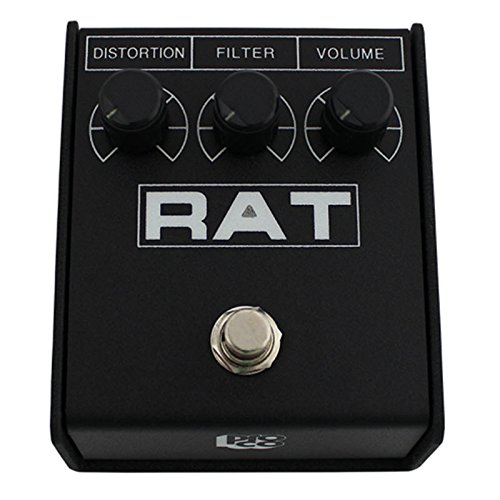
- Used as a primary distortion, it excels at arena rock rhythm tones and soaring leads
- Nails that sweet spot where a tube amp goes from sparkly clean to warm overdrive
The Proco RAT2 sits somewhere in the middle of the spectrum. It can act as a dirty boost, an overdrive, a distortion, or even a fuzzy wall of sound. Compared to the MXR Micro Amp, the RAT2 has a lot more “hair” and character. It features a unique “Filter” knob that cuts high frequencies as you turn it up. While the MXR provides a transparent lift, the RAT2 adds a gritty, vintage texture that is iconic in rock and roll history. We recommend the RAT2 for players who want a “boost” that also adds some harmonic grit and sustain, whereas the MXR is for those who want to keep their signal purely clean.
3. MOOER E7 Polyphonic Guitar Synth Pedal

- E7 the pocket-sized guitar synthesizer pedal. 7 smoother SYNTHS tones, easy to use by adding 7 LED indicators on the right side of the housing. Recommended 9V DC power supply.
- Versatile synth tones. 7 different custom synth tones, you can adjust any synth tone as you like. Synth types include trumpet, organ, ocean wave, Weeyo, saw wave, 8-bit, EDM, pad.
The MOOER E7 is a completely different animal and serves as a reminder of how simple the MXR Micro Amp truly is. The E7 is a polyphonic synthesizer that turns your guitar signal into trumpets, organs, and 8-bit synth leads. It features presets, arpeggiators, and complex frequency controls. Obviously, this is not a boost pedal. We include it here to show that sometimes, “more” means more complexity, whereas the MXR proves that “more” can also mean more of what you already have. If you’re looking for experimental sounds, the MOOER is a fun tool, but for professional signal management, the MXR is the superior, more reliable choice.
The Final Verdict: Is the MXR Micro Amp Right for You?
After putting it through its paces in the studio and on the stage, we can confidently say that the MXR Micro Amp is a masterpiece of simplicity. In a market flooded with overpriced “boutique” pedals that offer dozens of unnecessary features, the MXR stands out by doing one thing perfectly: it gives you more. Whether you need to push a tube amp into its sweet spot, compensate for a long cable run, or simply jump out of the mix during a solo, this pedal handles it with professional grace and zero noise. It is built to last a lifetime, easy to use, and completely transparent.
We highly recommend the MXR Micro Amp to any guitarist or bassist who feels their sound is missing that final bit of “oomph.” It is a foundational tool that belongs on almost every pedalboard, regardless of genre. From country pickers needing a clean lift to metalheads looking to tighten up their front end, its utility is universal. Don’t let your solos get buried or your tone suffer from signal loss any longer. Take the next step in perfecting your rig and grab the MXR Micro Amp today to experience your amp on steroids.
Last update on 2026-04-01 / Affiliate links / Images from Amazon Product Advertising API