
MXR M68 Univibe Effects Pedal Review: Capturing the Psychedelic Spirit of the 60s
If you have ever spent a late night listening to the soulful, swirling textures of Jimi Hendrix’s “Machine Gun” or the haunting, ethereal throb of Robin Trower’s “Bridge of Sighs,” you know exactly what I am talking about. There is a specific “chewy” modulation that sits somewhere between a chorus, a phaser, and a rotary speaker, yet it is none of those things entirely. It is the Univibe. For decades, guitarists have been searching for that elusive, liquid-like pulse that makes a guitar feel alive. The problem is that original 1960s units are the size of a toaster, cost as much as a used car, and are notoriously temperamental. Many modern “vibe” pedals either sound too much like a standard digital chorus or fail to capture the physical “throb” that makes the effect so legendary. I found myself in this exact predicament: needing that classic psychedelic swirl without sacrificing my entire pedalboard’s real estate or my bank account. This led me directly to my evaluation of the MXR M68 Univibe Effects Pedal.
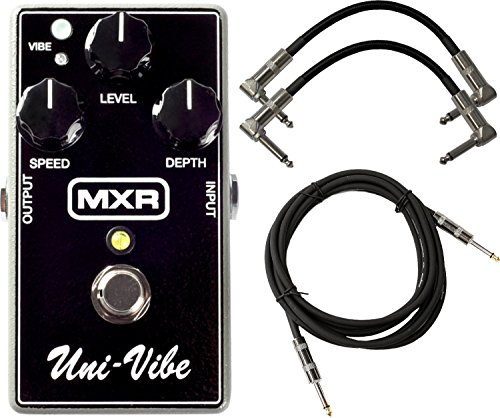
- Includes 3 Cables!
- Iconic Chorus/Vibrato true to the classic late '60s tone
What to Consider Before Buying Electric Guitar Chorus Effects
An Electric Guitar Chorus Effects is more than just an item; it’s a key solution for guitarists who want to add three-dimensional depth, movement, and character to their sound. Whether you are playing shimmering clean pop lines or thick, saturated blues solos, modulation provides a sense of space that a “dry” signal simply cannot achieve. Choosing the right modulation pedal is the difference between a sound that sits flat against the speakers and one that leaps out and surrounds the listener.
The ideal customer for this type of product is someone facing the limitation of a “stale” or “thin” guitar tone, particularly those who play in three-piece bands where the guitar needs to fill a lot of sonic space. It is also perfect for fans of 60s and 70s rock, reggae artists looking for that “bubble” rhythm, and ambient players. However, it might not be suitable for those who prefer a purely transparent tone or players who strictly need a “hi-fi” modern digital chorus, as Univibes tend to have a specific analog “darkness” or “warmth” that colors the signal. If you need 100% tonal transparency, you might consider a digital multi-modulation unit instead.
Before investing, consider these crucial points in detail:
- Dimensions & Space: Your pedalboard real estate is precious. A pedal should offer a massive sound without requiring a massive footprint. Look for standard “Phase 90” sized enclosures that allow for easy mounting and standard power requirements. Before you buy, see its full feature set and user reviews to ensure it fits your layout.
- Capacity/Performance: In the world of modulation, performance is measured by the “sweep” and the “throb.” You want a pedal that can go from a slow, syrupy crawl to a fast, Leslie-speaker-style wobble without introducing excessive hiss or digital artifacts.
- Materials & Durability: Since this is a foot-operated device, the housing must be heavy-duty metal. The switches should be rated for thousands of clicks, and the knobs should have enough resistance to prevent accidental movement during a performance.
- Ease of Use & Maintenance: Long-term care should be minimal. A good pedal uses a standard 9V center-negative power supply and features “True Bypass” switching to ensure your tone remains pristine when the effect is turned off.
Understanding these factors will help you decide if a specialized tool like a Univibe is the right addition to your rig or if a more standard chorus is what you need. While the MXR M68 Univibe Effects Pedal is an excellent choice, it’s always wise to see how it stacks up against the competition. For a broader look at all the top models, we highly recommend checking out our complete, in-depth guide:

- [Analog Chorus Pedal]: Donner Tutti Love pedal reproduces the classic warm jazz chorus tone with a natural wave curve; Suitable for jazz, rock, and pop, for both electric guitar and bass

- Classic BOSS Chorus Pedal: Clean, brilliant sound designed for guitar and keyboards

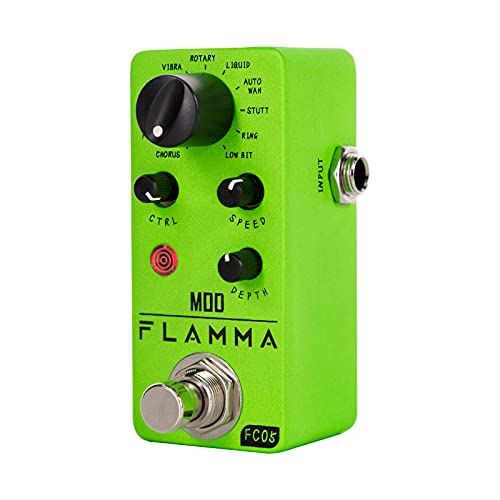
- 11 high-quality classic modulation effects: Chorus, Flanger, Tremolo, Phaser, Vibrato, Rotary, Liquid, Auto wah, Stutter, Ring, Low bit.
First Impressions: The MXR M68 Univibe Effects Pedal Unboxed
When I first got my hands on the MXR M68 Univibe Effects Pedal, I was immediately struck by its simplicity. MXR has a legendary reputation for “no-nonsense” design, and this pedal follows that tradition perfectly. It comes in a classic, sturdy black metal enclosure that feels like it could survive being thrown off a stage. Unlike the original bulky Univibes of the 60s, this is a standard-sized pedal, making it an instant friend to my crowded board. This specific bundle also included 3 high-quality cables, which is a fantastic touch for anyone looking to plug and play immediately.
The interface is refreshingly straightforward: three knobs (Level, Speed, Depth) and a small “Vibe” button that toggles between Chorus and Vibrato modes. There are no menus to dive into and no complicated secondary functions. I compared it mentally to some of the boutique vibe pedals I’ve used in the past, which often feature five or six knobs and internal trim pots. While those offer more “tweakability,” the MXR feels like a tool designed for the stage—where you need to make quick adjustments on the fly. You can check the latest price and availability of this compact powerhouse to see how it fits your budget.
Key Benefits
- Incredible “throb” and “chewy” texture that stays true to the 60s sound.
- Compact, tank-like MXR build quality that fits on any pedalboard.
- Simple three-knob interface makes it incredibly easy to dial in a great tone.
- True Bypass switching ensures no tone loss when the pedal is disengaged.
Drawbacks
- Can slightly darken the signal when placed at the very front of a chain.
- Does not have an expression pedal input for real-time speed control.
A Deep Dive into the Performance of the MXR M68 Univibe Effects Pedal
To truly understand what the MXR M68 Univibe Effects Pedal brings to the table, I spent several weeks testing it across multiple guitars—ranging from a vintage-spec Stratocaster to a humbucker-loaded Les Paul—and through both clean Fender-style amps and high-gain British stacks. What I discovered is a pedal that manages to be both a “one-trick pony” and a versatile workhorse simultaneously.
The “Vibe” Switch: Two Pedals in One
The heart of the MXR M68 Univibe Effects Pedal is the Vibe switch. In its default “out” position, the pedal is in Chorus mode. Now, don’t let the name fool you—this isn’t the glassy, 80s-style chorus of a BOSS pedal. This is the classic Univibe “chorus,” which is a mix of dry and modulated signals that creates that iconic staggered pulse. I found this mode to be incredibly “chewy.” When I hit the Vibe switch “in,” the pedal enters Vibrato mode. This removes the dry signal, leaving you with a pitch-shifting wobble. We found that this mode is spectacular for reggae “bubbles” or for adding a lo-fi, warped-record feel to your tracks. As one user aptly noted, as soon as they turned it on, they “just wanted to keep on playing.” This emotional connection to the sound is exactly what you want from a modulation effect, and it’s a feature that really sets it apart in its price bracket.
Level, Speed, and Depth: Mastering the Sweep
The three knobs on the MXR M68 Univibe Effects Pedal are exceptionally well-calibrated. The “Speed” control covers a vast range; at 8 o’clock, it provides a slow, syrupy wash that is perfect for ballads. Cranking it to 3 o’clock or beyond gets you into “Leslie speaker” territory, with a fast, fluttering pulse that adds urgency to solos. The “Depth” control is where you determine how much “throb” you want. I personally love the Depth at 2 o’clock, where the “whoosh” of the effect feels physical. One of the most important features here is the “Level” knob. Many vintage-style vibes suffer from a volume drop when engaged, but with the MXR M68 Univibe Effects Pedal, you can actually boost your signal slightly. We found that setting the volume at 2 PM helped the effect cut through a dense band mix perfectly, especially when soloing. If you’re curious about the technical specs, you can see its full feature set and user reviews to understand the amperage and voltage requirements.
Signal Chain Dynamics: Where to Place the Pulse
In our testing, we discovered that the MXR M68 Univibe Effects Pedal is very sensitive to where it sits in your signal chain. This is a crucial point for any prospective buyer. If you place it at the very front of your chain (before your overdrive or fuzz), the effect is subtle and “darkens” the tone slightly—a classic Hendrix-style setup. However, if you place it after your dirt pedals, the effect becomes incredibly pronounced and dramatic. We found that it “tightens up the bottom end” when run in front of an amp, which is a benefit we didn’t expect. Some users have mentioned that the pedal can be “harsh” if not dialed in correctly with their specific amp’s EQ, but in my experience, a slight tweak of the “Depth” knob resolved any harshness. The analog signal format ensures that even when the effect is intense, it never feels “sterile” or “digital.” To see how other guitarists have integrated this into their setups, you might want to read more user experiences and rig setups.
Durability and Gig-Readiness
Beyond the sound, the MXR M68 Univibe Effects Pedal is built for the road. The true bypass switching is a must-have for modern players, as it ensures your dry signal isn’t being sucked away when the pedal is off. The input and output jacks are top-quality 1/4-inch audio jacks that hold cables securely. While some users missed having an expression pedal input (which some high-end vibes use to control speed with their foot), the trade-off is a much smaller footprint. For the gigging musician who needs a reliable, consistent sound night after night, the simplicity of this unit is actually a strength. It’s a “set and forget” pedal that does exactly what it promises without any fuss. This reliability is a major reason why I often recommend this pedal over more expensive, finicky alternatives. You can check the latest price and availability to see if this durable unit fits your touring budget.
What Other Users Are Saying
The general consensus among the guitar community regarding the MXR M68 Univibe Effects Pedal is overwhelmingly positive, particularly regarding its value-to-performance ratio. Many users have expressed being “blown away by the genuine sound it produces for the price,” noting that they didn’t want to spend hundreds of dollars on boutique units just to get that classic 60s vibe. One user specifically mentioned it is “perfect for reggae,” proving its versatility beyond just psychedelic rock. Another praised how it “adds a subtle little sweep” to their rig, emphasizing that it can be as transparent or as bold as you want it to be.
However, no product is without its critics. A small segment of users found the pedal to be “dark” when placed at the front of the chain, and one user reported a noisy experience, though they suspected a defective unit. Another common point of feedback is the lack of a pedal output for speed control, with one user suggesting that if you have a larger budget, you might want a unit with an integrated treadle. Despite these few complaints, the vast majority of players find that for under $200, the MXR M68 Univibe Effects Pedal delivers the “throb” they’ve been looking for. This balanced feedback suggests that while it may not replace a $500 optical vibe for a purist, it is the perfect solution for 90% of guitarists. It’s always worth it to browse the latest user reviews to see how it performs with different amp types.
Comparing the MXR M68 Univibe Effects Pedal to Top Alternatives
Before you make your final decision, it’s important to see how the MXR M68 Univibe Effects Pedal compares to other popular modulation pedals. While the M68 is a dedicated “Vibe” pedal, many players cross-shop it with traditional chorus and phaser pedals.
1. BOSS CH-1 Compact Chorus Effects Pedal
- Classic BOSS Chorus Pedal: Clean, brilliant sound designed for guitar and keyboards
- Trusted Performance Since 1989: One of the most enduring and reliable chorus pedals in the industry
The BOSS CH-1 is a legend in the world of modulation, but it offers a very different flavor than the MXR M68 Univibe Effects Pedal. While the MXR is dark, chewy, and “throbby,” the BOSS CH-1 is crystal-clear, bright, and modern. The CH-1 is better suited for 80s clean tones and “shimmering” textures. If you are looking for that psychedelic, Hendrix-style pulse, the BOSS will likely feel too “polite” for you. However, for players who need stereo outputs and a very clean, predictable chorus sound for pop or jazz, the CH-1 is a fantastic, industry-standard alternative.
2. MXR Analog Chorus

- All-analog bucket-brigade circuitry
- Create classically lush, liquid textures
The MXR Analog Chorus offers more control over your EQ than the M68, featuring High and Low-frequency cut knobs. It provides a lush, warm analog chorus that is much more versatile than the CH-1, but it still lacks the specific “staggered pulse” of a Univibe. We found that the MXR Analog Chorus is perfect for those who want a “liquid” sound but don’t necessarily need the vintage “throb.” Choose the MXR M68 Univibe Effects Pedal if you want that specific 60s character, but go with the Analog Chorus if you want a general-purpose modulation pedal that can cover everything from subtle thickening to deep seasick warbles.
3. MXR Phase 90 Guitar Effects Pedal
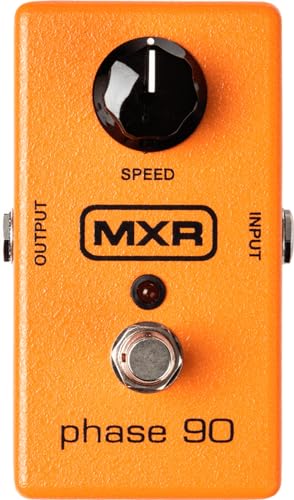
- 9V Batteries Required, best with Polaroid 9V Batteries.
- Rich, warm analog tone
The Phase 90 is perhaps the closest relative to the Univibe in the MXR family. It uses a different circuit architecture but provides a similar sense of movement. The Phase 90 is even simpler—just one knob—and has a much more “scripted” or “vocal” sweep. However, it lacks the “Chorus/Vibrato” toggle and the “Depth” control found on the MXR M68 Univibe Effects Pedal. If you want the simplest possible way to add movement to your sound, the Phase 90 is a classic choice, but if you want to dial in the “intensity” of the pulse, the M68 is the superior tool for the job.
Final Verdict: Is the MXR M68 Univibe Effects Pedal the Real Deal?
After putting the MXR M68 Univibe Effects Pedal through its paces, I can confidently say that it is one of the most cost-effective ways to get “that” sound. It captures the essential DNA of the original Shin-ei Univibe—the chewy texture, the physical throb, and the haunting vibrato—all while fitting into a modern, pedalboard-friendly enclosure. While it might slightly darken your tone in certain positions, this “warmth” is often exactly what players are looking for when trying to emulate vintage recordings. Its build quality is impeccable, and its interface is so simple that you’ll spend more time playing and less time tweaking.
We recommend this pedal to any guitarist who loves classic rock, blues, or reggae and wants to add a professional-grade modulation effect without breaking the bank. It is a rugged, soulful, and inspiring tool that earns its place on any board. If you are ready to add that legendary psychedelic pulse to your own rig, we highly recommend that you check the current pricing and grab this bundle with the extra cables today.
Last update on 2026-09-15 / Affiliate links / Images from Amazon Product Advertising API