
MXR Bass Chorus Deluxe Review: The Ultimate Tone-Thickener for the Modern Bassist
For years, I struggled with a recurring problem on my pedalboard: modulation. As a bassist, you want that shimmering, ethereal movement in your sound, especially for melodic passages or 80s-inspired grooves. However, most chorus pedals on the market were designed for guitarists. When I plugged my four-string into a standard chorus, the result was almost always the same: my low-end fundamental would turn into a muddy, washed-out mess. The punch that anchors the band would vanish, replaced by a thin, swirly sound that sat awkwardly in the mix. Failing to solve this means either sacrificing your role as the rhythmic foundation or abandoning chorus altogether. Neither felt like a good option. This is why I started looking for a dedicated solution, and my search led me to the MXR Bass Chorus Deluxe. We found that this pedal doesn’t just add an effect; it solves the inherent physics problem of modulating low frequencies.
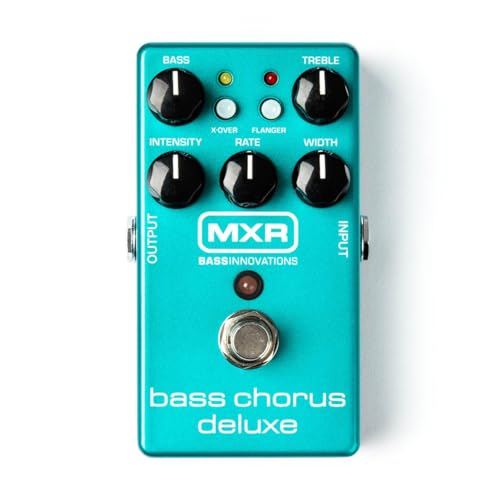
- Analog bucket-brigade technology
- Separate bass and Treble controls
What to Consider Before Buying a Bass Chorus Pedal
A bass chorus pedal is more than just an item; it’s a key solution for bassists who need to add harmonic complexity without sacrificing their low-end punch. In the world of effects, chorus works by duplicating your signal, slightly detuning the copy, and modulating its pitch before mixing it back with the original. For a bass player, this can be dangerous because the low-frequency phase shifts can cause “cancellation,” making your bass sound weak. A high-quality bass-specific chorus provides tools to mitigate this, such as crossovers or dedicated EQ controls.
The ideal customer for this type of product is a bassist who plays in a variety of genres—from jazz fusion and prog-rock to new wave and modern gospel—and needs a professional-grade, road-worthy tool. It is perfect for those who want “liquid” textures or a “thickened” sound that still cuts through a loud drummer. However, it might not be suitable for those who prefer a purely minimalist, dry signal or players looking for extreme, lo-fi experimental glitch sounds, as this pedal leans toward high-fidelity, analog warmth. For those seeking extreme weirdness, a dedicated synth pedal or a digital multi-effect might be better alternatives.
Before investing, consider these crucial points in detail:
- Tonal Integrity & Low-End Retention: Does the pedal have a “dry” blend or a crossover? Without this, you risk losing the “oomph” of your E-string. Look for pedals that allow you to keep the chorus away from your lowest frequencies to maintain a tight, percussive response.
- Circuitry (Analog vs. Digital): Analog bucket-brigade technology (BBD) is generally preferred for chorus because it offers a warmer, more “musical” degradation of the signal. Digital pedals can be cleaner but sometimes feel sterile. We found the BBD tech in the MXR Bass Chorus Deluxe provides that classic, organic sweep that digital units struggle to replicate.
- Build Quality & Footprint: Bassists often have smaller boards because our other gear (like DIs and Compressors) is so large. A compact, metal-housed pedal is essential for surviving years of gigging. Check for high-quality switches and recessed knobs that won’t get kicked out of place during a performance.
- EQ Shaping: Chorus naturally emphasizes certain frequencies. Having dedicated Bass and Treble knobs on the pedal itself is a massive advantage, as it allows you to compensate for any brightness or boominess the effect introduces without having to reach for your amplifier’s EQ.
While the MXR Bass Chorus Deluxe is an excellent choice, it’s always wise to see how it stacks up against the competition. For a broader look at all the top models, we highly recommend checking out our complete, in-depth guide:

- [Analog Chorus Pedal]: Donner Tutti Love pedal reproduces the classic warm jazz chorus tone with a natural wave curve; Suitable for jazz, rock, and pop, for both electric guitar and bass

- Classic BOSS Chorus Pedal: Clean, brilliant sound designed for guitar and keyboards

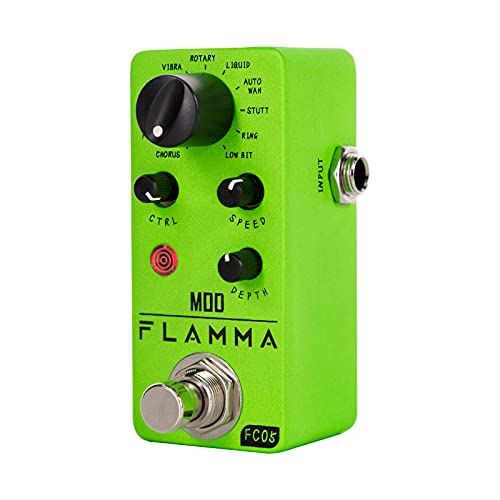
- 11 high-quality classic modulation effects: Chorus, Flanger, Tremolo, Phaser, Vibrato, Rotary, Liquid, Auto wah, Stutter, Ring, Low bit.
First Impressions and Feature Set of the MXR Bass Chorus Deluxe
When I first pulled the MXR Bass Chorus Deluxe out of the box, the first thing I noticed was the weight. Despite its compact “MXR-standard” size, it feels incredibly solid—like a small tank. The brushed metallic finish is sleek, and the top-mounted buttons for the Flanger and X-Over modes feel tactile and sturdy. Unlike some pedals that feel like plastic toys, this is clearly a professional tool. One of the standout physical features is the LED layout; the main status light pulses in time with the rate of the chorus, which is incredibly helpful for visual confirmation on a dark stage.
Setting it up is a breeze. It runs on a standard 9V power supply or battery, and the jacks are positioned perfectly for tight pedalboard layouts. We also noted that it includes an internal switch for TRS stereo output, allowing for a massive, wide soundstage if you’re running a dual-amp setup or recording in a studio environment. While it looks simple, the MXR Bass Chorus Deluxe hides a surprising amount of depth under its five-knob interface. Before even plugging it in, you can see its full feature set and user reviews to appreciate the engineering that went into this “Deluxe” moniker.
Pros & Key Benefits
- Bucket-Brigade Warmth: Pure analog signal path provides a rich, liquid texture that feels organic.
- X-Over Mode: Preserves the low-end fundamental by only modulating frequencies above 100Hz.
- Two-in-One: Dedicated Flanger mode adds massive value and tonal variety.
- Internal EQ: Separate Bass and Treble controls allow for precision tone sculpting.
Drawbacks & Limitations
- Subtle at Extremes: Some users might find the effect too “polite” compared to more aggressive, noisy pedals.
- Shared Controls: You cannot use the Flanger and Chorus with independent settings simultaneously.
Deep Dive: Performance Analysis of the MXR Bass Chorus Deluxe
The Magic of Analog Bucket-Brigade Technology
The heart of the MXR Bass Chorus Deluxe is its analog bucket-brigade (BBD) circuitry. In an age where digital modeling is everywhere, there is still something undeniably superior about the way BBD chips handle modulation. I found that when you engage this pedal, it doesn’t just “sit on top” of your tone; it becomes part of it. The “Width” and “Intensity” controls interact in a way that feels very musical. At low settings, it adds a subtle “thickness” to the bass—perfect for fretless playing where you want to emphasize the “mwah” and singing quality of the instrument.
When you crank the Rate and Width, you get into that classic “liquid” territory. We tested this with both passive P-basses and active 5-strings, and the BBD circuit handled the headroom beautifully. There is a specific “shimmer” in the high-mids that only analog circuits seem to achieve. Unlike digital chorus pedals that can sometimes introduce a “metallic” or “aliasing” noise, the MXR Bass Chorus Deluxe remains dead quiet. One user noted it is “much less noisy” than competitors, and I can confirm that the signal-to-noise ratio is impressive for an analog unit. If you are looking for that vintage warmth, you should definitely check the latest price and availability of this analog gem.
The X-Over (Crossover) Mode: A Game Changer for Low-End Clarity
This is, in my opinion, the single most important feature of the MXR Bass Chorus Deluxe. When you engage the X-Over button, the pedal applies a filter that stops the modulation from affecting frequencies below 100Hz. This sounds like a technical detail, but the practical effect is profound. Usually, when you use a chorus on a low E or B string, the pitch modulation makes the fundamental note sound “wobbly,” which can confuse the rhythm of the band and make the low end feel loose.
With X-Over engaged, my low notes remained rock-solid and perfectly in tune, while the upper harmonics and overtones danced with that beautiful chorus shimmer. This is a feature that really sets it apart from standard guitar pedals. I found it particularly useful when playing chords in the upper register. You can get that beautiful, Peter Hook-style lead bass tone while still maintaining a punchy, clear foundation. We found that turning the X-Over off makes the effect more “prominent” and “old-school,” which is great for certain 80s tracks, but for modern mix clarity, the X-Over is a revelation. It solves the “mud” problem that has plagued bassists for decades.
Dual-Functionality: The Hidden Flanger
While it is marketed as a chorus, the MXR Bass Chorus Deluxe features a top-mounted Flanger button that completely changes the character of the modulation. Flanging is a more aggressive form of modulation that creates a “whooshing” or “jet plane” sound. Because this pedal uses BBD technology, the flanger sounds incredibly “thick” and “metallic” in the best way possible. It reminds me of the classic tones used by Tool or The Cure.
The Bass and Treble EQ knobs are especially important when using the Flanger mode. Flangers can often “suck” some of the mids or add a harsh high-end peak. By tweaking the onboard EQ, I was able to dial back the Treble to keep the flanger smooth, while boosting the Bass to ensure the “whoosh” didn’t thin out my sound. Although one user mentioned the flanger felt “weak,” we found that it simply requires more aggressive setting of the “Width” and “Intensity” knobs compared to the Chorus mode. It’s essentially two pedals in one, which saves valuable real estate on your board. To see how these two modes look in action, you can explore more about its dual-mode capabilities here.
EQ Sculpting and Stereo Versatility
Most chorus pedals give you “Rate” and “Depth” and call it a day. The MXR Bass Chorus Deluxe goes much further by providing dedicated Bass and Treble knobs. These aren’t just “tone” knobs; they are powerful EQ tools. When you activate a chorus, the perceived volume can sometimes dip or the tone can become overly bright. I found that I could use the Bass knob to actually “beef up” my signal when the effect was on, making the chorus sound like a “glaze on a donut,” as one reviewer creatively put it. This level of tailoring is vital for professional gigs where the room acoustics might change your needs.
Additionally, the TRS (Tip-Ring-Sleeve) stereo capability is a hidden gem. By flicking an internal switch and using a Y-cable, you can send your signal to two different amps. In the studio, this creates a massive, three-dimensional sound that a mono pedal simply cannot touch. Even if you only use it in mono, the hardwire bypass ensures that your signal remains pure when the pedal is off. I found the bypass to be exceptionally clean, with zero tone-suck. For those who record at home, this stereo feature makes the MXR Bass Chorus Deluxe a must-have tool. It’s worth checking out the internal configuration options to see how it can fit into your specific rig.
What Other Users Are Saying
The general sentiment among the bass community is overwhelmingly positive, with many calling the MXR Bass Chorus Deluxe a “standard” for bass modulation. We found that users consistently praise its build quality and the “professional” nature of its sound. One user mentioned, “The EQ is suberb… it can even make the sound thicker and more voluminous,” which aligns perfectly with our experience of the Bass/Treble controls. Another user highlighted its reliability, noting that MXR makes “great quality stuff” and this pedal is “no exception.”
On the more critical side, some users found the effect to be “subtle.” One reviewer noted that even at extreme settings, it doesn’t get as “out there” as some vintage clones. However, this is often viewed as a positive by professional gigging bassists who want an effect that enhances their tone rather than overwhelming it. The consensus seems to be that if you want a “clean, not overbearing” chorus that “stacks well with other effects,” this is the gold standard. We also saw mentions of it working particularly well with 5-string basses, which is a common pain point for other modulation pedals. You can read more user testimonials and see their setups to see how it performs across different musical styles.
Comparing the MXR Bass Chorus Deluxe to Top Alternatives
While the MXR Bass Chorus Deluxe is a top-tier choice, it’s important to see how it compares to other staples in the modulation world. Depending on your specific needs—whether it’s budget, simplicity, or a different type of “swirl”—one of these alternatives might catch your eye.
1. BOSS CH-1 Compact Chorus Effects Pedal
- Classic BOSS Chorus Pedal: Clean, brilliant sound designed for guitar and keyboards
- Trusted Performance Since 1989: One of the most enduring and reliable chorus pedals in the industry
The BOSS CH-1 is a legendary pedal that has been on more boards than perhaps any other chorus. While it is technically a guitar pedal, many bassists use it for its “crystal-clear” and “bright” tone. Compared to the MXR Bass Chorus Deluxe, the CH-1 is much more “clinical” and less “warm.” It lacks the dedicated Bass/Treble EQ and, most importantly, the X-Over feature. If you are on a tighter budget and want a simpler, “industry-standard” sound that works for both guitar and bass, the BOSS is a solid pick. However, for bassists who want to preserve their low-end fundamental, the MXR is the superior choice.
2. MXR Phase 90 Guitar Effects Pedal
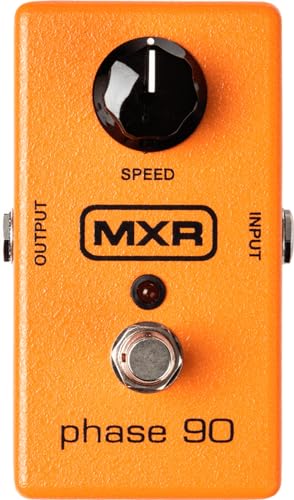
- 9V Batteries Required, best with Polaroid 9V Batteries.
- Rich, warm analog tone
If you find that chorus is a bit too “lush” for your taste, you might actually be looking for a phaser. The MXR Phase 90 is the most iconic phaser ever made. It offers a single knob (Speed) and a completely different type of “swish.” Unlike the MXR Bass Chorus Deluxe, which creates a watery, multi-voice sound, the Phase 90 creates a rhythmic, sweeping sound. We found that the Phase 90 is better for funk or “spacey” rock solos, but it lacks the depth and “thickening” ability of the chorus. It’s a great alternative for those who want simplicity and a more aggressive, vintage vibe.
3. MXR Analog Chorus

- All-analog bucket-brigade circuitry
- Create classically lush, liquid textures
Think of the MXR Analog Chorus as the “little brother” to the Deluxe. It also uses bucket-brigade technology and offers High and Low cut filters. However, it is designed primarily for guitar. While it sounds beautiful, it lacks the X-Over button which is the “secret sauce” for bass players. If you are a multi-instrumentalist who needs one chorus pedal to share between guitar and bass, this is a fantastic, cost-effective compromise. But if you are a dedicated bassist, the extra investment in the MXR Bass Chorus Deluxe is justified by the specialized features that keep your low-end tight.
The Final Verdict: Is the MXR Bass Chorus Deluxe Worth It?
After putting the MXR Bass Chorus Deluxe through its paces in both a studio setting and a live rehearsal environment, our conclusion is clear: this is one of the most well-engineered bass pedals currently available. Its ability to deliver lush, analog modulation without the dreaded “low-end loss” makes it an essential tool for any serious bassist. The X-Over mode is a masterclass in functional design, and the inclusion of a high-quality Flanger makes it a versatile 2-in-one powerhouse.
While it may be more “polite” than some wild, experimental pedals, its “clean sounding, not overbearing” nature is exactly what makes it so usable in a professional mix. Whether you’re looking to add a subtle “glaze” to your tone or you want to dive into deep, shimmering stereo soundscapes, this pedal delivers. We highly recommend it for anyone who has ever been disappointed by a standard chorus pedal. Don’t settle for a muddy tone—you can add this to your pedalboard today and finally experience the shimmering clarity your bass deserves.
Last update on 2026-09-14 / Affiliate links / Images from Amazon Product Advertising API