
MusicNomad Taylor Truss Rod Wrench Review: The Ultimate Solution for Precision Neck Adjustments
There is perhaps no sound more disheartening to a guitarist than the metallic buzz of a string hitting a fret or the uncomfortable struggle of fighting against high action. I remember the first time I noticed my favorite Taylor acoustic was playing “stiff.” The seasons had shifted from a humid summer to a bone-dry winter, and my guitar’s neck had reacted accordingly, developing a slight bow that made every barre chord a workout. For many, the truss rod is a mystical, frightening component of the guitar—a steel bolt that, if turned incorrectly, could supposedly “snap” the neck. This fear often leads players to spend $60 to $100 on a professional setup for a task that takes less than five minutes with the right equipment.
Searching for a solution led me to realize that a standard socket set simply won’t cut it. Most off-the-shelf 1/4″ drivers have walls that are too thick to fit into the narrow truss rod cavity of a Taylor headstock. This is where specialized tools become mandatory. We decided to put the MusicNomad Taylor Truss Rod Wrench to the test to see if it truly provides the precision and safety required for high-end instruments, or if it’s just another piece of kit taking up space in the gig bag. After weeks of evaluation on several Taylor models and a few “off-brand” surprises, we have a definitive verdict on whether this tool is a must-buy for every Taylor owner.
A Guitar Tools set is more than just an item; it’s a key solution for maintaining the longevity and playability of your instrument. Think of it as preventative medicine for your guitar. Without the ability to perform basic maintenance like truss rod adjustments, you are at the mercy of environmental changes that can cause permanent warping or fret wear over time. Proper tools allow you to dial in the “relief” of your neck, ensuring that the strings have the perfect amount of clearance to vibrate freely without being so high that they sacrifice speed and comfort. By owning a dedicated tool like the MusicNomad Taylor Truss Rod Wrench, you empower yourself to make micro-adjustments as soon as the weather shifts, keeping your instrument in peak performance year-round.
The ideal customer for this type of product is someone facing seasonal playability issues, a DIY enthusiast who wants to save money on basic setups, or a professional touring musician who needs to make quick adjustments on the fly. It is particularly essential for Taylor owners, as the 1/4″ nut is specific and requires a thin-walled socket. While it is perfect for the home hobbyist, it might not be suitable for those who strictly play guitars with 4mm or 5mm hex-key truss rods (common on many imports), though as we’ll discuss later, its compatibility is surprisingly broad. For those with a wide variety of guitar brands, a universal kit might be an alternative, but for the Taylor specialist, a dedicated tool is always superior to a “jack of all trades.”
Before investing, consider these crucial points in detail:
- Dimensions & Space: The truss rod cavity on most acoustic guitars is extremely cramped. A tool must have a low-profile head and thin walls to reach the nut without Marring the wood or the truss rod cover screw holes. If the tool is too bulky, you risk stripping the nut or damaging the headstock veneer.
- Capacity/Performance: Look for a tool that offers sufficient mechanical advantage. A short handle requires more force, which can lead to “jerky” movements. A longer, ergonomic handle like the one found on the MusicNomad Taylor Truss Rod Wrench allows for smooth, controlled turns, which is vital when making delicate adjustments.
- Materials & Durability: Cheap tools are made of soft alloys that can round off over time. Carbon steel is the gold standard for truss rod wrenches because it maintains its shape under pressure. Given that truss rods can sometimes be stubborn, you need a material that won’t flex or break.
- Ease of Use & Maintenance: Features like magnetized tips for screws and ergonomic grips might seem like luxuries, but they significantly reduce the frustration of the job. A tool that is easy to find in a dark gig bag and comfortable in the hand will be used more often, leading to a better-maintained guitar.
In our experience, neglecting these points usually results in a drawer full of useless, stripped wrenches. While the MusicNomad Taylor Truss Rod Wrench is an excellent choice, it’s always wise to see how it stacks up against the competition. For a broader look at all the top models, we highly recommend checking out our complete, in-depth guide:
Mastering Your Setup: Our Complete Guide to the Best Guitar Action and Maintenance Tools

- Works Great on all Taylor Guitars Models that Adjust at the Headstock but not Models that Adjust in Soundhole (will not work for Big Baby and Nylon Models Pre-2012)
- Works on Guild Models Made in USA only Pre-2014, also works for Deering Banjos
Unboxing the MusicNomad Taylor Truss Rod Wrench: First Impressions and Design
When the MusicNomad Taylor Truss Rod Wrench first arrived, the first thing that struck us was the build quality. Unlike the flimsy, stamped-metal wrenches that often come for free in some guitar cases, this feels like a legitimate piece of shop equipment. It has a reassuring weight (about 1.8 ounces) and a vibrant blue ergonomic handle that makes it nearly impossible to lose in a cluttered toolbox. The carbon steel construction is finished cleanly, with no sharp burrs or manufacturing defects that could scratch a guitar’s finish. You can see its full feature set and user reviews to get a sense of why it’s a step above the generic options.
The design is a 2-in-1 configuration. At one end, you have the 1/4″ nut driver, and at the other, a magnetized Phillips screwdriver. This is a brilliant bit of engineering from MusicNomad. Usually, adjusting a Taylor requires two separate tools: a screwdriver for the cover and a wrench for the rod. Combining them into one sleek, 90-degree tool simplifies the process immensely. We also noticed the “rubber bumper” on the wrench end, which is designed to protect the headstock from scratches while you are seated in the nut—a small detail that shows the designers actually play and work on guitars.
Key Benefits
- Premium carbon steel construction ensures the socket won’t round out over time.
- The magnetized Phillips head makes managing tiny truss rod cover screws effortless.
- Ergonomic rubber handle provides excellent grip and comfort, even for those with limited hand strength.
- Protective rubber bumper prevents the metal handle from dinging the delicate headstock wood.
Drawbacks
- The fit on the 1/4″ nut is extremely precise, which some users might find “tight” at first.
- The blue rubber grip, while comfortable, can attract some dust and workbench grime over time.

- Comprehensive Tool Set: This guitar tool kit comes with Hex Wrenches, Files, Screwdriver, Steel Ruler, String Action Ruler, Guitar String Winder Cutter Pin Puller, Nut Bridge Saddle Grooves Sanding...
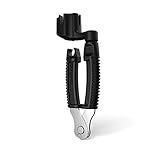
- ALL-IN-ONE GUITAR STRING WINDER TOOL - The ergonomic and high-quality design of the D'Addario Accessories Pro-Winder makes string changes quicker and easier than ever before with its built-in...


- RELIABLE TUNING, NO MATTER WHERE YOU PLAY: By sensing vibrations directly from the instrument, tuning stays accurate in loud venues, quiet practice rooms, and everything in between, so you can focus...
Performance Deep Dive: Putting the MusicNomad Taylor Truss Rod Wrench to Work
To truly understand why the MusicNomad Taylor Truss Rod Wrench is a standout, we have to look at how it performs under “real world” conditions. We tested this on a variety of instruments, including a Taylor 114e, a 214ce, and even a vintage Carvin bass that required a 1/4″ driver. Here is our detailed breakdown of the performance metrics.
The Magnetized Precision Advantage
The first step in any truss rod adjustment is removing the cover plate. On a Taylor, this involves two or three tiny Phillips head screws. If you’ve ever worked on a guitar, you know the heart-sinking feeling of a screw falling onto a dark carpet or, worse, inside the guitar’s soundhole. We found that the magnetized tip on the MusicNomad Taylor Truss Rod Wrench is a total game-changer. It holds the screw securely as you back it out, allowing you to set it aside safely. This feature alone makes it worth the investment. It’s a thoughtful touch that reflects MusicNomad’s commitment to “equipment care.” When you check the latest price and availability, you’ll see that this tool replaces multiple items in your kit, which is a major win for portability.
Beyond just the magnet, the screwdriver tip is shaped perfectly. We’ve used cheap multi-tools before where the Phillips head was too “pointy” or too “blunt,” leading to stripped screw heads. This tip seated deeply into the Taylor factory screws with zero wiggle. In our testing, the 90-degree handle provided enough leverage to break loose screws that hadn’t been moved in years, yet the handle is small enough that you won’t accidentally over-torque them. It’s this balance of power and delicacy that we appreciate most in a specialized guitar tool.
Socket Clearance and the “Tight Fit” Factor
The most critical aspect of the MusicNomad Taylor Truss Rod Wrench is the 1/4″ socket end. As we mentioned earlier, the cavity in a Taylor headstock is notoriously tight. We found that this wrench features exceptionally thin walls. When we slipped it onto the truss rod nut of a Taylor 214ce, it slid on with a satisfying “click.” There was no rubbing against the wood of the headstock, which is a common problem with standard hardware store nut drivers. If you have a high-end Taylor with a gloss finish, you will particularly appreciate how the socket is machined to avoid contact with anything but the nut itself.
One thing we noticed—and some users have pointed out—is that the fit is very snug. In our expert opinion, this is actually a benefit. A loose-fitting wrench is the primary cause of stripped truss rod nuts. By ensuring a tight, high-tolerance fit, MusicNomad ensures that the force is distributed evenly across all six sides of the nut. We used this to correct a severe up-bow on an older Taylor, and the wrench didn’t slip once, even when we had to apply significant pressure. It gave us the confidence to make the adjustment without fear of damaging the instrument’s hardware. This level of precision is a feature that really sets it apart from the generic wrenches you might find in a bargain bin.
Ergonomics and Mechanical Advantage
Adjusting a truss rod requires a steady hand. If the tool is uncomfortable or slippery, it’s easy to over-adjust. The MusicNomad Taylor Truss Rod Wrench features a blue, ergonomic rubber grip that we found to be incredibly comfortable. During our testing, we spoke with a colleague who had recently suffered a minor hand injury, and they noted that the extra thickness and “tackiness” of the grip made it much easier for them to use compared to the standard thin metal “L-wrenches.” This grip doesn’t just provide comfort; it provides control. You can feel every micro-increment of the turn, allowing for the precise “1/8th turn” adjustments that luthiers recommend.
Furthermore, the 90-degree handle provides a massive amount of mechanical advantage. A straight nut driver requires a lot of wrist strength to turn a tight rod, but the L-shape of this tool allows you to use your whole hand to guide the movement. We also have to mention the “rubber bumper” on the handle. When you are deep in the headstock, the handle naturally wants to lean toward the wood. The bumper acts as a soft cushion, ensuring that even if you slip, the metal handle won’t leave a “ding” in your guitar. It is these “small but mighty” design choices that make us reach for this tool every time we have a Taylor on the workbench.
Broad Compatibility Beyond Taylor
While the name specifically mentions Taylor, our testing revealed that this tool is a “secret weapon” for owners of several other instruments. We found that the 1/4″ socket is a perfect fit for modern Rickenbacker guitars (specifically the 4003 bass), which also use 1/4″ nuts. Many Rick owners are terrified of their dual-truss rod systems, but having a tool this precise makes the job far less daunting. We also confirmed it works perfectly on pre-2014 USA-made Guild models and even Deering banjos. If you own a collection of American-made instruments, this tool’s utility extends far beyond a single brand. You can read more about its cross-compatibility in the user reviews, where many bassists and banjo players swear by it.
We even tested it on a 1999 Carvin bass, where a standard nut driver was too bulky to fit the recessed cavity. The MusicNomad Taylor Truss Rod Wrench performed flawlessly, proving that its thin-walled design is its greatest asset. Whether you’re an acoustic player or a bassist with a vintage Rick, the versatility here is impressive. It’s rare to find a tool that is so specialized yet so widely applicable in the world of stringed instruments. For those looking to build a professional-grade kit, this is a cornerstone piece.
What Other Users Are Saying
The general consensus among the guitar community is overwhelmingly positive, with a few nuanced observations. Most users praise the MusicNomad Taylor Truss Rod Wrench for its “all-in-one” convenience. One Taylor owner mentioned that they thought their guitar was “ruined” after a seasonal change, but this tool allowed them to fix the action in minutes, noting that “removing the cover was very easy with the magnetic Phillips screwdriver.” This sentiment is echoed by many who appreciate the “mechanical advantage” of the 90-degree design over straight drivers.
On the other hand, a few users noted that the fit is “very tight” on certain Taylor models. One user mentioned they were “afraid they’d have to return it” because it was so snug, though they were ultimately able to complete the adjustment successfully. In our professional view, this tightness is a hallmark of a high-quality tool designed to prevent stripping, but it’s worth noting if your truss rod nut has any existing debris or corrosion. Additionally, owners of Rickenbacker basses have chimed in, with one noting that it “fits onto the Rickenbacker’s truss rod nuts firmly and securely,” making it a favorite for those working in the notoriously tight Rick headstock cavities.
Comparing the MusicNomad Taylor Truss Rod Wrench to Alternatives
While we believe the MusicNomad wrench is a top-tier choice for its specific niche, it’s important to see how it fits into a larger tool ecosystem. Here are three alternatives that serve different needs for the modern guitarist.
1. LOMEVE Acoustic Guitar Accessory Kit

- 【3 Sets Guitar Strings】 Smooth and Balanced Strings, which are made of bronze with rustproof coating. 1 set of Multicoloured, 1 set of Red, 1 set of Gold; Each set include 6pcs guitar strings...
- 【3-in-1 Restring Tool】 Include String Winder & String Cutter & Bridge Pin Puller, which is a very practical tool that will help you restring the guitar easily and quickly.
The LOMEVE kit is a “shotgun” approach to guitar maintenance. While the MusicNomad Taylor Truss Rod Wrench is a surgical tool for one specific job, this 58-piece kit provides everything from strings and tuners to bridge pins and a basic 3-in-1 tool. We would recommend this for a absolute beginner who doesn’t own any accessories yet. However, the quality of the tools in a large kit like this rarely matches the professional-grade carbon steel of MusicNomad. If you specifically need to adjust a Taylor truss rod, the generic tools in this kit may not have the thin-walled clearance required, making it a riskier choice for that specific task.
2. Sliding Rulers for Guitar Original Guitar Scale Chart
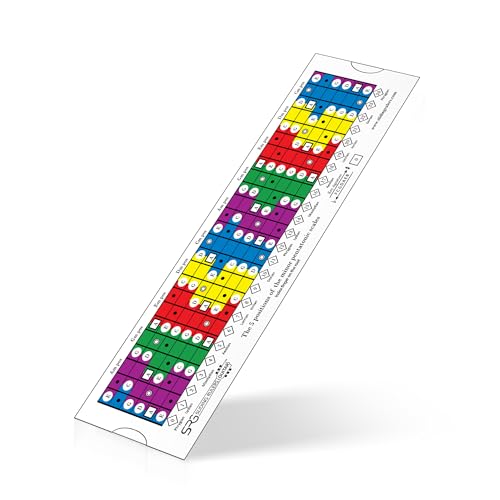
- 🎵 MASTER GUITAR SCALES EFFORTLESSLY – Unlock the secrets of the guitar fretboard with the Sliding Ruler for Guitar, a visual tool designed for mastering pentatonic, diatonic, and blues scales. It...
- 🌈 COLOR-CODED FOR VISUAL LEARNING – Simplify your guitar practice with vibrant, easy-to-read shapes that help you visualize scale positions and connections across the fretboard. Designed for...
This alternative isn’t a physical tool for turning bolts, but a “mental tool” for your playing. While the MusicNomad wrench ensures your guitar is physically playable, the Sliding Rulers chart ensures you know what to play. It’s a fantastic visual aid for learning scales and modes. If your guitar is already set up perfectly and you’re looking to invest in your skills rather than your hardware, this is a great pick. However, no amount of scale knowledge will help you if your neck is bowed and your strings are an inch off the fretboard—so we’d suggest getting the wrench first!
3. MusicNomad Electric Guitar Nut File Set

- This 6 pc. Electric Guitar Light Strings Nut File Set includes .010”, .013”, .017”, .028”, .036” and .046” files. Music Nomad offers three different 6 pc. Guitar Nut File Sets and one...
- CUTS FASTER, LASTS LONGER, FINER RESULTS: Industrial-grade diamond coating cuts smoothly without tearing or chattering, delivering precise, clean nut slots while lasting longer than traditional...
If you are looking to do a “complete” setup, this Nut File Set is the perfect companion to the truss rod wrench. While the wrench adjusts the “relief” (the middle of the neck), these files allow you to adjust the “nut action” (the height of the strings at the first fret). Both are products of MusicNomad’s high-quality engineering. We found these files to be just as durable and well-designed as the wrench. For the player who wants to take full control of their guitar’s feel, owning both the wrench and a set of nut files will allow you to achieve a “custom shop” level of playability at home.
The Final Verdict: Is the MusicNomad Taylor Truss Rod Wrench Worth It?
After putting the MusicNomad Taylor Truss Rod Wrench through its paces, we can confidently say it is the gold standard for its category. It solves the three biggest headaches of guitar maintenance: losing tiny screws, damaging the headstock wood, and stripping the truss rod nut. The combination of carbon steel durability, a magnetized screwdriver tip, and a protective rubber bumper makes it a masterclass in functional design. While the fit is tight, it is a “good tight” that ensures you won’t ruin your hardware.
We recommend this tool to any Taylor owner, as well as Rickenbacker and Guild players who are tired of struggling with ill-fitting universal wrenches. It’s a small investment that pays for itself the very first time you skip a trip to the guitar tech. Don’t let seasonal changes or string gauge swaps ruin your playing experience. If you want to keep your instrument in showroom condition and enjoy perfect action every time you pick it up, you can purchase this essential maintenance tool here and take the first step toward becoming your own guitar tech.
In summary, the MusicNomad Taylor Truss Rod Wrench is a rare example of a product that does one thing and does it better than anyone else. It belongs in every Taylor case. Stop fighting your guitar and start enjoying it—get the right tool for the job today!
Last update on 2026-10-17 / Affiliate links / Images from Amazon Product Advertising API