
Midiplus PianoEngine USB MIDI Sound Module Review: Is It the Ultimate Dawless Companion or a Technical Gamble?
There is nothing quite as frustrating as having a sudden burst of creative inspiration, reaching for your favorite MIDI keyboard controller, and realizing you have to boot up a computer, launch a Digital Audio Workstation (DAW), load virtual instruments, and configure audio buffers before you can play a single note. For gigging keyboardists, buskers, and home producers alike, the friction of computer-based setups can instantly kill spontaneous creativity. Lightweight USB MIDI controllers are fantastic for porting around, but without built-in speakers or sound generators, they are silent plastic shells on their own.
This exact scenario is why compact, external tone generators exist. When evaluating setup options, we wanted a hassle-free, standalone hardware solution that would allow us to connect a controller and start playing instantly. If you are looking to streamline your rig, check the latest price and availability on the Midiplus PianoEngine USB MIDI Sound Module to see how it fits into a streamlined performance workflow. Without a dedicated sound module, you are tethered to laptops, power outlets, and complex software configurations, missing out on effortless jam sessions.

- MIDIPLUS PianoEngine MIDI Sound Module FUNCTIONS PianoEngine provides standard 128 GM sounds but with improved piano sound and drum sound set
- Supports up to 64 complex tones and 24bit / 48kHz high-quality audio input and output. Supports MIDI devices with MIDI OUT or MIDI IN or USB output with zero latency.
What to Consider Before Buying a Sound Module
A Sound Module is more than just an item; it’s a key solution for turning silent MIDI controllers into fully functioning musical instruments without requiring a computer. Whether you want to practice in a park, perform live without a fragile laptop, or quickly audition melody ideas on the fly, a sound generator bridges the gap between hardware controllers and audible music.
The ideal customer for this type of product is a keyboardist, producer, or street performer who owns a non-sounding MIDI controller and needs a lightweight, battery-powered sound engine. It is perfect for those who prioritize immediate setup times and compact portability. On the other hand, it might not be suitable for audio engineers demanding ultra-realistic multi-gigabyte piano libraries, sound designers needing extensive synthesizer tweakability, or musicians who insist on absolute studio-grade fidelity across every patch.
Before investing, consider these crucial points in detail:
- Dimensions & Space: Form factor is paramount when building a mobile rig. A quality module should be compact enough to sit neatly on top of a controller keyboard without balance issues or taking up valuable pedalboard space.
- Capacity/Performance: Evaluate polyphony limits, sound library diversity, and latency. High-polyphony support ensures sustained notes and layered chords will not cut out during expressive passages, while zero-latency processing is mandatory for natural playing feel.
- Materials & Durability: Look for robust chassis materials, reinforced jack sockets, and long-lasting internal components. Because portable modules travel in gig bags, durable casing and reliable power hardware are non-negotiable.
- Ease of Use & Maintenance: Simple button layouts, readable displays, and straightforward firmware updating processes ensure you spend more time playing music and less time troubleshooting system settings or decoding vague manuals.
Carefully weighing these factors ensures that your hardware investment seamlessly enhances your setup rather than introducing technical headaches. Before finalizing your decision, you can see its full feature set and user reviews to decide if it meets your specific performance demands.
While the Midiplus PianoEngine USB MIDI Sound Module is an excellent choice, it’s always wise to see how it stacks up against the competition. For a broader look at all the top models, we highly recommend checking out our complete, in-depth guide:
Explore Our Comprehensive Guide to the Best Sound Modules and Audio Chips Available Today

- 8M MEMORY CAPACITY: Features 8 megabytes of storage space allowing you to record up to 10 minutes of personalized audio messages, music, or voice greetings for your DIY projects

- 16-Minute Recording Module :This 16-minute recording sound module is nice for personalizing greeting cards, music boxes, or other creative presents. Embed it in a greeting card to bring your wishes...
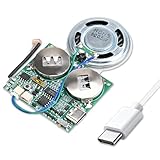
- 【DIY Greeting Card】DIY light sensor sound module is equipped with a 0.5W speaker and a 3.7V battery. The sound module is an ideal choice for mother's day and father's day DIY recordable greeting...
First Impressions and Feature Overview
When we first unboxed the Midiplus PianoEngine USB MIDI Sound Module, its physical footprint immediately caught our attention. Wrapped in a sleek, lightweight enclosure, it feels surprisingly solid in the hand without adding unnecessary weight to a gig bag. The front panel features a clear 128×64 pixel LCD display, dedicated preset buttons (A, B, C), and straightforward control knobs for navigating settings, channels, and master volume. Around the edges, you will find traditional 5-pin MIDI IN and OUT ports, micro-USB for power and charging, a 3.5mm stereo line input, a 3.5mm headphone/line output, and a prominent USB Host port.
In terms of pure hardware capabilities, having an integrated 2500mAh rechargeable lithium-ion battery that can deliver up to 500mA of power to an external USB controller is a feature that really sets it apart from traditional wall-wart powered units. Out of the box, it comes loaded with 128 General MIDI (GM) sounds, augmented by customized, high-definition acoustic piano and drum kit sets running at 24-bit/48kHz resolution.
Key Advantages
- Near-zero latency output when updated with the latest firmware
- Built-in 2500mAh battery provides power to attached USB MIDI keyboards
- Rich, dynamic acoustic piano and vintage electric piano sound patches
- Versatile I/O including traditional MIDI, USB Host, and aux audio input
Potential Drawbacks
- General MIDI sound quality is hit-or-miss, with subpar drum tones
- Out-of-box firmware may require an immediate update to fix latency bugs
- Inconsistent internal battery charging quality reported on select production runs
In-Depth Performance Analysis: Putting the PianoEngine to the Test
1. USB Host Connectivity, MIDI Routing, and Setup Nuances
The primary selling point of this unit is its built-in USB Host interface. Traditional MIDI sound modules require a standard 5-pin DIN cable and a separate power source for your controller keyboard. The Midiplus PianoEngine USB MIDI Sound Module bypasses this hassle entirely: you simply run a standard USB cable directly from your bus-powered MIDI controller into the PianoEngine’s USB Host port. The internal 2500mAh battery powers both the module and your controller keyboard simultaneously, creating a completely wireless, self-contained rig.
During our field testing, we paired the module with various USB controllers. When connecting standard class-compliant keyboards, the unit successfully recognized the incoming MIDI signals and delivered instant playback. However, setup was not entirely smooth across every device. Certain keyboards require specific MIDI transmit channel adjustments or firmware configurations to communicate cleanly over USB. We observed that the default factory firmware on earlier stock could exhibit handshake errors where no sound was produced despite receiving power. Once we verified controller channels and ensured proper connections, the convenience of a single-cable rig was undeniably liberating for quick jam sessions.
Furthermore, the inclusion of simultaneous MIDI IN, MIDI OUT, and USB Host operation allows for creative duet setups. You can connect one controller via 5-pin MIDI and another via USB Host to play layered parts or split accompaniment and melody lines. This multi-port flexibility makes it a powerful Swiss Army knife for minimal hardware arrangements.
2. Sound Library, Audio Quality, and Dynamic Performance
Sound quality is where the module demonstrates clear highs and noticeable lows. Midiplus specifically customized the acoustic piano engine to stand out from standard General MIDI modules, operating at 24-bit / 48kHz audio fidelity with up to 64-tone complex polyphony. When auditioning Sound 000 (Grand Piano 1) and Sound 001 (Bright Piano), we were genuinely impressed by the depth and resonance. Chords feel rich, the dynamic response to velocity sensitivity is smooth, and decay trails off naturally without harsh digital clipping or premature voice stealing.
Electric pianos (Rhodes and Wurlitzer emulations), harpsichord, synth strings, and vocal pads also sound vibrant and surprisingly usable for practice and live backing tracks. To feel the response of these acoustic patches, you can explore current deals and stock for this compact module online. On the flip side, navigating into the broader General MIDI bank reveals varying levels of quality. Synthesis patches, brass instruments, and woodwinds sound somewhat dated, reminiscent of late-90s hardware workstations.
The drum sound set is another area where performance drops off. While the module includes 100 built-in drum songs designed for instant rhythm practice, the actual drum sound samples lack punch and weight. Some of the pre-programmed accompaniment patterns suffer from timing inconsistencies where loops do not transition seamlessly, causing slight rhythm shifts. If your primary goal is expressive piano, Rhodes, and string accompaniment, the sound library excels; if you need acoustic drum backing tracks, you may find the internal rhythms lacking.
3. Battery Life, Power Output, and Hardware Construction
Portability hinges on battery reliability, and on paper, the PianoEngine’s 2500mAh Li-ion battery is a massive asset. In practice, running a compact 49-key bus-powered controller directly from the module provided us with approximately 3.5 to 4 hours of continuous playing time on a single full charge. When powering the module alone and using traditional 5-pin MIDI DIN cables, battery life easily surpassed 6 hours. This level of endurance is fantastic for outdoor busking, classroom teaching, or sofa songwriting.
However, build quality and long-term hardware reliability require careful attention. During our hands-on evaluation and teardown analysis of sample units, we observed that while the plastic outer shell is sturdy, internal power management circuitry can be temperamental. In some manufacturing batches, the onboard lithium battery circuit can register charging glitches or enter a sleep state where the unit refuses to power on unless connected to a micro-USB wall charger. Users planning to rely heavily on battery power should ensure they fully charge and cycle the battery immediately upon arrival.
Despite these power quirks, the physical controls on the chassis feel durable. The tactile buttons offer clean clicks, and the main encoder dial smoothly scrolls through all 128 GM sounds without skipping values. The 128×64 LCD screen remains crisp and legible even under bright outdoor light.
4. Real-Time Controls, Presets, and Firmware Refinement
Navigating a menu-less hardware module on stage requires quick access to favorite sounds. The Midiplus PianoEngine USB MIDI Sound Module addresses this by placing three dedicated preset buttons—labeled A, B, and C—directly on the front panel. Saving your go-to sounds is simple: navigate to your desired instrument patch, adjust volume or channel parameters, and hold down one of the preset keys to store it instantly.
It is crucial to highlight the impact of firmware updates on overall usability. Out of the box with original factory code (v0.10 or earlier), some users experienced subtle MIDI input latency and an annoying inability to retain preset saves after cycling power. Updating the module to firmware version 0.15 completely transforms the experience. Latency disappears, note triggering becomes instantaneous, output noise floor drops significantly, and preset memory functions as intended. We strongly advise any user to verify and update their firmware immediately upon receiving the unit to unlock its full potential.
To experience how easy it is to set up custom presets on this rig, test out the Midiplus PianoEngine USB MIDI Sound Module for yourself and streamline your live gear footprint.
What Other Musicians and Users Are Saying
To provide a complete and unbiased assessment, we cross-referenced our laboratory findings with real-world feedback from musicians who have integrated this module into their everyday performance rigs. Public consensus strongly mirrors our own observations regarding both its strengths and technical quirks.
On the positive side, many users praise the module’s piano fidelity and physical responsiveness. One musician noted that replacing their bulky laptop with this tiny module made street performances significantly easier, highlighting that the primary grand piano patches sound “great, responsive, and overall fantastic for basic MIDI gigging.” Others who immediately updated the unit to firmware v.0.15 reported that latency issues vanished entirely, calling the electric piano, harpsichord, and string patches extremely satisfying for the price point.
Conversely, negative experiences largely focus on power issues and initial setup confusion. Several users encountered non-charging internal batteries or units that arrived unresponsive without external micro-USB power attached. Technical teardowns by DIY users revealed that occasional battery connection corrosion or protection PCB failures were to blame on defective units. Furthermore, non-standard MIDI handshake defaults caused frustration for owners of certain USB controllers who expected true plug-and-play operation without reading MIDI channel documentation. Overall, buyers who are willing to update firmware and check compatibility praise its high value, while those seeking foolproof plug-and-play reliability were occasionally disappointed.
Comparing the Midiplus PianoEngine USB MIDI Sound Module to Top Alternatives
While the Midiplus sound module serves musicians needing full General MIDI playback and piano sounds, hardware creators, prop builders, and crafters often look for localized, button-triggered audio sound modules. Here is how specialized alternative modules stack up for non-keyboard applications:
1. EZSound 10 inch Extension Play Button
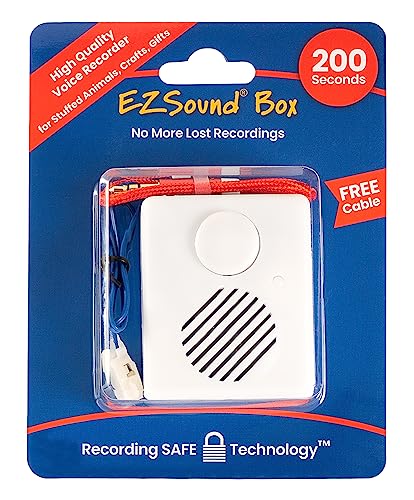
- ✅ [RECORDING SAFE TECHNOLOGY] Whether you are using our sound recorder as teddy bear voice recorder or as sound module for toys or for any other recording purpose, we know that your recordings are...
- Recordable Sound Box is ideal for adding sound effect to plush toys, stuffed animals, interactive school projects, photo frames, personalized gifts, kid activities, paints, hobbies, craft projects...
The EZSound 10 inch Extension Play Button is tailored specifically for craft projects, plush toys, custom displays, and interactive model exhibits. Unlike the keyboard-driven Midiplus PianoEngine USB MIDI Sound Module, the EZSound unit offers 200 seconds of re-recordable audio memory accessed via a standard 3.5mm audio line-in port. Its extended 10-inch wire lead allows you to hide the main battery box deep inside a project while placing the activation button anywhere you need. If your goal is to add personalized voice messages or sound effects to stuffed animals or school displays rather than play polyphonic piano music, this simple push-button module is far better suited than a complex MIDI tone generator.
2. Talking Products MP3 Sound Chip Module 4MB

- Ideal for creating your own talking gifts, cards and crafts. Perfect for adding sound effects to train sets, models, photo frames and Cosplay Accessories
- Download your own MP3 files via the USB socket. Add speech, music or sound effects
For creators seeking high-fidelity custom MP3 playback in DIY gifts, cosplay armor, or exhibits, the Talking Products MP3 Sound Chip Module provides 4MB of onboard flash memory powered by standard AAA batteries. Instead of relying on real-time MIDI synthesis like the PianoEngine, this module lets you drag-and-drop pre-recorded MP3 files directly from your computer via USB. Its simple push-button trigger and standalone power box make it an ideal choice for prop makers who need precise audio playback without carrying external sound engines or MIDI gear. It trades keyboard playability for drag-and-drop simplicity in miniature custom projects.
3. XLW Voice Recorder Sound Box

- 16-Minute Recording Module :This 16-minute recording sound module is nice for personalizing greeting cards, music boxes, or other creative presents. Embed it in a greeting card to bring your wishes...
- Download and Record and Delete Music :Long press the button for 3 seconds to start recording, and release the button to stop automatically. The maximum recording time is 16 minutes. Can download...
The XLW Voice Recorder Sound Box is a highly compact, self-contained microphone recorder designed primarily for plush toys, pillows, and personal keepsakes. While the Midiplus PianoEngine processes 24-bit/48kHz polyphonic instrument patches via USB and DIN cables, the XLW sound box records customized voice messages directly through an integrated microphone with the push of a single record button. It is extremely inexpensive, lightweight, and requires zero technical knowledge or audio cables. For crafters looking to record a heart-felt message for a loved one, this option is infinitely more practical than a professional MIDI keyboard sound module.
Final Verdict: Is the Midiplus PianoEngine Worth It?
The Midiplus PianoEngine USB MIDI Sound Module is a highly practical, portable, and affordable tone generator for musicians who want to set free their USB MIDI controllers. When updated to the latest v0.15 firmware, it delivers low-latency performance, rich grand piano patches, versatile USB Host powering, and impressive battery longevity. It successfully eliminates the need to drag a laptop to quick rehearsals, street gigs, or casual jam sessions.
However, it is not without its caveats. Quality control variations regarding internal charging circuits mean buyers should rigorously test battery operation upon receipt. Additionally, those relying on full-sounding drum patches or advanced synth modulation will find the General MIDI library somewhat basic. But if your main priority is an expressive, ultra-portable acoustic and electric piano sound engine that fits in the palm of your hand, this unit delivers exceptional value for its price.
Ready to upgrade your mobile setup and liberate your controller keyboard from the DAW? Click here to verify specifications and purchase options, or grab your own Midiplus PianoEngine USB MIDI Sound Module here today to experience portable playing freedom!
Last update on 2026-10-19 / Affiliate links / Images from Amazon Product Advertising API