
LR Baggs Para Acoustic D.I. Review: The Legendary “Brown Box” Verdict
We have all been there. You spend thousands of dollars on a beautiful, hand-crafted acoustic guitar. You love the way it resonates against your chest and the airy, woody chime of the strings in your living room. Then, you take it to a gig. You plug a standard instrument cable into the endpin jack, run it into a generic DI box provided by the venue, and suddenly, your prize instrument sounds like a swarm of angry bees trapped in a Tupperware container. This is the dreaded “piezo quack”—a thin, nasal, and harsh tone that plagues almost every acoustic musician who plugs in. We found that without a high-quality preamp to manage impedance and shape the EQ, even the most expensive guitars can sound amateurish through a PA system. This frustration is exactly why we went searching for a professional-grade solution, leading us directly to this LR Baggs Para Acoustic D.I. Review.

- Adjustable Gain for Both Passive and Active Pickups
- 5 Band EQ with Tuneable Notch and Midrange Bands
What to Consider Before Buying a High-End Acoustic Preamp and DI
A Guitar Pickups & Pickup Covers accessory is more than just an item; it’s a key solution for bridging the gap between your instrument’s natural voice and the clinical world of electronic amplification. When you play an acoustic instrument, you are dealing with a massive dynamic range and complex overtones. A standard DI box only converts your signal from high to low impedance; it doesn’t give you the tools to fight feedback or “sweeten” the tone. We’ve discovered that a dedicated acoustic preamp is the single most important investment you can make after your instrument itself, as it gives you control back from the sound engineer and ensures your “plugged-in” sound reflects your “unplugged” reality.
The ideal customer for this type of product is a gigging musician—whether you play guitar, violin, mandolin, or cello—who wants a consistent, studio-quality sound in any venue. It is especially vital for those using passive pickups that lack internal batteries. However, it might not be suitable for those who strictly play at home through a dedicated acoustic amplifier that already has these features built-in, or for casual players who don’t mind a basic, un-sculpted tone.
Before investing, consider these crucial points in detail:
- Dimensions & Space: In a world of oversized pedalboards, space is a premium. You want a device that is small enough to fit into your guitar case’s accessory compartment but heavy enough to stay put on the floor. A compact footprint ensures you can take your “signature sound” to open mic nights or international tours without needing an extra suitcase.
- Capacity/Performance: Look for “gain” control specifically. Not all pickups output the same level. A good preamp should be able to handle “hot” active pickups and “whisper-quiet” passive ones with equal grace. High headroom is essential to prevent digital-sounding clipping when you dig in for a solo.
- Materials & Durability: Stage gear takes a beating. Plastic housings are a recipe for disaster. We always look for heavy-duty steel enclosures and high-quality potentiometers (the knobs) that won’t snap off or become “scratchy” after a few months of exposure to dust and beer spills.
- Ease of Use & Maintenance: While complex EQ is great, it must be intuitive. You also need to consider power options. Having the ability to run off a 9V battery for 200+ hours or use 48V phantom power from the mixing board is a massive advantage that eliminates the need for messy wall-warts and power cables.
While the LR Baggs Para Acoustic D.I. is an excellent choice, it’s always wise to see how it stacks up against the competition. For a broader look at all the top models, we highly recommend checking out our complete, in-depth guide:

- Pickup Covers fit most single coil pickups,SAPHUE Pickup Covers is compatible with strat fender stratocaster electric guitars.The switch tip has a cross hole which can fit most USA Fender switches or...
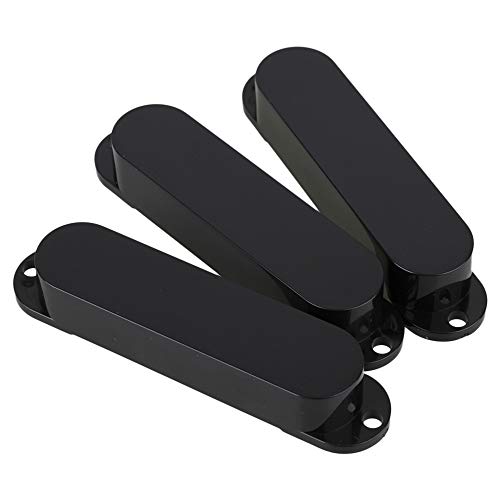
- These enclosed single-coil pickup housings are made of plastic for a , high-quality product with a long lifespan.

- Brass Material Humbucker Pickup Covers
First Impressions: Unboxing the “Little Brown Box”
When you first hold the LR Baggs Para Acoustic D.I., you immediately understand why it has been a staple on professional stages for over three decades. It feels like a tank. The “Medium Wash” brown steel casing is thick, and the unit has a reassuring weight of 0.67 kg. It doesn’t feel like a toy; it feels like a piece of laboratory equipment designed for the road. Setting it up is a breeze—there are no menus to scroll through or firmware to update. It is a purely analog experience. We noticed that every knob has a purpose, and the layout is logical, moving from the input gain on the side to the detailed 5-band EQ on the top. Before you even plug it in, you should see its full feature set and user reviews to understand the legacy of this design.
Pros: Key Benefits
- Exceptional 5-band EQ with a tunable “Notch” filter to kill feedback instantly.
- Studio-grade discrete Class A circuitry for a warm, transparent analog sound.
- Incredibly robust steel construction that survives decades of touring.
- Versatile power options: runs on a single 9V battery or 48V phantom power.
Cons: Limitations
- The gain control is very sensitive and requires careful adjustment for passive pickups.
- The battery compartment requires a screwdriver, which can be a pain during a quick change.
Deep Dive Performance Analysis: Why the LR Baggs Para Acoustic D.I. Rules the Stage
Unparalleled Tone Shaping: The 5-Band Parametric EQ
The standout feature we discovered during our testing is the sophisticated EQ section. Unlike the simple “Bass/Treble” knobs on a standard amplifier, the LR Baggs Para Acoustic D.I. offers a semi-parametric midrange and a dedicated “Tunable Notch” filter. This is a game-changer. We found that most acoustic guitars have a “boxy” frequency around 400Hz to 800Hz. By using the tunable mid-band, we were able to sweep through the frequencies, find the offending “honk,” and cut it out without affecting the beautiful high-end shimmer.
This level of precision is why professional violinists and mandolinists also swear by this box. As one user noted, it allowed them to bring out a “great acoustic violin sound” at high volumes without the typical piezo harshness. This isn’t just a volume box; it’s a surgical tool for your tone. If you are struggling with a “tinny” sound, you should check the latest price and availability for this essential tool.
Feedback Control: The Phase Inversion and Notch Filter Duo
There is nothing that ruins an acoustic set faster than the low-end howl of feedback. We tested the LR Baggs Para Acoustic D.I. in a high-volume church environment—a notorious place for feedback due to large speakers and hard surfaces. The combination of the Phase Inversion switch and the Notch filter is magic. The Phase switch allows you to flip the polarity of your signal, which often instantly cancels out feedback by changing how your guitar’s top vibrates in relation to the speakers. If a specific frequency is still ringing, the Notch filter (tunable from 60Hz to 400Hz) allows you to “target and destroy” that specific frequency with surgical precision. We found that we could push our volume significantly higher than before without a single squeal, a feature that really sets it apart from cheaper alternatives.
The “Always On” Reliability: Build Quality and Power
We’ve spoken to musicians who have used the same “brown box” for over 30 years. That kind of longevity is unheard of in modern electronics. The solid-state design and steel enclosure are built for the rigors of the road. One of our favorite features is the phantom power compatibility. When you plug the XLR output into a professional mixing board, the LR Baggs Para Acoustic D.I. draws power directly from the board. This means you don’t have to worry about batteries dying mid-set. However, if you are playing a smaller venue without phantom power, a single 9V battery lasts for roughly 200 hours. The peace of mind that comes with this reliability is worth the investment alone. It’s a “set and forget” piece of gear that has earned its spot on thousands of professional pedalboards worldwide.
Gain Staging Mastery: Handling Active and Passive Pickups
One common mistake musicians make is sending a signal that is either too weak (resulting in hiss) or too hot (resulting in distortion). We found the adjustable gain control on the LR Baggs Para Acoustic D.I. to be incredibly effective, though quite sensitive. Whether we were using a high-output Taylor Expression System or a low-output passive K&K Pure Mini, we could dial in the “sweet spot” perfectly. The “Gain” control isn’t just a volume knob; it matches the impedance of your instrument to the D.I., ensuring that your signal-to-noise ratio is optimal. This leads to a much “fuller” and more “present” sound that cuts through a mix without sounding loud or intrusive. This versatility makes it the ultimate “Swiss Army Knife” for any acoustic performer.
What Other Users Are Saying
The general sentiment online for the LR Baggs Para Acoustic D.I. is overwhelmingly positive, with many users referring to it as an “essential” piece of gear. Musicians frequently praise its ability to make cheap pickups sound expensive and expensive pickups sound like a professional studio recording. One user mentioned that after a year of struggling with a “tinny” sound on their Taylor 714CE, this D.I. finally gave them the balanced, 6-string clarity they had been chasing. Another user, a professional violinist, highlighted that they get “absolutely NO feedback” even at high volumes during cocktail parties and street busking.
On the negative side, the most common “minor quibble” is the sensitivity of the gain knob. Some users found that a tiny adjustment could lead to a significant jump in signal, requiring a bit of a learning curve to master. A few users also noted that while the sound is incredibly clean, it doesn’t “magically” make a $100 guitar sound like a $5,000 Martin—though it certainly gets it closer than anything else on the market. Overall, the consensus is that this model has been around for decades for a reason: it works perfectly.
How the LR Baggs Para Acoustic D.I. Compares to the Competition
While the LR Baggs Para Acoustic D.I. is a legendary preamp, it’s important to understand where it fits in the ecosystem of acoustic pickups and DI boxes. Depending on your specific needs—whether you need a permanent internal pickup or a lightweight classical solution—one of these alternatives might be a better fit for your secondary instruments.
1. Journey Instruments Passive Piezo Pickup EP001K
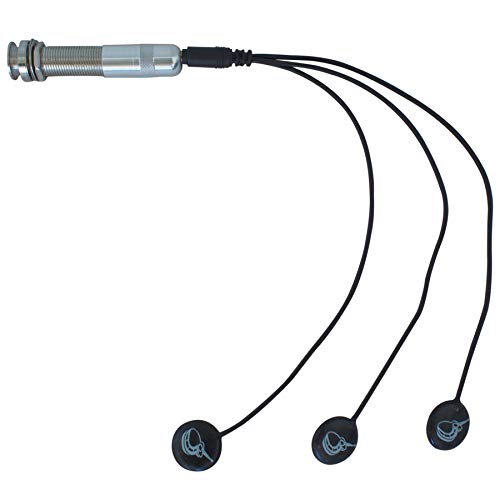
- AMPLIFY THE NATURAL SOUND OF YOUR ACOUSTIC GUITAR - Our passive piezo pickup is an elegant solution for transparent tone to amplify the natural sound of your guitar. Frequency response 22Hz-18kHz...
- EASY INSTALLATION - Easily upgradeable, minimal effort required installation will allow you to enjoy the acoustic guitar’s natural sounds. A premium, clear and transparent passive piezo pickup...
Unlike the LR Baggs, which is an external preamp, the Journey Instruments EP001K is an internal passive pickup system. It is designed for those who want a high-output signal without a battery inside their guitar. While the LR Baggs Para Acoustic D.I. is used to shape the sound, the Journey Instruments pickup is what captures it. We recommend using these together; the EP001K provides a surprisingly warm signal that the Para D.I. can then sculpt into perfection. It’s an affordable, battery-free alternative for those who don’t want to modify their guitar heavily.
2. K&K Sound Pure Mini Pickup

- Pickup with 3 piezo heads
- Frequency Response Ideal for Acoustic Guitar
The K&K Pure Mini is widely considered the gold standard for natural-sounding internal pickups. It uses three transducers that mount to the bridge plate. Much like the Journey Instruments option, this is a passive system. In our experience, the K&K Pure Mini requires a high-quality preamp like the LR Baggs Para Acoustic D.I. to truly shine, as its impedance needs to be matched to sound its best. If you want the most “mic-like” sound possible, pairing the K&K with the Para D.I. is a world-class combination used by many pro bluegrass players.
3. KNA Classical Flamenco Guitar Pickup
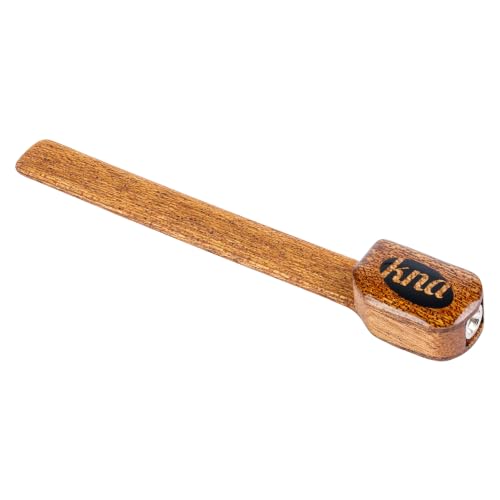
- NATURAL SOUND REPRODUCTION – Captures the authentic tone of your nylon-string guitar with clarity and balance.
- LIGHTWEIGHT WOOD-ENCLOSED SENSOR – Enhances tonal sensitivity while maintaining a natural aesthetic.
For nylon-string players, the KNA NG-1 is a fantastic, non-invasive alternative. It slides onto the tie-block of your classical guitar, requiring no drilling or glue. Because nylon strings have a very different frequency response than steel, the LR Baggs Para Acoustic D.I. is actually the perfect companion for this pickup. It allows you to dial out the “plunky” mids that can plague classical amplification. If you are a flamenco or classical player who needs a quick, portable setup, this KNA pickup paired with the Para D.I. is an unbeatable portable rig.
Final Verdict: Is the LR Baggs Para Acoustic D.I. Worth It?
After putting it through its paces in various environments, from quiet home studios to loud, cavernous halls, our verdict is clear: the LR Baggs Para Acoustic D.I. remains the industry standard for a reason. Its combination of studio-quality analog circuitry, surgical EQ precision, and bulletproof construction makes it an indispensable tool for any serious acoustic musician. While the gain control is a bit touchy, and the battery door could be easier to access, these are minor complaints compared to the massive improvement in tone and feedback control it provides. Whether you are a guitarist, violinist, or banjo player, this box will finally let your audience hear the instrument you fell in love with, not a plastic imitation of it.
If you are tired of fighting with sound engineers and want to take full control of your live sound, we highly recommend that you pick up the LR Baggs Para Acoustic D.I. and experience the difference for yourself. It is a one-time investment that will likely stay in your gig bag for the next twenty years.
Last update on 2026-09-20 / Affiliate links / Images from Amazon Product Advertising API