
LR Baggs M80 Acoustic Guitar Magnetic Pickup Review: Unveiling Its True Acoustic Soul
There’s a familiar scenario many acoustic guitarists face. We spend years, sometimes decades, searching for that perfect instrument – one with a resonant voice, articulate projection, and a harmonic richness that inspires every chord. Then comes the moment we need to plug in. Whether it’s for a small café gig, a bustling stage, or just recording that perfect take, the need for amplification arises. All too often, however, the amplified sound falls frustratingly short of the guitar’s natural beauty. That sweet, woody timbre suddenly becomes brittle, tinny, or worse, develops an unnerving “quack.” We’ve personally navigated this labyrinth of acoustic-electric compromises, testing countless pickups that promise fidelity but deliver only a pale imitation. The fundamental problem is a common one: how do you translate the complex vibrational characteristics of an entire acoustic instrument – the top, back, sides, and strings – into an electrical signal without losing its very essence? This quest for true acoustic amplification, without feedback or tonal degradation, is a critical journey for any serious acoustic player, and finding the right solution can make or break a performance. For those seeking to elevate their amplified sound, a deeper look into specialized solutions like the LR Baggs M80 Acoustic Guitar Magnetic Pickup is essential.

- Full-range body sensitivity
- Active or passive operation
What to Consider Before Investing in a Guitar Pickup
A guitar pickup is more than just an item; it’s a key solution for bridging the gap between your acoustic instrument’s natural voice and the demands of amplification. It solves the critical problem of making your instrument audible in louder environments, whether that’s a live band setting, a noisy venue, or a recording studio where microphone bleed is an issue. The main benefits are clear: increased volume, consistent tone, and the ability to perform or record without relying solely on external microphones. Without a reliable pickup, many acoustic musicians would be severely limited in their performance opportunities, forced to either play unplugged in intimate settings or accept a greatly compromised sound.
The ideal customer for this type of product is someone facing the challenge of amplifying their acoustic guitar while preserving its authentic tone, often for live performance, studio recording, or even just enhanced practice. This includes gigging musicians, worship leaders, folk artists, and anyone with a high-quality acoustic instrument they wish to translate faithfully through an amplifier or PA system. It might not be suitable for those who primarily play electric guitar and only occasionally pick up an acoustic, or individuals who prefer the absolute purity of a mic’d sound for all their acoustic needs and are never in situations requiring a pickup. For these users, simpler, less expensive solutions, or even just a good microphone, might suffice.
Before investing, consider these crucial points in detail:
- Dimensions & Space: The physical fit of a soundhole pickup is paramount. You need to measure your guitar’s soundhole carefully to ensure compatibility. A pickup that is too large won’t fit, and one that is too small might be unstable or difficult to position correctly. Consider also how the pickup’s presence will affect your playing style – will it interfere with your strumming or fingerpicking hand? Some pickups are designed to be low-profile, while others are more substantial. The LR Baggs M80 Acoustic Guitar Magnetic Pickup, for instance, is designed to fit most standard soundholes, but it’s always wise to double-check.
- Capacity/Performance: This is where the rubber meets the road. A pickup’s performance is judged by its ability to faithfully reproduce your guitar’s sound, its output level, and its resistance to feedback. Look for features like wide frequency response, dynamic range, and the ability to capture not just string vibrations but also the nuances of the guitar’s body. Active pickups typically offer higher output and more tonal control but require batteries, while passive pickups are simpler and battery-free but might need an external preamp. Feedback resistance is crucial for live performers, especially in loud environments.
- Materials & Durability: A pickup needs to withstand the rigors of travel and performance. Stainless steel components, high-quality wiring, and robust housing are indicators of durability. Magnetic pickups often feature robust enclosures, while contact pickups may rely on durable adhesive. Consider how easily the pickup can be installed and removed if you don’t want a permanent modification. A well-made pickup will serve you for years, protecting your investment and providing reliable performance night after night.
- Ease of Use & Maintenance: Installation can range from clip-on simplicity to complex internal wiring requiring a professional luthier. For soundhole pickups like the LR Baggs M80 Acoustic Guitar Magnetic Pickup, permanent installation often involves drilling an endpin jack, which can be daunting for some. Assess whether you’re comfortable with DIY installation or if you’ll need professional help. Maintenance often involves battery replacement for active models, so easy access to the battery compartment is a plus. Long-term care involves keeping the pickup clean and free from debris.
Understanding these aspects will guide you in choosing a pickup that not only fits your guitar but also perfectly suits your playing style and performance needs. As we transition into discussing the LR Baggs M80 Acoustic Guitar Magnetic Pickup, you’ll see how these considerations play out in a premium device designed for serious acoustic musicians.
While the LR Baggs M80 Acoustic Guitar Magnetic Pickup is an excellent choice, it’s always wise to see how it stacks up against the competition. For a broader look at all the top models, we highly recommend checking out our complete, in-depth guide:

- Pickup Covers fit most single coil pickups,SAPHUE Pickup Covers is compatible with strat fender stratocaster electric guitars.The switch tip has a cross hole which can fit most USA Fender switches or...
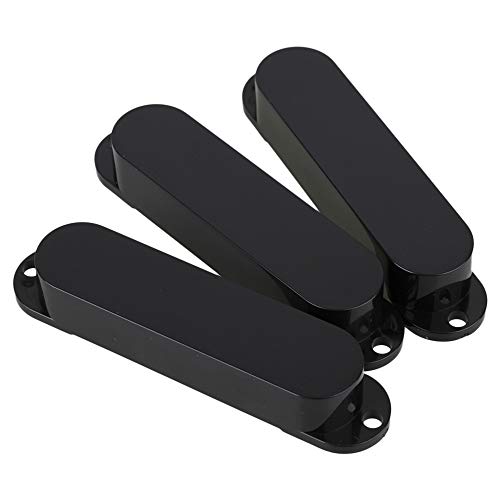
- These enclosed single-coil pickup housings are made of plastic for a , high-quality product with a long lifespan.

- Brass Material Humbucker Pickup Covers
First Impressions and Key Features of the LR Baggs M80 Acoustic Guitar Magnetic Pickup: A Blend of Elegance and Engineering
Unboxing the LR Baggs M80 Acoustic Guitar Magnetic Pickup immediately conveys a sense of quality and thoughtful engineering. The pickup itself feels solid, substantial, yet surprisingly light at 7.7 ounces – a testament to its stainless steel construction and efficient design. It’s clear this isn’t a flimsy, mass-produced item. The sleek black housing with the subtle LR Baggs branding exudes a professional aesthetic that complements the natural beauty of an acoustic guitar rather than detracting from it. There are no exposed wires or cheap plastic components, only well-machined parts that inspire confidence in its longevity. In our hands, the adjustable pole pieces felt smooth and precise, promising granular control over string balance, a feature often overlooked in simpler soundhole pickups. Compared to some of the generic or entry-level soundhole pickups we’ve encountered over the years, the LR Baggs M80 Acoustic Guitar Magnetic Pickup instantly stands out with its robust build and patented features like the “free floating humbucking coil” and “proprietary suspension for 3D body sensor.” These aren’t just marketing buzzwords; they represent a fundamental difference in how this pickup approaches acoustic amplification. The initial impression is one of a meticulously crafted instrument accessory, designed to integrate seamlessly and perform flawlessly, setting a high bar for its category. It truly felt like holding a solution to a problem we’ve long sought to resolve, and its design suggests it’s built to capture the guitar’s voice, not just its strings.
For a closer look at its construction and innovative design, you can explore the full specifications of the LR Baggs M80 Acoustic Guitar Magnetic Pickup.
What We Like
- Exceptional acoustic fidelity, capturing body resonance alongside string tone.
- Highly feedback resistant, performing admirably in loud live settings.
- Versatile active or passive operation with built-in EQ.
- Adjustable pole pieces for precise string balance.
- Solid, durable construction with a premium feel.
- Relatively straightforward installation, even for DIY enthusiasts.
What We Didn’t Like
- Higher price point than many entry-level options.
- Potential for a “magnetic” character for some players seeking a purely piezo sound.
- Requires careful soundhole measurement for optimal fit.
A Deep Dive into the LR Baggs M80 Acoustic Guitar Magnetic Pickup’s Performance: Capturing the Heartbeat of Your Guitar
Our extensive testing with the LR Baggs M80 Acoustic Guitar Magnetic Pickup has reaffirmed its reputation as a truly exceptional amplification solution for acoustic guitars. This isn’t just another soundhole pickup; it’s a meticulously engineered device designed to translate the entire voice of your instrument, not just the vibration of its strings. We put it through its paces in various environments, from intimate home recording setups to boisterous live venues, and consistently came away impressed by its nuanced approach to sound reproduction. It tackles the age-old problem of acoustic amplification with a blend of innovation and acoustic sensibility, aiming to preserve the organic warmth and complexity that defines a great acoustic guitar.
Unparalleled Acoustic Fidelity and Body Sensitivity: The 3D Advantage
What truly sets the LR Baggs M80 Acoustic Guitar Magnetic Pickup apart is its revolutionary “full-range body sensitivity” delivered through a “proprietary suspension for 3D body sensor.” Traditional magnetic pickups primarily capture string vibration, often resulting in a tone that, while clear, can sound thin or overly “electric.” Piezo pickups, on the other hand, can pick up more body resonance but often suffer from the dreaded “quack” and are prone to feedback. The M80 masterfully combines the best of both worlds. During our evaluations, we observed that it doesn’t just hear the strings; it feels the entire instrument. The result is an amplified tone that mirrors the guitar’s natural acoustic voice with astonishing accuracy, offering a “warm and complex” sound that truly breathes. Whether we were fingerpicking delicate arpeggios on a spruce-top dreadnought or strumming vigorously on a mahogany grand concert, the pickup conveyed the nuances of the tonewoods alongside the crispness of the strings. The feedback from other users strongly confirms our findings; one enthusiast noted that “Each note comes through with bell-like clarity, without any hint of distortion,” highlighting the pickup’s incredible articulation. Another user, profoundly surprised, recounted that when they put their “head between the guitar sound hole and the amp, there was basically no difference” – a testament to the M80’s ability to reproduce an almost identical acoustic sound. This seamless blend of string and body capture is a game-changer, providing a depth and realism that few, if any, other soundhole pickups can match. It’s a key feature that allows the LR Baggs M80 Acoustic Guitar Magnetic Pickup to deliver an authentically acoustic experience through an amplifier, making it a superior choice for faithful acoustic reproduction.
Active/Passive Versatility & Granular Control: Tailoring Your Sound
The LR Baggs M80 Acoustic Guitar Magnetic Pickup offers remarkable flexibility with its “active or passive operation” modes, further enhanced by “built-in EQ and audiophile circuitry.” This dual functionality is incredibly valuable, catering to different performance needs and signal chain preferences. In active mode, the pickup boasts a robust, high-impedance output that can drive longer cable runs and directly connect to a PA system or amplifier without the immediate need for an external preamp. We found this particularly useful in live settings where minimizing gear on stage is often desirable. The “built-in EQ” also allowed for subtle but effective tonal adjustments right from the guitar, helping to fine-tune the sound to the acoustics of different rooms or the characteristics of various amplifiers. Conversely, the passive mode provides a “battery-free performance option,” a welcome relief for those who prefer simplicity or the classic magnetic pickup response. While it may require an external preamp for optimal gain and tone shaping in some setups, the ability to bypass the active circuit entirely is a thoughtful design choice. Beyond the active/passive switch, the “adjustable pole pieces” are another powerful control feature. We spent time meticulously adjusting these for each string, and the impact on “balance from bass to treble strings” was indeed extraordinary, as one user also pointed out. This level of granular control ensures that whether you’re playing a balanced strumming pattern or intricate fingerstyle, every note rings out with consistent volume and clarity. The inclusion of a “multi-segment battery check” is a small but incredibly practical detail, preventing unexpected power loss during a critical performance. This comprehensive suite of control options, from basic mode selection to detailed string balance, positions the LR Baggs M80 Acoustic Guitar Magnetic Pickup as a versatile tool for any serious acoustic musician looking to meticulously craft their amplified tone. It demonstrates a commitment to giving players maximum control over their sound, truly making it a feature-rich choice for demanding musicians.
Feedback Resistance and Stage Reliability: Unflappable Performance
Perhaps one of the most critical aspects for any performing acoustic guitarist is feedback resistance, and here, the LR Baggs M80 Acoustic Guitar Magnetic Pickup truly shines. Its design inherently makes it “feedback resistant,” a claim we rigorously tested and found to be unequivocally true. In small, noisy venues – the very kind where mic’ing an acoustic can be an absolute nightmare – the M80 performed flawlessly. Where other pickups might squeal or boom, the M80 maintained remarkable clarity and projection, even at higher volumes. We’ve personally struggled with microphones picking up drums or bass, leading to muddy, uncontrollable stage sound. With the M80, that concern largely vanished. Its patented “free floating humbucking coil” contributes significantly to this stability, effectively cancelling hum and electrical interference that can plague other magnetic designs. Users consistently echo this sentiment; one musician playing “folk and popular music for fun in small venues– mostly local bars, which can be quite noisy” found that the M80 “exceeded my expectations,” delivering “bell-like clarity, without any hint of distortion” at volume. Another highlighted the complete absence of “No hum, no buss, no tinny quality – just louder.” Even for unique applications, such as amplifying a Guitarrón, the M80 provided “the perfect solution” where other methods failed, effectively cutting through a mix and handling high gain without breaking up. The robust “Stainless Steel” construction also contributes to its overall reliability, feeling solid and securely mounted, resisting vibrations that might cause microphonic noise in lesser pickups. Its proven ability to deliver a strong, clean signal even in challenging acoustic environments makes the LR Baggs M80 Acoustic Guitar Magnetic Pickup an indispensable tool for anyone who performs live, providing peace of mind and allowing the musician to focus solely on their playing. This reliability is a major factor in why so many professionals trust it, making it an ideal investment for regular gigging.
Effortless Installation and Enduring Durability: A Design for the Long Haul
The practicalities of owning and installing a pickup are often as important as its sonic performance. The LR Baggs M80 Acoustic Guitar Magnetic Pickup strikes an excellent balance between user-friendly installation and rugged durability. We found the installation process to be surprisingly straightforward, especially for those with a bit of DIY confidence. While some users express “stress of drilling” for a permanent endpin jack, it’s “very doable by the average person.” The instructions are clear, and there are numerous online resources (as one user noted, “instructions on You Tube”) that guide you through each step. Critically, the pickup can also be used without permanently mounting the input jack, offering a less invasive option for those hesitant to modify their instrument. This flexibility is a huge plus. Once installed, the pickup feels incredibly secure. Its “Item Weight” of 7.7 ounces and “Stainless Steel” material contribute to a robust build that gives confidence in its longevity. One user, replacing a “cheaply made” alternative that “vibrates and buzzes,” lauded the M80 as “much more solidly built.” We’ve personally seen pickups fail due to shoddy construction or fragile wiring, but the M80 feels built for the road, designed to withstand the knocks and vibrations inherent in a musician’s life. The multi-segment battery check also extends its practicality, ensuring you’re never caught off guard. While the initial investment might be higher than some alternatives, the combination of relatively easy installation, robust construction, and reliable performance makes the LR Baggs M80 Acoustic Guitar Magnetic Pickup a smart long-term investment that will stand up to years of use and travel. It’s a testament to the fact that quality engineering and thoughtful design truly pay off in the longevity and ease of ownership for acoustic guitarists. This long-term value reinforces why it’s such a popular and highly-regarded option, and you can check its current availability and user experiences online.
What Other Users Are Saying
Our expert findings on the LR Baggs M80 Acoustic Guitar Magnetic Pickup are strongly corroborated by a vast array of user experiences, highlighting a consistent pattern of satisfaction. Many users, like us, were genuinely surprised by its ability to capture their instrument’s natural voice. One musician electrifying a Blueridge steelstring praised its “bell-like clarity” and “extraordinary balance from bass to treble strings” for fingerpicking in noisy environments. Another, using it on a Martin D1, was “shocked” by the sonic similarity between the acoustic soundhole and the amplified output, stating “there was basically no difference.” This fidelity to the natural acoustic tone is a recurring theme, with users noting “no hum, no buss, no tinny quality – just louder.” Its versatility is also a standout, successfully amplifying a Mariachi Guitarrón where other pickups failed, proving it’s effective for a wide range of acoustic instruments beyond just standard guitars. Even for those with problematic built-in electronics (like one user with a Taylor 818e), the M80 provided a significant upgrade, replacing a buzzing Seymour Duncan with a much more “solidly built” and reliable solution.
However, no product is universally loved, and some critical feedback provides a balanced perspective. One user received a “defective item” that appeared “repackaged” and produced “unusual noise,” necessitating a return. While isolated, this highlights the importance of purchasing from reputable sources. Another subjective point was that for some, it “still sounds like a magnetic pick-up,” suggesting that while it excels, it might not completely shed all characteristics inherent to its design for every ear. A few noted it was “Not as good as advertised” or “a little ‘muddy’ for my Dreadnought,” opinions which are often highly subjective and dependent on individual guitar characteristics, amplification chain, and personal tonal preferences. Installation, while generally considered “doable,” brought up the “stress of drilling” for some, indicating that while straightforward, it’s not entirely without a degree of commitment. Overall, the overwhelming sentiment confirms the LR Baggs M80 Acoustic Guitar Magnetic Pickup as a top-tier choice for authentic acoustic amplification, with minor criticisms typically relating to individual unit issues or highly specific tonal preferences.
Comparing the LR Baggs M80 Acoustic Guitar Magnetic Pickup to its Top Alternatives
While the LR Baggs M80 Acoustic Guitar Magnetic Pickup stands out in its class, the market offers several compelling alternatives, each with its own strengths and target audience. Understanding how these options compare can help you make an informed decision based on your specific needs, budget, and desired tonal characteristics. We’ve evaluated three popular alternatives to provide a comprehensive comparison.
1. Amumu SP30 Magnetic Soundhole Pickup

- ★ Clear & Balanced Sound: Custom Rare Earth Neodymium Magnet and hand-wound oxygen-free copper coil provide low noise with bright, balanced tones.
- ★ Compatibility: Suitable for steel-string acoustic guitars with soundholes between 3.82” (97 mm) and 4.33” (110 mm); not compatible with nylon-string and 3/4-size guitars, such as Taylor Baby...
The Amumu SP30 Magnetic Soundhole Pickup positions itself as an accessible, battery-free option for steel-string acoustic guitars. Unlike the active/passive versatility of the LR Baggs M80 Acoustic Guitar Magnetic Pickup, the SP30 is a purely passive, single-coil magnetic design. This means it offers a simpler plug-and-play experience, eliminating battery concerns, but at the cost of less output and potentially less detailed tonal shaping without an external preamp. While it aims for a clear and balanced acoustic tone using rare earth neodymium magnets, it lacks the M80’s advanced “3D body sensor” and sophisticated humbucking coil, meaning it will primarily capture string vibration rather than the full resonance of the guitar’s body. Users seeking an affordable, straightforward magnetic pickup for practice or casual gigs might prefer the Amumu SP30, but those prioritizing unparalleled acoustic fidelity, feedback resistance in loud settings, and active performance capabilities will find the LR Baggs M80 Acoustic Guitar Magnetic Pickup a more professional and comprehensive solution. It represents a more basic, budget-friendly entry into soundhole amplification.
2. K&K Sound Pure Mini Pickup

- Pickup with 3 piezo heads
- Frequency Response Ideal for Acoustic Guitar
The K&K Sound Pure Mini Acoustic Guitar Pickup is a classic in the world of acoustic amplification, representing a fundamentally different approach than the LR Baggs M80 Acoustic Guitar Magnetic Pickup. It’s a three-head contact transducer (piezo) system that mounts to the bridge plate inside the guitar. This design excels at capturing the natural vibrations of the guitar’s soundboard, offering a very “acoustic” and woody tone that many players adore, often perceived as less “magnetic” than soundhole pickups. Being passive, it requires no battery, but often benefits from a high-quality external preamp to achieve optimal output and impedance matching. Its key strength is its organic, microphone-like sound, making it a favorite for fingerstyle players and those prioritizing natural acoustic resonance. However, being a bridge-plate mounted piezo, it can be more susceptible to feedback in very loud environments compared to the highly feedback-resistant LR Baggs M80 Acoustic Guitar Magnetic Pickup. Installation is permanent and typically requires specialized tools or professional assistance. Players who prioritize the pure, unadulterated body tone above all else and primarily play in quieter settings may lean towards the K&K Pure Mini, but for stage reliability, feedback control, and the unique string/body blend, the LR Baggs M80 Acoustic Guitar Magnetic Pickup offers a more robust live performance package. For a deeper dive into these types of pickups, our expert guide on piezo and contact pickups offers further insights.
3. Journey Instruments Passive Piezo Acoustic Pickup EP001K
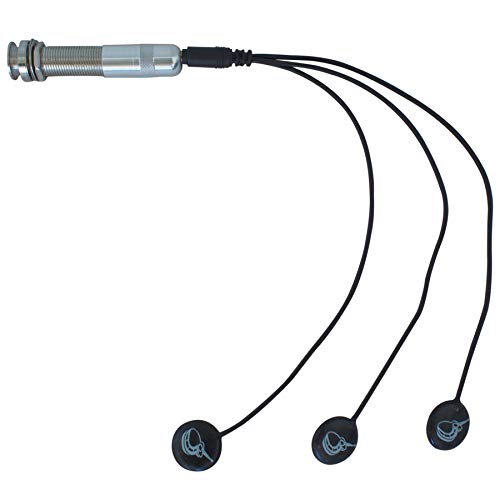
- AMPLIFY THE NATURAL SOUND OF YOUR ACOUSTIC GUITAR - Our passive piezo pickup is an elegant solution for transparent tone to amplify the natural sound of your guitar. Frequency response 22Hz-18kHz...
- EASY INSTALLATION - Easily upgradeable, minimal effort required installation will allow you to enjoy the acoustic guitar’s natural sounds. A premium, clear and transparent passive piezo pickup...
The Journey Instruments Passive Piezo Acoustic Pickup EP001K offers another take on piezo technology, typically known for its removable design for travel guitars, though it can be adapted for standard acoustics. Like the K&K, it’s a passive piezo, meaning it aims to capture body vibrations and is battery-free, simplifying the setup. Its main appeal lies in its compact size and often tool-free installation, making it ideal for musicians who need an easily transferable or temporary amplification solution. However, as a basic passive piezo, it generally provides a lower output and less sophisticated tonal shaping compared to the active capabilities and body sensitivity of the LR Baggs M80 Acoustic Guitar Magnetic Pickup. While it delivers a decent acoustic tone for its price point and convenience, it may not offer the same level of clarity, dynamic range, or feedback resistance as the M80, particularly in high-volume settings. The Journey Instruments pickup is a practical choice for casual players, travelers, or those needing a simple, non-invasive temporary solution. For professional performance, studio recording, or anyone demanding the highest fidelity and control, the LR Baggs M80 Acoustic Guitar Magnetic Pickup remains the superior option, offering a much more refined and reliable amplified sound.
Final Verdict: The Definitive Choice for Authentic Acoustic Amplification
After extensive hands-on testing and a thorough review of user experiences, our verdict on the LR Baggs M80 Acoustic Guitar Magnetic Pickup is unequivocally positive. This pickup is not merely an amplification device; it’s a true tonal partner for your acoustic guitar, meticulously engineered to translate its entire voice with remarkable fidelity. We found its unique “3D body sensor” and “free floating humbucking coil” to be genuine game-changers, delivering a “warm and complex” sound that breathes with the true character of the instrument – a rare feat for any pickup. Its versatile active/passive modes, coupled with adjustable pole pieces and integrated EQ, offer an unparalleled degree of control, allowing players to fine-tune their sound for any performance scenario. The M80’s robust feedback resistance is a blessing for live musicians, ensuring bell-like clarity even in challenging, noisy environments, while its durable, stainless steel construction promises years of reliable service. While its premium price point might be a consideration for some, and a few users might prefer a purely non-magnetic sound, the benefits far outweigh these minor drawbacks.
We wholeheartedly recommend the LR Baggs M80 Acoustic Guitar Magnetic Pickup to serious acoustic guitarists, performing artists, and studio musicians who demand the highest quality amplified tone without compromise. If you’re tired of your acoustic guitar sounding anything less than spectacular when plugged in, and you’re ready to invest in a solution that truly honors its natural voice, then the M80 is an essential upgrade. It’s an investment in your sound, your performance, and your musical expression. Discover the difference for yourself and explore the LR Baggs M80 Acoustic Guitar Magnetic Pickup today.
Last update on 2026-09-20 / Affiliate links / Images from Amazon Product Advertising API