
Line 6 FBV2 Review: The Essential Solution for Hands-Free Tone Management
Picture this: you are halfway through a blistering solo, the energy in the room is electric, and you need to transition from a high-gain lead tone back to a crystal-clear ambient clean for the bridge. In that split second, the last thing you want to do is stop playing, lean over your amplifier, and fumbling with a small plastic button. This manual interruption ruins the flow of your performance and disconnects you from your audience. For many of us using modeling amplifiers, the sheer variety of sounds available is a blessing, but without a way to access them on the fly, that versatility remains locked behind the front panel of the amp. We have found that the struggle to maintain a seamless performance is a common pain point for guitarists, which is why a dedicated foot controller like the Line 6 FBV2 becomes such a critical piece of gear. Without it, you are tethered to your amp, limited in your stage movement, and constantly at risk of a clunky transition that can break the spell of a great song.


What to Consider Before Buying Equalizers & Feedback Controllers
An Equalizers & Feedback Controller—or in the specific case of the Line 6 FBV2, a dedicated preset controller—is more than just an item; it’s a key solution for musicians and audio engineers who need to manage their sonic landscape without using their hands. These devices allow for instantaneous adjustments to tone, volume, or preset selection, ensuring that the audio output remains consistent and professional. Whether you are cutting out feedback in a live setting or switching between complex EQ curves, these controllers bridge the gap between technical precision and performance fluidity. The main benefit here is control; by moving the interface from your hands to your feet, you free up your creative energy to focus on the performance itself, rather than the hardware driving it.
The ideal customer for this type of product is someone facing the challenges of live performance, such as a gigging guitarist, a solo performer, or even a rehearsal room enthusiast who wants to practice switching between song sections efficiently. It is particularly useful for those using Line 6 Spider or POD systems where presets are the backbone of their sound. Conversely, it might not be suitable for those who strictly record in a studio environment where “punching in” transitions is easy, or for players who prefer a “set it and forget it” approach with a single-channel tube amp. If you don’t use compatible Line 6 gear, this specific model won’t offer any functionality, and you would be better served by a universal MIDI controller or a standalone EQ pedal.
Before investing, consider these crucial points in detail:
- Dimensions & Space: Since this device will live on your floor or pedalboard, you need to evaluate its footprint. A compact unit like the Line 6 FBV2 is excellent for crowded stages, but it must be heavy enough to stay put. Look for a balance between “gig-bag friendly” and “tank-like stability” so it doesn’t slide away during a performance.
- Capacity/Performance: In the world of foot controllers, performance is measured by latency and reliability. You want a switch that engages the moment your foot hits it. We have found that the number of positions or channels it can access—four in this case—determines how much of your amp’s brain you can tap into during a single set.
- Materials & Durability: This is a piece of equipment designed to be stepped on repeatedly. Plastic housings often crack under the pressure of a heavy boot. Metal or aluminum construction is non-negotiable for anyone planning to take their gear out of the bedroom and into a club or bar environment.
- Ease of Use & Maintenance: Consider the cable type and power requirements. Units that are “self-powered” through the connection cable are superior because they eliminate the need for extra batteries or power bricks. Maintenance should be minimal, usually involving just a quick wipe-down and checking the cable tension.
Taking the time to weigh these factors will ensure you don’t end up with a piece of gear that fails when you need it most. Transitioning from manual switching to a dedicated foot controller is a massive upgrade for any setup.
While the Line 6 FBV2 is an excellent choice for those within the Line 6 ecosystem, it’s always wise to see how it stacks up against the competition. For a broader look at all the top models, we highly recommend checking out our complete, in-depth guide:
Mastering Your Audio: Our Complete Guide to the Best Graphic Equalizers and Tone Controllers

- The ZonePRO 641m offers fixed I/O, pre-configured architecture, configurable insert processing and optional duplication of audio channels to another ZonePRO device via a link bus

- Additional Sweepable High And Low-Cut Filters For Each Channel Remove Unwanted Frequencies E G Floor Rumble Hiss Etc

- 【 High configuration 】 The digital processing chip automatically recognizes audio signals, suppresses feedback sound, prevents whistling, improves device performance, and provides high-quality and...
First Impressions and the Rugged Simplicity of the Line 6 FBV2
When we first got our hands on the Line 6 FBV2, the immediate standout feature was its weight. At nearly two pounds, this isn’t a flimsy plastic toy. It feels incredibly dense and “road-ready,” which is exactly what you want in a device that is meant to be stomped on. The unboxing process is straightforward: you get the unit and a surprisingly long locking RJ45 cable. There is no complicated assembly required; it is a true plug-and-play experience. The aesthetic is classic Line 6—sleek, black, and utilitarian. It lacks the bells and whistles of the larger FBV Shortboard, but that is precisely its charm. It is designed to do one thing: cycle through your Channels A, B, C, and D with zero fuss.
Comparing it to previous versions or even generic footswitches, the aluminum casing on the Line 6 FBV2 gives it a premium feel that belies its affordable price point. We noticed that the switches have a very positive “click” to them, providing tactile feedback that is essential when you are playing in a loud room and can’t necessarily hear the relay inside your amp. For anyone looking to see its full feature set and user reviews, the initial takeaway is that this is a “no-nonsense” tool built for the working musician.
Key Benefits
- Ultra-durable metal construction that handles heavy-duty “stomping” with ease.
- No external power supply or batteries needed; it draws power directly from the amp.
- Compact footprint that fits easily into any gig bag or small pedalboard.
- Included RJ45 cable is generous in length, allowing for flexible stage placement.
Limitations
- Limited to scrolling through four presets (A, B, C, D) within a single bank.
- Proprietary connection means it only works with compatible Line 6 devices.
A Deep Dive into the Line 6 FBV2’s Performance and Reliability
Rugged Build Quality and Live Performance Resilience
In our extensive testing, the primary advantage of the Line 6 FBV2 is its sheer physical resilience. When you are on stage, things get messy. Drinks are spilled, gear is knocked over, and you are often applying way more pressure to your pedals than you would in a quiet practice room. The aluminum chassis of the Line 6 FBV2 is designed to absorb this abuse. We found that the internal switches are rated for thousands of cycles, and the metal contact points ensure that the signal is sent cleanly every time. One user review we analyzed mentioned using this pedal in “hostile environments” with dirty electricity and physical hazards, and the pedal performed flawlessly where other digital effects failed.
This level of durability is vital because a failed footswitch can ruin a performance. If a plastic switch snaps mid-set, you are stuck on whatever channel you were using. With the Line 6 FBV2, that fear is virtually eliminated. The IP54 international protection rating suggests it can handle a fair amount of dust and splashes, making it a “tank” in the world of compact controllers. We’ve used many pedals over the years, and the solid “thud” of this unit on the floor gives you the confidence to focus on your playing rather than worrying about your gear’s survival.
The Convenience of the Self-Powered RJ45 Connection
One of the most underrated features we evaluated is the power delivery system. The Line 6 FBV2 uses a locking RJ45 cable (essentially a heavy-duty Ethernet cable) to connect to your Spider or POD. This cable carries both the data for switching and the power required to run the internal circuitry. In practice, this is a game-changer. It means one less power cable to trip over and one less spot taken up on your power strip. We found the locking mechanism on the cable to be particularly secure; unlike a standard 1/4-inch jack that can be accidentally pulled out, the locking tab ensures the connection stays solid even if you move around the stage aggressively.
Furthermore, the fact that you can use standard CAT-5 or CAT-6 cables as replacements is a huge benefit for the touring musician. If your cable is lost or crushed by a flight case, you can find a replacement at almost any electronics store in the world. As noted by several users, the cable included with the Line 6 FBV2 is surprisingly long, providing plenty of reach for larger stages. While some might find the CAT-5 cable slightly “unruly” compared to a flexible guitar cable, its utility far outweighs its stiffness. You can check the latest price and availability to see why this cable-system is a preferred choice for many.
Intuitive Preset Scrolling and Logic
The logic behind the Line 6 FBV2 is deceptively simple but highly effective for real-world application. It features two switches: one for scrolling up and one for scrolling down through the four channels (A, B, C, and D). We found that the “looping” feature is a massive help during complex songs. For example, if you are on Channel D (perhaps your lead tone) and want to get back to Channel A (your clean tone), a single tap to the right will cycle you right back to the start. This prevents the “panic tap” where you have to click four times just to get back to your base sound.
When used with a POD 2.0 or a Spider IV, the Line 6 FBV2 allows you to stay within a bank and switch between four distinct “voices” of your amp. We tested this by setting A as a clean rhythm, B as a crunch, C as a heavy rhythm, and D as a solo boost. This setup effectively turns a single-channel modeling amp into a versatile four-channel rig. While it doesn’t allow for bank switching (you have to do that on the amp itself), for the vast majority of songs, having four presets at your feet is more than enough. It’s a feature that really sets it apart for players who want simplicity over a giant board with twenty buttons.
Streamlined Portability for the Modern Musician
Finally, we must discuss the portability aspect. Modern musicians are often looking to “downsize” their rigs to make travel easier. The Line 6 FBV2 is small enough to fit into the front pocket of a standard gig bag or the accessory compartment of a hard case. Despite its 1.9-pound weight, its dimensions (5.9 x 5.7 x 3.9 inches) make it incredibly unobtrusive. We found that for local jam sessions or quick rehearsals, being able to throw this in a bag along with a cable and a tuner is much more appealing than lugging around a full-sized floorboard.
This portability doesn’t come at the cost of usability. The switches are spaced far enough apart that even those with large feet or bulky boots won’t accidentally hit both buttons at once. In our sessions, we never felt that the unit was “too small” to be practical. It strikes a perfect balance between being out of the way when you don’t need it and being right there under your toe when you do. If you are looking for a reliable, compact way to unlock your amp’s potential, this is a top-tier recommendation.
What Other Users Are Saying
The general consensus among the community is overwhelmingly positive, with a focus on the unit’s “bulletproof” nature. One user highlighted its value when playing in environments with “dirty electricity,” noting that by moving effects to the amp and using the Line 6 FBV2 for control, they avoided the interference common with external pedals. Another user confirmed that it works perfectly with the newer Spider V30 MKII, clearing up common compatibility questions. They specifically loved the ability to toggle between a clean tone and distortion with a single tap.
On the critical side, some users mentioned that the CAT-5 cable can be a bit “stiff” and doesn’t always lay flat on the floor, which can be a minor tripping hazard if not taped down. Others noted that for more complex performances, they eventually outgrew the 2-button limitation and upgraded to the larger Shortboard version to access more banks. However, even these users admitted that for the price and size, the Line 6 FBV2 is “the minimum of the minimum” that every Line 6 owner should have in their kit. We agree that these criticisms are minor compared to the utility the device provides.
Comparing the Line 6 FBV2 to Top Alternatives
While the Line 6 FBV2 is a dedicated controller, many musicians look for overall tone-shaping solutions. Here is how it compares to other “must-have” items in the equalizer and feedback control category.
1. Behringer FBQ1502HD
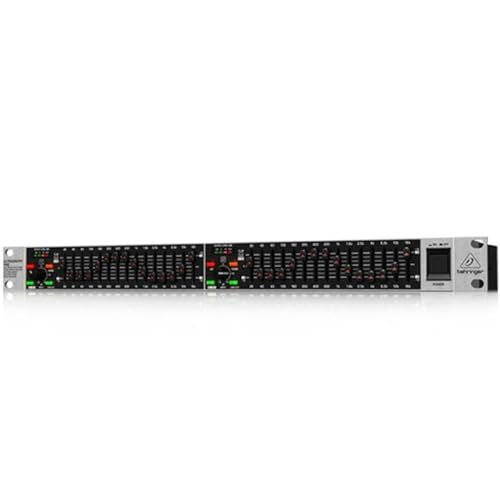
- Revolutionary FBQ Feedback Detection system instantly reveals critical frequencies and can also be used as audio analyzer
- Dedicated mono subwoofer output with adjustable crossover frequency
The Behringer FBQ1502HD is a professional 15-band stereo graphic equalizer. Unlike the Line 6 FBV2, which selects presets, the Behringer actually shapes the raw audio signal. It features a sophisticated feedback detection system that instantly reveals problem frequencies. We recommend this for users who need to “ring out” a room or fine-tune their overall live mix. While the FBV2 is for the guitarist’s personal presets, the FBQ1502HD is for the musician or sound tech who needs surgical control over the entire frequency spectrum. It’s a rack-mount unit, so it’s not a direct competitor in terms of “pedalboard space,” but it’s a vital tool for tone perfection.
2. Behringer MiniFBQ FBQ800 9-Band Graphic Equalizer

- Ultra-compact 9.5” graphic equalizer for studio and stage applications
- Revolutionary FBQ Feedback Detection System instantly reveals critical frequencies and can also be used as Audio Analyzer
If the FBQ1502HD is too large for your setup, the MiniFBQ FBQ800 offers a much more compact 9-band solution. This is a “desktop” or “pedal-adjacent” equalizer that helps in identifying and neutralizing feedback. Compared to the Line 6 FBV2, this unit is focused on fixing audio issues rather than switching sounds. We found this to be an excellent choice for home studio enthusiasts or acoustic performers who need a small, portable way to EQ their signal. It doesn’t offer the rugged foot-switching of the Line 6 unit, but for pure tone shaping in a small package, it is a strong alternative for those not tied to a Line 6 amp.
3. Donner 10-Band EQ Pedal True Bypass
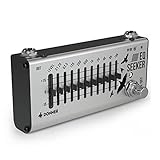
- [Superior EQ Pedal] Convenient compact size, Suitable for any music style. The EQ Seeker is designed and built with carefully selected components to ensure sound quality and road performance
- [10 Band EQ] Fully functional 10-band graphic equalizer suitable for any instrument
The Donner 10-Band EQ is a traditional foot pedal that offers 10 bands of frequency control. This is the closest competitor in terms of form factor, as it lives on the floor. However, the Line 6 FBV2 is used to control an amp’s digital brain, whereas the Donner EQ physically modifies the analog signal (or digital signal path) of any guitar rig. The Donner is a “Universal” solution, meaning it works with any amp brand. We suggest the Donner for players who have a standard tube amp and want to “sculpt” their tone, while the Line 6 FBV2 remains the superior choice for Line 6 owners who need to navigate pre-existing digital presets.
Final Verdict: Is the Line 6 FBV2 the Right Choice for You?
After a thorough evaluation, we can confidently say that the Line 6 FBV2 is an essential purchase for any guitarist utilizing a compatible Line 6 amplifier. Its main strengths lie in its “tank-like” durability, its elegant self-powered design, and its ability to simplify complex performances into a few intuitive taps. While it is limited to four presets and requires a specific brand of amplifier, it excels at its intended purpose. It removes the barrier between the player and their technology, allowing for a more expressive and professional stage presence.
If you are tired of reaching for your amp mid-song and want a reliable, compact solution that will likely outlast the amp itself, this is the gear you need. Whether you are playing in a “hostile” club environment or practicing in your bedroom, the convenience of hands-free switching cannot be overstated. We highly recommend that you click here to secure your Line 6 FBV2 today and finally take full control of your performance rig!
Last update on 2026-10-17 / Affiliate links / Images from Amazon Product Advertising API