
Lehle Mono Volume Pedal Review: Is This the Ultimate Precision Tool for Your Signal Chain?
If you have been playing guitar for any significant length of time, you have likely encountered the “Volume Pedal Curse.” We have all been there: you invest in a beautiful tube amplifier and a boutique pedalboard, only to realize that your passive volume pedal is sucking the high-end sparkle right out of your signal. Or perhaps, in the middle of a soulful ambient swell, you hear that dreaded “scratch” of a worn-out potentiometer. For years, I struggled with these exact issues, constantly replacing strings on my old industry-standard pedals or cleaning pots with contact cleaner every few months. The frustration of an unreliable sweep or a degraded tone is enough to make any professional musician seek a permanent solution. This is where the Lehle Mono Volume Pedal enters the conversation, promising to solve the mechanical and electronic failures that plague traditional designs. In this review, we are going to determine if it truly lives up to its reputation as a “forever” pedal.
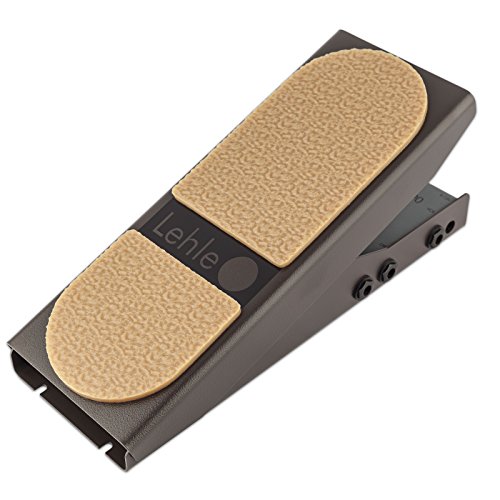
- with Magnetically-controlled Blackmer VCA
- Volume Pedal for Pedal Steel Guitar
What to Consider Before Buying Guitar Volume & Expression Effects
A Guitar Volume & Expression Effects unit is more than just an item; it’s a key solution for controlling your dynamics, shaping your ambient textures, and maintaining the integrity of your signal path. Unlike a simple distortion pedal that you might engage for a solo, a volume pedal is often at the very heart of your performance, acting as a throttle for your entire sound. If the pedal is poorly built or uses cheap internal components, it becomes a bottleneck that limits your instrument’s potential. Choosing the right one requires looking beyond the shiny exterior and understanding how the signal is actually being attenuated.
The ideal customer for this type of product is someone facing technical hurdles with tone loss (impedance mismatch) or those who require extreme precision, such as pedal steel players or ambient guitarists. It is a vital tool for the professional who cannot afford a mechanical failure during a tour. However, it might not be suitable for those who are strictly budget-conscious or players who prefer a completely passive, battery-free setup and don’t mind the occasional tone-suck or maintenance. For those players, a simple passive unit might suffice, but for the serious tone-chaser, the Lehle Mono Volume Pedal represents a significant upgrade.
Before investing, consider these crucial points in detail:
- Dimensions & Space: While you want a pedal that feels substantial underfoot, you must ensure it fits your pedalboard. A pedal that is too large can take up the space of three standard stompboxes, while one that is too small might feel “fidgety” and hard to control during a live performance. Consider if you have the vertical clearance in your flight case for the treadle’s height.
- Capacity/Performance: Look for the mechanism of control. Does it use a traditional potentiometer with a string, or a modern magnetic sensor? Magnetic sensors and VCA (Voltage Controlled Amplifier) technology offer a smoother taper and, more importantly, a lack of physical wear and tear that leads to the “scratchy pot” syndrome.
- Materials & Durability: Since your entire body weight can sometimes end up on this device, the housing must be robust. Cold-rolled steel or heavy-duty aluminum are standard for professional gear. Pay attention to the pivot point; a weak hinge is the most common point of failure on cheaper units.
- Ease of Use & Maintenance: Consider if the pedal requires a specific power supply (9V or 18V) and if it offers adjustable tension. Some players like a very loose “wah-like” feel, while others want a stiff treadle that stays exactly where they leave it. A good pedal should allow you to customize this without a trip to a technician.
Understanding these variables is the first step in ensuring your rig remains reliable and your tone stays pure. Transitioning from a budget-friendly plastic unit to a professional-grade tool like the Lehle Mono Volume Pedal can be a revelation for your playing dynamics.
While the Lehle Mono Volume Pedal is an excellent choice, it’s always wise to see how it stacks up against the competition. For a broader look at all the top models, we highly recommend checking out our complete, in-depth guide:
- Dual Functionality Design: Passive Volume Control and Expression Control combined in 1 pedal (Please use TRS cable, or volume may not control gradually)
- 【Versatile 2-in-1 Design】The Volume Expression Pedal combines both volume and expression control into one ultra-compact unit, making it an essential EXP & Volume 2 in 1 pedal for modern musicians...

- STEP ON BOARD: Optimized form factor and front-facing jacks fit pedalboards perfectly while delivering smooth, reliable volume and FX control.

First Impressions and Key Features of the Lehle Mono Volume Pedal
When we first unboxed the Lehle Mono Volume Pedal, the first thing that struck us was the sheer weight and industrial elegance of the unit. Finished in a unique, sophisticated brown powder coat, it looks and feels more like a piece of high-end laboratory equipment than a guitar pedal. Made in Germany, the craftsmanship is immediately evident. There are no plastic parts to be found in the structural assembly; it is a solid slab of stainless steel and high-grade components. Unlike the “clunky” feel of some classic American-made volume pedals, the Lehle moves with a hydraulic-like smoothness that is almost eerie. It doesn’t use a string—a notorious failure point—instead utilizing a precision magnetic sensor.
Comparing it to market leaders like the Ernie Ball MVP or the Dunlop DVP series, the Lehle Mono Volume Pedal feels significantly more advanced. While others are iterating on decades-old designs, Lehle has re-engineered the concept from the ground up. The inclusion of a buffered direct output and a gain boost suggests this was designed by people who understand the intricacies of a complex pedalboard signal chain. It’s not just a volume attenuator; it’s a high-fidelity signal conditioner.
Key Benefits
- Magnetic sensor technology eliminates scratchy pots and broken strings forever.
- High-end Blackmer VCA ensures zero signal degradation or “tone suck.”
- Internal voltage doubling provides massive headroom (up to 12dB of boost).
- Adjustable minimum volume and gain settings for total control.
Limitations
- Higher price point than standard passive volume pedals.
- Requires a dedicated 9V-15V power supply (cannot run passively).
A Deep Dive into the Performance of the Lehle Mono Volume Pedal
The Revolution of Magnetic Sensor Technology
In our extensive testing, the standout feature of the Lehle Mono Volume Pedal is undoubtedly its use of a Hall-effect sensor to control a Blackmer VCA. To the non-technical player, what this means in practice is that there is no physical contact between the pedal’s moving parts and the electronic component that controls your volume. In a traditional pedal, a gear or a string turns a potentiometer—a carbon track that eventually wears down, becomes dirty, and creates noise. We found that the Lehle Mono Volume Pedal eliminates this entire category of maintenance. Even after months of heavy use in dusty environments, the sweep remained dead silent and perfectly consistent.
The precision afforded by this technology is remarkable. When we compared it to our old passive pedals, the “jumpiness” at the beginning of the sweep was gone. Instead, you get a linear, musical curve that feels incredibly intuitive. For players who use volume swells in tandem with heavy delay and reverb, this level of control allows for a much more expressive performance. We noticed that we could dial in the exact amount of “swell-up” time without the pedal suddenly leaping from 0% to 20% volume. It is a level of refinement that you simply have to feel under your foot to fully appreciate. If you’re looking for this kind of surgical precision, you can see its full feature set and user reviews to see how it might fit your specific setup.
Tone Preservation and the High-Fidelity Buffer
One of the biggest complaints with volume pedals is the loss of high-end frequencies when the volume is rolled back—often referred to as “tone suck.” Because the Lehle Mono Volume Pedal is an active unit featuring a high-impedance buffer, this problem is entirely non-existent. We tested this by running a high-end Stratocaster through 20 feet of cable into the Lehle, and then into a clean boutique amplifier. Even with the volume rolled halfway down on the pedal, the high-end clarity remained identical to the direct-to-amp sound. This is a crucial benefit for any player who values the nuance of their instrument’s natural voice.
The internal electronics are designed to handle high-voltage signals, meaning that even if you have high-output active pickups or a hot boost pedal before the volume pedal, it won’t clip or distort. We found that the 120dB of dynamic range provided by the VCA is more than enough for any musical application. The buffered direct output is also a godsend for those who use tuners or want to split their signal to a second amp without loading down the pickups. It keeps the primary signal path pure and isolated from the secondary output, ensuring that your tuner doesn’t interfere with your tone. This level of signal integrity is a feature that really sets it apart from the sea of mediocre alternatives.
Customizable Sweep: Minimum Volume and Boost Controls
What truly elevates the Lehle Mono Volume Pedal from a simple utility to a creative tool are the secondary controls located on the side of the chassis. You have the ability to set a “Minimum Volume” and a “Gain” level. We spent a lot of time experimenting with these during our evaluation. By adjusting the minimum volume, you can use the pedal to switch between a preset rhythm volume (at the heel-down position) and a lead volume (at the toe-down position). This effectively turns the pedal into a two-channel gain stage for your amp.
Furthermore, the Gain knob allows you to add up to 12dB of clean boost when the pedal is in the toe-down position. We found this incredibly useful for pushing the front end of a tube amp into natural saturation during a solo. It’s essentially a volume pedal and a high-end clean boost in one heavy-duty enclosure. The ability to fine-tune the “taper” or the feel of the sweep via these controls means that whether you are playing a fast-paced country lick or a slow, cinematic soundscape, the pedal can be tailored to your specific physical response. For many, this level of customization justifies the investment, and you can check the latest price and availability to see if it’s currently within your gear budget.
The “Pedal Steel” Standard of Ergonomics
While the Lehle Mono Volume Pedal is used by all types of guitarists, it was designed with a heavy influence from the world of pedal steel guitar—a discipline where the volume pedal is used as much as the picks themselves. This heritage is felt in the ergonomics. The physical sweep of the treadle is slightly longer than a standard wah pedal, providing more “resolution” for your foot. We found that this longer throw makes it much easier to hold the volume at a specific, consistent level during a song.
The friction of the treadle is also adjustable. If you prefer a pedal that moves with the lightest touch, you can set it that way. If you want it to stay put even if you take your foot off, a quick adjustment makes it happen. The low profile of the pedal also reduces foot fatigue during long sets. We’ve used pedals that sit too high, forcing your ankle into an uncomfortable angle; the Lehle sits just right. The stainless steel construction ensures that no matter how hard you stomp, there is zero flex in the chassis. It is a “buy it once, use it for life” piece of equipment that provides a level of confidence on stage that is hard to put a price on.
What Other Users Are Saying
The general sentiment among users who have made the switch to Lehle is overwhelmingly positive, with many echoing our findings regarding the build quality. One veteran guitarist, who has been playing for 55 years, noted that this is “by far the best volume pedal” they have ever owned in over five decades of performing. This specific user highlighted the Hall-effect sensor as the game-changer, noting that they had tried almost everything else on the market over the years and found nothing as reliable. This corroborates our assessment that the removal of the traditional potentiometer is the key to this pedal’s longevity.
Some users have mentioned that the cost was initially a deterrent, but after three or more years of use without a single failure, they viewed it as a cost-saving measure in the long run. We did find a few minor critiques regarding the weight—it is a heavy pedal—which might be a concern for those trying to build an ultra-lightweight fly-rig. However, for most users, the trade-off of weight for durability is a welcome one. The consensus is clear: while it is an investment, the performance and peace of mind it provides are unparalleled. You can read more user testimonials here to see how it performs in different musical genres.
How the Lehle Mono Volume Pedal Compares to Top Alternatives
1. Jim Dunlop Volume X Mini Pedal DVP4

- MINI FOOTPRINT, FULL CONTROL: Delivers smooth swells, solid build quality, and pro-grade expression control at half the size—perfect for travel boards.
- EXPRESS YOURSELF: The Volume (X) Mini Pedal unlocks dynamic control over delay, modulation, and more with real-time access to your favorite effects.
The Jim Dunlop DVP4 is the polar opposite of the Lehle in terms of footprint. It is designed specifically for tight pedalboards where every square inch is precious. While it is built like a tank and offers a very smooth sweep for its size, it is a passive pedal. This means you don’t get the active buffering or the 12dB boost found in the Lehle Mono Volume Pedal. The DVP4 is excellent for the touring musician who needs a reliable, compact solution and already has a high-quality buffer elsewhere in their chain. However, if you are looking for the absolute best tone preservation and a full-sized treadle for maximum control, the Lehle remains the superior choice.
2. SONICAKE Vexpress Mini Guitar Volume Pedal
- Dual Functionality Design: Passive Volume Control and Expression Control combined in 1 pedal (Please use TRS cable, or volume may not control gradually)
- Automatic Function Detection: Automatically detects and switches between Volume or Expression Control functionality based on connection
The SONICAKE Vexpress is a budget-friendly alternative that serves as both a volume and expression pedal. It is a passive unit, making it very simple to integrate into any setup without needing a power supply. In our comparison, it obviously lacks the premium feel, the magnetic sensor, and the active electronics of the Lehle. The Vexpress is a great choice for beginners or hobbyists who need a dual-purpose tool on a strict budget. However, for professional applications or high-fidelity recording, the difference in signal quality and physical durability between this and the Lehle Mono Volume Pedal is night and day.
3. Donner Viper 2 in 1 Passive Volume Expression Pedal

- [2 in 1 Guitar Pedal] Combine passive volume pedal and expression pedal in one
- [Automatic Switching] Switch between volume and expression mode automatically by detecting input jack
Similar to the Sonicake, the Donner Viper is a compact, entry-level 2-in-1 pedal. It is constructed with a plastic-and-metal hybrid housing that is surprisingly sturdy for the price, but it cannot compete with the stainless steel industrial build of the Lehle. The sweep on the Donner is much shorter, which makes precision swells more difficult. We would recommend the Donner Viper for players who only occasionally use a volume pedal or those looking for a cheap expression pedal for their multi-effects unit. If your music relies heavily on volume dynamics, the investment in the Lehle Mono Volume Pedal is significantly more rewarding.
Final Verdict: Is the Lehle Mono Volume Pedal Worth the Investment?
After putting the Lehle Mono Volume Pedal through its paces in both studio and live environments, our conclusion is that it is quite possibly the finest volume pedal ever made. It successfully addresses every common failure point of traditional designs—eliminating the scratchy pot, the broken string, and the loss of high-end frequencies. While the price is certainly higher than your average pedal, the “German engineering” is not just a marketing slogan here; it is evident in every swell and every perfectly preserved note. It is a precision instrument designed for musicians who refuse to compromise on their sound or their gear’s reliability.
We recommend the Lehle Mono Volume Pedal to any professional guitarist, pedal steel player, or serious enthusiast who wants to buy their last volume pedal once and for all. Its combination of the Blackmer VCA, magnetic sensor technology, and incredible headroom makes it a class-leader that justifies every penny of its cost. If you are ready to upgrade your rig to a professional standard and experience a sweep that is as smooth as silk, we highly recommend you pick up the Lehle Mono Volume Pedal today and hear the difference for yourself.
Last update on 2026-09-28 / Affiliate links / Images from Amazon Product Advertising API