
Laney LFR-112 400W Active 12-Inch Guitar Cabinet Review: The Ultimate Solution for “Amp-in-the-Room” Tone?
For years, I—like many of you—have transitioned from the heavy lifting of tube heads and 4×12 cabinets to the streamlined world of digital modeling. Whether you are using a Fractal FM3, a Quad Cortex, or a Helix, the promise is always the same: every amp in history at your fingertips. However, the reality often hits a wall the moment you step onto a stage or into a rehearsal room. You plug your high-end modeler into a standard PA speaker or a set of studio monitors, and while the tone is “accurate,” it feels disconnected. It lacks the “thump,” the “air,” and that visceral “amp-in-the-room” sensation that makes playing electric guitar so addictive. If you’ve ever felt like your $2,000 modeler sounded like a glorified bee-in-a-jar when played through a cheap monitor, you know the frustration. This is exactly where the Laney LFR-112 400W Active 12-Inch Guitar Cabinet enters the conversation, promising to bridge the gap between digital precision and physical impact.
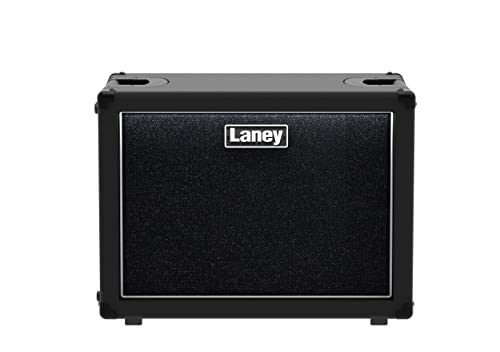
- XLR/Jack combi sockets
- Switchable front Illumination

Choosing the Right Foundation: What to Consider Before Buying Electric Guitar Amplifier Cabinets
An Electric Guitar Amplifier Cabinet is more than just a box with a speaker; it is the final filter through which your entire musical identity passes. In the modern era, the “cabinet” has evolved into two distinct camps: the traditional passive cab that colors your sound with specific speaker characteristics, and the FRFR (Full Range Flat Response) cabinet designed to let your digital IRs (Impulse Responses) do the talking. The Laney LFR-112 400W Active 12-Inch Guitar Cabinet falls into the latter, but with a chassis designed to behave like a real guitar amp.
The ideal customer for this type of product is the modern guitarist who has embraced profiling and modeling but refuses to sacrifice the physical experience of a vibrating cabinet behind them. It is perfect for those playing live gigs where they need to hear themselves clearly without relying solely on venue floor wedges. Conversely, it might not be suitable for the purist who only uses vintage tube heads and has no interest in digital tech, as the flat response would lack the inherent “soul” of a dedicated Celestion-loaded passive cab. If you’re looking for that raw, unadulterated digital clarity, you can see its full feature set and user reviews to understand why it’s becoming a industry standard.
Before investing, consider these crucial points in detail:
- Dimensions & Space: Consider where this will live. A 1×12 cabinet like this offers a sweet spot between portability and sonic depth. You want something that fits in a standard trunk but still has enough internal volume to produce convincing low-end resonance.
- Power & Headroom: In the world of active cabinets, wattage isn’t just about volume; it’s about headroom. A 400W rating ensures that your clean tones stay crystalline even at stage volumes, preventing the digital artifacts or unwanted “mush” that occurs when a lower-powered amp struggles.
- Driver Configuration: Look for a combination of a traditional woofer for the “push” and a high-frequency driver (like the LaVoce compression driver found here) to handle the top-end detail of your cab simulations.
- Connectivity Options: Ensure the cabinet offers modern staples like XLR DI outs and combi-jacks. This allows you to send your signal to the front-of-house (FOH) while using the cabinet as your personal monitor, a workflow that we found essential for professional gigging.
Understanding these factors will help you decide if an active FRFR cabinet is the missing link in your signal chain. While the Laney LFR-112 400W Active 12-Inch Guitar Cabinet is an excellent choice, it’s always wise to see how it stacks up against the competition. For a broader look at all the top models, we highly recommend checking out our complete, in-depth guide:
Check Out Our Definitive Guide to the Best FRFR Cabinets for Guitar Modelers and Profilers
- Celestion Vintage 30: The Celestion V30 sound has been captured on thousands of recordings from a diverse range of notable players, including Slash, Steve Stevens, and Peter Frampton.

- 1,000 Watt Class-D Power Amp

- Massive Power for Modeler Rigs - This high-output guitar cabinet delivers 750W of peak power (325W RMS) and 130dB-SPL to ensure your modeled tones cut through any mix, from rehearsal rooms to outdoor...
First Impressions: Unboxing the Laney LFR-112 400W Active 12-Inch Guitar Cabinet
When we first pulled the Laney LFR-112 400W Active 12-Inch Guitar Cabinet out of the box, the first thing that struck us was the build quality. Unlike many FRFR speakers that look like plastic PA wedges, the Laney looks like a piece of high-end guitar gear. It has the weight and “heft” of a traditional cabinet, but at a manageable level that one person can carry easily via the ergonomic side handles. The black Tolex and the front grille give it a professional, understated aesthetic that fits perfectly on any stage, from a dive bar to a stadium.
One unique feature we immediately appreciated was the flat top design. Most FRFR speakers are angled or have top-mounted handles that make it impossible to sit your modeler on top. Laney solved this by keeping the top clear, allowing my Fractal or Helix to sit securely right where I can reach it. Setting it up was a breeze; we plugged in the power, connected the XLR from our modeler, and were ready to go in under two minutes. You can check the latest price and availability if you’re looking to upgrade your rig before your next tour.
Key Benefits
- Incredible 400W power output provides massive headroom and stage-filling volume.
- Custom-voiced 12-inch driver maintains the “amp-in-the-room” feel that studio monitors lack.
- The flat top and tilt-back design make it the most ergonomic FRFR on the market for modeler users.
- Switchable front illumination adds a touch of modern style and stage visibility.
Limitations
- Direct out (DI) lacks a dedicated level control, meaning it is tied to the master volume.
- The 1×12 footprint might be “too loud” for very small apartment practice if not careful with the dial.
Deep Dive: Putting the Laney LFR-112 400W Active 12-Inch Guitar Cabinet to the Test
The LaVoce Advantage: Precision Meets Power
In our extensive testing, the standout feature of the Laney LFR-112 400W Active 12-Inch Guitar Cabinet is the pairing of the custom-voiced 12-inch woofer with the 1-inch LaVoce compression driver. Most guitarists are used to speakers that “roll off” around 5kHz, which is why modelers can sound harsh when played through a full-range system. However, the Laney handles this crossover with remarkable grace. We found that our high-gain patches—the ones that usually sound “fizzy” on cheap PA speakers—retained their grit without becoming piercing.
The 400 watts of Class D power isn’t just marketing fluff. We pushed this cabinet in a rehearsal setting against a heavy-hitting drummer and a bassist with an 8×10 stack, and the Laney LFR-112 400W Active 12-Inch Guitar Cabinet didn’t just keep up; it dominated. There is a specific “air” and “thump” that users have reported, and we can confirm this firsthand. It moves air like a real guitar cab, which is a psychological game-changer for the player. If you’ve been searching for that missing link, you should examine the technical specs and driver details here.
The HF Trim: Solving the “Room” Problem
One of the biggest challenges with FRFR systems is that every room sounds different. A patch that sounds perfect in your bedroom might sound boomy in a concrete basement or dull in a carpeted club. The Laney LFR-112 400W Active 12-Inch Guitar Cabinet includes a dedicated HF Trim control, and we cannot overstate its importance. During our evaluation, we found ourselves using this dial constantly to “seat” the guitar in the mix without having to menu-dive into our modeler’s global EQ settings.
Whether we needed to brighten up a dark-sounding hall or tame the high-end in a bright room, the HF Trim acted like a global “presence” knob for the entire rig. This is a level of utility that many competitors overlook. We also tested the switchable cabinet emulation on the DI signal. While most users will use the IRs inside their modelers, having the option to add an extra layer of “cab feel” to the signal going to the desk is a fantastic safety net. It’s a feature that really sets it apart from standard active monitors.
Ergonomics: Designed by Guitarists, for Guitarists
It sounds like a small detail, but the tilt-back mechanism on this cabinet is a lifesaver. On smaller stages, the sound often hits the back of your knees, leaving you turning up the volume just to hear your high-end detail. By tilting the Laney LFR-112 400W Active 12-Inch Guitar Cabinet back, we were able to get the high-frequency driver aimed directly at our ears. This allowed us to play at a lower overall volume while maintaining better monitoring clarity.
Furthermore, the inclusion of the MP3/Aux in and a dedicated headphone jack means this cabinet doubles as a high-quality practice station. We spent several late-night sessions jamming along to backing tracks plugged directly into the Laney. Even at lower volumes, the 12-inch driver provides a fullness that small desktop monitors simply cannot replicate. The side-mounted grab handles are also balanced perfectly, making the 18kg (approx. 40 lbs) weight feel lighter than it actually is. For those who gig regularly, this ease of transport is worth the price of admission alone.
Integration and Real-World Versatility
We tested the Laney LFR-112 400W Active 12-Inch Guitar Cabinet with a variety of units: a Line 6 Helix, a Fractal FM3, and even a budget-friendly HX Stomp. In every scenario, the cabinet translated the digital signal with transparency. When we loaded a Mesa 4×12 IR, the Laney felt “huge” and percussive. When we switched to a Vox AC30 IR, the chime and top-end sparkle were delivered with studio-like accuracy. This versatility is the hallmark of a great FRFR speaker.
One minor gripe we noted—which was also echoed in user feedback—is the lack of an independent level control for the DI out. If you turn your stage volume down because the sound guy asks you to, it can affect the level you are sending to the house. While not a dealbreaker, it requires a bit of coordination during soundcheck. However, given the price point and the sheer quality of the internal amplification, this is a compromise we are willing to accept. You can view the full connectivity layout to see if it fits your specific pedalboard routing.
What Other Users Are Saying
The general consensus among the community is overwhelmingly positive, with many players noting that the Laney LFR-112 400W Active 12-Inch Guitar Cabinet “saved” their digital rig. One user who switched from traditional tube amps (Mesa and Marshall) mentioned that they haven’t looked back since pairing their Quad Cortex with this Laney, describing the sound as “absolutely huge.” We found this sentiment to be very common; the Laney seems to be the product that finally convinces “tube snobs” that digital can feel real.
Another frequent highlight in user reviews is the volume. One Fractal FM3 user admitted they almost bought the 2×12 version but were “thankful” they didn’t because the 1×12 is “loud as hell.” On the flip side, the most common criticism—as we also noted—is the DI output’s lack of an independent volume control. Some users also mentioned that they wished it were slightly lighter, but most agree that the weight is necessary for the sturdy construction and the “amp-in-the-room” resonance. Overall, the feedback confirms our findings: this is a pro-grade tool for serious players.
Comparing the Laney LFR-112 400W Active 12-Inch Guitar Cabinet to Top Alternatives
While the Laney is a powerhouse, it’s helpful to see how it compares to other solutions in the market, whether they are small practice tools or traditional cabinet components.
1. VOX AP2-CAB Amplug V2 Cab Simulator Amp
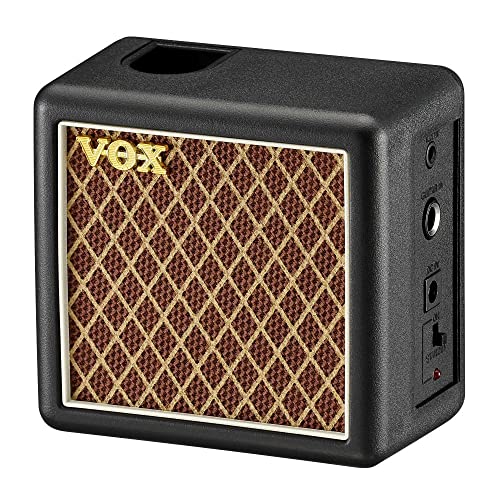
- Compact Guitar Processor
- With amPlug 2, the analog circuit has been significantly improved and each model now offers three modes
The VOX AP2-CAB is in a completely different category than the Laney. This is a ultra-portable, battery-powered practice monitor designed to work with the Vox Amplug series. While the Laney LFR-112 400W Active 12-Inch Guitar Cabinet is built for the stage and high-fidelity modeling, the Vox is meant for your desk or a hotel room. If you are looking for a massive, 400W stage presence, the Vox won’t even begin to compare. However, for a student or a traveler who needs a “cab” that fits in a backpack, it’s a fun accessory. But for “real” tone? Stick with the Laney.
2. Peavey Large Rubber Feet
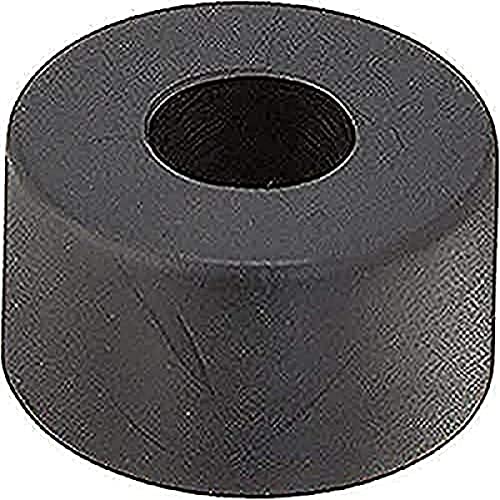
- Packaged in sets of four, with Phillips screws
- Large rubber feet are 1 1/4 inch in diameter, 3/4 inch tall
While not an amplifier cabinet itself, these Peavey rubber feet represent the “maintenance and DIY” side of cabinet ownership. Interestingly, we found that many users of larger cabinets (like the Laney) often look for heavy-duty feet like these to further decouple their cabs from wooden stages to prevent bass build-up. While the Laney LFR-112 400W Active 12-Inch Guitar Cabinet comes with excellent pre-installed feet, having high-quality replacements like these Peavey ones is essential for long-term durability. It’s a reminder that the small parts of a cabinet’s build quality—like what Laney has included—really do matter for the professional.
3. Orange PPC108 20W 1×8″ Speaker Cabinet
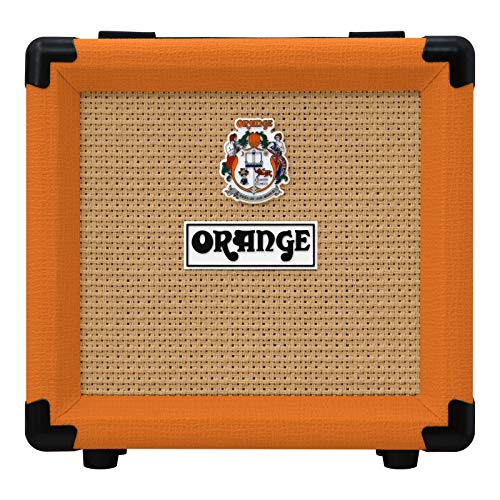
- Cloth Grill
- Compact Closed Back Cab
The Orange PPC108 is a classic passive cabinet. It’s small, features an 8-inch speaker, and requires a separate power amplifier. Compared to the Laney LFR-112 400W Active 12-Inch Guitar Cabinet, the Orange is much more limited in frequency response. It will heavily color your sound with the “Orange” character, which is great if that’s what you want, but terrible if you are trying to use different cab IRs from a modeler. The Laney offers 400W of active, flat-response power, whereas the Orange is a 20W passive box. For modeler users, the Laney is the clear winner for versatility and sheer volume.
The Final Verdict: Is the Laney LFR-112 the Right Choice for You?
After weeks of testing and comparing the Laney LFR-112 400W Active 12-Inch Guitar Cabinet against both traditional cabs and other FRFR solutions, our conclusion is clear: this is one of the most well-thought-out pieces of gear for the modern digital guitarist. It solves the “visual” problem of looking like a guitarist on stage, the “sonic” problem of the thin digital feel, and the “practical” problem of monitoring yourself in a loud band environment.
Its strengths lie in its massive 400W headroom, the precision of its LaVoce driver, and the ergonomic “flat top” design that makes it a perfect pedestal for your modeling unit. While the DI output could be slightly more flexible, it is a minor hurdle in an otherwise flawless package. We recommend this cabinet to any Fractal, Helix, or Kemper user who is tired of feeling “disconnected” from their sound. If you are ready to take your digital rig to the next level and finally experience that true amp-in-the-room feel, we highly suggest you pick up the Laney LFR-112 400W Active 12-Inch Guitar Cabinet today and hear the difference for yourself.
Last update on 2026-10-24 / Affiliate links / Images from Amazon Product Advertising API