
KRK S10.4 Powered Studio Subwoofer Review: Is This the Ultimate Precision Tool for Your Low-End?
I remember the first time I realized my home studio setup was lying to me. I had spent three weeks meticulously mixing a bass-heavy electronic track on a pair of high-quality seven-inch monitors. In my room, it sounded tight, punchy, and professional. However, the moment I played it through a club system, the low-end turned into a muddy, vibrating mess that swallowed the vocals and distorted the kick. The problem wasn’t my ears or my monitors; it was the fact that I couldn’t hear what was happening below 50Hz. This “invisible octave” is where professional mixes are either made or broken.
Searching for a solution leads many of us to the same crossroad: do we trust our smaller monitors to “guess” the sub-bass, or do we invest in a dedicated subwoofer? Choosing the wrong sub can actually make your problems worse by introducing phase issues and “hyped” bass that doesn’t translate. That is why I decided to put the KRK S10.4 Powered Studio Subwoofer to the test. In this review, we will explore whether this fourth-generation beast provides the surgical accuracy needed for professional production or if it is just another loud box taking up floor space.

- 10" glass aramid composite woofer
- Bass extension to 28Hz with a max SPL of 117 dB

Choosing the Right Foundation: What to Consider Before Buying a Studio Subwoofer
A Studio Subwoofer is more than just an item; it’s a key solution for uncovering the sonic truths that standard monitors simply cannot reproduce. In a professional or semi-professional mixing environment, the goal isn’t to make the room shake for the sake of excitement; it is to extend the frequency response of your monitoring system so you can make informed decisions about the lowest frequencies. Without an accurate sub, you are essentially mixing in the dark, which leads to tracks that sound “thin” on big systems or “boomy” in cars.
The ideal customer for this type of product is someone facing translation issues in their mixes, specifically music producers, film composers, and mixing engineers working in medium-sized rooms. It is also an excellent choice for DJs who need to feel the “club” energy while practicing. However, it might not be suitable for those in tiny, untreated rooms where a 10-inch sub might create more standing waves than solutions, or for casual listeners who prefer “colored” or “booseted” bass over flat, surgical accuracy. In those cases, smaller eight-inch alternatives might be a safer bet.
Before investing, consider these crucial points in detail:
- Dimensions & Space: Studio subwoofers are significantly larger than standard monitors. You need to ensure you have the floor space, preferably under your desk or in a corner that doesn’t create massive bass buildup. If you are tight on space, you should check the dimensions of the KRK S10.4 Powered Studio Subwoofer to ensure it fits your ergonomic workflow.
- Crossover Flexibility: A sub is only as good as its ability to blend with your main monitors. Look for a unit that offers multiple crossover frequency points. This allows you to “hand off” the low-end from your monitors to the sub at exactly the right frequency, preventing a “hole” in your sound or a messy overlap.
- Port Placement: Front-firing ports are generally preferred in smaller or medium studios because they allow you to place the subwoofer closer to walls without the “chuffing” or boundary interference issues common with rear-firing designs.
- Connectivity and Control: Ensure the sub has the right I/O for your interface (XLR, TRS, or RCA). Features like a bypass footswitch are invaluable, as they allow you to instantly hear your mix with and without the sub to check for compatibility.
While the KRK S10.4 Powered Studio Subwoofer is an excellent choice, it’s always wise to see how it stacks up against the competition. For a broader look at all the top models, we highly recommend checking out our complete, in-depth guide:

- 8inch bass-reflex powered subwoofer

- HONEST. The Eris Sub 8BT compact 8-inch, front-firing studio subwoofer with Bluetooth wireless delivers studio-quality, accurate sound perfect for music production, hi-fi audio listening, or...
- 10" glass aramid composite woofer
First Impressions: Unboxing the KRK S10.4 Powered Studio Subwoofer
Upon unboxing the KRK S10.4 Powered Studio Subwoofer, the first thing I noticed was its sheer weight. At 35 pounds, it feels incredibly dense and well-constructed, which is exactly what you want in a device meant to handle high-pressure low frequencies. The signature yellow glass aramid composite woofer looks striking against the matte black finish of the cabinet. The curved edges aren’t just for aesthetics; they help reduce diffraction, a common issue in square-edged cabinets.
Setting it up was surprisingly intuitive. The back panel is clearly labeled, and the inclusion of various input types—XLR, 1/4″ TRS, and even RCA—means it can integrate into almost any setup, from a professional interface to a basic DJ controller. We found the front-firing bass port to be a major design win, allowing us to tuck it under a desk near a wall without the bass becoming uncontrollable. Before you get started, it is worth noting that you can see its full feature set and user reviews to understand the technical depth KRK has engineered into this fourth generation.
Key Benefits
- Exceptional low-frequency extension down to 28Hz for true sub-bass monitoring.
- Four-position crossover control allows for seamless integration with any monitor size.
- Front-firing port provides incredible placement flexibility in smaller rooms.
- Dedicated bypass footswitch input for quick A/B testing of your mix.
Limitations
- The protective speaker grille is sold separately and can be difficult to find in stock.
- At 35 pounds, it is quite heavy and requires a stable, solid floor surface.
Performance Deep Dive: Putting the KRK S10.4 Powered Studio Subwoofer to the Test
Sonic Accuracy and the Glass Aramid Advantage
When we first fired up the KRK S10.4 Powered Studio Subwoofer, the immediate sensation wasn’t “more bass,” but rather “more space.” This is the hallmark of a true studio subwoofer. Unlike consumer subs that add a generic “thump,” the S10.4 reproduces low-end with startling clarity. We tested it with several reference tracks, ranging from James Blake’s sub-heavy electronic compositions to orchestral film scores. The 10-inch glass aramid composite woofer is incredibly stiff and lightweight, which allows it to react quickly to transients.
In our tests, the 28Hz floor felt very real. There was no “groping” for the notes; the sub delivered them with a flat harmonic profile that we found essential for critical listening. This accuracy ensures that you aren’t just hearing the volume of the bass, but the actual pitch and texture. When we paired it with a set of Rokit 7s, the soundstage opened up significantly. By offloading the heavy lifting of the low frequencies to the 160-watt Class D amplifier in the sub, the main monitors were able to breathe, resulting in clearer mids and more detailed highs. It’s a transformative experience that you can explore further by checking out its performance specs.
Masterful Integration: The Four-Position Crossover
One of the biggest challenges with adding a sub is the “crossover gap.” If the sub stops playing at 80Hz but your monitors only go down to 100Hz, you lose a chunk of your mix. The KRK S10.4 Powered Studio Subwoofer solves this with a highly optimized four-position crossover control (60, 70, 80, and 90Hz). We found this feature to be the “secret sauce” of the unit. We spent about an hour toggling between these settings to find the perfect “handshake” between the sub and our monitors.
For smaller five-inch monitors, the 90Hz setting provided a necessary boost in the lower-mid punch, while for our larger eight-inch monitors, the 60Hz setting allowed the sub to only handle the “true” sub-bass, leaving the monitors to do what they do best. This level of customization is rare at this price point and is supported by user feedback that confirms how “insanely responsive” the unit feels in medium-sized rooms. The ability to dial in this crossover ensures that the sub becomes a natural extension of your speakers rather than a separate, disconnected sound source.
The Bypass Footswitch: A Workflow Essential
If you are a mixing engineer, the footswitch control is arguably the most important feature of the KRK S10.4 Powered Studio Subwoofer. In our studio sessions, we often need to check if our kick drum is still audible on “low-end challenged” devices like laptop speakers or phones. By plugging in a standard latching footswitch, we were able to instantly bypass the sub and the internal crossover. This sends the full-range signal back to the main monitors and mutes the sub entirely.
This “reality check” is vital. We found that being able to switch the sub off without leaving the mixing “sweet spot” allowed us to make faster, more confident decisions. It prevents your ears from becoming “bass-fatigued.” One user mentioned that they had “absolutely no regrets” pairing this with their Rokit setup, and we attribute much of that satisfaction to this seamless integration. You can see how this feature sets it apart from other more “passive” subwoofers in the same category.
Build Quality and Thermal Management
The KRK S10.4 Powered Studio Subwoofer is built like a tank. During our high-SPL testing, where we pushed the unit near its 117 dB maximum, the cabinet remained remarkably still. There were no audible rattles or port turbulence, which is often a problem with cheaper plastic-ported subs. The Class D amplifier is not only powerful but also lightweight and efficient, meaning it doesn’t get excessively hot even after hours of use. We also appreciated the ground lift switch, which saved us from a pesky ground loop hum that appeared when we first connected our interface.
The only point of contention we found—and this was echoed by several users—is the lack of an included protective grille. For a subwoofer that often sits on the floor near feet and rolling chairs, the exposed yellow cone is a bit of a liability. While there is an accessory screen available, it is frequently back-ordered. We recommend that if you decide to check the latest price and availability, you also look into protective options if your studio floor is a high-traffic area. Despite this, the overall construction quality is professional-grade and designed for longevity.
What Other Users Are Saying
The general sentiment surrounding the KRK S10.4 Powered Studio Subwoofer is overwhelmingly positive, with many users highlighting its “night and day” difference compared to standard home theater subwoofers. One professional producer noted that “regular subs are designed to add punch for casual listening, but these KRK subs don’t mess with the sound—they reproduce it accurately.” This aligns with our findings that the S10.4 is a tool for accuracy, not just volume.
Another user praised its responsiveness in medium rooms, mentioning it can “hit those 20 Hz minimums without breaking a sweat.” However, there is a recurring frustration regarding the speaker grille. Multiple users expressed disappointment that the “pictures are false advertising” as they show a grille that isn’t included, and obtaining one afterward is “impossible” due to stock issues. Some also mentioned the weight as a factor, calling it a “hefty boy.” Despite these minor gripes about accessories and weight, the consensus is that for critical listening and mixing, this is the sub to get, especially when paired with KRK monitors. It’s a 10/10 recommendation for many who wanted that extra punch under 60 Hz that they just wasn’t getting from their standard setup.
Comparing the KRK S10.4 Powered Studio Subwoofer to the Competition
1. JBL LSR310S Studio Monitor Subwoofer
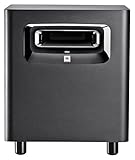
- This patented JBL port design works in concert with the LSR310S low frequency driver for deep, dynamic bass response at all playback levels. The double-flared shape of the port is precisely calculated...
- A JBL first, the XLF setting activates a specially-engineered tuning that emulates the ample bass tuning used in today's dance clubs. When producing a dance track, the XLF setting will inspire you and...
The JBL LSR310S is the primary rival to the KRK S10.4 Powered Studio Subwoofer. The JBL features a unique “XLF” (Extended Low Frequency) setting which is great for dance music, but we found the KRK’s four-position crossover to be more useful for surgical mixing. The JBL is down-firing, which makes it less picky about wall placement but can sometimes lead to a slightly “diffused” sound compared to the KRK’s front-firing precision. If you are looking for a more “club-like” feel, the JBL is a strong contender, but for pure accuracy and build quality, the KRK feels like the more modern, robust tool.
2. PreSonus Eris Sub 8 Compact Studio Sub

- 8-inch, front-firing, paper-composite transducer with high-elasticity rubber surround delivers smooth low-frequency transients.Waterproof : No
- 100W Class AB amplifier (50W RMS) gives robust output with minimal distortion.
The PreSonus Eris Sub 8 is a much smaller, budget-friendly alternative. While it’s great for tiny bedroom setups, it simply cannot compete with the KRK S10.4 Powered Studio Subwoofer in terms of power or frequency extension. The Eris only goes down to 30Hz (on paper) but lacks the 117dB headroom of the KRK. We would recommend the PreSonus for someone with four-inch monitors in a very small space, but for anyone serious about professional production or working in a medium-sized room, the KRK is a significant and necessary upgrade.
3. Mackie CR-X Series 8-Inch Multimedia Subwoofer
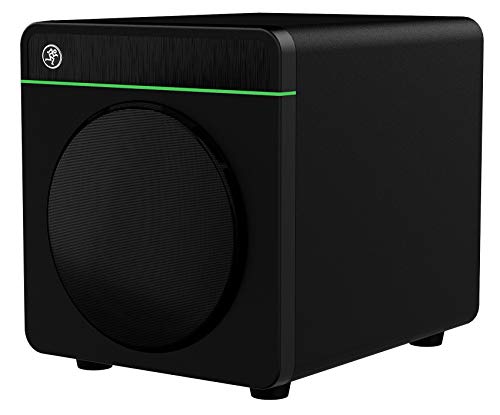
- Professional studio-quality sound
- Adds Bluetooth streaming to any studio monitors
The Mackie CR8S-XBT is aimed more at the “prosumer” and content creator market rather than the professional mix engineer. It includes Bluetooth connectivity, which is a nice feature for casual listening but irrelevant for low-latency studio work. Compared to the KRK S10.4 Powered Studio Subwoofer, the Mackie feels less “tight” in its reproduction and lacks the professional balanced I/O versatility. The KRK is a serious piece of studio gear, whereas the Mackie is a high-end multimedia speaker. If your goal is professional music production, the KRK is the clear winner here.
The Final Verdict: Is the KRK S10.4 Powered Studio Subwoofer the Right Choice?
After weeks of testing, it’s clear that the KRK S10.4 Powered Studio Subwoofer is one of the most capable and accurate subwoofers in its price bracket. Its ability to extend the low-end down to 28Hz with such flat harmonics is a game-changer for home and project studios. The combination of the glass aramid woofer, the versatile four-position crossover, and the essential bypass footswitch makes it a professional tool that solves the “invisible octave” problem once and for all.
While the lack of an included grille is a frustrating oversight and the unit’s weight makes it a permanent fixture once placed, these are small prices to pay for the sonic clarity it provides. If you are currently mixing on monitors smaller than eight inches, or if you find that your bass just isn’t translating to the real world, this is the missing piece of your puzzle. We highly recommend this sub for electronic producers, hip-hop engineers, and film composers alike. If you are ready to finally hear what is actually happening in your low-end, you should check the latest price and availability of the KRK S10.4 Powered Studio Subwoofer and take your studio’s monitoring to the next level today.
Last update on 2026-10-16 / Affiliate links / Images from Amazon Product Advertising API