
KRK ROKIT7G4 7″ Powered Studio Monitor Review: The Goldilocks of Precision and Power for Modern Producers
In the world of music production, there is a recurring nightmare that keeps many of us awake at night: the “Translation Gap.” You spend hours, maybe even days, perfecting a mix in your home studio. It sounds punchy, clear, and vibrant. But the moment you play it in your car or on a pair of consumer earbuds, it falls apart. The bass is muddy, the vocals are buried, and the high-end is piercing. This happens because your speakers are lying to you. Finding a monitor that provides an honest, flat response while still offering enough low-end “vibe” to keep you inspired is a massive challenge. Without an accurate reference, you are essentially mixing in the dark, and the KRK ROKIT7G4 7″ Powered Studio Monitor aims to be the light that guides your creative process.

- Professional grade 7“ (bi-amp) studio monitor designed and engineered in the USA
- 7” matching woofer and 1” tweeter made with Kevlar
What to Consider Before Buying Studio Audio Monitors
A Studio Audio Monitors is more than just an item; it’s a key solution for anyone looking to bridge the gap between amateur recordings and professional-grade sonic landscapes. These aren’t just speakers for listening; they are precision tools designed to reveal the flaws in your audio so you can fix them. The goal is transparency—you want a speaker that doesn’t “beautify” the sound but rather exposes the truth of the frequency spectrum. Without this accuracy, your creative decisions are based on a distorted reality, leading to frustration and wasted time during the mastering phase.
The ideal customer for this type of product is a music producer, mixing engineer, or content creator who has outgrown entry-level desktop speakers and needs a reliable, bi-amplified system to make critical EQ and compression choices. It is also perfect for broadcasters and DJs who need a punchy yet accurate reference. However, it might not be suitable for those who purely want a “hi-fi” experience for casual listening, where “colored” sound—boosted bass and sparkling highs—is often preferred over the clinical flatness of a studio monitor. If you are in a very small, untreated room, a 7-inch monitor might even be too much, and you may need to look at smaller 5-inch alternatives.
Before investing, consider these crucial points in detail:
- Dimensions & Space: The physical size of your room dictates the size of the monitor you should buy. A 7-inch monitor like this occupies a significant amount of desk real estate and requires proper stands or isolation pads to prevent unwanted vibrations. You also need to ensure you have enough space between the monitor and the wall to prevent low-end build-up, although front-firing ports help mitigate this.
- Capacity & Performance: Look at the wattage and the driver materials. Bi-amplified systems are superior because they use separate amplifiers for the woofer and the tweeter, ensuring that a heavy bass hit doesn’t distort the clarity of your high-end frequencies. The frequency response range is also vital; you want something that reaches low enough to hear the “sub” without needing a separate subwoofer immediately.
- Materials & Durability: The material of the cone affects the speed and accuracy of the sound. Kevlar is the industry gold standard for a reason—it is incredibly stiff and lightweight, allowing the driver to stop and start instantly, which reduces “smearing” in the audio. Choosing high-quality materials ensures the monitor can handle high sound pressure levels without degrading over time.
- Ease of Use & Maintenance: Modern monitors often include Digital Signal Processing (DSP) to help tune the speaker to your specific room. Look for monitors that offer a clear interface for adjusting EQ settings. Long-term maintenance is usually minimal for active monitors, but having a built-in limiter is a huge plus to protect your investment from accidental signal spikes that could blow a driver.
By keeping these factors in mind, you can ensure that your purchase aligns with your studio’s acoustic environment and your specific workflow needs.
While the KRK ROKIT7G4 7″ Powered Studio Monitor is an excellent choice, it’s always wise to see how it stacks up against the competition. For a broader look at all the top models, we highly recommend checking out our complete, in-depth guide:

- HONEST. Eris 3.5 near field studio monitors deliver studio-quality, accurate sound perfect for music production, hi-fi audio listening, or multimedia reference.


- PACKAGE INCLUDES: (2) 305P MkII 5 2-Way Powered Studio Reference Monitor Monitoring Speaker
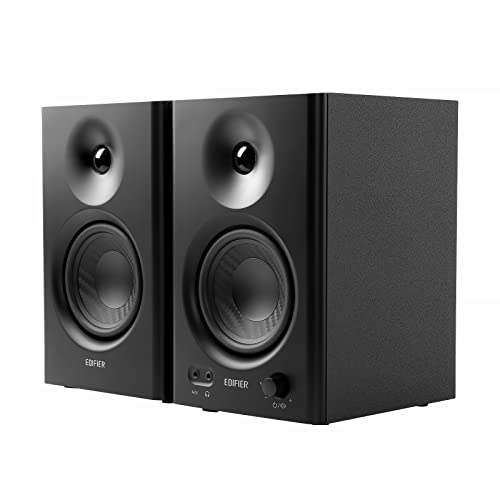
- TRUE STUDIO MONITOR - Based on the highly rated Edifier bookshelf speakers professionally tuned to a responsive almost flat curve for artists and music creators.
First Impressions: The Evolution of an Icon
When we first pulled the KRK ROKIT7G4 7″ Powered Studio Monitor out of the box, the first thing that struck us was the build quality. KRK has always been known for that distinctive yellow cone, but the Generation 4 (G4) series feels like a significant step forward in professional aesthetics. The black enclosure is sleek, and the 16.8-pound weight tells you immediately that this isn’t a plastic toy—it’s a dense, well-engineered piece of acoustic machinery. We were particularly impressed by the matching Kevlar drivers; having both the woofer and the tweeter made of the same high-end material is a rarity at this price point.
Setting it up was a breeze. Unlike older models that relied on confusing toggle switches on the back, the G4 features a brilliant LCD screen on the rear panel. This allows for precise DSP-driven EQ adjustments. We also took the time to download the KRK App, which is a game-changer for initial placement. It uses your smartphone’s microphone to help you calculate the perfect angle and EQ settings for your specific room. Before you even play a single note, you can check the latest price and availability to see why these are becoming the new standard in mid-sized studios.
Key Benefits
- Matching Kevlar® drivers ensure incredible sonic integrity across all frequencies.
- Onboard LCD visual DSP EQ provides 25 presets to correct your acoustic environment.
- Front-firing port allows for more flexible placement near walls without bass “boominess.”
- The built-in brickwall limiter protects the system from damage at high volumes.
Limitations
- The rear-mounted LCD screen can be difficult to access if your monitors are placed close to a wall.
- One user reported a unit failing after some time, suggesting potential quality control outliers.
Deep Dive: Why the KRK ROKIT7G4 7″ Powered Studio Monitor Dominates the Mid-Range
The “Goldilocks” Size: Why 7 Inches is the Sweet Spot
In the world of monitors, size matters, but bigger isn’t always better. We found that the KRK ROKIT7G4 7″ Powered Studio Monitor sits in the perfect “Goldilocks” zone. Most home studios struggle with 5-inch monitors that lack low-end extension, or 8-inch monitors that are simply too overwhelming for a small bedroom or office. The 7-inch Kevlar woofer provides a surprising amount of “thump” and clarity in the sub-bass regions that you simply don’t get with smaller drivers. When we tested these with heavy electronic tracks, the kick drums were tight and well-defined, not “floppy” or exaggerated.
This size allows the monitor to move enough air to feel the music, which is essential for creative inspiration, while still maintaining the surgical precision needed for mixing. The bi-amp design ensures that the 1-inch tweeter has its own dedicated power source, meaning the high-end remains crisp even when the woofer is working hard on a bass-heavy passage. This versatility is a feature that really sets it apart from its smaller siblings in the ROKIT lineup.
Kevlar Consistency: A Symphony of Materials
One of the most impressive technical aspects of the KRK ROKIT7G4 7″ Powered Studio Monitor is the use of matching Kevlar® for both the woofer and the tweeter. In many budget or mid-range monitors, manufacturers use different materials—perhaps a paper woofer and a silk dome tweeter. This can lead to a “sonic disconnect” at the crossover frequency, where the two drivers have different tonal characteristics. Because KRK uses Kevlar for both, the transition between lows, mids, and highs is incredibly smooth.
We noticed this most during vocal editing. The “air” in the vocal (reproducued by the tweeter) felt physically connected to the “body” of the vocal (reproduced by the woofer). This material is also incredibly resilient. As we pushed the volume to test the Class D power amp, the Kevlar drivers maintained their shape perfectly, resulting in significantly lower distortion than traditional materials. To get a better look at these high-tech drivers, see its full feature set and user reviews.
DSP EQ and the KRK App: Engineering Your Room
Let’s be honest: most of us are mixing in rooms that were never designed for audio. We have flat walls, windows, and furniture that create acoustic nightmares. The onboard DSP-driven EQ on the KRK ROKIT7G4 7″ Powered Studio Monitor is a lifesaver in these scenarios. With 25 different presets, we were able to quickly dial back a 2dB hump in the low-mids that was being caused by our desk surface. The visual feedback from the LCD screen is intuitive and far more useful than the “blind” switches found on competitors.
Furthermore, the KRK App (available for iOS and Android) provides a suite of tools including a Level Meter, Delay Alignment, and a Polarity check. But the standout is the Spectrum Analysis tool. We used it to play pink noise through the monitors while the app “listened” and suggested the best EQ preset to flatten our room’s response. It’s like having a mini acoustic consultant in your pocket. You can check the latest price and availability for these smart monitors here, as the value added by this software cannot be overstated.
Front-Firing Port and Enclosure Design
Traditional rear-port monitors are notorious for being “picky” about placement. If you put them too close to a wall, the bass reflects off the wall and creates a muddy, inaccurate mess. The KRK ROKIT7G4 7″ Powered Studio Monitor utilizes a front-firing port, which significantly reduces these boundary coupling issues. We tested these in a corner setup, and while no speaker is immune to physics, the KRK performed much better than rear-ported alternatives we’ve used in the past.
The enclosure itself is made from high-quality materials designed to minimize internal resonance. We felt the sides of the cabinet while playing at high volumes, and the vibration was remarkably low. This means the sound you hear is coming from the drivers, not the “singing” of the wooden box. The included high-density ISO-foam pads also help decouple the speaker from your desk, which is a small but vital detail for professional results. For those concerned about build quality, you can view the detailed specifications to see the engineering that goes into these cabinets.
What Other Users Are Saying
The general consensus among the community is overwhelmingly positive, with many users praising the “clarity and bass for their size.” We found that people often highlight the simplicity and effectiveness of the EQ system. One user noted that their “acetates (vinyl) had never sounded so good,” illustrating that these monitors are also finding a home with audiophiles and DJs. The KRK app is frequently cited as a “must-use” tool that makes a “big difference” in dialing in the perfect speaker angle and frequency response.
However, it is important to address the rare negative experiences. We encountered a few reports of reliability issues, such as one user whose monitor “died” after a period of use, leading to a vow never to buy the brand again. Another user mentioned receiving a defective unit and having a slow experience with the return process. While these seem to be the exception rather than the rule, they highlight the importance of the 3-year warranty that KRK provides. Overall, the sentiment is that for a home or small studio, these are arguably the “best on the market” for the price.
How the KRK ROKIT7G4 7″ Powered Studio Monitor Compares to the Competition
1. JBL 305P MkII Powered Studio Monitors
- PACKAGE INCLUDES: (2) 305P MkII 5 2-Way Powered Studio Reference Monitor Monitoring Speaker
- CRYSTAL-CLEAR IMAGING: 305P MkII’s patented Image Control Waveguide delivers precise, immersive sound with a wide sweet spot, ideal for music production and podcasting.
The JBL 305P MkII is a legendary budget monitor known for its “Image Control Waveguide,” which provides an incredibly wide sweet spot. However, compared to the KRK ROKIT7G4 7″ Powered Studio Monitor, the JBL’s 5-inch woofer simply cannot compete in the low-end department. While the JBL offers a very neutral sound, the KRK feels more “alive” and robust, especially for modern genres like Hip-Hop or EDM. The JBL also lacks the sophisticated DSP and LCD screen found on the KRK, relying instead on basic hardware switches. The JBL is a great choice for those on a strict budget with a very small room, but the KRK is a clear step up in technology and power.
2. IK Multimedia iLoud Micro Monitor Portable Bluetooth Studio Speakers

- The smallest active studio reference monitoring system in the world, iLoud Micro Monitor provides you with ultra-accurate true linear frequency response with no coloration, and does so in every...
- Whether you’re recording, editing, mixing or mastering audio, editing video, sound designing or gaming, iLoud Micro Monitor ensures your production will translate well to the huge variety of...
The iLoud Micro Monitors are a marvel of engineering, delivering a surprisingly flat response from a tiny footprint. They are the ultimate choice for the traveling producer who needs to mix in hotel rooms. However, when placed side-by-side with the KRK ROKIT7G4 7″ Powered Studio Monitor, the difference in “physicality” is massive. The KRK provides a much more authoritative soundstage and can reach much higher volumes without hitting its limiter. While the iLouds are perfect for portability and have Bluetooth capability, the KRK is a superior choice for a permanent studio setup where critical low-end decisions are being made.
3. ADAM Audio T5V Studio Monitor Single
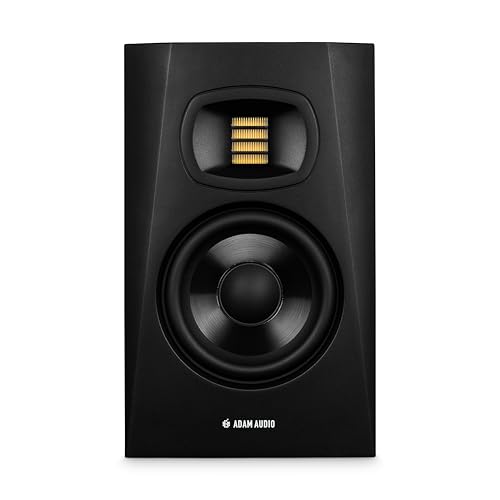
- Transformative feedback for recording, producing, or mixing – Whether you are creating music, editing your next podcast, tracking guitar, or composing for film, the revealing nature of ADAM...
- High resolution audio designed in Berlin – The HPS waveguide and U-ART tweeter combine to deliver detailed sound across the high frequency spectrum
The ADAM Audio T5V is perhaps the fiercest competitor in terms of high-end detail, thanks to its U-ART accelerated ribbon tweeter. Some engineers prefer the “sparkle” and fast transient response of the ADAM ribbon tweeter over the KRK’s Kevlar tweeter. However, the T5V is a 5-inch monitor, and like the JBL, it lacks the bass extension and the sophisticated onboard DSP EQ of the KRK ROKIT7G4 7″ Powered Studio Monitor. The ADAM is rear-ported, making it more difficult to place in small rooms compared to the front-ported KRK. If you prioritize high-frequency detail above all else, the ADAM is great, but for an all-around workhorse with modern features, the KRK takes the win.
Final Verdict: Is the KRK ROKIT7G4 7″ Powered Studio Monitor Right for You?
After putting the KRK ROKIT7G4 7″ Powered Studio Monitor through its paces, we can confidently say it is one of the most versatile and technologically advanced monitors in its class. It successfully sheds the “too much bass” reputation of previous generations, offering a much flatter, more professional response that actually translates to the real world. The inclusion of Kevlar drivers and a sophisticated DSP engine makes it feel like a premium product at a mid-range price point. While there are some reports of quality control issues, the vast majority of users—ourselves included—find them to be reliable, inspiring tools that make the mixing process easier and more enjoyable.
Whether you are a bedroom producer looking for your first “real” set of monitors or a seasoned pro needing a reliable secondary pair, these speakers offer an incredible balance of features and performance. They provide the honesty you need to fix your mixes and the power you need to enjoy the creative process. If you are ready to upgrade your studio and finally close that “translation gap,” secure your pair of these industry-standard monitors today and start hearing the truth in your music.
Last update on 2026-04-04 / Affiliate links / Images from Amazon Product Advertising API