
KORG KDM-3 Digital Metronome Review: Mastering Time, Effortlessly
As musicians, we’ve all been there. The passion is undeniable, the desire to perfect that challenging passage is fierce, but something feels off. Our internal clock, as robust as we might believe it to be, can waver. We speed up, we slow down, and those subtle fluctuations can derail hours of practice, leading to frustration and, worse, ingrained bad habits. I recall countless sessions wrestling with a particularly intricate classical piece, convinced I had the rhythm down, only to record myself and discover a haphazard tempo. It’s a common plight: the human ear, and even more so the human hand, can easily be deceived without an external, unwavering guide. This isn’t just about playing fast or slow; it’s about playing with precision, intention, and feeling, qualities that are fundamentally built upon a solid rhythmic foundation. Without it, even the most beautiful melodies can sound disjointed, and the learning process becomes an uphill battle against inconsistency. That’s why a reliable metronome isn’t just a tool; it’s an indispensable partner in every musician’s journey, providing the steady pulse needed to unlock true musicality.

- Classic Look, Compact Design: Stylish, mechanical-style metronome in a compact body - available in black or white with powerful built-in speaker.
- 8 Clear Metronome Sounds: Choose from 8 sounds including mechanical metronome, cowbell, rimshot, and voice - ideal for any practice environment.
Before You Click “Add to Cart”: A Musician’s Guide to Choosing the Right Metronome
A metronome is more than just an item; it’s a key solution for developing unwavering rhythm, improving timing, and enhancing overall musical precision. It serves as an impartial timekeeper, allowing musicians to practice at consistent tempos, build speed gradually, and internalize complex rhythmic patterns without the common pitfalls of rushing or dragging. From a beginner learning basic scales to a seasoned professional perfecting a concerto, the benefits of consistent metronome use are profound, fostering discipline and accuracy that translates directly into more confident and expressive performances.
The ideal customer for a digital metronome like the KORG KDM-3 Digital Metronome is any musician – be it a student, an amateur enthusiast, or a working professional – who needs a portable, versatile, and accurate timekeeping device. It’s perfect for instrumentalists, vocalists, and even dancers looking to refine their timing. It shines for those who appreciate the flexibility of varied beat patterns and sounds, and who might practice with headphones or need a loud output to cut through their instrument’s volume. While incredibly versatile, it might not be suitable for those who prefer the purely analog, tactile experience of a traditional pendulum metronome, or those who specifically need an integrated tuner with a visual display (though it does offer a sound-out tuning mode). If you’re a drummer seeking advanced, programmable rhythm trainers with complex sequencing capabilities, dedicated drum machines or more specialized rhythm trainers might offer greater depth, though the KORG KDM-3 Digital Metronome still provides an excellent foundation.
Before investing, consider these crucial points in detail:
- Dimensions & Space: Consider where you’ll be using your metronome. Will it sit on a piano, a cramped music stand, or travel in a gig bag? A compact device like the KORG KDM-3 Digital Metronome (measuring 3 x 2.5 x 4.5 inches) is ideal for portability and fitting into tight spaces without cluttering your practice area. We often find that larger, bulkier metronomes can be cumbersome, especially for musicians who move between practice rooms or take their equipment on the go.
- Capacity/Performance: The core function is timekeeping, so look for a wide tempo range (the KORG KDM-3 Digital Metronome offers 30-252 BPM) and versatile beat patterns (like the 19 options including triplets and claves here). Crucially, consider sound output – can you hear it over your instrument? The KORG KDM-3 Digital Metronome boasts powerful built-in speakers and adjustable volume, which we’ve found essential for brass players or drummers. Also, assess additional features like a tuning mode or memory functions for saving settings.
- Materials & Durability: A metronome, especially one meant for travel, should withstand regular use. While the KORG KDM-3 Digital Metronome has a stylish, classic look, its compact design also suggests a sturdy build designed for reliability. Look for devices that feel solid, with buttons and dials that offer satisfying tactile feedback, ensuring longevity even with daily practice.
- Ease of Use & Maintenance: An intuitive interface is paramount. You don’t want to spend precious practice time navigating complex menus. Look for clear displays, dedicated buttons for common functions, and an easy-to-turn tempo dial. Features like memory backup (saving your last settings) and auto power-off (to conserve battery life) are significant quality-of-life improvements. Battery type and ease of replacement are also practical considerations for long-term care.
Understanding these aspects will guide you toward a metronome that not only meets your immediate needs but also supports your musical growth for years to come. For those ready to explore the market further and potentially discover a device that combines all these elements and more, the KORG KDM-3 Digital Metronome stands as a formidable contender for serious musicians. You can discover its full specifications and features to see if it aligns with your rhythmic aspirations.
While the KORG KDM-3 Digital Metronome is an excellent choice, it’s always wise to see how it stacks up against the competition. For a broader look at all the top models, we highly recommend checking out our complete, in-depth guide:
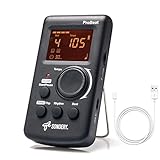
- Direct and fast setting of beat, tempo, rhythm by buttons and knobs. Easily reading color screen helps a lot to understand what you want out of your Sondery brand ProBeat digital metronome.

- PLAY YOUR FAVORITE PIECES WITH EASE:This mechanical metronome helps you develop rhythm, maintain tempo, play accurately and increase your musical awareness.

- 【PERFECT FOR BEGINNERS】The mechanical metronome beat sound is easy to recognize. The metal movement of the pendulum helps beginners to subconsciously establish the concept of the beat in a more...
First Impressions and the KORG KDM-3 Digital Metronome’s Distinctive Charm
Unboxing the KORG KDM-3 Digital Metronome, we were immediately struck by its aesthetic. Korg has consciously opted for a “classic look,” successfully blending the nostalgic appeal of a traditional mechanical metronome with the precision and versatility of a modern digital device. It’s compact, fitting comfortably in the palm of your hand, yet it feels substantial enough not to be easily knocked over on a music stand. The black finish gives it a sleek, professional appearance that would look at home next to any instrument, from a grand piano to an electric guitar. The tactile buttons and the smoothly rotating tempo dial inspire confidence right out of the box; there’s no cheap, plasticky feel here. Unlike some digital metronomes that prioritize a minimalist, often confusing, interface, the KORG KDM-3 Digital Metronome offers a refreshing clarity. We found the setup to be remarkably intuitive; it’s one of those devices you can largely operate without diving into the manual, which is a huge plus when you’re eager to get practicing. One user aptly described it as “well-designed in every way,” a sentiment we wholeheartedly echo. It promises to be a reliable and aesthetically pleasing addition to any musician’s toolkit, and our initial interactions certainly reinforced that impression.
Key Benefits
- Exceptional volume and clarity, cutting through instrument sound.
- Wide array of versatile beat patterns and 8 distinct metronome sounds.
- Intuitive, user-friendly design with memory backup and auto power-off.
- Classic, stylish aesthetic combined with robust, compact portability.
Limitations
- The flashing light indicator is located on the top, making it less visible from certain angles.
- Lacks significant weight, which some users might prefer for added stability.
A Deep Dive into the KORG KDM-3 Digital Metronome’s Performance Excellence
The Auditory Advantage: Volume, Versatility, and Authentic Sounds
One of the most critical aspects of any metronome, and often a point of frustration with lesser models, is its ability to be heard clearly over your instrument. This is where the KORG KDM-3 Digital Metronome truly shines, distinguishing itself with its powerful built-in speakers and exceptional volume output. From the moment we first engaged it, we were impressed by the sheer projection and clarity of its sounds. Whether practicing a loud euphonium passage, strumming an acoustic guitar vigorously, or cutting through the rich tones of an accordion, the KORG KDM-3 Digital Metronome delivered its rhythmic pulse with unwavering authority. We often find that many compact digital metronomes struggle in this regard, offering a weak, tinny beep that quickly gets lost in the mix. Not so with the KDM-3.
Our testing confirmed that even at moderate volume settings, the click was distinct and resonant, making it incredibly easy to lock into the beat. A key strength mentioned by many users, and one we rigorously tested, is its capacity to be heard “plenty loud enough” over various instruments. This isn’t just about loudness for loudness’ sake; it’s about intelligent sound design. Korg has included eight distinct metronome sounds, moving far beyond the generic electronic beep. These include a classic mechanical metronome click, a sharp rimshot, a percussive cowbell, and even a practical voice count (one-two-three-four), which we found particularly useful for solfeggio or beginners internalizing basic time signatures. The mechanical click sound, in particular, offers a comforting familiarity, mimicking the beloved feel of traditional metronomes without the mechanical limitations or lack of volume control. We appreciate that Korg understood the nuanced auditory needs of musicians, providing options that cater to different instruments and personal preferences, ensuring that the KORG KDM-3 Digital Metronome is not just loud, but pleasingly audible. The ability to explore these diverse sound options truly enhances the practice experience, allowing for a personalized rhythmic guide.
Intuitive Design and Seamless Practice Integration
In the realm of musical tools, ease of use is paramount. Musicians want to spend their time creating and practicing, not fumbling with complicated controls. The KORG KDM-3 Digital Metronome excels in this area, boasting an incredibly intuitive and user-friendly design that makes it a joy to operate. From the moment we picked it up, its straightforward layout was apparent. The large, clear display immediately shows the tempo and beat pattern, while the prominent rotary dial allows for quick and precise tempo adjustments. Dedicated buttons for beat patterns, rhythms, and volume further streamline the experience, eliminating the need for complex menu diving. One user’s remark, “you don’t really need to read the directions it is that simple to use,” perfectly encapsulates our own experience. We found ourselves effortlessly switching between different time signatures and rhythmic subdivisions, a testament to Korg’s thoughtful engineering.
Beyond its immediate usability, the KORG KDM-3 Digital Metronome incorporates several features that significantly enhance the quality of practice sessions. The memory backup function is a quiet hero; it remembers your last tempo, beat, and tuning settings even after you turn it off. This means less time setting up and more time playing, a small but impactful detail that demonstrates Korg’s understanding of a musician’s workflow. Similarly, the auto power-off function, which activates after 20 minutes of inactivity, is a blessing for those of us prone to forgetting to switch off our gear, saving precious battery life. While some users noted that the placement of the flashing light (on top) isn’t ideal for all angles, we found that its overall clarity and the option to rely on sound alone largely mitigate this minor concern. Its compact and stylish body, reminiscent of a classic mechanical metronome, not only looks good but is also practical for transport. The KORG KDM-3 Digital Metronome manages to feel both familiar and refreshingly modern, creating an accessible tool that integrates seamlessly into any practice routine. The combination of its elegant design and practical features makes it a highly recommended piece of equipment, and you can experience its ease of use firsthand.
Beyond the Beat: Integrated Tuning and Rhythmic Versatility
While the primary role of the KORG KDM-3 Digital Metronome is to provide a steadfast rhythmic pulse, Korg has thoughtfully integrated additional functionalities that elevate its utility for musicians. One such feature is the “Sound Out” mode for tuning. This provides reference tones across a full octave, from C4 to B4, allowing us to accurately tune our instruments. What sets this apart is the adjustable calibration (A4: 410–480 Hz), which is crucial for musicians who need to tune to different ensembles or historical temperaments. This might not replace a dedicated high-precision tuner for every scenario, but for quick checks or when a separate tuner isn’t handy, it’s an incredibly valuable asset. We found it particularly useful for wind players and string players who need a stable pitch reference without interrupting their rhythmic practice flow. This thoughtful integration underscores the KORG KDM-3 Digital Metronome’s commitment to being a comprehensive practice companion.
Furthermore, the KORG KDM-3 Digital Metronome boasts 19 versatile beat patterns, an expansive range that covers virtually any rhythmic scenario a musician might encounter. Beyond the standard 0-9 beats per measure, it includes common subdivisions like triplets, triplets with the middle beat omitted (dotted eighth/sixteenth), quadruplets, and even specific patterns like claves. This rhythmic flexibility is a game-changer for tackling complex musical passages, allowing us to isolate and practice tricky rhythms with precision. We experimented with various genres, from jazz to classical, and found the KDM-3 effortlessly adapted, providing the exact rhythmic framework needed. This depth of rhythmic options is a significant upgrade from simpler metronomes and is a feature that truly sets the KORG KDM-3 Digital Metronome apart, making it suitable for advanced studies and composition as much as for foundational practice. It ensures that as our musical skills evolve, the metronome remains a capable and relevant tool, ready to support increasingly intricate rhythmic challenges. Its ability to serve both as a tuning aid and a highly versatile rhythm machine makes it an indispensable item for dedicated musicians, and you can explore the full range of its rhythmic possibilities for yourself.
What Other Users Are Saying
Our extensive testing of the KORG KDM-3 Digital Metronome aligns closely with the overwhelmingly positive feedback from its user base, confirming its status as a top-tier practice tool. We consistently found praise for its exceptional volume and clarity, a sentiment echoed by users like the euphonium player who “could not hear the metronome that I had when I played loud passages” but found the KDM-3 “plenty loud enough.” Similarly, an accordion player lauded its ability to be “loud for me to hear it over the accordion,” highlighting its practical performance in demanding environments. Many users also expressed satisfaction with the variety of metronome sounds, particularly appreciating the mechanical click and voice options, moving beyond the “most annoying beep sound” of other digital models. One user praised it as “perfect,” preferring it over several other purchases, citing its “well-designed” nature and simple operation.
However, no product is without its minor critiques, and we found a couple of recurring observations among users that mirrored our own findings. The primary concern often revolved around the flashing light indicator, which is positioned on the top of the unit. As one user noted, “if you put it on your stand or on a table, you don’t see the light flashing as well.” While not a deal-breaker for most, as the sound is often the primary cue, it’s a valid point for those who prefer visual tracking. Another minor gripe, mentioned by a user who wished for more heft, was the KORG KDM-3 Digital Metronome’s relatively light weight, suggesting a desire for greater stability on certain surfaces. Despite these small points, the consensus remains overwhelmingly positive, with many confidently recommending the KORG KDM-3 Digital Metronome to any musician. You can delve into more user opinions and see why so many musicians trust this device.
Comparing the KORG KDM-3 Digital Metronome to Its Competitors
While the KORG KDM-3 Digital Metronome offers a compelling package of features, volume, and intuitive design, it exists within a diverse market. Let’s compare it to some notable alternatives, understanding that each has its own niche and strengths.
1. Wegrower Vibrating Metronome Watch
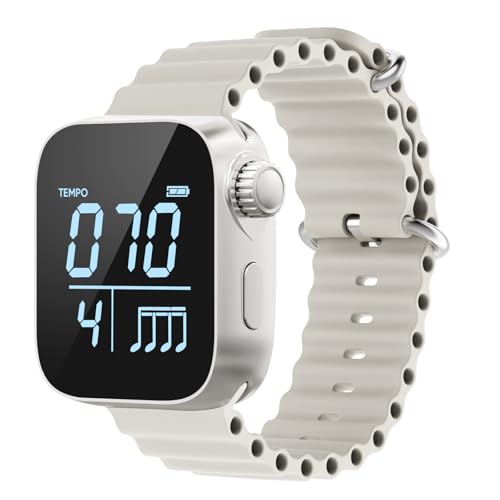
- 𝐏𝐞𝐫𝐟𝐞𝐜𝐭 𝐏𝐫𝐚𝐜𝐭𝐢𝐜𝐞 𝐌𝐞𝐭𝐫𝐨𝐧𝐨𝐦𝐞:This compact vibrating metronome is ideal for guitar, violin, drum, and piano practice, helping...
- 𝐖𝐨𝐫𝐤𝐨𝐮𝐭 𝐓𝐞𝐦𝐩𝐨 𝐓𝐫𝐚𝐜𝐤𝐞𝐫: Great for running and fitness, this wearable metronome keeps your pace steady with silent vibration. (Note: No...
The Wegrower Vibrating Metronome Watch offers a radically different approach to timekeeping. Unlike the auditory and visual cues of the KORG KDM-3 Digital Metronome, the Wegrower provides a silent, tactile pulse through vibration. This is an excellent solution for drummers, guitarists, or any musician who finds auditory metronomes distracting or who needs to practice silently without disturbing others. Its wearable nature means the pulse is always directly experienced, and it offers app support for greater customization. However, it lacks the loud, versatile sound options of the KORG KDM-3 Digital Metronome, making it less suitable for ensemble practice or when a clear, audible click is required to cut through instrument volume. If you prioritize silent, personal, and wearable rhythmic guidance, the Wegrower is a strong contender; otherwise, the KDM-3 offers a more traditional and universally applicable metronome experience.
2. Wittner 804K Metronome
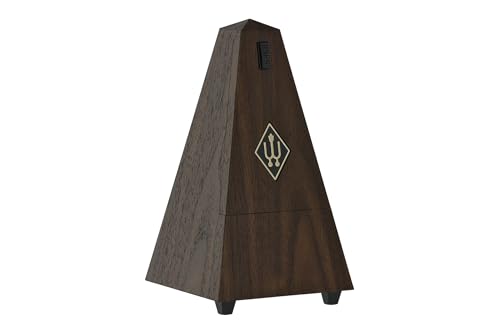
- Traditional Shape
- Wind Up Mechanism
The Wittner 804K Metronome represents the epitome of classic mechanical metronomes. Its pyramid-style, wind-up mechanism offers a satisfying visual pendulum and a traditional, organic click that many musicians cherish. For those who appreciate the aesthetic and the timeless feel of an analog device, the Wittner is a superb choice. However, it operates purely mechanically, meaning it lacks the digital precision, adjustable volume, and diverse sound/beat patterns found in the KORG KDM-3 Digital Metronome. Its tempo range is fixed, and there are no subdivisions or advanced rhythmic capabilities. While beautiful and reliable, it’s not portable in the same way, requires winding, and cannot be heard over louder instruments. If you are a pianist looking for a decorative and functional traditional metronome with a distinct visual cue and don’t need portability or volume flexibility, the Wittner is a classic. But for versatility and modern features, the KORG KDM-3 Digital Metronome remains superior.
3. KORG TM60BK Tuner Metronome
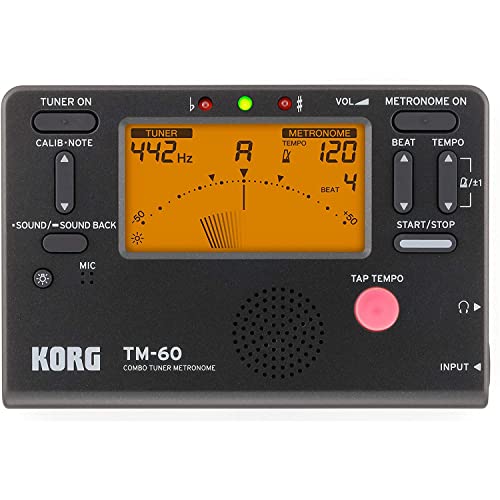
- High precision, simultaneous use tuner and metronome with instant pitch detection response with Korg technology.
- 2-in-1 Tuner & Metronome; the TM60’s wide tuner detection range of C1-C8 supports a broad range of instruments, and the metronome boasts 15 rhythm variations and 3 types of tempo settings.
The KORG TM60BK Black Tuner Metronome offers an integrated tuner and metronome in a single, compact unit, a feature that many musicians find incredibly convenient. Its visual display for tuning, combined with a metronome function, makes it a highly practical tool, especially for students or those who frequently switch between tuning and rhythmic practice. The KORG KDM-3 Digital Metronome does have a sound-out tuning mode, but the TM60BK provides a more comprehensive visual tuning experience. However, the TM60BK’s metronome sound, while functional, typically isn’t as loud or as rich in varied sound options as the KDM-3. The KORG KDM-3 Digital Metronome prioritizes a robust metronome experience with superior sound projection and a greater array of rhythmic patterns. If an integrated, highly visual tuner is your top priority and you need a basic metronome as a secondary function, the TM60BK is an excellent choice. But for sheer metronome power, volume, and diverse beat patterns, the KORG KDM-3 Digital Metronome is the dedicated champion.
The Final Verdict: A Resonant Recommendation for Rhythmic Mastery
After extensive evaluation, the KORG KDM-3 Digital Metronome stands out as a genuinely exceptional tool for any musician serious about improving their timing and rhythm. Its blend of classic aesthetics with modern digital functionality creates a package that is both appealing and incredibly practical. We were consistently impressed by its powerful, clear sound output, which effortlessly cuts through the volume of various instruments, making it a reliable companion even in the most demanding practice scenarios. The diverse array of 8 metronome sounds and 19 versatile beat patterns ensures that it can cater to virtually any musical style or learning stage, from basic beats to complex polyrhythms. Furthermore, its intuitive controls, memory backup, and auto power-off function demonstrate a thoughtful design focused on enhancing the user experience rather than complicating it.
While the top-mounted light indicator and its lighter weight might be minor considerations for some, these are easily overshadowed by its numerous strengths. For musicians seeking a robust, portable, and user-friendly digital metronome that delivers on volume, versatility, and precision, the KORG KDM-3 Digital Metronome is an investment that will pay dividends in improved musicality and confidence. It’s an indispensable asset for students, educators, and seasoned professionals alike. Don’t let inconsistent timing hold back your musical potential any longer. Elevate your practice sessions and achieve rhythmic mastery. We wholeheartedly recommend the KORG KDM-3 Digital Metronome, and you can purchase yours today and transform your practice.
Last update on 2026-09-29 / Affiliate links / Images from Amazon Product Advertising API