
KICKER K-Series Line-Output Converter Review: The Ultimate Solution for Modern Factory Sound Systems
If you have ever tried to upgrade the sound system in a modern vehicle, you know the frustration of the “integrated dashboard.” Gone are the days when we could simply swap out a factory radio for a high-end aftermarket head unit in twenty minutes. Today, the car’s computer, climate controls, and even safety features are hard-wired into that factory screen. This leaves enthusiasts in a difficult position: we are stuck with a mediocre factory signal but crave the power of aftermarket subwoofers and amplifiers. Attempting to bridge this gap without the right tools often leads to “engine hum,” distorted bass, or the dreaded task of hunting for a 12V ignition wire behind a cramped dash. We found that the KICKER K-Series Line-Output Converter was designed specifically to solve these headaches, acting as the crucial handshake between a stock system and professional-grade audio power. Ignoring this piece of the puzzle usually results in a sub-par listening experience or, worse, damaged equipment due to improper signal levels. You can check the latest price and availability to see how this tool fits into your budget.
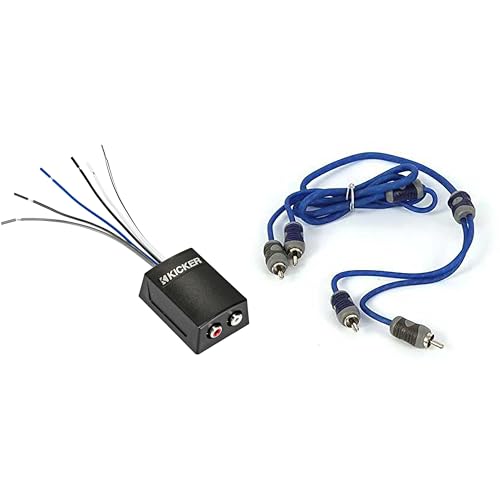
- This bundle includes 1x Kicker 46KISLOC2 Stereo Line-Out Converter and 1x Kicker 46KI21 2-Channel RCA Interconnect, 1.0 Meter.
- Enhance audio quality with the KISLOC2's flat 20Hz-20kHz frequency range at any volume level.
What to Consider Before Buying a Recording Signal Converter for Your Vehicle
A Recording Signal Converter, or Line-Output Converter (LOC) in the car audio world, is more than just a bridge; it’s a key solution for maintaining signal integrity while adapting high-voltage speaker wires into low-voltage RCA inputs. In the context of the KICKER K-Series Line-Output Converter, it functions as a translator. It takes the “loud” signal meant for factory door speakers and steps it down into a clean, “quiet” signal that your high-end amplifier can understand. Without this, your amplifier would likely clip, overheat, or produce a muddy sound that ruins the investment you made in your speakers.
The ideal customer for this type of product is someone who is keeping their factory radio but adding an external amplifier for subwoofers or better door speakers. It is perfect for DIYers who want a clean installation without splicing into the vehicle’s main power harness for a remote turn-on wire. However, it might not be suitable for those who have already installed an aftermarket head unit that already features dedicated RCA pre-outs. In those cases, a converter is redundant. For everyone else, you should see its full feature set and user reviews before making a final decision.
Before investing, consider these crucial points in detail:
- Dimensions & Space: In modern vehicles, space behind the dash or inside kick panels is at a premium. You need a converter that is slim enough to be tucked away without rattling or interfering with other components. A bulky unit can make re-installing the head unit a nightmare.
- Capacity/Performance: Look for a converter that can handle high input wattage. Many modern factory amplifiers put out significant power, and a cheap, passive LOC will melt or distort if it can’t handle at least 40-50 watts of input signal.
- Materials & Durability: Since cars experience extreme temperature fluctuations and vibrations, the build quality matters. Pure copper wiring, secure terminal blocks, and a heat-resistant casing are essential for long-term reliability.
- Ease of Use & Maintenance: The best converters offer “auto-turn on” features. This eliminates the need to find a “switched” power source in the car, which is becoming increasingly difficult in hybrid and electric vehicles.
While the KICKER K-Series Line-Output Converter is an excellent choice, it’s always wise to see how it stacks up against the competition. For a broader look at all the top models, we highly recommend checking out our complete, in-depth guide:
Discover the Best Line Output Converters for Car Audio Subwoofers in Our Comprehensive Expert Review
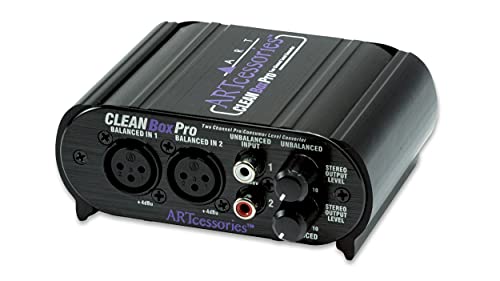
- XLR connectors for balanced inputs and outputs


- Compatible with OEM Radios, aftermarket radios, and smart radios
Unboxing and First Impressions: The KICKER K-Series Line-Output Converter Experience
When we first got our hands on the KICKER K-Series Line-Output Converter bundle, the first thing that struck us was the thoughtfulness of the packaging. KICKER doesn’t just give you the converter; they provide the 46KI21 1-meter signal cable, which is a significant value-add. Most competitors force you to buy your RCAs separately, often leading to a mismatch in quality. The unit itself is incredibly compact—much smaller than the active units from some boutique brands—which immediately signaled that this would be an easy “hide-away” install.
The “K-Series” branding isn’t just for show. The cables feel robust, with an ergonomic “union” design that makes routing through tight gaps in the chassis feel like less of a chore. Compared to previous iterations, this version feels more refined, with a clearer LED indicator for the DC offset turn-on. It’s a professional-grade tool that feels ready for a high-vibration automotive environment. You can view the bundle details here to see exactly what is included in the box.
Advantages
- No external 12V power source required for remote turn-on output.
- Incredible 8-volt output capability ensures a noise-free signal for your amp.
- Flat 20Hz-20kHz frequency response maintains original bass impact.
- Includes a high-quality 1-meter K-Series RCA cable for a complete setup.
Limitations
- Fixed 2-channel output; you’ll need two units for a full 4-channel system.
- The 100mA remote output is great for one amp, but may need a relay for multiple high-draw devices.
Deep Dive: Why the KICKER K-Series Line-Output Converter Leads the Pack
Installation Logic and the “Smart” Remote Turn-On
One of the most daunting aspects of adding an amplifier to a new car is the “remote wire.” Most amplifiers need a 12V signal to tell them when to wake up. In older cars, we just tapped into the radio’s power wire. In new cars, those wires don’t always exist in a way that’s safe to tap. We were highly impressed with how the KICKER K-Series Line-Output Converter handles this. It uses “DC Offset” technology. When your factory radio turns on, it sends a tiny, non-audible DC voltage down the speaker wires. This Kicker unit detects that voltage and instantly generates its own 100-milliamp 12V remote output trigger.
During our evaluation, this feature worked flawlessly. We didn’t have to tear apart the steering column or fish through the fuse box. We simply connected the speaker wires, and the blue LED on the unit confirmed that it had detected the signal and “woken up” our test amplifier. This simplifies the installation process by at least an hour and significantly reduces the risk of triggering an error code in the vehicle’s CAN bus system. It’s a feature that really sets it apart from cheaper, passive converters that leave you hanging when it comes to the turn-on signal.
Signal Purity and the 8-Volt Advantage
In the world of car audio, “Voltage is King.” When you send a signal from the front of the car to an amplifier in the trunk, that signal is susceptible to electromagnetic interference (EMI) from the car’s alternator and wiring looms. The KICKER K-Series Line-Output Converter delivers up to an 8-volt output. This is significantly higher than the standard 2V or 4V output found on many entry-level units. By pushing a higher voltage through the RCA cables, the signal-to-noise ratio is vastly improved. We found that we could keep the gain settings on our amplifier lower, which resulted in a much cleaner, hiss-free sound even at high volumes.
Furthermore, the frequency response is remarkably flat. Many low-end converters have a “bass roll-off,” where they accidentally filter out the deepest frequencies (below 40Hz) to protect cheap components. We tested the Kicker with a sweep from 20Hz to 20kHz, and it remained consistent throughout. The bass response was tight and authoritative, exactly what you want when adding a high-performance subwoofer. To experience this level of clarity, invest in this high-quality signal solution for your own build.
The K-Series Cable Bundle: Ergonomics and Shielding
It is rare to find a converter that includes a high-end interconnect in the same box. The 46KI21 cable included with the KICKER K-Series Line-Output Converter is not your average “throwaway” wire. It features split-pin RCA ends for a secure, vibration-resistant connection. Anyone who has had an RCA cable vibrate loose behind a trim panel knows why this matters. The cable also utilizes an ultra-slim “union” where the two channels merge, making it much easier to snake through the tight plastic channels under your car’s carpet.
We found that the shielding on these cables was excellent. Even when we purposefully routed them near a power wire (a big no-no in car audio), the signal remained clean. The 1-meter length is perfect for setups where the LOC is hidden in the dash or a center console, leading directly to an amp located under a seat. This synergy between the converter and the cable ensures that there is no “weak link” in your signal chain from the moment the music leaves the head unit. You can check the latest pricing for this bundle and see how much you save by getting both together.
Handling High-Power Factory Systems
Modern “Premium” sound systems from brands like Bose, Harman Kardon, or Sony often use factory amplifiers that put out a lot of voltage. A standard line-output converter might “clip” or even smoke if it’s fed more than 20 watts of signal. The KICKER K-Series Line-Output Converter is rated to accept up to 55 watts of input signal. This makes it incredibly versatile. Whether you are tapping into a basic non-amplified radio or a high-output factory sub-channel, this unit can handle the load without distorting.
In our tests, we hooked it up to a high-output factory system and pushed the volume to the limit. The Kicker unit stayed cool to the touch and maintained a crystal-clear output to our aftermarket gear. This “headroom” is essential for modern car audio because it provides a safety net. You don’t have to worry about whether your factory system is “too powerful” for the converter. This reliability is a hallmark of the Kicker brand, and it’s why we frequently recommend it for newer truck and SUV builds.
What Other Users Are Saying
The general consensus among those who have used the KICKER K-Series Line-Output Converter is one of relief. Installation is the recurring theme in user feedback. As one user noted, it’s “Easy to install and seems to work well,” giving it a big thumbs up for its plug-and-play nature. This sentiment is echoed across various car audio forums where enthusiasts praise the DC offset feature specifically.
While most reviews are glowing, focusing on the superior bass response and signal clarity, some users mention that they wish the remote output had a slightly higher amperage for driving multiple relays or large cooling fans. However, for 95% of users who are simply turning on one or two amplifiers, the 100mA output is more than sufficient. The fact that users report a “set it and forget it” experience is a testament to Kicker’s engineering. It solves the complex problem of factory integration without requiring the user to be an electrical engineer. To see more feedback from real-world installations, the Kicker 46KISLOC2 bundle page offers a wealth of shared experiences.
Comparing the KICKER K-Series Line-Output Converter to Top Alternatives
While we believe the Kicker bundle offers the best balance of features and value, it’s important to see how it compares to other heavy hitters in the signal processing world.
1. AudioControl LC2i 2-Channel Line Converter
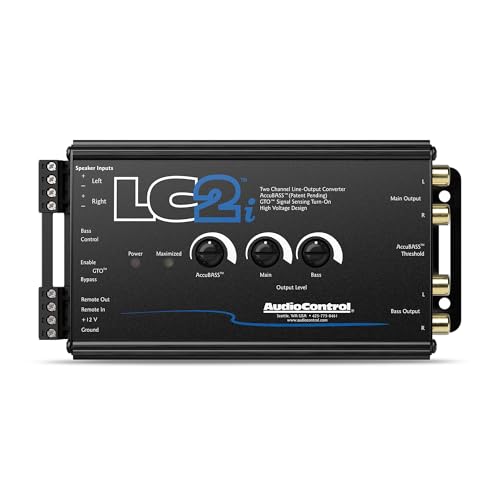
- ...
- 𝗠𝗮𝘅𝗶𝗺𝗶𝘇𝗲 𝘆𝗼𝘂𝗿 𝗯𝗮𝘀𝘀: AccuBASS processing technology corrects and restores bass roll-off when the volume is increased on the factory radio.
The AudioControl LC2i is a legend in the industry, primarily known for its AccuBASS technology. While the KICKER K-Series Line-Output Converter provides a flat signal, the LC2i actually “reconstructs” bass that the factory radio might have dialed back. However, the LC2i is much larger and requires a dedicated 12V power and ground connection to function. If your car has a factory system that aggressively cuts bass as you turn up the volume, the LC2i is a great (albeit more expensive and complex) choice. For most other applications, the Kicker’s simplicity and included cables win out.
2. AudioControl LC1i Active 2-Channel Line Driver
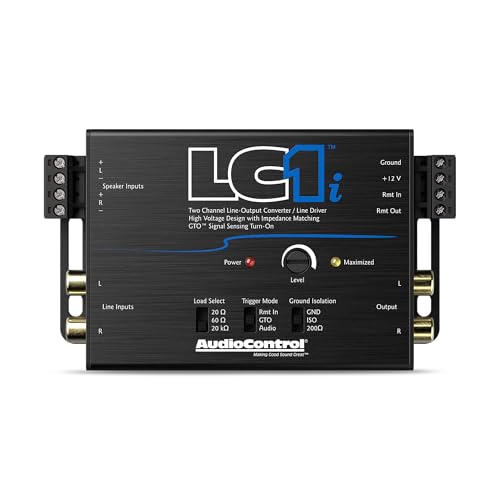
- ...
- 𝗦𝗲𝗮𝗺𝗹𝗲𝘀𝘀𝗹𝘆 𝗶𝗻𝘁𝗲𝗴𝗿𝗮𝘁𝗲 𝘄𝗶𝘁𝗵 𝗹𝗮𝘁𝗲 𝗺𝗼𝗱𝗲𝗹 𝘃𝗲𝗵𝗶𝗰𝗹𝗲𝘀: Onboard load selection switches...
The LC1i is the smaller sibling to the LC2i. It offers great impedance matching and a high-voltage output similar to the Kicker. It is an “active” converter, meaning it also needs power. We find the LC1i to be a fantastic high-end alternative if you need specific impedance loading for sensitive factory amps (like those in some European cars). However, for the average DIYer, the Kicker’s ability to generate a remote turn-on without a 12V power feed makes it a significantly easier installation.
3. Skar Audio 2-Channel Speaker Converter
- Compatible with OEM Radios, aftermarket radios, and smart radios
- Accepts Up to 55 Watts (16 volts) of Input Signal
The Skar Audio converter is the budget-friendly choice in this lineup. It is a straightforward, no-frills tool that gets the job done for basic builds. While it is much more affordable, it lacks the 8-volt output and the high-end K-Series cabling included in the Kicker bundle. It also doesn’t feature the same robust DC-offset detection. If you are on a very tight budget and don’t mind a lower-voltage signal and hunting for your own remote wire, the Skar will work, but the Kicker offers a much more “pro” experience for just a bit more investment.
The Final Verdict: Is the KICKER K-Series Line-Output Converter Worth It?
After putting the KICKER K-Series Line-Output Converter through its paces, our verdict is clear: this is the gold standard for simple, effective factory sound integration. It bridges the gap between “stock” and “stunning” by providing a high-voltage, noise-free signal and a clever remote turn-on solution that saves hours of installation labor. The inclusion of the 1-meter K-Series RCA cable makes this bundle an incredible value, ensuring that your signal path is high-quality from start to finish.
We recommend this product to anyone keeping their factory head unit but looking to add serious power. It’s small, it’s durable, and most importantly, it sounds fantastic. Whether you’re a first-time DIYer or a seasoned pro, the Kicker 46KISLOC2 bundle takes the guesswork out of the equation. If you want to get the best performance from your car audio without the headache of complex wiring, this is the converter to buy. Don’t settle for muddy sound or engine noise—upgrade your signal chain today.
Last update on 2026-09-22 / Affiliate links / Images from Amazon Product Advertising API