
Kawai ES120 Piano Review: Is This the New Gold Standard for Intermediate Players?
Finding the right digital piano is often a journey fraught with compromise. For many of us, the search begins when our skills outgrow a basic portable keyboard, yet our living space or budget isn’t quite ready for a full-sized acoustic upright. I remember the frustration of practicing on keys that felt like clicking plastic, where the “grand piano” sound resembled a tinny recording from the 1980s. This lack of authenticity doesn’t just hurt your ears; it stunts your technical growth. Without proper weighted action and nuanced sound, you simply cannot develop the finger strength or the expressive touch required for classical or jazz repertoire. This is exactly where the Kawai ES120 Piano enters the conversation. It promises to bridge the gap between portability and professional-grade performance, solving the dilemma of the serious student who needs a “real” piano feel without the “real” piano footprint. Failing to find a solution like this often leads to “practice fatigue,” where the disconnect between the player and the instrument becomes so great that motivation simply withers away.
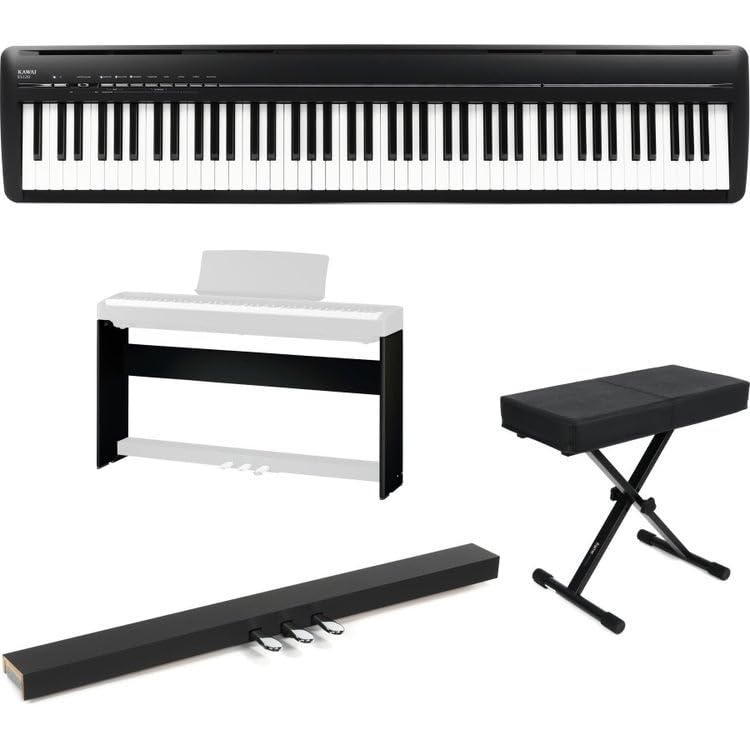
- 88-key Digital Piano with Responsive Hammer Compact Action, 25 Sounds, Spatial Headphone Sound, Bluetooth Audio/MIDI, and USB-MIDI - Black, Furniture-style Stand, Triple Pedal, and Bench
- F-351 Triple Pedal Assembly for HML-2 Stand - Black: Triple-pedal Assembly for Kawai HML-2 Stand with Damper, Soft, and Sostenuto Pedals - Black Triple-pedal Assembly for Kawai HML-2 Stand with...
What to Consider Before Buying a Stage Digital Piano
A Stage Digital Piano is more than just an item; it’s a key solution for musicians who require a high-quality sound engine and realistic key action in a package that can actually be moved. Unlike furniture-style digital pianos that are meant to stay in one corner of a living room forever, stage pianos like the Kawai ES120 Piano offer the flexibility to perform at a gig, record in a studio, or tuck away when guests arrive. They solve the problem of space and portability while maintaining the 88-key standard that any serious pianist requires. The main benefits include high-fidelity sampling of world-class concert grands, headphone outputs for silent practice, and modern connectivity like Bluetooth and MIDI, which turn a simple instrument into a powerful production tool.
The ideal customer for this type of product is an intermediate player, a dedicated hobbyist, or a gigging musician who values touch and tone above all else. It is perfect for someone who lives in an apartment or a dorm where an acoustic piano is impossible. However, it might not be suitable for professional touring keyboardists who need hundreds of synth leads and complex workstation features, nor for absolute beginners who might find the weighted action a bit heavy if they are only interested in casual “synth-pop” playing. For those players, a lighter, non-weighted keyboard might be a more affordable entry point.
Before investing, consider these crucial points in detail:
- Dimensions & Space: Even though these are “portable,” an 88-key instrument still requires about 52 to 55 inches of horizontal space. You need to ensure your designated practice area can accommodate the width and that you have a sturdy enough surface or stand. Measuring your room before you see its full feature set and user reviews is a vital first step.
- Capacity/Performance: Look closely at the polyphony (the number of notes the piano can play at once) and the quality of the key action. For intermediate pieces with heavy pedaling, you want at least 128-note polyphony to ensure notes don’t “cut off” prematurely. The Kawai ES120 Piano excels here, but always check the specs against your specific repertoire needs.
- Materials & Durability: Since these instruments are often moved, the chassis material matters. A high-quality reinforced plastic shell keeps the weight down while protecting the sensitive internal sensors. Consider if the bundle includes a furniture-style stand or if you will be using a collapsible X-stand, which can affect the overall stability of the playing experience.
- Ease of Use & Maintenance: Unlike acoustic pianos, digital pianos don’t need tuning, but they do need software updates and occasional cleaning of the keybed. Check for intuitive controls; you don’t want to be scrolling through endless menus just to change a reverb setting or transpose a key during a live performance.
Understanding these factors will help you determine if a stage piano is the right investment for your musical journey. While the Kawai ES120 Piano is an excellent choice, it’s always wise to see how it stacks up against the competition. For a broader look at all the top models, we highly recommend checking out our complete, in-depth guide:
Our Comprehensive Guide to the Best Lightweight Stage Pianos for Gigging and Home Practice
- 88 Natural Wood keys with Synthetic Ebony and Ivory Key Tops and Graded Hammer (GH3) Action

- Digital stage piano with piano, organ, and synthesizer sound engines

- Professional RD Stage Piano: Features expanded sounds, including the SuperNATURAL Acoustic Piano 3 Expansion for enhanced performance capabilities
First Impressions: Unboxing the Kawai ES120 Piano Experience
When the Kawai ES120 Piano arrived at our studio, the first thing we noticed was the sheer elegance of the redesign. Kawai has moved away from the somewhat utilitarian look of the previous ES110, opting for a sleeker, more modern aesthetic that looks fantastic in the black finish. Unboxing the full bundle—which includes the furniture-style stand, the triple pedal assembly, and the bench—is a significant undertaking, but it’s one that pays off. The assembly of the stand is straightforward, though we recommend having a second person to help lift the keyboard onto the base. Once assembled, the Kawai ES120 Piano looks less like a piece of tech and more like a refined piece of furniture. The keys have a matte finish that feels premium under the fingers, and the control panel is remarkably clean, using a combination of buttons and key-press shortcuts to navigate its 25 built-in sounds. It’s a significant step up from entry-level keyboards and immediately feels like a “serious” instrument. Before you dive into the settings, you can check the latest price and availability to see how this bundle fits your budget.
Key Benefits
- Responsive Hammer Compact (RHC) action provides an incredibly realistic acoustic feel.
- Stunning Shigeru Kawai SK-EX concert grand piano samples for professional-grade tone.
- Integrated Bluetooth Audio and MIDI for seamless app connectivity and wireless playback.
- Complete furniture bundle includes a triple pedal (damper, soft, sostenuto) for advanced technique.
Limitations
- The furniture stand can feel slightly less stable during very aggressive, fortissimo playing.
- Onboard speakers are clear but may lack the low-end “thump” required for large rooms without external amplification.
A Deep Dive into the Performance of the Kawai ES120 Piano
The Responsive Hammer Compact Action: A Pianist’s Dream
The heart of any digital piano is its action, and this is where we found the Kawai ES120 Piano truly shines. Kawai uses their Responsive Hammer Compact (RHC) action, which is designed to mimic the weight and mechanical movement of an acoustic piano without the need for actual wooden hammers and strings. In our testing, the transition from a traditional upright to the ES120 was remarkably smooth. The keys have a graded weight—meaning the lower notes feel slightly heavier than the higher notes—just like an acoustic grand. This is a feature that really sets it apart from many competitors in this price bracket.
We spent hours playing through Chopin nocturnes and jazz standards, and the repetition speed of the RHC action is impressive. It doesn’t have that “spongy” or “bouncy” return that plagues cheaper digital pianos. Instead, it feels precise and controlled. We found that the matte texture on the key surfaces helps significantly with grip during longer practice sessions, preventing your fingers from sliding if they get a bit sweaty. While one user mentioned the keys feel “great,” we would go further and say they are among the best in class for a portable instrument. If you are a student working on your grades, this action will ensure that your technique translates accurately to the piano in the exam room.
Sonic Depth: From the Shigeru Kawai Grand to Spatial Headphone Sound
The sound engine in the Kawai ES120 Piano is powered by Kawai’s Harmonic Imaging technology. The flagship sound is a meticulously sampled Shigeru Kawai SK-EX concert grand. When we first struck a chord with the volume at 75%, the richness of the overtones was startling. It’s not just a “piano sound”; it captures the resonance of the soundboard and the sympathetic vibration of the strings. We found that the 25 built-in sounds are all highly usable, ranging from warm electric pianos to lush strings that layer beautifully with the grand piano tones.
One feature we must highlight is the Spatial Headphone Sound (SHS). Many digital pianos sound “flat” or “inside your head” when using headphones, which can lead to ear fatigue. However, the SHS technology on the Kawai ES120 Piano adds a sense of depth and space. It feels as though the sound is coming from the room around you rather than directly into your ear canals. This is a game-changer for those who do 90% of their practicing silently. While one user review mentioned “puny sound,” we suspect they might be referring to the internal speakers in a very large room. When we used high-quality headphones or connected the piano to a pair of studio monitors, the sound was anything but puny—it was expansive and professional. To truly appreciate the audio fidelity, you should explore the detailed technical specifications regarding its sound engine.
Connectivity and the Modern Workflow
In today’s musical landscape, a piano needs to do more than just play notes; it needs to talk to your devices. We were particularly impressed with the Bluetooth Audio and MIDI implementation in the Kawai ES120 Piano. Setting it up was a breeze. We were able to pair a tablet within seconds, allowing us to stream backing tracks directly through the piano’s speakers while we played along. This makes practicing with apps like iReal Pro or simply playing along to your favorite Spotify tracks incredibly immersive.
The Bluetooth MIDI functionality is even more impressive. We tested it with Kawai’s PianoRemote app, which allows you to change sounds, adjust the “Virtual Technician” settings (like string resonance and damper noise), and even record your performances all from your smartphone screen. This solves the problem of the Kawai ES120 Piano having a minimal interface; the app becomes your high-resolution control center. For those who prefer a wired connection, the USB-to-Host port ensures low-latency communication with DAWs like Logic Pro or Ableton Live. This versatility makes it a strong contender for home studio producers who need a reliable 88-key controller with a realistic feel.
Stability and the Furniture Bundle: Addressing the “Jiggle”
The version of the Kawai ES120 Piano we reviewed includes the furniture-style stand and the triple pedal board. This turns the portable slab into a stationary instrument that looks right at home in a living room. The triple pedal assembly is a massive benefit for intermediate players, as it allows for proper use of the soft and sostenuto pedals, which are often omitted on portable setups. The pedals feel substantial and offer a realistic resistance, particularly the damper pedal which supports half-pedaling for sophisticated tonal control.
However, we have to address the “jiggle” mentioned by some users. During our most intense playing—think Rachmaninoff or vigorous boogie-woogie—we did notice a slight lateral movement in the furniture stand. It is not “flimsy,” but it doesn’t have the absolute rock-solid stability of a 500-pound acoustic upright. For 95% of playing scenarios, it is perfectly adequate and much sturdier than a standard X-stand. If you find the movement distracting, placing the stand on a rug rather than a hardwood floor helps dampen the vibration significantly. Despite this minor trade-off, the aesthetic and functional benefits of the bundle are undeniable. You can check the current bundle price to see the value it adds over buying the components separately.
What Other Users Are Saying
The general sentiment surrounding the Kawai ES120 Piano is overwhelmingly positive, particularly regarding its core features. Many users have expressed being “very pleased” with the sound quality and the realistic feel of the keys. One reviewer highlighted that the piano itself is “great,” echoing our findings that the RHC action is a standout feature in this category. However, as we noted in our deep dive, some users have pointed out that the furniture stand can move or “jiggle” during play, leading to a 4-star rather than a 5-star rating for those specific bundles. There was also a mention of “puny sound,” which we believe is a matter of perspective; while the 20W speaker system is excellent for home practice, it may not fill a large hall without help. This feedback is relevant because it underscores that while the instrument itself is world-class, your choice of stand and amplification should match your specific environment. Overall, the consensus confirms that for the price, the Kawai ES120 Piano offers a touch and tone that are hard to beat.
Comparing the Kawai ES120 Piano to Its Top Alternatives
1. YAMAHA PSR-E363 Touch Sensitive Keyboard

- The PSR-E363 is an ideal portable keyboard for beginners and hobbyists
- Touch sensitive keys, on-board lessons, computer and mobile device connectivity and much more
The YAMAHA PSR-E363 is a completely different beast compared to the Kawai ES120 Piano. It features 61 non-weighted, touch-sensitive keys and is geared toward absolute beginners or hobbyists looking for a portable “fun” keyboard with hundreds of voices and accompaniment styles. While it’s much more affordable and lighter, it lacks the 88-key range and the realistic hammer action of the Kawai. If you are serious about learning piano technique, the Yamaha PSR-E363 will feel like a toy in comparison. However, for a child’s first keyboard or for someone who wants to play around with different instrument sounds and auto-accompaniment, it remains a solid, budget-friendly entry point into the Yamaha ecosystem.
2. Yamaha P-Series Digital Piano Soft Case

- Yamaha Soft Case designed for P125 Digital Piano
- Size: W 54" (1380 mm) x H 9" (220 mm) x D 13" (340 mm)
While not a piano itself, this soft case is a common accessory for those considering the Kawai ES120 Piano‘s main competitor, the Yamaha P-125. This comparison is important for the gigging musician. If you choose to use the Kawai ES120 Piano as a portable stage piano rather than a furniture-bound home instrument, you will need a similar high-quality padded gig bag. The Kawai is slightly more streamlined than the Yamaha P-series, but both require a dedicated case to protect the keys and internal electronics during transport. If your primary goal is portability and you plan on moving your instrument every weekend, factoring in the cost and weight of a protective case is essential before you finalize your purchase.
3. Casio Privia PX-S1100 Piano

- ENTRY INTO PRIVIA EXCELLENCE – Slim, stylish design with illuminated touch controls and gold accents—perfect for new players ready for a premium experience.
- REFINED PIANO TONE – Features a German grand piano with enhanced string/damper resonance, plus 17 other rich, expressive tones.
The Casio Privia PX-S1100 is perhaps the most direct competitor to the Kawai ES120 Piano. It is famous for being the world’s slimmest 88-key digital piano, making it the king of portability. While the Casio has a very modern, glossy “smart” look and decent weighted action, we found that the Kawai ES120 Piano offers a slightly more authentic “acoustic” feel. The Casio’s keys are shorter, which can make playing deep into the keys (near the fallboard) a bit more difficult than on the Kawai. However, if space is your absolute number one priority and you want a piano that looks like a futuristic piece of tech, the Casio Privia PX-S1100 is a fantastic alternative with excellent Bluetooth features and a very respectable German Grand tone.
Final Verdict: Is the Kawai ES120 Piano the Right Choice for You?
After extensive testing and comparison, we can confidently say that the Kawai ES120 Piano is one of the most balanced digital pianos on the market today. Its greatest strength lies in the synergy between the Responsive Hammer Compact action and the Shigeru Kawai sound samples. It provides an expressive, tactile experience that many other pianos in this price range simply cannot match. While the furniture stand could be a bit more rigid, and the speakers are best suited for smaller rooms, these are minor quibbles when compared to the professional-level touch and tone of the instrument itself. We recommend this piano to intermediate students who need a reliable practice tool, as well as to experienced players who want a secondary instrument that doesn’t sacrifice feel for portability.
The Kawai ES120 Piano represents a significant step forward in what we can expect from a mid-range digital piano. Whether you are practicing silently late at night using the impressive Spatial Headphone Sound or using the Bluetooth MIDI to compose your next masterpiece, this instrument delivers. If you’re ready to elevate your playing experience and move beyond entry-level keyboards, the Kawai ES120 Piano is a choice you won’t regret. Don’t miss out on the chance to transform your musical journey—click here to secure your Kawai ES120 Piano bundle today and experience the difference that world-class engineering makes.
Last update on 2026-10-25 / Affiliate links / Images from Amazon Product Advertising API