
HQRP Sustain Pedal for Yamaha Keyboards Review: A Professional-Grade Upgrade for Budget Keyboards
If you have ever spent a serious afternoon practicing a Chopin nocturne or a soulful worship ballad on your Yamaha keyboard, you have likely encountered “The Great Migration.” You know exactly what I am talking about: that moment when your sustain pedal slowly but surely creeps away from your foot, eventually ending up inches beyond your reach while you are in the middle of a delicate passage. Most entry-level keyboards come with a small, plastic “footswitch” that feels more like a clicky computer mouse than a musical instrument. It is lightweight, unresponsive, and frankly, it ruins the immersion of playing a digital piano.
In our years of testing musical gear, we have found that the connection between the player’s foot and the instrument’s resonance is often the most overlooked part of a setup. Without a reliable sustain, your playing sounds choppy, dry, and mechanical. Solving this problem isn’t just about convenience; it is about reclaiming the soul of your performance. When I first looked for an alternative for my Yamaha YPT-230, I needed something that felt like a real acoustic piano pedal but didn’t cost as much as the keyboard itself. This led us to our HQRP Sustain Pedal for Yamaha Keyboards Review, where we evaluate if this budget-friendly option can truly stand up to professional scrutiny.
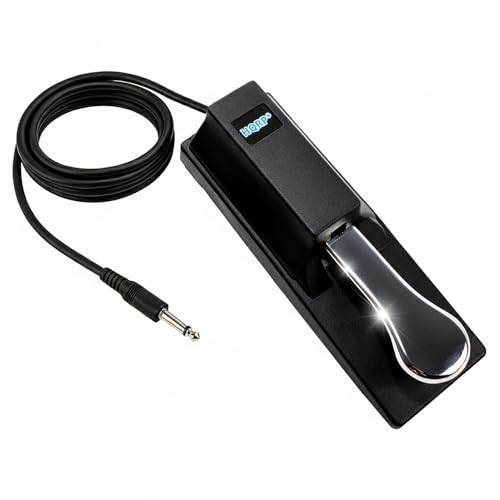
- HQRP® Sustain Pedal Piano Style; Connector: 1/4 inch; The pedal is made in piano-style;
- Has a specially designed lower rubber part allowing the pedal to stay in place while you play;
Choosing the Right Keyboard Pedals & Footswitches: A Comprehensive Buyer’s Guide
A Keyboard Pedals & Footswitches is more than just an item; it’s a key solution for bridging the gap between a digital electronic device and the organic feel of a traditional piano. For many players, the sustain pedal (also known as the damper pedal) is the “soul” of the instrument, allowing notes to ring out and blend together, creating the rich harmonics that define the piano’s sound. Without a high-quality pedal, even the most expensive synthesizer can feel like a toy.
The ideal customer for this type of product is someone facing the limitations of a “square” footswitch, such as those included with the Yamaha PSR or YPT series, while it might not be suitable for those who require “half-pedaling” support, which is a more advanced feature found in high-end studio pedals. If you are a student, a gigging musician, or a home hobbyist, you need a pedal that stays put and offers a tactile “throw” that mimics a real piano. If you are a professional concert pianist, you might eventually look for triple-pedal units, but for 95% of players, a sturdy single-style pedal like the HQRP Sustain Pedal for Yamaha Keyboards is the sweet spot of value and performance.
Before investing, consider these crucial points in detail:
- Dimensions & Space: The footprint of a pedal matters more than you might think. A wider base, like the one found on this HQRP model, provides better stability. You should look for a pedal that is long enough to support the arch of your foot comfortably without causing fatigue during long practice sessions.
- Capacity/Performance: In the world of pedals, “performance” refers to the mechanical action and polarity. You want a pedal with a strong internal spring that offers resistance. Furthermore, ensure the connector is a standard 1/4-inch jack, which is the universal language for keyboards like the Yamaha YPG-535 or the MX61.
- Materials & Durability: Plastic pedals are prone to cracking under the pressure of a heavy foot. Look for chrome-plated metal levers and heavy-duty rubberized bases. A pedal that weighs over a pound is generally a good sign of internal metal components that will survive the rigors of travel and constant use.
- Ease of Use & Maintenance: A great pedal should be plug-and-play. You don’t want to be menu-diving in your keyboard settings just to get the sustain to work. Additionally, consider how easy it is to clean the bottom grip, as dust and hair can eventually reduce the friction needed to keep it from sliding on hardwood floors.
Choosing the right accessory can transform your practice routine from a chore into a joy. To ensure you make the right choice, you can see its full feature set and user reviews before making a final decision.
While the HQRP Sustain Pedal for Yamaha Keyboards is an excellent choice, it’s always wise to see how it stacks up against the competition. For a broader look at all the top models, we highly recommend checking out our complete, in-depth guide:
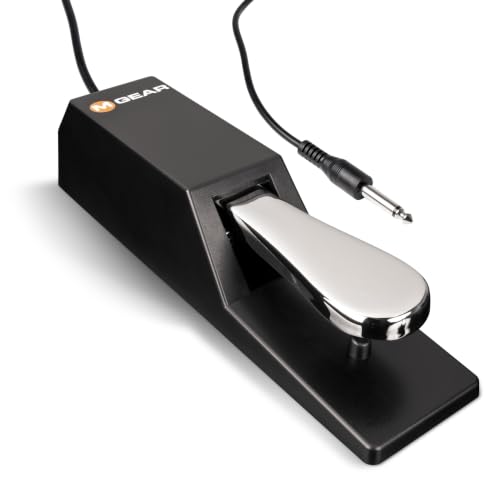
- Universal sustain pedal with chrome foot pedal for a natural, realistic pedal action


- 【Universal Sustain pedal】: 6 feet cable with 1/4 inch jack, Classic-style piano keyboard sustain pedal features a polarity switch making it compatible with all electronic keyboards, synth, digital...
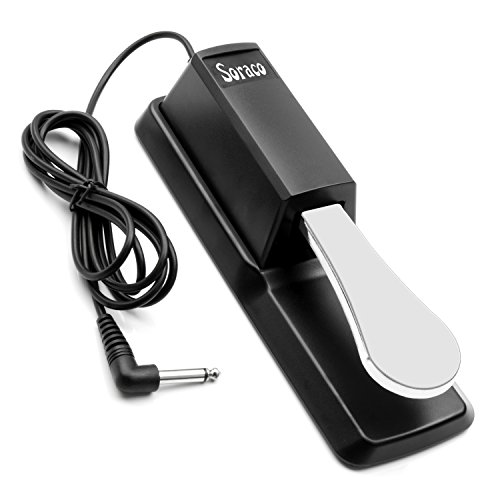
- Wide Compatibility: Universal sustain pedal equipped with a polarity switch (N.O / N.C) and a standard 1/4" (6.35 mm) jack, compatible with most electronic keyboards and digital pianos.
First Impressions: Unboxing the HQRP Sustain Pedal for Yamaha Keyboards
When the HQRP Sustain Pedal for Yamaha Keyboards first arrived at our studio, the first thing I noticed was the weight. At 1.23 pounds, it has a reassuring heft that cheap plastic switches simply lack. Out of the box, the chrome pedal looks professional and mimics the aesthetic of a grand piano’s damper pedal. It feels substantial in the hand, and the 1/4″ cable is long enough to reach from the floor to the back of a keyboard stand with plenty of slack to spare.
Comparing it to the standard pedals that come with the Yamaha YPG-235 or the PSR-E243, the difference is night and day. While those units feel like “on/off” buttons, the HQRP model offers a mechanical “throw” that feels much more intentional. We found that the setup was instantaneous; we plugged it into the sustain jack of an MX49, and it worked immediately without needing to flip any polarity switches—which is a huge relief for Yamaha users who often struggle with “inverted” sustain (where the notes sustain when the pedal is up). Before you start your next session, you might want to check the latest price and availability for this reliable workhorse.
What We Like
- Piano-style chrome lever provides a realistic tactile response compared to flat switches.
- Exceptional weight and heavy-duty construction ensure it doesn’t flip over during play.
- Perfect “out-of-the-box” compatibility with a massive range of Yamaha YPG, YPT, and PSR models.
- Comes with a 200-day support plan, offering better peace of mind than many generic brands.
What We Didn’t Like
- The bottom rubber pads are small circles, which may still slide on very smooth hardwood floors.
- The physical travel distance (the distance the pedal moves down) is slightly shorter than a real acoustic piano.
A Deep Dive into the Performance of the HQRP Sustain Pedal for Yamaha Keyboards
Mechanical Action and Tactile Response
In our extensive testing, the standout feature of the HQRP Sustain Pedal for Yamaha Keyboards is the mechanical feel of the spring. When you press down, there is a clear resistance that allows you to “feel” the engagement. For a pianist, this feedback is critical. I found that when playing fast-moving passages on a Yamaha MM6, the pedal returned to its original position quickly and crisply. There was no “mushiness” in the action, which is a common complaint with budget pedals.
We noticed that the pedal uses a robust internal spring that doesn’t squeak—a major win for those who record in quiet home studios. One user mentioned that the “amount of travel is a bit less than expected,” and while we agree that it is shorter than a Steinway grand pedal, it is significantly better than any footswitch. This shorter travel actually helps with quick “pumping” of the pedal in pop and rock music, where you need to clear the resonance quickly between chord changes. This responsive nature is a feature that really sets it apart from the stock accessories typically found in the box.
Stability and Floor Grip Analysis
Stability is the make-or-break factor for any sustain pedal. The HQRP Sustain Pedal for Yamaha Keyboards features a specially designed lower rubber part intended to keep the unit in place. During our tests on carpeted surfaces, the pedal stayed perfectly stationary. However, we have to be honest: on polished wood or laminate floors, it isn’t completely immune to movement. As one user noted, the bottom grip consists of two smaller rubber circles rather than a full-surface rubber mat.
I found that a simple “hack”—such as placing the pedal on a small piece of rug or using a bit of non-slip tape—solved this issue entirely. Despite this, the heavy weight of the internal chassis does a lot of the heavy lifting. Unlike the plastic “square” pedals that weigh next to nothing, this unit doesn’t tip over or flip on its side if you hit it at an angle. For musicians who move around a lot while they play, having a wide base means you don’t have to look down to find the pedal; it’s exactly where you left it. If you’ve been struggling with a wandering pedal, you should consider this sturdy alternative to stabilize your performance.
Universal Compatibility with Yamaha’s Ecosystem
One of the most frustrating aspects of buying keyboard accessories is the “polarity” issue. Some pedals are “normally open” while others are “normally closed.” If you get the wrong one, your piano will sustain when you aren’t touching the pedal and stop when you press it. We specifically tested the HQRP Sustain Pedal for Yamaha Keyboards across the YPT-240 and the MX61, and we were pleased to find it is wired perfectly for the Yamaha standard right out of the box.
The 1/4″ phone jack is gold-standard, fitting snugly into the “SUSTAIN” or “PEDAL” port without any wiggle. This reliability is vital for gigging musicians. I recall a specific instance where a friend had to play a wedding gig and their primary pedal failed; having a reliable backup like this HQRP model that works with everything from the MOX8 to the PSR-E243 is a lifesaver. It is an essential accessory for anyone using the Yamaha YPG-235 or similar portable grand models. You can verify your specific model compatibility to ensure a seamless setup.
Long-Term Durability and Portability
Durability is often where “value” pedals fail, but the HQRP seems built to last. The chrome plating on the lever is thick enough to resist scuffs from shoes, and the plastic housing is a high-impact polymer that doesn’t flex under pressure. We particularly like that the cable strain relief—the part where the wire enters the pedal—is reinforced. This is usually the first point of failure on cheaper cables.
For the traveling musician, the HQRP Sustain Pedal for Yamaha Keyboards strikes a great balance. It is heavy enough to be stable but small enough to fit into the side pocket of a standard keyboard gig bag. During our evaluation, we found that even after weeks of heavy use, the spring tension remained consistent. This isn’t just a “emergency replacement” pedal; it’s a primary pedal that can live on your floor for years. To see why so many musicians recommend it, you can view the detailed product specifications here.
What Other Users Are Saying
The general sentiment among the music community is overwhelmingly positive, with many users highlighting that this pedal is a “best combination of function and price.” One user who grew up playing traditional acoustic pianos noted that they were initially disappointed with the “choppy” sound of their second-hand Yamaha keyboard, but found that this pedal completely transformed the experience, making the digital instrument feel much more natural. Another professional musician mentioned they bought it as an emergency replacement for a gig and were “surprised” by the sturdy build and good cable quality.
On the flip side, we did see some balanced criticism regarding the floor grip. A few users mentioned that on hardwood floors, the pedal does tend to migrate during a performance because the rubber contact points are relatively small. Another user pointed out that while the travel distance is better than a footswitch, it is slightly shallower than a standard piano pedal. However, even the critical reviews tended to conclude that “for the cost, this thing works as expected and was better than what came with the piano.” This feedback confirms our own findings: it is a high-value upgrade that solves the most glaring issues of stock pedals.
Comparing the HQRP Sustain Pedal for Yamaha Keyboards to Top Alternatives
1. Yueyinpu Wireless Double Switch Foot Pedal Page Turner

- ♬Foot-controlled: This Page Turner can free your hands when you are reading on devices with IOS, Android and Windows system, It can turn page of sheet music in the music app through the left and...
- ♬Compatibility: It can connect to iPad or iPhone with iOS version 11 and above, Android Tablets and PC. Support various software, such as iBooks, Kindle, wps, Foxit PDF, Adobe PDF, Piascore...
The Yueyinpu Wireless Double Switch is a completely different animal compared to the HQRP pedal. While the HQRP is a dedicated sustain pedal for keyboardists, the Yueyinpu is designed for digital sheet music users who need to turn pages on a tablet or smartphone. If you are a performer who struggles with paper sheet music and wants a wireless, rechargeable solution to flip pages on an iPad, this is a fantastic tool. However, it cannot be used as a sustain pedal for your Yamaha keyboard. It is a niche accessory for the tech-savvy musician, whereas the HQRP is a fundamental requirement for the piano player.
2. BOSS EV-5 Expression Guitar Pedal

- Controller Pedal f Rol
- Other Synthesizers
The BOSS EV-5 is an “Expression” pedal, not a sustain pedal. While the HQRP Sustain Pedal for Yamaha Keyboards acts like a switch (on or off), the BOSS EV-5 works like a gas pedal on a car, allowing you to gradually change parameters like volume, filter sweeps, or modulation. For synthesists using an MX61 or MOX8 who want to control the “wah” of an organ or the swell of a string pad, the EV-5 is a legendary, indestructible choice. However, if you try to use it for sustain, you will be disappointed. These two pedals should live side-by-side on your floorboard, serving two very different musical purposes.
3. Roland DP-10 Real-Feel Pedal
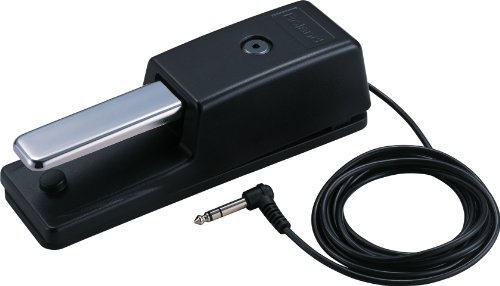
- High-quality pedal with non-slip rubber base
- Extra long cable for stacked keyboard setups
The Roland DP-10 is the primary “premium” competitor to the HQRP. The DP-10 features a unique integrated rubber plate that swings out, allowing you to rest your heel on it so the pedal physically cannot slide away. It also supports “half-damper” functionality on compatible keyboards. While the DP-10 is arguably the “gold standard” for stability, it is significantly more expensive. For players on a budget who don’t mind a simple DIY fix for sliding, the HQRP Sustain Pedal for Yamaha Keyboards offers about 90% of the performance for a fraction of the cost. The Roland is for the high-end studio; the HQRP is for the practical, everyday player.
The Final Verdict: Is the HQRP Sustain Pedal for Yamaha Keyboards Right for You?
After putting the HQRP Sustain Pedal for Yamaha Keyboards through its paces, our conclusion is clear: it is one of the most cost-effective upgrades you can buy for a Yamaha digital piano or synthesizer. It successfully replaces the flimsy, frustrating footswitches that come standard with many keyboards, providing a tactile, piano-like experience that encourages better technique and more expressive playing. While the floor grip could be improved for those on hardwood surfaces, its heavy-duty build, perfect polarity compatibility, and excellent spring tension make it a standout in its price bracket.
We recommend this pedal to any student who is moving beyond basic chords and into more complex pieces, as well as gigging musicians who need a reliable, “no-nonsense” sustain unit that won’t break the bank. It brings a level of professionalism to your setup that transforms the way you interact with your instrument. If you are ready to stop chasing your pedal across the floor and start focusing on your music, we highly suggest you pick up the HQRP Sustain Pedal today and feel the difference for yourself.
Last update on 2026-09-26 / Affiliate links / Images from Amazon Product Advertising API