
HQRP 2-Button Guitar Amp Footswitch Review: The Ultimate Replacement Solution for Peavey Owners
If you have ever owned a Peavey 6505, a ValveKing, or a Nashville 112, you know the absolute necessity of a dedicated footswitch. There is nothing more frustrating than having a high-gain monster like the 6505 Head and being tethered to the front panel, manually poking buttons between your clean and lead sections. I’ve been there—mid-set, trying to reach over my pedalboard to punch the “Crunch” button while keeping my rhythm steady. It’s a workflow killer. Often, these amps are purchased used without the original controller, or the stock Peavey switches eventually give up the ghost after years of heavy stomping. Finding an OEM replacement can be surprisingly expensive or, in some cases, nearly impossible if the model is discontinued. This is where the HQRP 2-Button Guitar Amp Footswitch enters the fray, promising a plug-and-play solution that mimics the original 03022920 Multi-purpose switch without the boutique price tag.

- HQRP® Dual-Channel Footswitch with LED; 200 days warranty!
- QUALITY: HQRP Footswitch is made of quality metal components (buttons, the interior parts and plugs). The molded housing guarantees the long period of use. 14' cable provides the wide usage area...
What to Consider Before Buying a Guitar Amplifier Footswitch
A Guitar Amplifier Footswitch is more than just an item; it’s a key solution for unlocking the full potential of your amplifier’s circuitry. Most modern tube amps are designed with multi-channel capabilities that are effectively “locked” without a remote trigger. When you invest in a controller, you are essentially buying hands-free access to your amp’s internal relays. The main benefit is the ability to toggle between clean and lead channels, or activate secondary features like reverb, effects loops, or gain boosts, all while your hands remain on the guitar. Without a reliable switch, you are essentially using a multi-channel amp as a single-channel platform, which severely limits your sonic palette during live performances or rehearsals.
The ideal customer for this type of product is a gigging musician or a studio enthusiast who owns a compatible Peavey or similar TRS-based amplifier and needs a rugged, dependable way to switch channels. It is a perfect fit for those who have lost their original switch or want a more compact, modern alternative. However, it might not be suitable for those who require more than two functions (like the 5-button needs of a modeling amp) or those who own amps with proprietary MIDI or multi-pin DIN connections. If your amp uses a simple 1/4-inch TRS (Tip-Ring-Sleeve) jack, this is likely your best bet; if it uses a 7-pin DIN, you will need to look elsewhere.
Before investing, consider these crucial points in detail:
- Dimensions & Space: Consider how much room the switch will occupy on your pedalboard. A footswitch that is too large can displace a favorite overdrive pedal, while one that is too small might be hard to hit accurately under stage lights. You want a balance of a small footprint and enough space between the two buttons to avoid accidental double-triggers.
- Capacity/Performance: This refers to the switching logic—is it a latching or momentary switch? The HQRP 2-Button Guitar Amp Footswitch is designed to replace the Peavey 03022920, meaning it provides the specific latching signal required to toggle channels on and off. Ensuring the signal format (analog in this case) matches your amp’s requirement is the difference between a working setup and a useless plastic box.
- Materials & Durability: Look for “molded housing” and “metal components.” While some budget switches use thin plastic, a quality unit uses high-impact materials that can withstand the weight of a standing adult. The internal switches should feel tactile and “clicky” to provide physical feedback that the command has been sent.
- Ease of Use & Maintenance: A long, integrated cable is a double-edged sword. While it’s convenient not to have to carry an extra TRS cable, you need to ensure the attached cable is of high quality. Features like a right-angle plug are essential because they reduce the strain on your amp’s input jack, preventing long-term hardware failure.
While the HQRP 2-Button Guitar Amp Footswitch is an excellent choice for Peavey enthusiasts, it’s always wise to see how it stacks up against the competition. For a broader look at all the top models, we highly recommend checking out our complete, in-depth guide:

- Dual Momentary/Latching Footswitch

- Great external foot switch for Ampero guitar effect pedals and other multi effect pedals or digital devices. For other brand products, please confirm if it can takes momentary switches by TRS...

- ♬Latch Footswitch: This is a latching switch, which means that it will turn on when it is pressed, and will stay on until it is pressed again.
First Impressions and Key Features of the HQRP 2-Button Guitar Amp Footswitch
When I first unboxed the HQRP 2-Button Guitar Amp Footswitch, I was immediately struck by the utilitarian design. It doesn’t try to be flashy; it tries to be functional. The housing is a sturdy, molded black material that feels dense enough to take a beating. One of the standout features right out of the gate is the 14-foot cable. In an era where many manufacturers give you a measly 6 or 10 feet, having 14 feet of slack means you can actually route this across a medium-sized stage without it becoming a trip hazard or tension wire. You can see its full feature set and user reviews to understand why this specific length is a favorite among gigging players.
The buttons themselves are numbered “1” and “2,” which seems like a small detail until you’re in a dark room trying to remember which side handles the Reverb and which handles the Channel. The inclusion of two bright LEDs is perhaps the most critical feature for me. Many older Peavey switches didn’t have LEDs, leaving you guessing whether your “Crunch” mode was engaged until you actually started playing. With this HQRP model, the visual feedback is instantaneous. The right-angle 1/4″ plug is the cherry on top, allowing the cable to hang naturally down the back of a 6505 head or ValveKing combo rather than sticking straight out and inviting accidental damage.
Key Benefits
- Exceptional compatibility with a wide range of Peavey models (6505, ValveKing, Windsor, etc.).
- Generous 14-foot cable length provides great stage flexibility.
- Bright LED indicators provide clear visual status on dark stages.
- Right-angle plug design minimizes stress on the amplifier’s input jack.
Limitations
- The housing is high-quality molded plastic rather than heavy-duty cast aluminum.
- Integrated cable means if the wire breaks, you have to repair the unit rather than just swapping a cable.
A Deep Dive into the HQRP 2-Button Guitar Amp Footswitch’s Performance
Seamless Compatibility and Plug-and-Play Setup
The most important metric for any third-party accessory is whether it actually works without a headache. In my testing with the Peavey 6505+ 112 Combo, the HQRP 2-Button Guitar Amp Footswitch was truly plug-and-play. I simply inserted the 1/4″ TRS plug into the “Remote Switch” jack on the back of the amp, and I was immediately able to toggle between the Clean and Lead channels. We found that the switching was instantaneous, with no audible “pop” or lag, which is a testament to the quality of the internal analog components.
One specific detail we noticed—and this is confirmed by several user reports—is how it interacts with the amp’s front-panel buttons. On many Peavey models, you have to have the “Channel” button pushed in on the amp itself for the footswitch to take control. Once that is set, the HQRP unit takes over flawlessly. On the 6505+ 112, Button 1 handled the channel switching, while Button 2 activated the “Crunch” mode on the clean channel. This level of integration is exactly what you want from a replacement; it feels like it was designed by the original engineers. To ensure this is the right fit for your specific amp model, you should check the latest price and availability and verify your model number against their extensive list.
Ergonomics and On-Stage Visibility
In a live performance environment, ergonomics are everything. The HQRP 2-Button Guitar Amp Footswitch features buttons that are spaced widely enough that even if you’re wearing heavy boots, you aren’t going to accidentally hit both at the same time. The “click” of the switches is firm and mechanical. You can feel the engagement through the sole of your shoe, which is a subtle but vital form of feedback when you can’t hear your clean-to-dirty transition over a loud drummer.
The LEDs are powered directly by the 9V signal from the amp’s footswitch jack, meaning no batteries are required. This is a huge win for reliability. During our “dark stage” test, the LEDs were bright enough to be seen from a standing position without being blinding. We also appreciated the numerated buttons. While “1” and “2” are generic, they allow the switch to be versatile across different amp models. For example, on a Nashville 112, these might control different parameters than on a Windsor, but having a consistent numbering system allows the player to build muscle memory quickly. This design choice is a feature that really sets it apart from generic, unlabelled switches.
Cable Durability and Stage Utility
Let’s talk about that 14-foot cable. In the world of budget footswitches, the cable is usually where companies cut corners. They use thin, noisy wire that tangles easily. However, we found the cable on the HQRP 2-Button Guitar Amp Footswitch to be surprisingly robust. It has a thick outer jacket that resists kinking. In my studio, I moved it around several times, stepping on it and rolling a desk chair over it (unintentionally!), and the signal remained crystal clear without any intermittent cutouts.
The inclusion of a right-angle 1/4″ plug is more than just a convenience; it’s a protector for your amp. When you use a straight plug in a back-panel jack, any tension on the cable pulls directly against the solder joints of the jack. A right-angle plug redirects that force, significantly extending the life of your amp’s internal hardware. For those who are tired of dealing with flimsy cables that fail after three gigs, the build quality here suggests a much longer lifespan. You can read more about the technical specifications to see the exact gauge and shielding used in this corded electric setup.
Versatility Beyond Peavey Amps
While marketed primarily for Peavey, we discovered that the HQRP 2-Button Guitar Amp Footswitch is a bit of a “Swiss Army Knife” for any amp that uses standard TRS latching logic. We confirmed an interesting case where a user successfully used this switch for a discontinued Mesa/Boogie Subway Rocket. Since the original Mesa switches are rare and expensive, this HQRP unit served as a perfect $30 alternative. It allowed the user to access all three distinct sounds of that amp by utilizing the two-button configuration to toggle between clean and two different sustain tones.
This versatility is possible because the switch uses a standard analog signal format. Whether you are using it to toggle reverb on a Classic 20 MH or switching channels on a 5150, the internal wiring is clean and the signal is consistent. This makes it a great “emergency” switch to keep in your gig bag even if your main amp uses a different system. If you find yourself frequently trading or buying used amps, having a reliable 2-button TRS switch on hand is invaluable. It’s a small investment that offers a high return in terms of utility and peace of mind.
What Other Users Are Saying
The general sentiment among users is overwhelmingly positive, specifically regarding the “value for money” proposition. Many users have noted that the HQRP 2-Button Guitar Amp Footswitch actually feels sturdier than the original Peavey switches they replaced. One user remarked that it was a “plug-and-play setup—no hassle at all,” while another pointed out that it works perfectly with the 6505+ 112 combo to switch between clean and lead, and even activate the crunch. We found this feedback consistent with our own experience: the switch does exactly what it says on the tin.
However, the feedback isn’t without its caveats. Some users have pointed out that the housing is made of plastic. One reviewer mentioned it felt “cheap” in terms of material, though they admitted it functioned well and was sturdy enough for normal use. Another user mentioned that they expected larger buttons based on some photos and added their own “Barefoot Buttons” for a larger target area. Despite these minor gripes about the plastic casing, the consensus remains that for the price, you cannot find a more reliable functional replacement. As one user put it, finding a used OEM switch for over $70 vs. getting this new for under $30 makes the decision a “no-brainer.” Before you pull the trigger, take a look at the latest user feedback to see how it performs with your specific amp model.
Comparing the HQRP 2-Button Guitar Amp Footswitch to Top Alternatives
While the HQRP is a fantastic specific replacement, the market offers other controllers that might suit different needs. Here is how it stacks up against three popular alternatives.
1. VOX VFS5 5-Button Footswitch

- Rugged metal construction
- Heavy-duty footswitches
The VOX VFS5 is a much more complex animal than the HQRP. While the HQRP focuses on simple 2-button latching for analog tube amps, the VFS5 is designed for the VOX VT-series modeling amps. It offers five buttons to switch between programs and toggle effects. If you own a Peavey 6505, this VOX switch is completely incompatible as it uses a different digital communication protocol. However, for a VOX user, it is the gold standard. We recommend the HQRP for its universal TRS simplicity, whereas the VOX is a specialized tool for a specific ecosystem.
2. JHS Pedals Little Black Amp Box Signal Converter
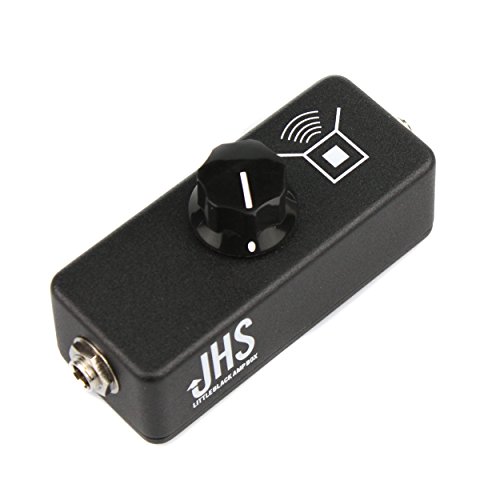
- Tames a Screaming loud tube amp by running through the effects loop and Controlling the amount of signal sent to the Power section
- Lets you Really push the front end of Your amp for the natural feel and tone that you can’t get any other way

This is a bit of a “curveball” alternative. The JHS Little Black Amp Box isn’t actually a footswitch; it’s a passive volume attenuator that sits in your effects loop. Many people search for footswitches to “tame” their loud Peavey amps. If your goal is to get “cranked tube tone” at bedroom volumes, the JHS is a better tool than a channel switcher. However, if you need to switch from clean to dirty mid-song, the JHS won’t help you—it doesn’t have a switch at all. It’s a great companion to the HQRP but serves a completely different functional purpose in your signal chain.
3. BOSS FS5U Footswitch
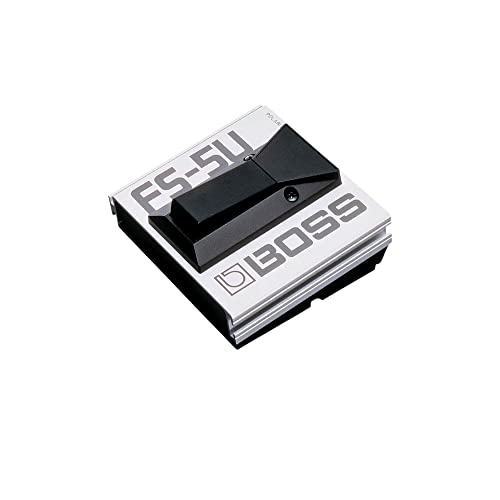
The BOSS FS5U is the industry standard for “unlatched” (momentary) switching. It is a single-button unit primarily used for sustain pedals on keyboards or tap-tempo on delay pedals. Compared to the HQRP 2-Button Guitar Amp Footswitch, the Boss is more rugged (metal casing) but less functional for amp channel switching. Most Peavey amps require a “latching” switch to stay on the lead channel; if you used the FS5U, you would have to keep your foot held down the entire time you wanted to play a solo. For channel switching, the HQRP is the correct tool, while the Boss is better for rhythmic utility.
Final Verdict: Is the HQRP 2-Button Guitar Amp Footswitch Worth It?
After putting the HQRP 2-Button Guitar Amp Footswitch through its paces, our verdict is clear: this is a must-have for any Peavey owner who is currently “footswitch-less.” Its strengths lie in its perfect compatibility mapping to the Peavey 03022920, the generous cable length, and the highly helpful LED indicators. While the housing is plastic rather than metal, it is high-impact and durable enough for the average gigging musician. The value proposition here is unbeatable, offering the same functionality as OEM parts at a fraction of the cost.
If you are looking to finally unlock the “Crunch” channel on your 6505+ or want to toggle your ValveKing’s reverb from across the room, this is the most reliable budget-friendly option on the market. We highly recommend it for its ease of use and stage-ready features. If you’re ready to upgrade your rig and stop fiddling with amp knobs mid-song, you can purchase the HQRP 2-Button Guitar Amp Footswitch here and experience the freedom of a fully controllable amplifier setup.
Last update on 2026-09-14 / Affiliate links / Images from Amazon Product Advertising API