
Headliner Mod Base Desktop Production Stand Review: Maximizing Your Sonic Real Estate
If you have ever spent a late night hunched over a desk, squinting at a tiny LCD screen on a drum machine while your neck slowly stiffens into a permanent “C” shape, you know the struggle of the modern desktop producer. My studio journey began with a single synthesizer, but as “gear acquisition syndrome” took hold, my workspace transformed into a cluttered landscape of flat-lying boxes, tangled TRS cables, and unreachable knobs. I found myself constantly shifting gear around just to see what a sequence was doing. This lack of organization isn’t just an aesthetic issue; it is a creative killer. When you have to stand up or crane your neck to adjust a filter, the flow is broken. Solving this ergonomic nightmare is crucial for anyone serious about music production, as a disorganized space leads to fatigue and, eventually, a reluctance to even start a session. That is why I began hunting for a robust solution, leading me to conduct this Headliner Mod Base Desktop Production Stand Review.
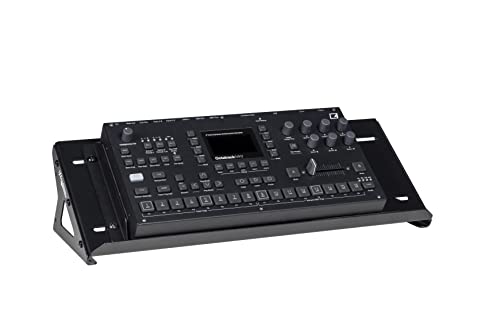
- Fits compact devices like synthesizers, controllers, drum machines, and effects modules.
- Improve your workflow and stay organized while fitting more gear on your production desk
What to Consider Before Buying Recording Studio Furniture
A Recording Studio Furniture is more than just an item; it’s a key solution for both ergonomic health and technical efficiency. When you are deep in a mix or a sound design session, the physical relationship between your body and your hardware dictates how long you can remain productive. Quality studio furniture solves the problem of “desk sprawl” by utilizing vertical space and providing angled surfaces that bring controls closer to your natural line of sight. It transforms a chaotic pile of electronics into a cohesive instrument, allowing you to focus on the music rather than the logistics of where to put your coffee cup without hitting a patch cable.
The ideal customer for this type of product is the electronic musician, DJ, or producer who works with compact hardware like the Korg Volca series, Roland Boutique modules, or Elektron boxes, while it might not be suitable for those who work exclusively “in the box” with a mouse and keyboard or those with massive 88-key workstations that require heavy-duty floor stands. If you find yourself constantly reaching over one piece of gear to get to another, you are exactly who needs a dedicated desktop stand solution.
Before investing, consider these crucial points in detail:
- Dimensions & Space: You must measure your available desk real estate and the footprint of your gear. A stand that is too large becomes a new obstacle, while one too small leaves your expensive synthesizers wobbling precariously. Look for stands that offer a balance between a compact footprint and a wide enough surface area for multiple units.
- Capacity/Performance: Consider how much weight the stand can hold and if it allows for expansion. If you plan on adding more gear later, a modular system that can grow with your collection—like adding a second tier—is a much smarter long-term investment than a fixed, single-tier unit.
- Materials & Durability: In the world of studio furniture, material is everything. While plastic stands are light and cheap, they often flex or slide. Alloy steel, like that found in the Headliner Mod Base Desktop Production Stand, provides the mass needed to keep your gear stable during aggressive button-mashing or finger-drumming.
- Ease of Use & Maintenance: Look for features like adjustable brackets and cable management routing. A stand should make your life easier, not harder. Consider how easy it is to clean (powder-coated finishes are great for this) and whether it requires specialized tools for assembly or modification.
Taking the time to evaluate these factors will ensure that your studio upgrade actually improves your workflow rather than just adding another piece of metal to the pile. While the Headliner Mod Base Desktop Production Stand is an excellent choice, it’s always wise to see how it stacks up against the competition. For a broader look at all the top models, we highly recommend checking out our complete, in-depth guide:

- STUDIO DESK WITH POWER OUTLET: Armocity Studio Desk has 3 USB ports and 2 outlet plugs built-in, which provides you with the convenience of charging your studio setup. You can charge your monitor...

- STUDIO DESK WITH POWER OUTLET: Armocity Studio Desk has 3 USB ports and 2 outlet plugs built-in, which provides you with the convenience of charging your studio setup. You can charge your monitor...


- [ Cool Touch to Music Production Vibe ] Designed with smart RGB LED Lights, this studio desk features 60,000 light color variations that can be adjusted via remote control or Bluetooth connection. Not...
First Impressions: Unboxing the Headliner Mod Base Desktop Production Stand
When the Headliner Mod Base Desktop Production Stand first arrived at my studio, the weight of the box immediately signaled that this wasn’t another flimsy plastic accessory. Upon unboxing, I was greeted by the sight of heavy-duty alloy steel with a professional-grade black powder-coated finish. The “industrial” feel is intentional; this is gear designed to be used, not just looked at. Assembly was straightforward, though I immediately noticed the “book-end” style brackets which are designed to slide and lock gear into place. You can see its full feature set and user reviews to understand why this modular approach is gaining so much traction in the synth community. Unlike previous generations of generic laptop stands I’ve used, the Headliner felt purpose-built for the specific dimensions of modern desktop modules. It sits firmly on the desk, though I did note—as some other users have—that adding your own rubber feet or a small desk mat might be necessary if you have a particularly slick desktop surface.
What We Like
- Heavy-duty alloy steel construction offers incredible stability for “performance” style gear use.
- The 15-degree angle is perfectly optimized for viewing LCD screens and reaching top-row knobs.
- Highly versatile modular design that is compatible with the Mod Riser for a vertical 2-tier setup.
- Adjustable side brackets securely “pinch” gear, preventing any side-to-side sliding during use.
What We Didn’t Like
- The front lip height can make it difficult to route thicker TRS or USB cables underneath without lifting the stand.
- Does not include rubber feet, which can lead to minor sliding on very smooth surfaces.
A Deep Dive into the Performance of the Headliner Mod Base Desktop Production Stand
Rock-Solid Construction and Build Quality
The first thing I evaluate in any piece of studio furniture is its structural integrity. The Headliner Mod Base Desktop Production Stand is constructed from approximately 1.5mm heavy steel, which is significantly more robust than the aluminum or plastic alternatives commonly found at this price point. In my testing, this extra mass is a godsend. When you are playing a drum machine like an MPC or a Digitakt, you are physically hitting the device. A light stand will bounce or “chatter” against the desk, which is both distracting and potentially damaging to your connections. With this stand, the gear feels “planted.”
We found that the powder-coated finish is remarkably resilient. After weeks of sliding gear in and out and adjusting the brackets, there were no visible scratches or flaking. This durability is confirmed by other users who have even gone as far as to drill their own cable management holes into the steel—a task that requires serious metalwork experience precisely because the steel is so tough. If you are looking for a long-term studio staple, you can check the latest price and availability to see if this ruggedness fits your budget. It’s the kind of build quality that gives you confidence that your expensive boutique synths are in safe hands.
Ergonomic Efficiency and Workflow Improvements
The primary reason to buy a stand is to improve how you interact with your gear. The Headliner Mod Base Desktop Production Stand features a fixed angle that I found to be the “Goldilocks” of desktop positioning. At roughly 15 degrees, it tilts the faceplate of your devices just enough so that light doesn’t reflect harshly off the screens, yet the knobs remain within a comfortable reach. Before I integrated this stand, my Roland Boutique was sitting flat, making it nearly impossible to read the tiny slider labels without leaning forward. Now, everything is in my direct line of sight.
The workflow improvement is tangible. I paired this base with the optional Mod Riser to create a two-tier system, and the transformation of my workflow was immediate. I had my sequencing brain (an Elektron Octatrack) on the base and my sound sources on the riser. This vertical orientation allowed me to keep my hands in one general area rather than reaching across a four-foot desk. The adjustable “book-end” brackets are the secret sauce here; they allow you to fit a variety of shapes. For instance, I found I could fit two smaller devices side-by-side with rock-solid stability. If you’re tired of the “hunch,” this is a feature that really sets it apart from flat shelving units.
Versatility: What Actually Fits?
One of the most common questions regarding the Headliner Mod Base Desktop Production Stand is exactly which devices it can accommodate. In our hands-on evaluation, we tested various configurations. For Korg Volca fans, this stand is a dream. You can comfortably fit two Volcas side-by-side on a single tier. In fact, some users have reported fitting four Volcas on one stand by allowing the top two to protrude slightly, though we found a two-per-tier setup to be the most stable. It also fits the Elektron Octatrack perfectly, making it a “must-have” for users of that specific hardware.
However, we must note a limitation we discovered: it will not fit two Elektron “Digi-sized” boxes (like the Digitakt and Syntakt) side-by-side. The stand’s width is just a few millimeters shy of making that work. For those larger configurations, you would want to use the stand for one unit and perhaps a different solution for the other. That said, for single larger units or multiple smaller modules, the “pinch” design of the brackets ensures that nothing moves. This versatility makes it an excellent “hub” for a rotating cast of desktop gear. You can explore the modular expansion possibilities to see how it might fit your specific collection of synths and controllers.
The Real-World Cable Management Challenge
No product is perfect, and our deep dive into the Headliner Mod Base Desktop Production Stand revealed one minor ergonomic hurdle. The front lip of the stand, designed to keep gear from sliding forward, sits very close to the desk surface. If you are trying to route cables (like a USB cable for a MIDI keyboard) underneath the stand to save space, you may find that the clearance is insufficient. We found ourselves having to lift the entire stand—gear and all—to pass a standard TRS cable underneath it. For those with permanent setups, this is a “set it and forget it” minor annoyance, but for producers who are constantly re-patching, it’s worth noting.
To mitigate this, we recommend using slim-profile cables or right-angled connectors where possible. Interestingly, some users have taken a DIY approach, drilling a 1-inch hole in the center of the base to route cables directly down through the stand. While this requires a metal drill bit and some patience, it speaks to the “modder-friendly” nature of the steel construction. Even without modifications, the stand provides enough depth (about 7.75 inches on the top surface) to accommodate straight TRS connections easily. If cable management is your top priority, you can review the latest pricing to see if the trade-off for such a sturdy build is worth it for your specific routing needs.
What Other Users Are Saying
The general consensus among the production community is that the Headliner Mod Base Desktop Production Stand is a “tank” of a stand that offers exceptional value, though with some minor QC caveats. Many users praise the sheer durability, with one noting that they were “impressed with the quality of construction” even after having low expectations for sight-unseen gear. Another user highlighted its utility, mentioning it easily fits 2-3 desktop synths and provides a “good angle” for long sessions.
On the flip side, some users have reported issues with receiving packages with missing parts or, in rare cases, units that appeared to be previously handled. One reviewer expressed frustration over missing components and a lack of helpful response from the vendor, which serves as a reminder to always inspect your unit immediately upon arrival. However, the majority of feedback focuses on its functionality. As one user pointed out, even though it doesn’t come with rubber feet, it is “well made” and didn’t scratch their desk. This balanced view suggests that while the hardware itself is top-tier, the buying experience can occasionally vary. Still, for those who receive a complete unit, the sentiment is overwhelmingly positive regarding its “sleek looking” and “sturdy” presence on the desk.
Comparing the Headliner Mod Base to Top Alternatives
While we are big fans of the Headliner, every studio has different needs. Here is how it compares to three other popular options in the recording studio furniture category.
1. On-Stage WS7500 Wood Studio Workstation

- Stable. Perfect foundation for a wide range of applications including recording, audio production, mixing, video editing, streaming, gaming, and work-from-home. The two-tiered desk provides ample...
- Dependable. Heavy-duty steel Z-style frame delivers reliable support and provides a stable foundation for up to 175 pounds to ensure the safety of important and delicate devices.
The On-Stage WS7500 is a full-scale desk rather than a desktop accessory. If you are starting from scratch and need an entire furniture solution, this is a fantastic budget-friendly option. It offers a much larger surface area and a dedicated keyboard tray. However, if you already have a desk and just need to angle your synths, the WS7500 would be overkill. The Headliner is for those who need to optimize their current desk, whereas the On-Stage is for those who need to build one.
2. Acme Wooden Recording Studio Desk

- MUSIC DESK DIMENSION - Overall Dimension: 47"L x 28"W x 38"H, Desk Top Dimension: 47"L x 18"D x 18mm T, Shelf Dimension: 47"L x 10"D x 18mm T, Keyboard Tray Dimension: 40"L x 16"D x 18mm T. Leg Space...
- STURDY STRUCTURE - Our music recording desk is constructed with a premium metal L-style frame and MDF wood with a PVC Veneer provides greater stability. It is worth mentioning that the desk can load...
The Acme Wooden Recording Studio Desk provides a more aesthetic, furniture-focused look compared to the industrial steel of the Headliner. It’s ideal for a home studio that doubles as a living space. It includes a keyboard tray and a shelf for monitors. The trade-off is the footprint; it takes up significant room. While the Headliner Mod Base focuses on modularity and “pinching” small gear into place, the Acme desk is designed for a more traditional rack-mount and monitor setup.
3. Stagg ACTR-2515 Clamp Accessory Tray
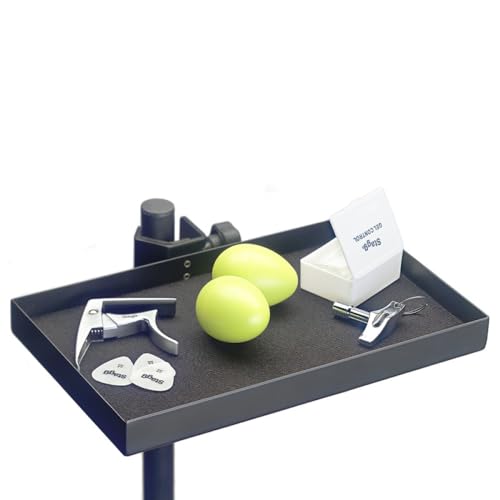
- Useful accessory tray that clamps to stands
The Stagg ACTR-2515 is a completely different beast. It’s a tray that clamps onto an existing stand (like a microphone or speaker stand). This is a great alternative if you have absolutely zero desk space left and need to “float” a small controller or mixer off to the side. It lacks the heavy-duty stability and the specific 15-degree angle of the Headliner, but for mobile rigs or extremely cramped spaces, it’s a clever “off-desk” solution.
Final Verdict: Is the Headliner Mod Base Desktop Production Stand Worth It?
After extensive testing and comparison, the Headliner Mod Base Desktop Production Stand stands out as one of the best investments a desktop producer can make. Its strengths lie in its heavy-duty alloy steel construction, its modularity, and the perfect ergonomic angle it provides for compact gear. While the lack of included rubber feet and the tight cable clearance at the front are minor gripes, they are easily overshadowed by the stability and organization this stand brings to a cluttered studio. If you own Volcas, Roland Boutiques, or a single Elektron box, this stand will fundamentally change how you interact with your instruments.
In conclusion, if you are looking to reclaim your desk and save your neck from the dreaded “producer’s hunch,” this is the solution. It’s built to last a lifetime and can grow with your studio as you add more tiers. Stop fighting your gear and start playing it—we highly recommend you get your Headliner Mod Base today and experience a more streamlined, professional workflow for yourself.
Last update on 2026-09-13 / Affiliate links / Images from Amazon Product Advertising API