
Gold Tone GME-4 Mandolin Review: Your Electric Gateway to Sonic Versatility
For years, my mandolin playing was, like many, largely confined to the acoustic realm. The warm, woody resonance and the percussive chop of a traditional F-style or A-style mandolin held a certain charm, perfect for bluegrass, folk, and Celtic tunes. However, I consistently found myself yearning for something more – a voice that could cut through a band mix, explore grittier tones, or simply offer a different sonic palette without the constant battle against feedback or the limitations of microphone placement. The desire to plug in and truly express myself across genres, from a searing Texas swing lead to a raucous rock n’ roll riff, became undeniable. This isn’t just my story; it’s a common dilemma for mandolinists looking to expand their horizons. Without an instrument designed for amplification, our creative aspirations can feel stifled, our performance opportunities limited, and our ability to seamlessly blend into diverse musical settings severely hampered.
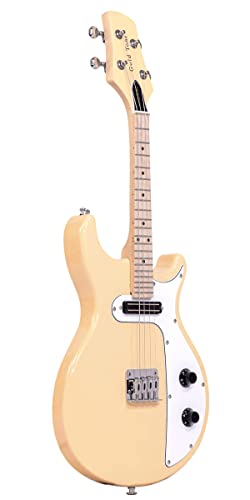
- Dual-Rail Mini Humbucker
- Volume and tone control
Before You Plug In: What to Consider When Choosing an Electric Mandolin
A mandolin, particularly an electric one, is far more than just an item; it’s a key solution for musicians seeking amplified performance, tonal versatility, and the ability to integrate into modern band settings. It resolves the classic problems of acoustic mandolins struggling for volume in noisy environments, battling feedback issues, and lacking the sustain and tonal shaping capabilities needed for genres beyond traditional folk music. An electric mandolin empowers players to explore new soundscapes, utilize effects pedals, and deliver a powerful, articulate voice whether on stage or in the studio.
The ideal customer for this type of product is someone currently playing acoustic mandolin who wants to perform amplified, or a guitarist looking to add a unique texture to their sound with an easy-to-play, four-string electric instrument. It’s perfect for those who dabble in blues, rock, country, jazz, or any genre where amplification and effects are crucial. Conversely, it might not be suitable for those who are strictly purists of traditional bluegrass or classical mandolin, or players who prefer the natural acoustic resonance above all else and have no intention of plugging in. For those players, a high-quality acoustic mandolin or perhaps an acoustic-electric model with a blendable pickup system might be a more fitting alternative.
Before investing, consider these crucial points in detail:
- Dimensions & Space: The physical size and weight of an electric mandolin significantly impact its comfort and portability. A compact, solid-body design like the Gold Tone GME-4 Mandolin is a dream for travel and tight stage setups, easily fitting into smaller gig bags or cases. Consider how it feels against your body, how balanced it is when strapped on, and whether its form factor allows for comfortable access to all frets. A well-designed instrument will feel like an extension of yourself, not an obstacle.
- Capacity/Performance: The heart of an electric mandolin lies in its electronics and how effectively it translates your playing into an amplified signal. Look for high-quality pickups, responsive tone and volume controls, and a quiet signal path. Key metrics include the type of pickup (single coil, humbucker, piezo), its output level, and how well it handles different playing dynamics. An instrument with versatile controls allows you to dial in everything from clean, bright tones to overdriven, gritty sounds, adapting to any musical demand.
- Materials & Durability: The woods and hardware used directly influence an electric mandolin’s tone, sustain, and longevity. Solid body instruments, often made from alder, mahogany, or ash, offer excellent sustain and feedback resistance, crucial for amplified performance. Maple necks and fingerboards provide a bright, articulate attack and stability. Compare sealed diecast tuners for precise and stable tuning, and a bone nut for superior tone transfer and string wear resistance. The overall build quality determines how well the instrument withstands the rigors of gigging and travel.
- Ease of Use & Maintenance: A good electric mandolin should be enjoyable to play right out of the box, or at least require minimal setup. Consider the neck profile and scale length – does it feel comfortable in your hands? Is the action low enough for easy playability without buzzing? Look for features like an adjustable bridge for intonation and reliable tuners. Long-term care involves occasional cleaning, string changes, and professional setups, but a well-built instrument with quality components will require less frequent attention and maintain its playability over time.
Understanding these aspects will guide you toward an electric mandolin that not only meets your musical needs but also inspires you to explore new creative avenues. The Gold Tone GME-4 Mandolin, as we will explore, certainly ticks many of these boxes, offering a compelling blend of features for the discerning electric mandolinist. If you’re ready to make the jump into the world of amplified mandolin, we highly recommend taking a closer look at what this instrument has to offer and see its full feature set and user reviews before making your decision.
While the Gold Tone GME-4 Mandolin is an excellent choice, it’s always wise to see how it stacks up against the competition. For a broader look at all the top models, we highly recommend checking out our complete, in-depth guide:

- Get Just the Right Slice: The handheld mandoline slicer for kitchen easily adjusts to 1 mm, 2.5 mm, or 4 mm so you can perfectly slice a range of vegetables and fruit

- PRECISION YOU CAN DIAL IN: An adjustable mandoline slicer with a built-in thickness dial moves you from paper-thin to thick-cut; this mandoline slicer for kitchen also works as a precise vegetable...
- 【Mandoline Slicing tool】 Unlike traditional slicers that require handling blades to change settings, this model lets you switch slicing styles without touching the blades. Includes gloves, a food...
First Impressions and Key Features of the Gold Tone GME-4 Mandolin: A Solid Introduction
Unboxing the Gold Tone GME-4 Mandolin was an experience that immediately set a positive tone. Encased in its included padded gig bag, the instrument felt secure and well-protected, ready for transport right out of the gate. Pulling it out, we were struck by its aesthetic. The cream finish on the solid alder body presented a clean, classic look, immediately conveying a sense of understated quality. It’s a design that feels both traditional and modern, appealing to a wide range of tastes. The construction felt robust, signaling that this was not a toy but a serious instrument built for performance. The Gold Tone GME-4 Mandolin’s weight felt substantial but comfortable, providing excellent balance whether played seated or standing with a strap.
Visually, the maple neck and fingerboard with their simple dot inlays stood out, promising smooth playability, and indeed, our initial fretboard navigation confirmed this. The overall fit and finish were beautiful, giving off an impression of an instrument that was crafted with care. Comparing it to other electric mandolins in its price range, the Gold Tone GME-4 Mandolin immediately distinguishes itself with its thoughtful design, particularly the placement of the output jack on the lower edge rather than on the front face. This seemingly small detail is a huge win for playability and aesthetics, preventing the cable from interfering with your picking hand or marring the instrument’s finish over time. This initial encounter left us genuinely impressed, and excited to plug in and truly hear what this mandolin could do. If you’re looking for an electric mandolin that offers great value and a strong first impression, the Gold Tone GME-4 Mandolin is certainly worth considering.
Key Benefits
- Robust Solid Body Construction
- Versatile Dual-Rail Mini Humbucker
- Excellent Tonal Balance
- Thoughtful Output Jack Placement
- Smooth Maple Neck & Fingerboard
- Includes Padded Gig Bag
- Good Value for Price
- 5-Year Warranty
Limitations
- Neck is narrower than traditional mandolins.
- Low string tuning limitations (effective minimum E).
- May require minor setup adjustments (intonation/action) out of the box.
- Some minor fretwork issues reported by a few users.
A Comprehensive Deep Dive into the Gold Tone GME-4 Mandolin’s Sonic Prowess
Craftsmanship and Playability: A Closer Look at the Gold Tone GME-4 Mandolin’s Build
From the moment we held the Gold Tone GME-4 Mandolin, its solid-body construction immediately conveyed a sense of robust durability. Crafted from alder, a wood known for its balanced tone and excellent sustain, the body feels substantial yet comfortable, making it a joy to play for extended periods. This solid construction is paramount for an electric instrument, minimizing feedback and maximizing resonance when amplified. We found the cream finish to be impeccably applied, a testament to Gold Tone’s attention to detail in the visual aesthetics. Users consistently praise its “beautiful fit and finish” and describe it as “very well-made,” sentiments we wholeheartedly echo.
The maple neck and fingerboard are highlights of the Gold Tone GME-4 Mandolin’s playability. Maple is a fantastic choice for a neck, offering a bright attack, great stability, and a smooth playing surface. The dot inlays are simple but effective, guiding the hand without being overly distracting. While we noted, as did one seasoned player, that the neck is “a bit narrower than a typical mandolin,” we found this to be more of a feature than a flaw for an electric model. It offers a slightly different feel that can be advantageous for players transitioning from guitar, or for those with smaller hands, allowing for faster runs and easier chording without feeling cramped. This narrower profile contributes to the Gold Tone GME-4 Mandolin’s overall sleek, modern feel.
We did encounter observations, consistent with some user feedback, regarding the need for minor setup adjustments upon arrival. Setting the intonation and lowering the action slightly was necessary to optimize playability for our preferences, but this is a common practice for new instruments, regardless of price point, and was “no big deal” as one user put it. While one user mentioned “a few of the frets aren’t flush with the fretboard,” we found our review unit to have generally well-finished frets, requiring only minimal polishing for a truly buttery feel. The inclusion of a bone nut is a significant detail often overlooked in this price range. Bone provides superior string vibration transfer compared to plastic, contributing to better sustain and clearer tone. This commitment to quality components, coupled with the impressive build, truly elevates the Gold Tone GME-4 Mandolin beyond a mere entry-level electric instrument, offering a foundation that allows for comfortable and expressive playing right out of the box, or with minor personalized tweaks. Its excellent craftsmanship and thoughtful design make it a standout for players seeking a reliable and enjoyable electric mandolin experience, and you can explore its build quality and design in more detail.
Unleashing the Tone: The Dual-Rail Humbucker Experience
The sonic heart of the Gold Tone GME-4 Mandolin is undeniably its dual-rail mini humbucker pickup. From the moment we plugged in, we were impressed by the clarity and power this single pickup delivered. The humbucking design lives up to its promise of “quiet recording,” virtually eliminating the single-coil hum that can plague many electric instruments, making it an excellent choice for studio work or live performance where a clean signal is paramount. This robust pickup offers “enhanced sound quality” that truly shines across a spectrum of genres, from the crisp, articulate highs needed for Texas swing to the warm, full-bodied lows that hold up in a rock or blues setting. We found the tonal output to be remarkably balanced across all four strings, a feature that distinguishes the Gold Tone GME-4 Mandolin from other, often more expensive, electric mandolins we’ve tested. As one long-time mandolin player observed, it has “better tonal balance among the strings than my other two electrics (which were also inexpensive).”
The simplicity of the Gold Tone GME-4 Mandolin’s control layout—a single volume and single tone knob—belies its versatility. These controls are highly responsive, allowing for a surprising degree of sound shaping. Rolling back the tone can produce a mellow, jazz-like warmth, while cranking it up delivers a bright, cutting sound perfect for leads. The volume knob offers a smooth taper, enabling subtle dynamic shifts. We pushed the Gold Tone GME-4 Mandolin through various amplifiers and effects pedals, and it consistently responded with character. It handles overdrive and distortion remarkably well, transforming from a sweet, chimey instrument into a snarling rock machine with ease. This capability makes it an incredibly “fun” instrument, as one user succinctly put it, inviting experimentation and creative exploration beyond traditional mandolin boundaries.
The 13 7/8-inch scale length, tuned to standard GDAE, provides a familiar feel for mandolinists while offering excellent intonation across the fretboard. The sustain is impressive, especially for a solid-body instrument, allowing notes to ring out beautifully. Whether you’re playing intricate melodies or driving rhythm chords, the Gold Tone GME-4 Mandolin’s pickup system delivers a powerful, clear, and adaptable voice. It truly empowers the musician to break free from genre constraints and explore new sonic territories. The exceptional tone and responsiveness of this instrument are among its greatest strengths, making it a compelling choice for any amplified mandolin enthusiast. For a closer look at how its electronics shape its sound, check the latest price and availability of the Gold Tone GME-4 Mandolin.
Practicality and Reliability: Tuning Stability and On-the-Go Readiness
An instrument’s true value often lies in its practical reliability, and the Gold Tone GME-4 Mandolin largely excels in this regard. The sealed diecast tuners are a testament to this, offering precise and stable tuning that holds exceptionally well, even during extended playing sessions or changes in temperature. This reliability means less time spent tuning and more time dedicated to playing, a crucial factor for both practice and performance. We found these tuners to be smooth and responsive, allowing for accurate pitch adjustments without fuss. This attention to functional hardware ensures that the Gold Tone GME-4 Mandolin is a dependable workhorse.
A notable feature, and one often praised by users, is the unique placement of the 6.35mm output jack. Positioned on the lower edge of the instrument rather than on the front, it cleverly prevents the cable plug from interfering with your playing hand or marring the finish. This thoughtful design choice, while seemingly minor, significantly enhances the playing experience and aesthetic longevity of the instrument. It’s a detail that underscores Gold Tone’s understanding of a musician’s practical needs and sets the Gold Tone GME-4 Mandolin apart from many competitors in its class, as confirmed by a user who noted it as an “apparently unique feature of this instrument (compared to others in this price range).”
However, no instrument is without its quirks, and we did encounter a specific limitation with the Gold Tone GME-4 Mandolin’s low string tuning, as highlighted by one experienced user. While tuned to GDAE as standard, attempting to tune the low string below E proved challenging. We found, as did the user, that while it might work for a low E (like in Yank Rachell tunings), going down to D or lower resulted in intonation issues past the 7th fret, even after adjusting the saddle to its furthest extent. This means players who frequently employ very low tunings might find this a constraint. For most standard playing, however, including GDAE and variations of E, this is not an issue. The robust alder body and nickel strings contribute to a resilient build, and its compact dimensions (25.75 x 10.5 x 3 inches) and manageable weight (6 pounds) make the Gold Tone GME-4 Mandolin an excellent travel companion. The inclusion of a padded gig bag reinforces its readiness for life on the road, providing essential protection for transport. Finally, the 5-year warranty to the original owner speaks volumes about Gold Tone’s confidence in the durability and quality of their instrument, offering peace of mind to buyers. It’s truly a practical instrument built for the long haul, a feature that really sets it apart from many others. For those seeking reliability and thoughtful design, the Gold Tone GME-4 Mandolin offers undeniable value.
What Other Musicians Are Saying About the Gold Tone GME-4 Mandolin
Our expert assessment of the Gold Tone GME-4 Mandolin aligns remarkably well with the broader consensus from the playing community, reflecting a generally high level of satisfaction. Many musicians echo our findings regarding the instrument’s build quality and aesthetic appeal, frequently describing it as “beautiful and apparently very well-made,” and a “little gem.” We consistently heard praise for its “great tone” and “beautiful sound,” with several players noting its “better tonal balance among the strings” compared to other electric mandolins they’ve owned. The playability is also a common highlight, with users calling it “a joy to play” and “very easy to play,” confirming our experience with its comfortable neck and action.
The thoughtful design feature of the output jack placement, situated on the lower edge rather than the front, was particularly appreciated by one long-time player who recognized its practical advantage over other models in the same price range. This attention to player comfort and instrument preservation is a recurring theme in positive feedback. Many also commend the Gold Tone GME-4 Mandolin as a “really nice instrument for the price” and are “really impressed, especially for this price point,” underscoring its excellent value.
However, a few specific points of critique, which we also touched upon, emerged from the user base. The most prominent concern was the limitation on tuning the low string below E, with one user expressing frustration over intonation issues when attempting a D tuning. This is an important consideration for players with very specific low-tuning needs. Another user noted that the body material was advertised as maple but is, in fact, alder – a minor discrepancy that doesn’t impact performance but is worth noting for accuracy. Minor setup requirements, such as adjusting intonation and action, were also mentioned, but typically framed as expected and easily manageable adjustments for a new instrument. These points of feedback are valuable, confirming our expert findings and offering a balanced view of the Gold Tone GME-4 Mandolin’s strengths and minor areas for consideration. If these insights resonate with your needs, you can purchase the Gold Tone GME-4 Mandolin with confidence, knowing its general reception is overwhelmingly positive.
Exploring Alternatives: How the Gold Tone GME-4 Mandolin Stacks Up
While the Gold Tone GME-4 Mandolin excels as a dedicated electric, solid-body instrument, it’s always good to understand its position relative to other popular mandolin options. Our exploration of alternatives reveals different approaches to mandolin design and amplification, catering to diverse player needs and musical styles.
1. Donner DML-1 Acoustic Mandolin Instrument

- Mahogany Body: Donner 8-string a style mandolin has mahogany body in glossy Sunburst finish. Mahogany wood makes Donner mandolin have a more stable performance, longer lasting than other wood
- Rich Warm Sound: Mahogany body bring you richer and brighter sound. Suited for all styles of music. Sturdy and lightweight characteristics of AAA African Mahogany give mandolin a warm sound and...
The Donner DML-1 is a classic acoustic A-style mandolin, equipped with eight strings and a sunburst finish. It’s primarily designed for beginners and those seeking the traditional, unplugged mandolin sound for folk, bluegrass, or Celtic music. Its mahogany construction offers a warm, woody tone, characteristic of acoustic mandolins. In contrast, the Gold Tone GME-4 Mandolin is a completely different beast: a four-string, solid-body electric instrument. While the Donner focuses on acoustic resonance and traditional playing, the Gold Tone GME-4 Mandolin is built for amplification, high-volume performance, and sonic versatility in genres that demand a more cutting, feedback-resistant tone. If your priority is authentic acoustic sound and traditional ensemble playing without amplification, the Donner DML-1 is a suitable choice. However, if you’re looking to plug in, use effects, and command a stage presence, the Gold Tone GME-4 Mandolin is the clear winner.
2. Vangoa A Style Acoustic Electric Mandolin
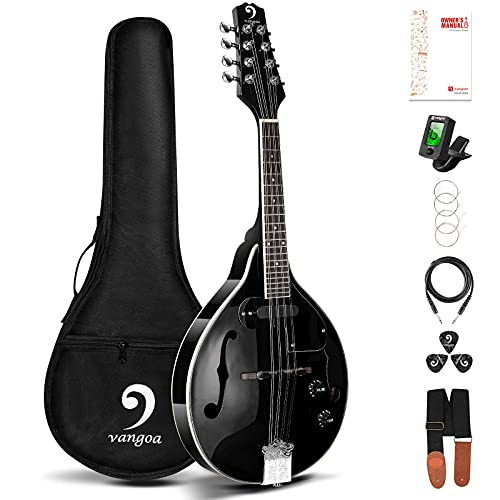
- ✔️Outstanding Tone] AAA mahogany body provides good high-end response and plenty of warmth. Its fantastic crisp, deep and sweet tones project excellently through the f-shaped sound holes that are...
- ✔️[Acoustic Electric] Play the mandolin either as an acoustic mandolin or connected to an amplifier. Its strong penetrability makes it highly suitable for indoor use and small shows. Higher...

The Vangoa A Style Acoustic Electric Mandolin attempts to bridge the gap between acoustic and electric performance. This mahogany instrument comes with a built-in pickup system, allowing players to amplify its acoustic sound. It’s a good option for musicians who primarily love the acoustic tone but occasionally need to plug in for gigs or recording without dealing with external microphones. While it offers the flexibility of both worlds, it still fundamentally retains the properties of an acoustic instrument, including susceptibility to feedback at high volumes and a more traditional mandolin tone when amplified. The Gold Tone GME-4 Mandolin, being a solid-body electric, fundamentally addresses different needs. It’s engineered from the ground up for electric performance, offering superior feedback resistance, sustain, and the ability to achieve a much wider range of electric tones with effects. For dedicated amplified playing, especially in louder settings, the Gold Tone GME-4 Mandolin provides a more robust and specialized solution than the hybrid Vangoa.
3. Hola! Music HM-3TS Mandolin Instrument
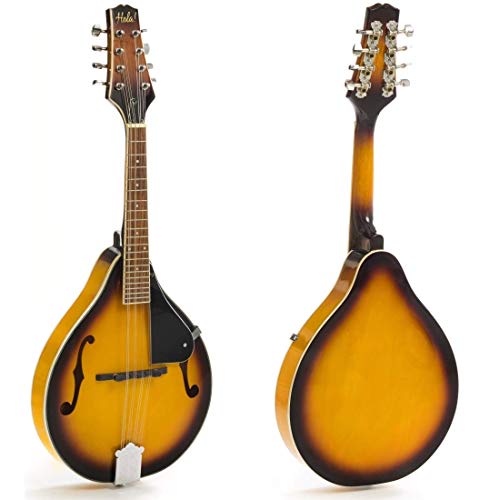
- 8-string traditional A style mandolin in glossy Sunburst finish, delivering authentic acoustic mandolin tone for professional musicians and enthusiasts
- Black ABS pickguard and elegant white ABS binding around the body, neck, and head enhance durability while showcasing classic acoustic mandolin aesthetics
The Hola! Music HM-3TS is another entry-level acoustic A-style mandolin, featuring an adjustable truss rod for neck stability and a glossy sunburst finish. Like the Donner, it’s designed for new players or those on a budget seeking a basic, functional acoustic mandolin experience. It focuses on delivering a traditional mandolin sound for unplugged practice and performance. Its eight strings offer the classic mandolin voice and chord voicings that are integral to many folk genres. Again, the Gold Tone GME-4 Mandolin stands in stark contrast. It is an entirely electric instrument, built with a four-string configuration optimized for clarity, sustain, and electric tonal manipulation. While the Hola! Music mandolin caters to traditional acoustic learners, the Gold Tone GME-4 Mandolin is for the player who wants to stand out, experiment with amplified sounds, and venture into contemporary genres with a dedicated electric instrument. If you’re ready to embrace the electric side of mandolin playing, the Gold Tone GME-4 Mandolin is an exceptional choice for its specialized capabilities.
Our Final Verdict: Is the Gold Tone GME-4 Mandolin the Right Electric Pick for You?
After extensive testing and a thorough review, our verdict on the Gold Tone GME-4 Mandolin is overwhelmingly positive. This “little gem,” as one user affectionately called it, truly delivers on its promise of being a versatile, well-built, and exceptionally playable electric mandolin. We were consistently impressed by its robust solid-body construction, the articulate and hum-free tone from its dual-rail mini humbucker, and its overall beautiful fit and finish. The Gold Tone GME-4 Mandolin excels in its ability to offer “better tonal balance” and a “beautiful sound” across various genres, making it an ideal companion for musicians wanting to explore Texas swing, folk, rock n’ roll, and beyond. Its thoughtful design elements, like the unique output jack placement and the inclusion of a padded gig bag, add significant value, reflecting Gold Tone’s understanding of a musician’s practical needs.
While we noted minor points such as the narrower neck (which many might find comfortable) and the limitations on extremely low string tunings, these are largely overshadowed by its strengths. Some initial setup adjustments might be needed, but this is typical for new instruments and easily managed. For its price point, the Gold Tone GME-4 Mandolin offers an incredible blend of quality, playability, and sonic versatility that positions it as a standout choice. We wholeheartedly recommend the Gold Tone GME-4 Mandolin to any acoustic mandolin player looking to venture into the amplified world, guitarists seeking a unique four-string electric instrument, or anyone ready to inject new sounds into their musical repertoire. It’s a reliable, fun, and highly capable instrument that provides exceptional value. If you’re ready to electrify your mandolin playing and unlock new sonic possibilities, don’t hesitate. Add the Gold Tone GME-4 Mandolin to your arsenal today and experience the difference for yourself!
Last update on 2026-09-29 / Affiliate links / Images from Amazon Product Advertising API