
Glider Capo Helmet Review: A Real User’s Verdict on This Rolling Innovation
Every guitarist knows the sinking feeling of realizing a song requires a sudden key change, only to find yourself awkwardly fumbling with a spring-loaded clamp in front of an audience. You rush to unclip your current capo, slide it up or down the neck in the dark, and desperately hope you don’t knock your instrument out of tune in the process. More often than not, the result is a jarring pause in your performance, an off-key chord, or a frantic mid-song re-tuning session that kills the momentum of your set. For years, we accepted this mechanical awkwardness as an unavoidable hazard of playing with a capo.
That precise operational headache is why we decided to put the Glider Capo Helmet through a rigorous, hands-on evaluation. Designed by Greg Bennett, this rolling capo promises instantaneous transitions without ever needing to remove the device from your guitar’s neck. If you are a gigging musician, a worship leader, or a bedroom player tackling complex arrangements with multiple key modulations, finding a reliable solution for smooth transitions is paramount. Without the right gear, your playing remains handcuffed to rigid structural limitations. Let’s dive deep into how this unique metal-and-silicone rolling device performs under real-world playing conditions.

- Very smooth and smart design
- With the touch of your thumb, you slide the glider gl-1 capo up or down the fingerboard
What to Consider Before Buying a Guitar Capo
A guitar capo is more than just a simple clamp; it’s a key solution for expanding your instrument’s tonal range without altering your open-chord fingerings. The ideal customer for this type of product is someone facing frequent key shifts within a single setlist, while it might not be suitable for those who prefer ultra-compact designs that vanish into a pocket or traditionalists who demand hyper-specific manual tension control on every single string.
Before investing, consider these crucial points in detail:
- Dimensions & Space: Consider the physical profile of the device on your fretboard. A bulkier frame can occasionally interfere with complex fingerpicking styles or thumb-over chord techniques, making low-profile models a priority for intricate players.
- Capacity/Performance: Evaluate how well the unit maintains even pressure across all strings. Uneven tension inevitably leads to string buzzing, dead notes, and frustrating pitch shifts that ruin your overall tone.
- Materials & Durability: Look closely at the build materials, such as heavy-duty metals versus lightweight plastics. A solid metal construction paired with high-grade silicone padding ensures longevity and protects your guitar’s finish from scratches.
- Ease of Use & Maintenance: Think about how quickly you can attach, remove, or adjust the device during a live performance. Long-term reliability depends on the spring tension and the smoothness of any rolling or sliding mechanisms.
Taking these factors into account ensures you select a tool that seamlessly integrates into your daily playing routine rather than becoming another piece of unused gear collecting dust in your case.
While the Glider Capo Helmet is an excellent choice, it’s always wise to see how it stacks up against the competition. For a broader look at all the top models, we highly recommend checking out our complete, in-depth guide:
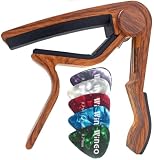
- Quick Release: easy to clip on guitar and quick to change; It can even change keys during a song, just clamp it and let your song fly.

- ♫ [ MANY APPLICATIONS ] - Designed for acoustic and electric Guitars,also fit Ukulele, Banjo, Bass, Mandolin.

- High-quality silicone rubber protects your precious guitar capo from scratching or damage.
Unboxing, First Impressions, and Key Features of the Glider Capo Helmet
Right out of the box, the Glider Capo Helmet immediately stands out from traditional trigger and C-clamp styles. Weighing in at a mere 1.41 ounces with dimensions of 3.94 x 2.76 x 1.18 inches, it strikes a solid balance between structural heft and agile maneuverability. The modern metal aesthetic looks sleek and professional on both electric and acoustic instruments. Unlike standard clamps that rely on sheer brute force, this unit features a clever dual-hand operation system, complete with a rear thumb roller and a smooth sliding mechanism that allows you to effortlessly push it up and down the fretboard with your palm or thumb.
Inspecting the build quality closely, we appreciated the soft silicone grip material designed to protect delicate guitar necks from marring or scratching. The authentic Greg Bennett design feels markedly sturdier than the flimsy imported knockoffs flooding the market. If you want to check the latest price and availability, it is readily accessible online. To give you a clear snapshot of its performance profile, here is a breakdown of the major advantages and drawbacks we uncovered during our testing:
Key Benefits
- Enables lightning-fast, seamless key changes without removing the device
- Maintains exceptional tuning stability across multiple frets
- Even pressure distribution prevents string buzzing and dead notes
- Protects the instrument neck with a high-grade silicone contact pad
Drawbacks
- Larger profile compared to minimalist trigger capos
- Rolling it past the nut onto the headstock can apply excessive pressure on certain vintage instruments
Deep Dive Into the Glider Capo Helmet’s Performance
Installation and Setup on Various Neck Profiles
Getting started with the Glider Capo Helmet is refreshingly straightforward, though it does require a minor adjustment period if you are accustomed to traditional squeeze-and-release capos. To attach it, you simply open the spring-loaded assembly and place it directly onto the guitar neck. During our evaluation, we tested it across a diverse lineup of instruments, including a modern Stratocaster, a Gibson Les Paul, a Yamaha acoustic, and even a five-string banjo. The unit clamped on securely in seconds without requiring any manual tension calibration.
What truly separates this product from standard accessories is the sheer ease of initial placement. Because the tension is factory-calibrated, it finds a comfortable sweet spot on standard neck radii immediately. However, because neck thickness varies significantly between vintage acoustic models and modern shredder electrics, finding the right starting fret is key. You can see its full feature set and user reviews to understand how well it fits different instrument types. We found that once positioned properly, the unit hugs the fretboard profile evenly, laying the groundwork for smooth, uninterrupted mobility during complex practice sessions.
Rolling Mechanism and Mid-Song Modulations
The core engineering marvel of the Glider Capo Helmet is its rolling mechanism, and this is where the product genuinely shines. Utilizing the thumb wheel on the back or applying a gentle push with your pick-hand palm, you can roll the device up or down the fingerboard instantaneously. When we tested this feature with songs requiring rapid modulation—such as navigating complex key shifts—the transition time dropped to literally zero seconds. You no longer have to stop strumming to relocate your clamp.
As we pushed the unit up through the 14th fret on our acoustic test guitar, the tuning stability remained astonishingly accurate. We didn’t experience the typical string-bending or sharp pitch anomalies that plague standard side-squeeze capos. Real users echo this sentiment, noting that it is an absolute life saver for modulated music pieces. The silicone rollers glide smoothly over the fret wire without catching, allowing for fluid execution of dynamic musical passages that would otherwise require tedious manual repositioning.
Tuning Stability and Pressure Distribution
One of the greatest historical complaints against capo usage is the inevitable sharp pulling of strings caused by excessive, uneven clamping pressure. We scrutinized the Glider Capo Helmet specifically for this issue, running multi-fret chromatic checks to monitor intonation. Because the pressure is evenly distributed across the entire width of the fret, individual strings do not get yanked out of their natural alignment. You get clean, crisp notes without frustrating buzzes.
Of course, user technique plays a vital role here. If you position the unit too far away from the fret wire, you may encounter slight string buzz, easily remedied by rolling it closer to the metal fret. Additionally, while the manufacturer suggests rolling the unit past the nut onto the headstock for storage when not in use, our evaluation—backed by cautious user reports—suggests exercising care on vintage instruments with delicate nuts, as the continuous spring tension can occasionally exert unwanted stress. For everyday playing, simply sliding it up to the nut works wonderfully. If you are ready to upgrade your setup, order yours today through this secure link.
What Other Users Are Saying
Synthesizing feedback from players across the musical spectrum provides a comprehensive look at how the Glider Capo Helmet performs in the wild. The general consensus among guitarists and even banjo players is overwhelmingly positive. Many musicians praise its ability to maintain flawless intonation, with one veteran player noting that they ran the unit up every fret through the 14th on an acoustic guitar and the tuning stayed completely perfect at every position—a feat they had never experienced with any other capo.
Users also frequently highlight its value, comparing it favorably to boutique mechanical capos costing upwards of $200. Players tackling complex, key-changing arrangements find it indispensable for live performance. On the critical side, a few users noted minor caveats regarding the physical profile, mentioning that while it is slightly bulkier than traditional clip-on models, it never gets in the way of aggressive strumming or intricate fingerpicking. Others caution against storing it tightly over delicate vintage guitar nuts, advising users to remove it manually when a capo is no longer needed. Overall, the community agrees that the design ingenuity far outweighs these minor operational quirks, making it a stellar addition to any gig bag.
Comparing the Glider Capo to Its Top Alternatives
To ensure you make the most informed decision possible, it is essential to compare the Glider Capo Helmet against other prominent capo models currently dominating the market. Each alternative offers a unique engineering approach to solving the eternal problem of fretboard clamping.
1. G7th Performance 3 6 String Guitar Capo
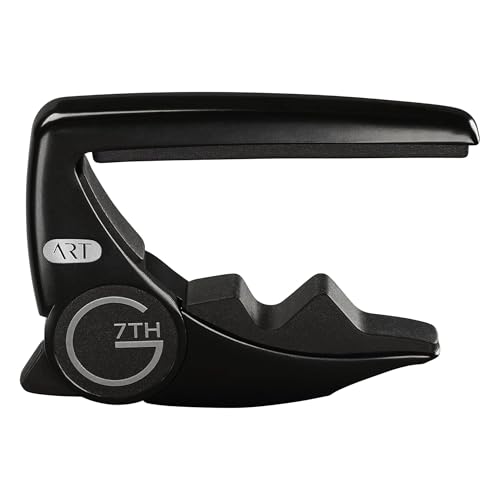
- Maximum Tuning Stability: Our revolutionary Adaptive Radius Technology ( ART ) mechanically adjusts to match your guitar fingerboard curvature, eliminating buzzing and tuning instability. Ideal as...
- Instant Squeeze Control: Quickly attach or remove this guitar capo with just a simple squeeze. Thanks to our intuitive Unique Tension Control, switching positions between songs or frets on acoustic or...
The G7th Performance 3 is widely regarded as a pinnacle of traditional capo engineering, featuring groundbreaking Adaptive Radius Technology and a unique tension-control clutch mechanism. Unlike the rolling design of the Glider, the G7th requires you to squeeze it onto the neck, where it locks securely and releases with a simple squeeze of the rear lever. It is exceptionally sleek, highly aesthetic, and eliminates tuning issues entirely by adapting to the exact radius of your fretboard. For players who want maximum stealth, precision tension control, and traditional placement without a rolling bar, the G7th is a phenomenal alternative that justifies its premium price point.
2. Paige 6-String Guitar Capo
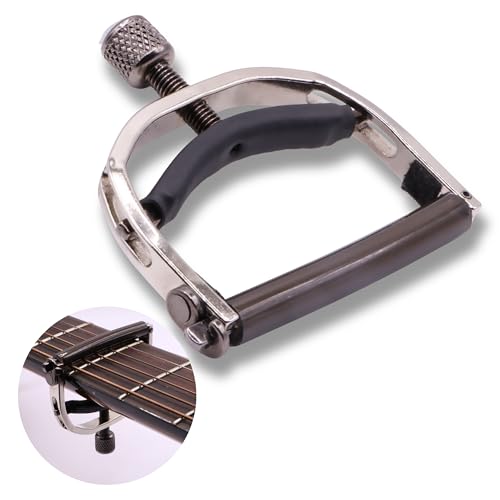
- 🎯 Premium Craftsmanship – The Paige Capo for 6-string acoustic guitars is meticulously crafted in the USA. Designed with precision and care, it delivers reliable performance, long-term...
- ⚙️ Upgraded Design & Fit – Now features durable, replaceable tinted tubing for extended life, upgraded clips for smoother handling, and a felt lining for added protection. The clip locks...
The Paige capo utilizes an ultra-thin design with a central adjustment screw located behind the neck, allowing for direct, micro-adjustable tension control. Like the Glider, it can be parked behind the nut when not in use, making it a favorite among acoustic traditionalists and bluegrass players. However, operating a Paige requires manually turning a thumb screw to tighten and loosen the bar, meaning mid-song key changes are slower than the instant rolling action of the Glider. If you prioritize absolute micro-control over clamping pressure and prefer a low-profile bar that stays permanently mounted behind the nut, the Paige is a worthy contender to consider.
3. Kyser Quick-Change Capo for Acoustic Guitars
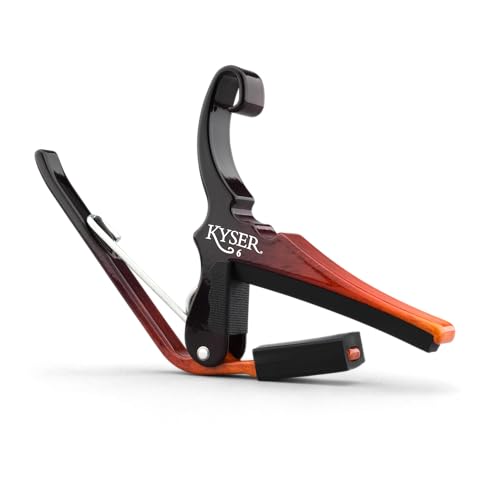
- The original one-handed Quick-Change guitar capo
- Strong, lightweight aluminum with steel spring
The Kyser Quick-Change is perhaps the most ubiquitous spring-clamp capo in modern music history. Built for raw speed, it allows players to clamp and unclamp the device with a single-handed squeeze in less than a second. While it doesn’t roll up the neck like the Glider or offer micro-adjustment like the G7th and Paige, its rugged spring steel construction and sheer reliability make it a staple for campfire players and gigging artists alike. It is more affordable and virtually indestructible, though you do have to deal with traditional repositioning and potential string-pulling tuning issues during rapid modulations.
Final Verdict on the Glider Capo Helmet
The Glider Capo Helmet successfully redefines what a rolling capo can achieve in the hands of a working musician. By combining smooth dual-hand operation, reliable pressure distribution, and rock-solid tuning stability, it solves the age-old frustration of clumsy mid-song modulations. While its physical profile is slightly larger than minimalist clamps and requires mindful handling around delicate vintage nuts, its performance benefits are undeniable. For players who demand seamless key changes without sacrificing intonation, this innovative accessory is an absolute game-changer. If you are ready to elevate your live performances and streamline your playing experience, explore the Glider Capo Helmet today and experience effortless key changes for yourself.
Last update on 2026-10-09 / Affiliate links / Images from Amazon Product Advertising API