
G7th Newport 12 String Capo Review: Is This the Ultimate Solution for Twelve-String Tuning Stability?
If you have ever picked up a 12-string guitar, you already know the unique brand of heartbreak that comes with trying to clamp a traditional capo onto the neck. For years, my acoustic 12-string sat neglected in its case simply because the standard spring-loaded and flat-bar capos I owned completely wrecked the intonation. No matter how meticulously I tuned the instrument beforehand, clamping down a generic capo meant embarking on a multi-minute re-tuning ritual. The thick bass strings would get yanked horribly sharp by twenty cents, while the thinner octave strings would barely make contact, resulting in a pathetic, muted plunk instead of a crisp ring. It is an exhausting compromise that leaves many musicians abandoning capos altogether on their multi-course instruments. When we set out to test the G7th Newport 12 String Capo, we wanted to see if this UK-designed accessory could finally conquer the physics problem that has plagued 12-string players for decades.

- Patented Compensated String Pad Technology: Applies even pressure across all 12 strings for clean, consistent fretting. The ridged silicone pad adapts to varying string gauges for balanced tension and...
- Swift Release, Seamless Play: Say goodbye to clunky capos. With an upgraded quick-release mechanism, the Newport delivers fluid attachment and removal - no disruption, no fuss. Whether you're...
What to Consider Before Buying a Guitar Capo
A guitar capo is more than just an item; it’s a key solution for altering the pitch of your instrument instantly without changing your open-chord fingerings. Whether you are accompanying a vocalist in a different key or exploring new sonic textures, a reliable capo is indispensable. However, standard models designed for six-string guitars simply lack the engineering required to handle the dual-string courses and varying string diameters of a 12-string setup.
The ideal customer for this type of product is a dedicated 12-string acoustic or electric player who frequently performs or records and needs rock-solid tuning stability across the fretboard. Conversely, it might not be suitable for casual players on a strict budget or those who play reverse-strung instruments like certain vintage models, as the tension mechanics require specific string configurations. Before investing, it’s wise to consider whether you need something lightning-fast for aggressive live setlist changes or a precision instrument focused entirely on intonation accuracy.
Before investing, consider these crucial points in detail:
- Dimensions & Space: A 12-string capo must accommodate a significantly wider fingerboard and thicker neck profile without crowding your fretting hand. Look for a low-profile design that sits flush against the neck without snagging your fingers during complex chord transitions.
- Capacity/Performance: Even string tension distribution is paramount. The capo must exert enough downward force to cleanly fret the paper-thin octave strings without simultaneously overpowering and sharpening the thick wound bass strings running right alongside them.
- Materials & Durability: Metal construction combined with high-grade protective silicone is essential. Cheap rubber degrades over time and fails to absorb shock, while unpadded metal can easily scratch or mar a valuable guitar neck and headstock finish.
- Ease of Use & Maintenance: Fine-tune adjustment knobs allow for micro-adjustments in pressure, though they may take an extra second or two to engage compared to a basic spring clamp. Regular inspection of the silicone pads ensures optimal longevity and consistent grip.
Choosing the right hardware can completely transform your playing experience, making it essential to weigh these mechanical differences carefully before making a purchase. Before you decide, we invite you to check the latest price and availability to see if it fits your gear budget.
While the G7th Newport 12 String Capo is an excellent choice, it’s always wise to see how it stacks up against the competition. For a broader look at all the top models, we highly recommend checking out our complete, in-depth guide:
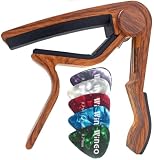
- Quick Release: easy to clip on guitar and quick to change; It can even change keys during a song, just clamp it and let your song fly.

- ♫ [ MANY APPLICATIONS ] - Designed for acoustic and electric Guitars,also fit Ukulele, Banjo, Bass, Mandolin.

- High-quality silicone rubber protects your precious guitar capo from scratching or damage.
First Impressions, Unboxing, and Initial Design of the G7th Newport 12 String Capo
Unboxing the G7th Newport 12 String Capo immediately reveals a level of refined craftsmanship that sets it apart from standard music store accessories. Weighing in at a modest 2.08 ounces, the silver metal chassis feels substantial and robust in the hand without feeling like a heavy anchor pulling down your headstock. The finish is sleek, modern, and professional, designed to complement high-end acoustic and electric guitars alike. Unlike bulky spring-loaded clamps that dominate the visual landscape of your fretboard, this model boasts a streamlined, low-profile silhouette.
When you handle it for the first time, the engineering highlights become immediately apparent. The wrap-around rubber and internal silicone padding are meticulously molded to protect your guitar’s finish from direct metal contact while preventing any unwanted tone damping or loss of sustain. The quick-release flip-lever mechanism feels crisp and mechanical, offering a satisfying snap when engaged. To truly appreciate the level of detail packed into this unit, you can see its full feature set and user reviews directly.
Key Benefits We Discovered
- Patented compensated string pad expertly handles varying string diameters simultaneously
- Precision micro-adjustment knob eliminates string buzzing without pulling notes sharp
- Sleek, lightweight metal construction protects the guitar neck from scratches
- Low-profile design avoids interfering with the fretting hand during complex chord shapes
Potential Drawbacks
- Requires manual tension adjustment rather than a simple one-handed squeeze
- Can feel a bit tight or require extra finger stretching when positioned higher up the neck
Deep Dive Into Performance, Mechanics, and Real-World Testing
The Patented Compensated String Pad Magic
The single most revolutionary aspect of the G7th Newport 12 String Capo is its patented compensated string pad, which addresses the historic Achilles’ heel of multi-course instruments. On a traditional flat or uniformly curved capo, the massive difference in diameter between the low E string pair and the high E octave string pair creates a mechanical nightmare. When you tighten a standard capo enough to clamp the thin octave string down firmly, the massive over-pressure bends the thick wound bass string severely sharp, destroying your intonation.
During our rigorous testing sessions, we found that the specially designed silicone ridges on this compensated pad equalize the pressure dynamically. As you clamp the unit down, the pad conforms intelligently to the unique radii and thicknesses of all twelve strings. The first time we clamped it onto the second fret of a dreadnought acoustic, the relief was palpable—every single string maintained its relative intonation up and down the neck without requiring a frantic retuning session. It is a feature that truly sets it apart from traditional capos on the market.
Fine-Tune Adjustment and Tension Control
Achieving absolute tuning stability on a 12-string guitar requires precise control over clamping pressure, and the integrated micro-adjustment knob on this unit delivers precisely that. Unlike traditional spring-loaded capos that offer a single, unyielding tension level regardless of your guitar’s neck profile, the Newport allows you to dial in the exact amount of pressure needed. If you notice a faint buzz on the unwound G string or the low E pair, a simple clockwise turn of the precision knob tightens the grip by mere fractions of a millimeter.
This level of pinpoint pressure control ensures stability even when working with heavy-gauge strings or playing complex arrangements further up the neck. While some players with stiff or arthritic fingers might find the knurled adjustment knob a bit small to turn initially, the payoff in intonation accuracy is well worth the minor learning curve. Once you set the baseline tension for your specific guitar neck, subsequent applications using the flip-lever become fast and reliable.
Low-Profile Ergonomics and Tone Preservation
A common complaint among working musicians is that bulky capos get in the way of the fretting hand, particularly when wrapping the thumb over the top for blues bends or intricate folk thumb-picking patterns. The low-profile, tapered design of the G7th Newport 12 String Capo addresses this by sitting exceptionally close to the neck. We tested it extensively during fast-paced acoustic sets, and at no point did the hardware collide with our knuckles or impede fluid hand movement.
Furthermore, tone preservation is exceptional. Cheap rubber pads often absorb string vibrations, choking out the natural acoustic resonance and sustain of a fine instrument. The high-grade internal silicone pads used here anchor the strings firmly against the frets while allowing the natural voice of the guitar to ring out clearly. Whether you are strumming wide-open cowboy chords or fingerpicking intricate arpeggios, the acoustic volume and chime of your twelve-string remain entirely uncompromised.
What Other Users Are Saying
Listening to the broader community of musicians who rely on this equipment daily confirms our laboratory findings. Many players echo our sentiment regarding intonation relief, noting that it is the first accessory of its kind that actually keeps a twelve-string in tune all the way up the fretboard. One working musician playing demanding acoustic sets in Las Vegas noted that the compensated pad design is a total game-changer, eliminating both the dreaded string buzz on the first fret and the twenty-cent sharp pull on the bass strings.
At the same time, constructive user feedback highlights a few practical considerations. A few players with older hands mentioned that the adjustment knob requires a bit of fine dexterity to set up initially. Another user pointed out that while it shines brilliantly on lower frets, positioning it high up near the seventh fret requires careful string alignment due to the tapering width of the fingerboard. Overall, however, the overwhelming sentiment highlights immense satisfaction, with seasoned guitarists stating they will never go back to standard flat-bar clamps after experiencing this level of tuning stability.
Comparing the G7th Newport 12 String Capo to Top Alternatives
1. Shubb C1B Steel Guitar Capo
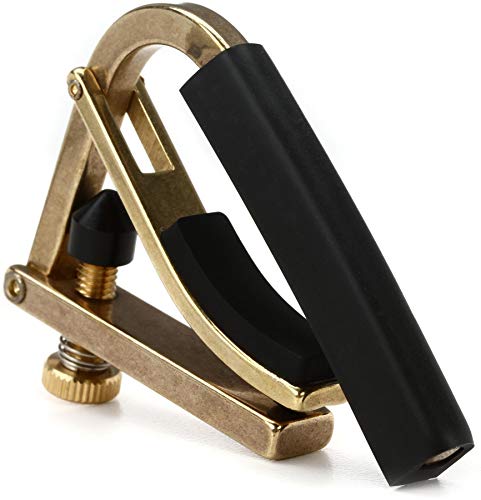
- Brand: Shubb
- Manufacturer Part: C1B
The Shubb C1B is a legendary brass capo known for its durability and custom roller-lever locking mechanism. While it is an exceptional choice for standard six-string electric and acoustic guitars, adapting a standard Shubb model for a 12-string often results in the same uneven pressure distribution issues mentioned earlier. If you primarily play a six-string and value traditional mechanics, the Shubb is a stalwart companion, but it lacks the specialized compensated string pad required to properly intonate twelve distinct strings simultaneously.
2. Kyser Quick-Change 6-String Guitar Capo

- The original one-handed Quick-Change guitar capo
- Strong, lightweight aluminum with steel spring
The Kyser Quick-Change is perhaps the most ubiquitous spring-loaded capo on the market, prized for its blazing-fast, one-handed operation during live shows. However, applying a standard Kyser unit to a 12-string guitar is a recipe for tuning frustration. The unyielding spring tension routinely pulls heavy wound strings sharp while leaving thinner octave strings buzzing. While great for quick key changes on a standard six-string, it simply cannot match the precision intonation offered by dedicated twelve-string engineering.
3. Paige 6-String Acoustic Guitar Capo
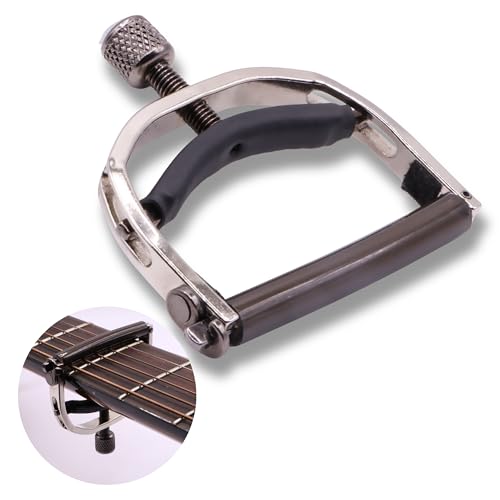
- 🎯 Premium Craftsmanship – The Paige Capo for 6-string acoustic guitars is meticulously crafted in the USA. Designed with precision and care, it delivers reliable performance, long-term...
- ⚙️ Upgraded Design & Fit – Now features durable, replaceable tinted tubing for extended life, upgraded clips for smoother handling, and a felt lining for added protection. The clip locks...
The Paige capo utilizes a central tension-screw design that pulls evenly across the back of the neck, offering incredible tuning stability that rivals more expensive units. It is an ultra-thin, highly effective tool for standard acoustic guitars. However, much like the other alternatives in this comparison, standard models are optimized for six-string fingerboard radii and widths. For players seeking a dedicated solution built specifically for the unique physical demands of a twelve-string instrument, a specialized multi-course design remains the superior choice.
The Final Verdict on the G7th Newport 12 String Capo
The G7th Newport 12 String Capo successfully solves one of the most frustrating acoustic guitar maintenance problems in existence. By combining a brilliantly engineered compensated string pad with micro-adjustable tension control and a sleek, low-profile metal chassis, it eliminates the agonizing re-tuning rituals that have traditionally scared musicians away from capoing their twelve-strings. While it requires a modest upfront investment and a bit of initial adjustment, the payoff in pristine intonation, sustain, and playing comfort is immeasurable.
If you are tired of sacrificing your tuning stability every time you want to explore an elevated key on your favorite acoustic or electric twelve-string, this accessory is an absolute must-have addition to your gig bag. Ready to experience flawless intonation and effortless clamp changes for yourself? We highly recommend that you check out the G7th Newport 12 String Capo today and elevate your twelve-string playing experience.
Last update on 2026-10-09 / Affiliate links / Images from Amazon Product Advertising API