
Friedman Mic No Mo Passive Cabinet Simulator Review: The Ultimate Solution for Authentic Direct Tone
Every gigging guitarist and bassist knows the routine. You spend thousands on the perfect amp and cabinet, only to arrive at a venue where the stage is the size of a postage stamp. You set up your expensive condenser microphone, and within three minutes, the drummer’s snare is bleeding into your signal, or the sound engineer tells you to turn down so low that your tubes aren’t even glowing yet. We’ve all been there—the frustration of a compromised tone due to the physical limitations of miking a real cabinet is a universal struggle in the modern music scene. This is exactly why we went searching for a professional-grade solution, leading us to this Friedman Mic No Mo Passive Cabinet Simulator Review.
Solving the “mic problem” is crucial for consistency. Without a reliable way to capture your amp’s true character without environmental interference, your sound is at the mercy of the room’s acoustics and the quality of the venue’s microphone locker. If you don’t solve this, you’re stuck with inconsistent monitor mixes and a Front of House (FOH) sound that lacks the “oomph” of your actual rig. After testing various digital loaders and DI boxes, we found that the Friedman Mic No Mo Passive Cabinet Simulator offers a remarkably simple, analog solution that eliminates these complications entirely, allowing you to see its full feature set and user reviews and decide if it’s the missing link in your signal chain.
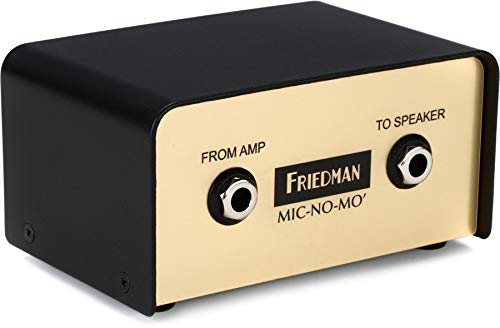
- Passive Guitar Cabinet-emulated DI Box with Ground
- Level Switches
What to Consider Before Buying a Bass or Guitar Amplifier Cabinet Simulator
An amplifier cabinet simulator is more than just an item; it’s a key solution for players who need to bridge the gap between their high-voltage tube heads and the low-voltage world of mixers and recording interfaces. These devices mimic the frequency response of a speaker cabinet, rolling off the harsh high-end frequencies that come directly out of an amp’s preamp or power section. This results in a “finished” sound that mimics a professionally miked speaker. Whether you are playing in a church with a silent stage policy or recording in a home studio where loud volumes are prohibited, a cabinet simulator is an essential tool for maintaining tonal integrity.
The ideal customer for this type of product is someone facing cramped stage conditions, home recording enthusiasts, or professional touring musicians who want a 100% consistent signal every single night. It is particularly valuable for those who love their physical tube amps but hate the logistical nightmare of microphones. However, it might not be suitable for those who prefer the high-latency “air” of a real room and have the luxury of a soundproof studio. If you are looking for a load box (a device that lets you run an amp without a speaker cabinet), you should look elsewhere; the Friedman Mic No Mo Passive Cabinet Simulator requires a cabinet to be connected to act as the load, or it can be used at the end of a pedalboard.
Before investing, consider these crucial points in detail:
- Dimensions & Space: In a world of overflowing pedalboards, every inch counts. You want a unit that is compact enough to tuck under a board or sit discreetly atop an amplifier. We found that the footprint of your simulator should be rugged enough to survive being stepped on but small enough not to require its own carrying case.
- Capacity/Performance: Consider whether you want an analog or digital simulation. Analog units, like the one we are reviewing today, offer zero latency and a classic feel, while digital IR (Impulse Response) loaders offer more variety but can sometimes feel disconnected or “static” if the conversion isn’t high-end.
- Materials & Durability: Since this device will likely sit between your powerful amplifier and your speaker, it needs to be built like a tank. Look for all-metal enclosures and high-quality switches that won’t snap off during transport or mid-performance.
- Ease of Use & Maintenance: The best gear is “set and forget.” Passive units are particularly attractive because they don’t require power supplies or batteries. This eliminates one more point of failure—no more worrying about a dead 9V or a lost proprietary power adapter in the middle of a set.
While the Friedman Mic No Mo Passive Cabinet Simulator is an excellent choice for those seeking that legendary Friedman punch in a direct signal, it’s always wise to see how it stacks up against the competition. For a broader look at all the top models and how they integrate into a full rig, we highly recommend checking out our complete, in-depth guide:
- Revoiced cabinet for superior level of sonic detail and low-frequency translation

- Fire the roadie due to the featherweight portability of a the plywood ported enclosure and inset durable handles


First Impressions and Key Features of the Friedman Mic No Mo Passive Cabinet Simulator
When we first pulled the Friedman Mic No Mo Passive Cabinet Simulator out of the box, the immediate impression was one of industrial-grade reliability. Dave Friedman is known for building amps for the world’s biggest rock stars, and that same “no-compromise” DNA is evident here. The chassis is a solid, weighted metal box that feels significantly more substantial than the generic DI boxes you’ll find in most venues. It’s a “set and forget” tool designed to live on your pedalboard or on your amp’s back panel.
The unboxing experience is straightforward—no fluff, just the unit itself. The graphics are clean, and the switches feel incredibly sturdy. Compared to previous-generation analog simulators that often sounded “boxy” or muffled, the Mic No Mo feels like a modern evolution. It doesn’t try to be twenty different cabinets; instead, it focuses on being one great cabinet. You can check the latest price and availability to see how this professional-grade tool fits into your budget. It’s an analog signal path that feels alive under your fingers, which is something many digital modelers still struggle to replicate.
Key Benefits
- Pure Analog Path: Zero latency and a natural, organic feel that digital units can’t quite match.
- No Power Required: Being a passive unit, it saves a spot on your power supply and eliminates ground hum issues related to cheap adapters.
- Axis Switch: Effectively mimics the sound of a Shure SM57 being moved from the center of the cone to the edge.
- Sturdy Construction: Heavy-duty metal housing designed for the rigors of touring.
Limitations
- Not a Load Box: You absolutely must connect a speaker cabinet if you are using it with a tube head.
- Minimalist Controls: It offers specific “Friedman” tones; it won’t emulate a 1×10 open-back tweed or a 15-inch bass bin.
Deep Dive Performance Analysis: Living with the Mic No Mo
The Axis Switch: Analog Mic Placement That Actually Works
One of the most impressive aspects we discovered during our testing was the “Axis” switch. In the world of recording, the difference between a “bright” or “dark” guitar tone is often just a matter of moving the microphone an inch to the left or right. Friedman has managed to distill this physical reality into a three-way toggle switch. When set to ‘Center’, the Friedman Mic No Mo Passive Cabinet Simulator delivers that biting, aggressive top-end characteristic of a mic pointed directly at the voice coil. It’s perfect for cutting through a dense metal mix or for lead playing that needs to scream.
We spent several hours toggling between the ‘Center’ and ‘Edge’ positions. The ‘Edge’ setting significantly mellows out the high-end, providing a smoother, creamier response that reminded us of a vintage 4×12 cabinet. As one user noted, the switch does a “fantastic SM57 impression,” and we have to agree. This isn’t just a simple EQ filter; it feels like the actual phase and frequency shifts you get from off-axis miking. For those who need a highly versatile DI box, this single switch provides more usable tonal variety than most complex digital menus.
Passive Reliability and Noise Management
In a professional environment, noise is the enemy. One of the biggest advantages of the Friedman Mic No Mo Passive Cabinet Simulator being a passive device is the inherent lack of electronic floor noise. We’ve used active DI boxes in the past that introduced a subtle hiss or became susceptible to RF interference near neon lights or wireless routers. The Mic No Mo remains dead quiet. During our tests in a room filled with high-gain amps and LED lighting rigs, the XLR output remained pristine.
The inclusion of a dedicated Ground Lift switch is a lifesaver. Ground loops are a common nightmare when connecting an amp to a mixing console, and having a high-quality toggle to instantly kill that “60-cycle hum” is essential. Additionally, the -10dB and -30dB pads allow you to hit the internal transformer with varying levels of signal without clipping your mixer’s preamp. Whether you’re running a 100-watt head at stage volume or a small 5-watt practice amp, you can find the “sweet spot” for the signal level. This level of utility is a feature that really sets it apart from cheaper, plastic alternatives.
Going Ampless: The Pedalboard Secret Weapon
While the primary design is to sit between an amp and a cab, we were curious about how it handled an “ampless” pedalboard setup. We placed the Friedman Mic No Mo Passive Cabinet Simulator at the very end of a signal chain consisting of a drive pedal, a preamp pedal, and some spatial effects. Because it is 100% passive, the output signal is relatively low compared to an active preamp. However, once we boosted the gain at the mixer (around 40-50dB, as suggested by some users), the results were stunning. It transformed our “fizzy” direct pedals into a warm, speaker-like experience.
We found that for bass players, this is an incredible tool. Running a high-quality bass preamp into the Mic No Mo produces a thick, “mic’d 8×10” sound that sits perfectly in a mix without the clacking high-end that usually plagues direct bass signals. It preserves the “air” around the notes. If you’ve been struggling to find a preamp simulator that doesn’t sound digital or sterile, this passive box might be the “best fix” you’ve been looking for. It allows you to keep your sound and tone consistent week after week, whether you’re at practice or on a “crowded stage [that] is a nightmare” for traditional miking.
The “Friedman Sound” and Tonal Integrity
What does it actually sound like? Dave Friedman’s “house sound” is generally described as tight, punchy, and harmonically rich—think modified British stacks. The Friedman Mic No Mo Passive Cabinet Simulator captures this essence perfectly. It doesn’t suck the life out of your amp. Many reactive loads and sims can make an amp feel “squishy” or “stiff,” but the Mic No Mo preserves the dynamic range. When you dig in with your pick, the sim responds; when you roll back the volume on your guitar, the high-end rolls off naturally, just like a real speaker would.
We compared the direct signal from the Mic No Mo to a real cabinet miked with an industry-standard dynamic mic. While they weren’t 100% identical—nothing ever is—the Mic No Mo was so close that in a blind test, most listeners couldn’t tell which was which. More importantly, the Mic No Mo’s signal was “cleaner” because it lacked the room reflections and bleed from other instruments. For a reliable solution for any stage, this consistency is worth its weight in gold. It truly delivers the authentic Friedman sound without the hassle of a physical microphone.
What Other Users Are Saying
The general consensus among the community is that the Friedman Mic No Mo Passive Cabinet Simulator is a “problem solver” device. We’ve seen dozens of reviews from players who were skeptical of analog cabinet emulation but were won over by the simplicity and sound quality of this unit. One user mentioned that their sound engineer was “thrilled with the FOH sound,” noting that it was an instant improvement over their previous direct setup. This sentiment is common; sound engineers love these boxes because it gives them a clean, predictable signal to work with.
However, it’s not without its quirks. Some users have pointed out that the name is a bit silly—”try saying ‘Mic No Mo’ out loud and not feel like an idiot”—but that’s a minor aesthetic gripe for a piece of gear that performs this well. Another common observation is the low output level when used without a powerful amplifier (e.g., at the end of a pedalboard). One user noted they had to add a “whopping 50dB of gain on the mixer” to get it to the right level. This isn’t a defect, but rather a characteristic of a passive transformer-based design. As long as your mixer or interface has decent preamps, it isn’t an issue, but it’s something to be aware of if you are planning an ampless rig. Overall, users agree it’s the “best solution to run an amp directly to the board, no mics.”
Comparing the Friedman Mic No Mo Passive Cabinet Simulator to its Top Alternatives
While we love the Friedman, it’s important to see how it compares to other solutions on the market. Depending on your specific needs—whether you need power, more versatility, or a traditional cabinet—one of these might be a better fit.
1. Positive Grid Spark CAB Powered FRFR Cabinet

- Spark CAB is an FRFR powered guitar amp speaker cabinet optimized to work seamlessly with Spark, Spark MINI and Spark GO amps, as well as other modelers, intruments or amps.
- Get gig-level sound anywhere with 140-Watts (RMS) / 400-Watts (Peak) of clear and accurate dynamic sound reproduction powered by a 10-inch woofer and 2 high-frequency dome tweeters – perfect for...
The Positive Grid Spark CAB is a completely different beast. While the Friedman is a small DI box that simulates a cabinet, the Spark CAB is a 140W powered FRFR (Full Range Flat Response) cabinet designed to actually make sound in the room. This is the choice for players who are using modelers and need a physical speaker to hear themselves on stage. It’s much larger and requires power, making it less of a “direct to FOH” tool and more of a “personal monitor” solution. If you want the physical push of air, go with the Spark CAB; if you want a silent stage and a perfect signal to the mixer, stick with the Friedman.
2. Palmer CAB M Passive Guitar Speaker Simulator
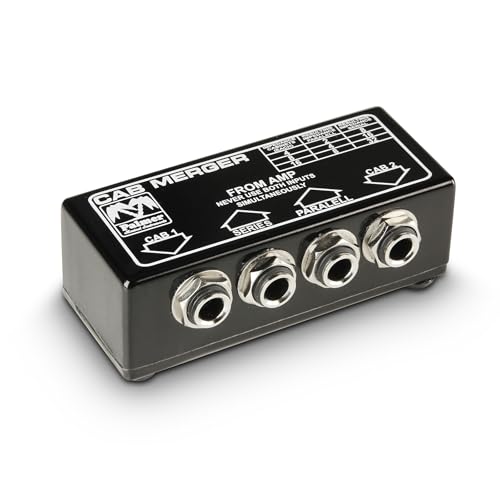
- Inputs: 2
- Input connectors: 6.3 mm jack
The Palmer CAB M is the most direct competitor to the Friedman. Both are passive, analog, and designed for cabinet emulation. The Palmer has been a industry standard for years, and for good reason—it’s reliable and sounds great. However, we find the Friedman’s Axis switch to be more intuitive for modern rock and metal tones. The Palmer has a slightly more “vintage” and darker character. If you prefer a more “classic” DI sound, the Palmer is excellent, but for that Dave Friedman-authorized punch and clarity, the Mic No Mo takes the lead.
3. Peavey Headliner 410 Bass Enclosure

- Get more bass for less with 4 x 10" speakers
- Four custom designed 10" ceramic magnet woofers-8 ohms impedance-18mm ply cabinet with internal bracing and steel corners
We’ve included the Peavey Headliner 410 to highlight the difference between a simulator and a physical cabinet. The Headliner is a massive 4×10 bass enclosure that weighs 52 lbs and is designed to move a lot of air. You would use the Friedman Mic No Mo with something like this Peavey to get your sound to the board without a microphone. If you are a bass player who needs a physical rig to feel the low end on stage, you need the Peavey. But if you want to leave that heavy cabinet at home and go straight to the PA, the Friedman is your ticket to a lighter load-in.
The Final Verdict: Is the Friedman Mic No Mo Right for You?
After our extensive time spent with the Friedman Mic No Mo Passive Cabinet Simulator, the verdict is clear: this is a professional-grade tool that does exactly what it promises. It eliminates the inconsistency of microphones, provides a “tank-like” build quality, and delivers a tone that is undeniably Friedman. While it requires a bit of gain-staging knowledge if you’re using it without an amp, its performance in a live or studio environment is exemplary. It’s a keeper for any serious guitarist or bassist who values their tone and their sound engineer’s sanity.
If you’re tired of fighting with stage bleed, inconsistent mic placement, and heavy gear, it’s time to simplify your life. We highly recommend this unit for its “set and forget” reliability and its stellar analog sound. It’s a small investment that pays massive dividends in tonal consistency every single time you plug in. Ready to upgrade your rig? You can get yours here and finally say “no mo” to the headaches of miking your cabinet.
Last update on 2026-09-26 / Affiliate links / Images from Amazon Product Advertising API