
Fender 9050 Stainless Steel Flatwound Bass Strings Review: The Secret to That Classic, Silky Smooth Thump
If you have ever spent a long night in the studio or a three-hour set on stage, you know the literal pain of roundwound strings. That “sandpaper” texture against your fingertips can turn a great gig into a test of endurance. But beyond the physical toll, there is the sonic hurdle: the aggressive, metallic “zing” and the constant clatter of finger noise that plagues many standard sets. For those of us chasing the elusive, deep, and chocolatey thump of vintage Motown, classic jazz, or heavy reggae, modern roundwounds often feel like they are fighting against the music rather than supporting it. We searched for a solution that offered both physical comfort and a refined, punchy low-end. Our journey led us back to a classic: the Fender 9050 Stainless Steel Flatwound Bass Strings. In this deep-dive evaluation, we will explore whether these polished legends can truly transform your bass into a groove machine without breaking the bank.
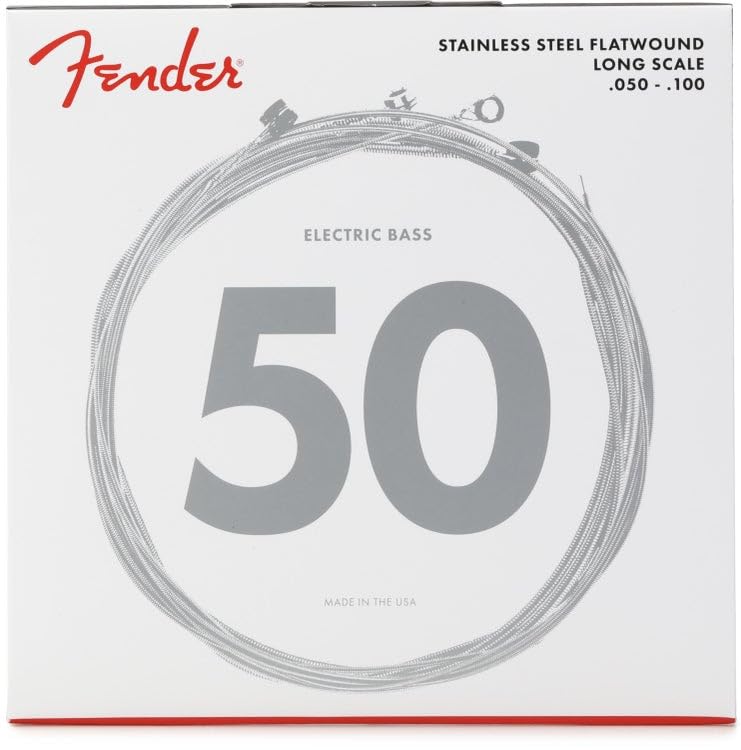
- Flatwound stainless steel bass strings are great for reggae, jazz, country, and R&B
- Perfect for a fretless bass or when you’re looking for a warm tone with little finger noise

What to Consider Before Making the Switch to Flatwound Bass Strings
Investing in a set of bass strings is more than just a routine maintenance task; it is a fundamental shift in the voice of your instrument. Choosing a flatwound set like the Fender 9050 Stainless Steel Flatwound Bass Strings is a key solution for bassists who want to eliminate the high-frequency “clack” and extraneous sliding noise that can muddy a recording or a live mix. These strings provide a fundamental-heavy tone that sits perfectly in a mix, providing a solid foundation without competing with guitars or vocals for the same frequency space. They are particularly transformative for fretless players, as the smooth surface prevents the “chewing up” of the fingerboard that happens with rougher windings.
The ideal customer for this type of product is a musician playing genres like jazz, blues, country, R&B, or reggae, where a warm, “pillowy” low end is prioritized over modern percussive slap tones. They are also a godsend for players with sensitive skin or those who find the friction of roundwounds distracting. However, these might not be suitable for those who strictly play heavy metal or modern aggressive funk that requires a massive amount of high-end “bite” and harmonic overtones. If you need your bass to sound like a piano, you might want to stick to rounds, but if you want it to sound like a thumping heartbeat, you are in the right place. Before you see its full feature set and user reviews, consider these critical factors:
Before investing, consider these crucial points in detail:
- Scale Length and Compatibility: Not all strings fit all basses. These are designed for 34-inch long-scale instruments. While some users have successfully managed to fit them on medium or even short-scale “thru-body” designs, you must ensure the silk-wrapped ends align properly with your tuners to avoid breakage or intonation issues.
- Gauge and Tension: The 9050ML set (Medium Light) runs from .050 to .100. Flatwounds generally have higher tension than roundwounds of the same gauge. We found that this specific set offers a balanced “stiffness” that allows for a low action without excessive buzzing, provided your neck is properly adjusted.
- Material Science: These are stainless steel, not nickel. Stainless steel tends to be slightly brighter and more durable over time. This gives the Fender 9050 Stainless Steel Flatwound Bass Strings a unique “zing” when fresh that eventually settles into a rich, deep resonance that can last for years.
- Physical Texture: The “Flat” in flatwound means the outer winding is flattened and polished. This results in a surface that feels like chrome or glass. If you are used to the grip of roundwounds, your fingers might “fly” faster on these, which requires a slight adjustment in your technique.
Transitioning to these strings is a commitment to a specific aesthetic and feel. It is about finding that “sweet spot” where playability meets a legendary sonic profile.
While the Fender 9050 Stainless Steel Flatwound Bass Strings is an excellent choice for those seeking to upgrade their tone, it’s always wise to see how it stacks up against the competition in the wider gear world. For a broader look at all the top models and instruments, we highly recommend checking out our complete, in-depth guide:

- One Squier Debut Series Stratocaster electric guitar – a perfect beginner guitar for all ages

- Grote's LP electric guitar is built to last with high-quality materials and craftsmanship, making it an excellent investment for players of all levels.
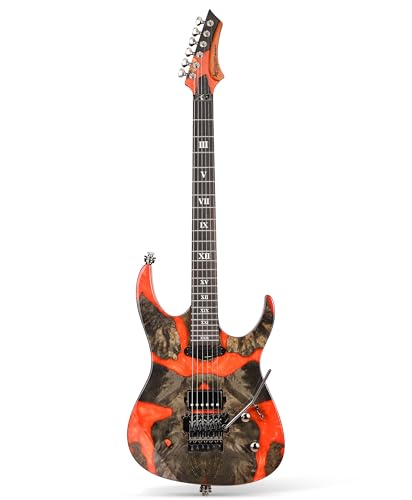
- Smooth and Precise Playability: The rosewood fingerboard paired with 24 frets offers a smooth feel and excellent note articulation. It ensures accurate fingering and fluid movement across the neck...
First Impressions: Unboxing the Fender 9050 Stainless Steel Flatwound Bass Strings
Opening a fresh pack of the Fender 9050 Stainless Steel Flatwound Bass Strings is a tactile experience. Unlike the gritty feel of standard strings, these feel smooth and substantial right out of the packaging. We were immediately struck by the quality of the polishing; the stainless steel finish has a mirror-like quality that speaks to the manufacturing standards at Fender’s USA facility. The distinctive green silk wraps at the tuner ends are a classic Fender touch, not just for aesthetics but to protect the windings from the sharp angles of the tuning posts.
When we first held them, the 9050ML gauge (.050, .065, .085, .100) felt like the “Goldilocks” of string sets—not too heavy to be cumbersome, but thick enough to provide a thunderous low end. Comparing these to high-end alternatives like La Bella, the Fender strings have a slightly different sheen and a more “modern” initial brightness. During installation, we found the ball ends to be standard and easy to seat, and the strings reached pitch stability remarkably quickly. If you are ready to experience this for yourself, you can check the latest price and availability here.
Key Benefits We Loved
- Extremely smooth polished surface that virtually eliminates finger sliding noise.
- Remarkable longevity; these strings often sound better after six months of “breaking in.”
- The .050-.100 gauge provides a perfect balance of tension and “thump.”
- Protective silk wraps prevent winding damage at the bridge and tuners.
Some Minor Limitations
- Initial “metallic” brightness may be too sharp for some until they are played in.
- Tension is significantly higher than equivalent roundwounds, requiring a truss rod adjustment.
A Deep Dive into the Performance of the Fender 9050 Stainless Steel Flatwound Bass Strings
The Tonal Evolution: From Metallic Bite to Earthy Thump
One of the most misunderstood aspects of the Fender 9050 Stainless Steel Flatwound Bass Strings is their “break-in” period. When we first strung them up on a Precision Bass, we were surprised by the amount of treble presence. Unlike some “dead from the box” flats, these have a distinct high-mid grind when they are brand new. We found that this initial brightness is actually a benefit for players who want to bridge the gap between rounds and flats. It allows for a bit more “cut” in a rock setting. As several users have noted, these strings “mellow with age,” and our experience confirmed this. After about two weeks of consistent playing, the high-end sizzle dissipates, leaving behind a rich, punchy fundamental that is the hallmark of the Fender sound.
In a recording environment, this tonal profile is a dream. We found that we could dial in a “throaty” thump that sat right under the kick drum. The stainless steel construction ensures that even when they mellow out, they don’t become “muddy.” There is still a tight, defined bottom end that ensures every note is distinct. This makes them a feature that really sets it apart from cheaper, nickel-plated alternatives that can lose their definition too quickly. Whether you are playing Latin jazz or heavy blues, the tonal consistency across the neck is impressive.
Physical Playability and the “Glass-Like” Feel
The tactile sensation of playing these strings is where the Fender 9050 Stainless Steel Flatwound Bass Strings truly shine. If you are used to the “cheese-grater” effect of roundwounds, these will feel like a revelation. The polished surface allows for effortless slides up and down the neck without the screeching sound of friction. We evaluated the “finger-friendliness” of this set over a four-hour rehearsal and found virtually no fatigue or soreness. This is particularly vital for fretless players. We tested these on a fretless Squier and found that they sang with a beautiful “mwah” sound without leaving a single scratch on the ebony-style fingerboard.
Furthermore, the 9050ML gauge provides a very specific resistance under the fingers. We found that the .050 G-string is slightly thicker than many standard light sets, which prevents it from feeling “twangy” or thin. This gauge choice encourages a more deliberate, authoritative playing style. You can really dig in with your plucking hand without the strings flopping against the frets. For anyone looking for a more comfortable experience, we recommend you explore the gauge options and user feedback to see if this Medium-Light set matches your hand strength.
Construction, Tension, and Long-Term Stability
Construction-wise, Fender has clearly leaned into their American heritage with these strings. The winding is tight, and the polishing is consistent from end to end. We encountered no “flat spots” or manufacturing defects during our testing. The tension, however, is a factor every bassist must account for. Because flatwounds are essentially a solid mass of metal compared to the “gaps” in a roundwound, they exert more pull on the neck. We found that we needed to tighten the truss rod by about a quarter-turn to maintain the ideal action. Once settled, however, the tuning stability was rock-solid. These strings do not stretch as much as rounds, meaning once they are on, they stay on.
We also paid close attention to the silk wraps. The green silk on the Fender 9050 Stainless Steel Flatwound Bass Strings is not just for show; it acts as a cushion. On some basses with high-break angles at the bridge or tuners, bare wire can sometimes snap under high tension. The silk wraps mitigate this risk significantly. This level of detail is why we believe these strings offer a superior value proposition. To see the quality of these wraps and the ball-end design, you should take a closer look at the product photos and specs.
Genre Versatility and the “Secret Weapon” for Budget Basses
A surprising finding during our review was how much these strings improved the “perceived” value of budget instruments. We put a set of these on an entry-level bass and the transformation was staggering. By removing the cheap, metallic clatter of factory strings and replacing it with the authoritative thump of the 9050MLs, the instrument suddenly sounded like a professional tool. They are particularly effective for Reggae, where you want that deep, sub-bass “dub” sound, and for Motown, where the “P-Bass and Flats” combination is the industry standard.
We also found them to be surprisingly effective for classic rock. While they won’t give you the Chris Squire or Geddy Lee “clank,” they provide a massive, solid foundation that fills the room. The “medium-light” tension allows for just enough flexibility to do subtle bends, which is often difficult on heavier flatwound sets. If you are curious how these might transform your specific instrument, checking the latest user experiences can provide a wealth of insight into different bass and amp pairings.
What Other Users Are Saying
The general consensus among the bass community regarding the Fender 9050 Stainless Steel Flatwound Bass Strings is overwhelmingly positive, particularly regarding their value-to-performance ratio. Many users have noted that for a “budget-friendly” string, they hold their own against boutique brands. One user mentioned that these strings “totally transformed the tone” of their fretless bass, while another praised the “thunderous sound” of the thicker gauge. We saw frequent mentions of the “silky smooth” feel and how they stay in tune for months on end. Many players who were nervous about switching from rounds reported being “very happy” with the transition, especially regarding the lack of finger noise.
However, it is important to address some of the outliers in the feedback. A few users reported quality control issues, such as receiving a set with two “E” strings instead of an “A,” or a “thin” sounding string. One user also noted a small “lump” on one string that had been polished over, affecting intonation. While these instances seem rare in the context of thousands of successful sets, they highlight the importance of inspecting your strings upon arrival. Another common theme was the surprise at the initial brightness; some international users mentioned they sounded “metallic” at first, but acknowledged this was due to them being “so fresh.” Overall, the consensus is that these are a “best-kept secret” that music stores should really be putting on their premium instruments to show off their true potential.
Comparing the Fender 9050 Stainless Steel Flatwound Bass Strings to Top Alternatives
While we are focusing on the incredible value of these strings, some players might be looking for a completely new instrument or a different rig setup. Here is how the Fender strings stack up against some popular gear choices in the broader market.
1. Fender Squier Classic Vibe 50s Stratocaster Electric Guitar

- 100% designed by Fender
- Inspired by 1950s-era Stratocaster models
While the Fender 9050 strings are designed to give your bass a vintage, thumping soul, the Squier Classic Vibe 50s Stratocaster is designed to do the same for guitarists. If you are a multi-instrumentalist, you’ll find that the philosophy is the same: providing professional-grade, vintage-inspired tones at a fraction of the cost. The Stratocaster offers that classic 50s “spank” and “chime,” whereas our 9050 strings provide the “thump.” Both products represent Fender’s commitment to high-quality entry points into classic sounds. If you are looking to build a vintage-sounding studio on a budget, pairing a bass with 9050 flats alongside this Stratocaster is a winning combination.
2. WestCreek Revenge Solid Body Electric Guitar
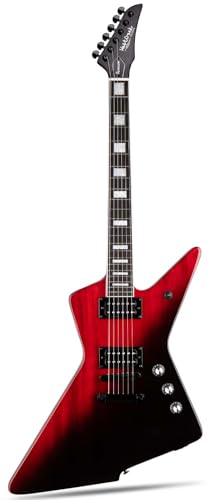
- WestCreek Revenge Introduction: This WestCreek Revenge electric guitar is easy to access the upper frets.
- Musical Style: Revenge model electric guitar is heavy metal guitar.
The WestCreek Revenge is a completely different animal, aimed at the heavy metal and hard rock crowd. While our Fender 9050 Stainless Steel Flatwound Bass Strings are all about smoothness and warmth, the Revenge is built for aggression and bite. It features heavy metal pickups and jumbo frets designed for speed. If you are a bassist who primarily plays in a metal band, the 9050 flats might be too mellow for you, just as the WestCreek might be too aggressive for a jazz player. This alternative is for the player who wants to stand out visually and sonically with a modern, high-output edge.
3. Ibanez GIO GRX70QA Electric Guitar

- Fast, slim Maple neck
- Beautiful quilted Maple art grain top
The Ibanez GIO Series is the ultimate “utility” instrument. Much like the 9050ML strings are a versatile choice for many bass genres, the GIO GRX70QA is designed to handle everything from blues to rock to metal. It’s a “jack of all trades.” However, where the Fender 9050 Stainless Steel Flatwound Bass Strings specialize in a very specific, high-end “polished” feel, the GIO is more about provide a broad range of sounds at an entry-level price point. It’s an excellent choice for a beginner who hasn’t yet committed to the “flatwound sound” or a specific genre, but for those who know they want that vintage thump, the Fender strings are the more specialized tool.
Final Verdict: Are the Fender 9050 Stainless Steel Flatwound Bass Strings Right for You?
After our extensive hands-on testing and analysis of the Fender 9050 Stainless Steel Flatwound Bass Strings, we can confidently say they are one of the best upgrades you can give your bass guitar. They successfully solve the problem of harsh finger noise and abrasive texture, replacing them with a “glass-like” playability that is a joy for both the fingers and the ears. While they do require a brief break-in period to lose their initial stainless steel “zing,” the resulting tone is a rich, punchy, and professional sound that sits perfectly in almost any musical mix. They are durable, stable, and offer a vintage aesthetic that is hard to beat at this price point.
We recommend these strings to any bassist playing Jazz, R&B, Reggae, or Classic Rock, as well as any fretless player looking to protect their instrument. While players should be mindful of the increased tension and the rare quality control quirk, the benefits far outweigh the drawbacks. If you are ready to stop fighting your strings and start flowing with the groove, we highly suggest you grab a set of Fender 9050 Flatwounds today and hear the difference for yourself. Your fingers—and your sound engineer—will thank you.
Last update on 2026-03-29 / Affiliate links / Images from Amazon Product Advertising API