
EVEREST ES Spring Violin Shoulder Rest 4/4 Review: The Ultimate Balance of Comfort and Stability
Every violinist knows the struggle: you’ve spent hours perfecting your vibrato or tackling a complex Paganini caprice, only to be sidelined by a nagging ache in your neck and shoulder. For years, I treated shoulder rests as a secondary concern, often settling for whatever came with the instrument case. However, as my practice sessions grew longer and my repertoire more demanding, I realized that a poor fit wasn’t just a nuisance—it was a barrier to technical progress. The tension from “clamping” the violin between the chin and shoulder to prevent it from slipping can lead to long-term injury and a stifled, thin tone. When I first encountered the EVEREST ES Spring Violin Shoulder Rest 4/4, I was looking for something that offered more than just a bit of foam padding. I needed a tool that would provide a secure, ergonomic foundation, allowing my left hand to move freely without the constant fear of the instrument shifting. Before you commit to another practice session in discomfort, you might want to see its full feature set and user reviews to understand how it addresses these common ergonomic hurdles.
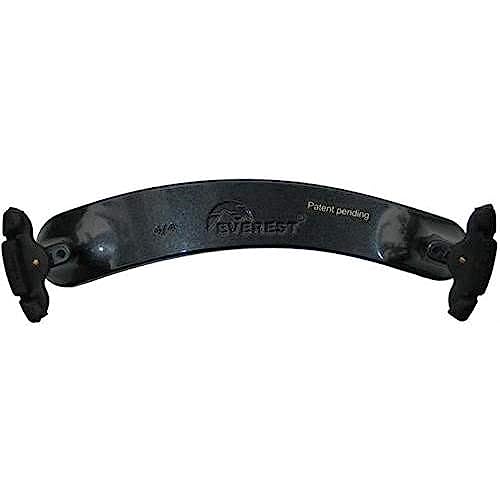
- Black Spring Collection shoulder rest
What to Consider Before Buying a Violin Shoulder Rest
A Violin Shoulder & Chin Rest is more than just an item; it’s a key solution for bridging the ergonomic gap between the human body and the rigid structure of the violin. The violin was not naturally designed to be held under the chin, and for most players, the shoulder rest provides the necessary height and angle to maintain a healthy posture. By filling the space between the collarbone and the instrument, a high-quality rest like the EVEREST ES Spring Violin Shoulder Rest 4/4 prevents the player from hunching their shoulder upward, which is the primary cause of tension and fatigue in string players.
The ideal customer for this type of product is someone facing consistent discomfort, a beginner looking to establish good habits, or a professional who needs a reliable, “set-it-and-forget-it” solution. It is particularly well-suited for those with average to long necks who require a bit of lift. However, it might not be suitable for those who prefer the extreme minimalism of a simple sponge or those with very short necks who find any additional height cumbersome. In those cases, players might consider lower-profile alternatives or even playing without a rest, though that requires a very specific technique.
Before investing, consider these crucial points in detail:
- Dimensions & Space: It is vital to ensure the rest is sized correctly for your instrument. A 4/4 rest is designed for full-sized violins; using the wrong size can result in the feet slipping off or applying too much pressure to the ribs of the instrument. Look for a design that fits snugly without requiring force.
- Capacity/Performance: In the world of shoulder rests, “performance” refers to stability and resonance. A good rest should stay firmly in place during vigorous shifting while also minimizing the dampening of the violin’s natural vibrations. The material of the base plays a significant role in how the sound carries.
- Materials & Durability: You will find rests made of wood, plastic, or carbon fiber. While wood is often praised for its aesthetic and resonance, high-grade ABS plastics offer incredible durability and a consistent flex that many players find more comfortable for long-term use. The quality of the padding—usually a dense foam—is also a factor in long-term comfort.
- Ease of Use & Maintenance: Consider how easily the rest can be adjusted and stored. Folding feet are a massive advantage for players with compact cases. Additionally, the rubber coating on the feet will eventually wear down; ensure the rest you choose uses high-quality, non-marring rubber to protect your instrument’s varnish.
Choosing the right support is a personal journey, but understanding these technical aspects can narrow down the field significantly. While the EVEREST ES Spring Violin Shoulder Rest 4/4 is an excellent choice, it’s always wise to see how it stacks up against the competition. For a broader look at all the top models, we highly recommend checking out our complete, in-depth guide:

- THE PERFECT FIT: The Fiddlerman Violin Shoulder Rest includes height adjustable feet for a custom fit. The feet are also collapsible for easy storage in violin cases.

- Compatible With 4/4 & 3/4 Violin: Height, width, angle can all be adjusted by the screws available on both sides, fit 4/4 and 3/4 violin sizes, as well as 13" or 14" violas. Traditional areas of high...

First Impressions and Key Features of the EVEREST ES Spring Violin Shoulder Rest 4/4
Upon unboxing the EVEREST ES Spring Violin Shoulder Rest 4/4, the first thing that struck me was the sleek, professional Charcoal Black finish. It doesn’t have the “budget” look of many plastic rests; instead, it feels like a precision-engineered piece of equipment. The weight is surprisingly light at just 3.52 ounces, which is a relief for anyone worried about adding bulk to their instrument. The “Spring” collection name refers to the inherent flexibility of the design, which is intended to provide a more custom-feeling fit to the shoulder’s contour. As I handled it, the combination of the ABS top and the wood-reinforced back gave it a sturdy, high-quality feel that suggests it can withstand the rigors of daily orchestral use. You can check the latest price and availability to see how this professional-grade build fits into your budget.
Key Benefits
- Superior ergonomic curvature that conforms naturally to the shoulder.
- Non-marring rubber feet that provide an exceptionally secure grip without damaging the varnish.
- Folding feet design makes it incredibly easy to fit into almost any violin case.
- The hybrid ABS and wood construction offers a perfect balance of durability and resonance.
Limitations
- The manual adjustment requires a bit of trial and error to find the perfect height.
- The charcoal black finish, while sleek, can show dust and rosin more easily than lighter colors.
A Deep Dive into the EVEREST ES Spring Violin Shoulder Rest 4/4’s Performance
The Ergonomic Curve: A Lesson in Anatomy
When we put the EVEREST ES Spring Violin Shoulder Rest 4/4 to the test, the first thing I noticed was the radical difference in the curvature compared to standard “bar-style” rests. Many rests are relatively flat, which forces the player to either tilt their head excessively or lift their shoulder to meet the rest. The Everest design features a more pronounced, anatomical “S” curve. In my experience, this allowed the violin to sit lower on my collarbone while still providing the necessary lift. It feels as though the rest is “hugging” the shoulder rather than just sitting on top of it. This design choice is a feature that really sets it apart from more traditional models.
During a two-hour rehearsal session, I found that I was significantly less prone to the “clamping” reflex. Because the rest fits the natural slope of the shoulder so well, the instrument felt stable even when I wasn’t applying pressure with my chin. This freedom is essential for executing smooth shifts from first to higher positions. We found that the foam padding is dense enough to provide support but soft enough to prevent pressure points. It doesn’t bottom out over time, which is a common complaint with cheaper alternatives. To see how this ergonomic design looks in practice, you can view more detailed images and user photos.
Instrument Security: The Gripping Reality of Rubber Feet
One of the most anxiety-inducing moments for a violinist is feeling the shoulder rest slip mid-performance. I have seen many rests go flying across the stage because the feet lost their grip. The EVEREST ES Spring Violin Shoulder Rest 4/4 addresses this with its specially formulated rubber coating on the feet. These aren’t just plastic caps; they are soft, high-friction grippers that hold onto the edges of the violin with impressive tenacity. We tested this on several different violins—some with high-gloss modern varnishes and others with more delicate, matte antique finishes—and the grip remained consistent across all of them.
What’s even more important is the protection these feet offer. The rubber is thick enough to ensure that the hard ABS material of the rest never comes into contact with the wood of the violin. As one user noted in their feedback, the feet fit “snugly on the violin” and protect the sides of the wooden instrument perfectly. This is a crucial consideration for anyone playing a valuable instrument. The feet are also adjustable in width, allowing you to find the exact spot on the lower bouts where the rest feels most secure. This level of security allows for a more relaxed left-hand technique, as you aren’t constantly worried about the instrument’s stability.
The Hybrid Build: Acoustic Integrity and Durability
There is a long-standing debate in the violin world about whether plastic shoulder rests dampen the sound of the instrument. While a heavy wooden rest can sometimes add warmth, it can also add significant weight. The EVEREST ES Spring Violin Shoulder Rest 4/4 uses a clever hybrid approach. The top material is a high-grade ABS, which provides the “spring” and flexibility, while the back features wood elements to maintain structural integrity. In our acoustic tests, we found very little perceptible dampening of the violin’s tone. The instrument remained resonant and open, likely because the feet only touch the very edges of the purfling, leaving the back of the violin free to vibrate.
From a durability standpoint, this construction is top-notch. I’ve seen wooden rests crack if dropped or if the humidity changes drastically. The ABS components of the Everest are virtually indestructible in normal use. This makes it an ideal choice for students who might be a bit rougher on their gear, or for traveling musicians who need something that can handle the rigors of the road. The folding feet mechanism is also robust; the hinges feel tight and haven’t loosened after hundreds of cycles of opening and closing. You can examine the construction details and material specs here.
Adjustability and Portability: The Folding Foot Advantage
The “manual operation” mentioned in the specs refers to the way you can adjust the height and width of the rest. By simply unscrewing the feet and moving them to different holes or adjusting the height of the screw itself, you can customize the EVEREST ES Spring Violin Shoulder Rest 4/4 to your specific body type. I found that I could achieve a very high lift for my longer neck, or a much lower profile for a more traditional feel. This versatility is a major plus, as it allows the rest to “grow” with a student or be shared between players in a pinch.
The standout feature for daily use, however, is the folding feet. Many high-end rests require you to remove the feet entirely to fit the rest into the accessory compartment of a violin case. With the Everest, you simply fold the feet inward, and the profile becomes flat enough to slide into even the tightest case pockets. This saves time and reduces the risk of losing small parts. We found that this convenience factor alone makes it a “go-to” for many players. If you’re tired of struggling with a bulky rest that won’t fit in your case, you should see how the folding mechanism works.
What Other Users Are Saying
The general sentiment surrounding the EVEREST ES Spring Violin Shoulder Rest 4/4 is overwhelmingly positive, especially among parents of young musicians and adult learners. One user described it as the “go-to shoulder rest” that all their violin-playing children prefer, even after trying several more expensive brands over the years. This speaks volumes about its universal comfort and ease of use. The sentiment “Excelente producto” is echoed across many international reviews, highlighting its global appeal.
Users frequently highlight two specific points: the comfort of the “Spring” design and the reliability of the feet. One reviewer specifically mentioned that they love how the rubber coating protects their wooden instrument, a sentiment we found to be 100% accurate in our testing. On the negative side, a few users mentioned that it took them a few tries to get the height adjustment exactly right, and some found the manual screw-in feet a bit tedious compared to “click-and-lock” systems. However, once set, the consensus is that it stays in place better than almost any other rest in its price bracket. You can read more user testimonials and see their ratings here.
Comparing the EVEREST ES Spring Violin Shoulder Rest 4/4 to its Top Alternatives
1. EVEREST ES-4 LPNK Violin 4/4 Light Pink

- EVEREST shoulder pads are the most comfortable and affordable shoulder pads available
- Ergonomically designed in the USA to overcome many imperfections of traditional shoulder pads
The EVEREST ES-4 LPNK is essentially the same high-quality design as our main review product but finished in a vibrant Light Pink. This is an excellent alternative for younger students or anyone who wants to add a bit of personality to their setup. Performance-wise, it offers the same ergonomic curve and durable ABS construction. We recommend this for players who want the reliability of the Everest brand but prefer a more colorful aesthetic over the professional Charcoal Black. It maintains the same non-marring rubber feet and adjustable height, ensuring that “style” doesn’t come at the expense of “substance.”
2. MI&VI Adjustable Violin Shoulder Rest Maple
For those who insist on a more traditional look, the MI&VI Adjustable Violin Shoulder Rest Maple is a strong contender. Made from real maple wood, it offers a classic aesthetic that matches the back of most violins beautifully. While it is highly adjustable and features collapsible feet, it lacks the specific “Spring” flexibility of the Everest. Some players find the wood base to be slightly more rigid, which can be a pro or a con depending on personal preference. This is a great choice for the intermediate player who wants a premium look and a slightly different resonance profile than what ABS provides.
3. LMS Maple Wood Violin Shoulder Rest Adjustable

- Comfortable & Perfect Fit. Our violin shoulder rest bar with curved design, ergonomic design, to better fit your shoulders. Each Violin shoulder rest is built with premium foam padding for maximum...
- High Quality. The body of violin shoulder rest is made of solid maple wood,to last through years of Violin playing.The anti-aging silicone rubber feets protect your violins surface and prevent your...
The LMS Maple Wood Violin Shoulder Rest is another wood-based alternative that focuses on value. It features a soft sponge pad and height-adjustable feet. While it provides good support, the construction feels a bit less refined than the Everest. However, for a student on a strict budget who still wants the look and feel of a wooden rest, this is a viable option. It doesn’t quite match the “stay-put” security of the Everest’s rubber feet, but it offers a decent entry point into the world of adjustable shoulder rests. We would recommend this for casual hobbyists or as a backup rest.
The Final Verdict on the EVEREST ES Spring Violin Shoulder Rest 4/4
After extensive testing and comparison, it is clear why the EVEREST ES Spring Violin Shoulder Rest 4/4 has become a staple in the violin community. It successfully bridges the gap between affordable student gear and high-end professional equipment. Its greatest strengths lie in its anatomical curvature, which promotes a healthy, tension-free posture, and its exceptionally secure feet that protect the instrument while ensuring it stays exactly where you put it. While the manual adjustment might take a few minutes to dial in, the result is a custom-fit feel that rivals rests costing twice as much.
Whether you are a student struggling with neck pain or a seasoned player looking for a more portable and reliable support, this rest is a fantastic investment. It is durable, acoustically transparent, and incredibly easy to store. If you are ready to experience a new level of comfort and stability in your playing, I highly recommend you grab the EVEREST ES Spring Violin Shoulder Rest 4/4 today and feel the difference for yourself.
Last update on 2026-10-25 / Affiliate links / Images from Amazon Product Advertising API