
Epiphone Inspired By Gibson Hummingbird Acoustic-Electric Review: A Vintage Icon Reborn for Modern Players
For decades, the Hummingbird has stood as one of the most recognizable silhouettes in music history. From the hands of Keith Richards to Sheryl Crow, its square-shouldered dreadnought body and ornate pickguard have become symbols of folk, rock, and country excellence. However, for most of us, the dream of owning an original often hits a massive roadblock: the price tag. Seeking that authentic, “sweet” mahogany tone and the iconic aesthetic usually requires a multi-thousand-dollar investment. We’ve all been there—scouring music shops for a guitar that offers the same resonance and “vibe” without requiring a second mortgage. The frustration of settling for laminate woods or generic designs is real. Without the right balance of premium materials and craftsmanship, you’re often left with a guitar that looks the part but sounds thin and uninspiring. This is where the Epiphone Inspired By Gibson Hummingbird Acoustic-Electric steps into the spotlight, promising to bridge the gap between heritage and affordability.
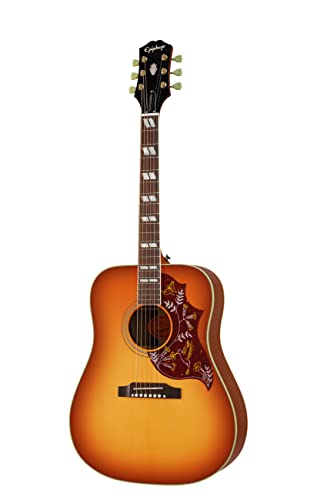
- Brand: Epiphone
- Color: sunburst
What to Consider Before Buying an Acoustic-Electric Guitar
An Acoustic-Electric guitar is more than just an item; it’s a key solution for musicians who need the organic warmth of a hollow-body instrument paired with the versatility of modern amplification. Whether you are performing in a crowded coffee shop or recording in a home studio, having a guitar that can transition seamlessly from “unplugged” to “plugged-in” is essential. The right instrument solves the problem of projection and clarity in a live setting while maintaining the nuanced frequency response of a high-quality acoustic.
The ideal customer for this type of product is someone facing the transition from intermediate to professional-level gear. It’s perfect for the singer-songwriter who needs a reliable stage workhorse or the enthusiast who appreciates vintage aesthetics and all-solid wood construction. While it is an incredible value, it might not be suitable for those who prefer the smaller, more intimate body shapes like a Parlor or Grand Concert, nor for players who strictly want a high-gain, modern-looking instrument. Those looking for a purely budget-friendly “beater” guitar might find the premium features here more than they currently need.
Before investing, consider these crucial points in detail:
- Solid Wood vs. Laminate: In this price bracket, solid wood construction is the most important factor. Solid tops, backs, and sides allow the instrument to “breathe” and improve in tone as the wood ages, whereas laminates remain static and often sound “boxy.”
- Scale Length and Playability: A shorter scale length, like the 24.75 inches found on this model, reduces string tension. This makes the guitar easier to play, especially for complex chords or for those who find standard scales a bit too stiff.
- Electronics Integration: Look for reputable pickup systems. An under-saddle piezo paired with a high-quality preamp ensures that the natural acoustic character isn’t lost when you plug into a PA system or amplifier.
- Materials and Hardware: Small details like a bone nut and saddle or high-ratio tuners aren’t just for show. They directly impact sustain, tuning stability, and the overall harmonic richness of the instrument.
By understanding these factors, you can better appreciate why some guitars command a higher presence on stage. While the Epiphone Inspired By Gibson Hummingbird Acoustic-Electric is an excellent choice, it’s always wise to see how it stacks up against the competition. For a broader look at all the top models, we highly recommend checking out our complete, in-depth guide:
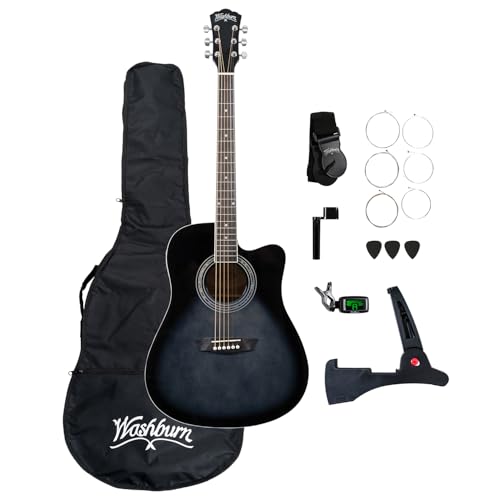
- AN AMERICAN ORIGINAL 130 years of history is at the root of our foundation building high quality instruments. Many of the biggest names in music have played Washburn and some of the most significant...
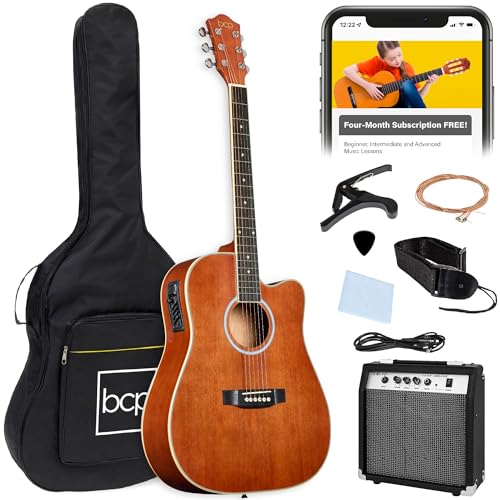
- ALL-IN-ONE ACOUSTIC-ELECTRIC GUITAR KIT: No need to purchase any additional accessories, this all-inclusive set comes with an amplifier, gig bag, strap, pick set, and more
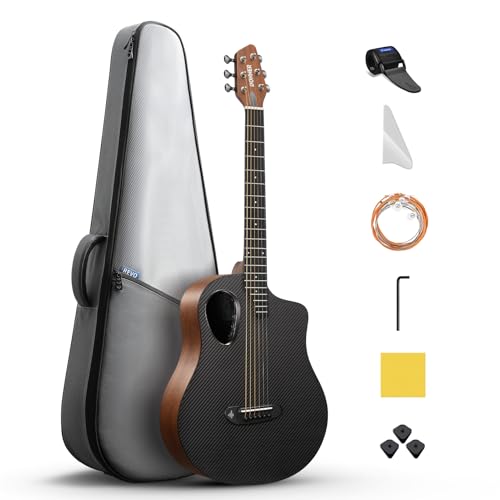
- 【Powerful Alliance with Modern Materials】Donner acoustic electric guitar features a 3K pure carbon fiber fabric top with premium african mahogany sides, back and neck. Harmoniously blends the...
First Impressions: Unboxing the Epiphone Inspired By Gibson Hummingbird Acoustic-Electric
When we first pulled the Epiphone Inspired By Gibson Hummingbird Acoustic-Electric out of its packaging, the “Aged Cherry Sunburst” finish immediately grabbed our attention. Unlike the high-gloss, plastic-like finishes often found on mid-tier guitars, this “aged” gloss has a subtle, vintage-correct sheen that looks like it has been sitting in a climate-controlled studio for thirty years. The Kalamazoo-style headstock and the gold Epiphone Deluxe tuners give it an air of authority that mimics its Gibson big brother perfectly. To see its full feature set and user reviews, one only needs to look at the craftsmanship of the multi-ply binding and the iconic hummingbird pickguard.
The guitar feels substantial yet balanced. Weighing in at approximately 4900 grams, it has the heft of a professional instrument without being cumbersome. The factory setup was surprisingly good—the action was low enough for comfortable fingerstyle but high enough to prevent buzzing during aggressive flatpicking. It’s clear that this “Inspired by Gibson” series is a massive step up from the standard Epiphone lineup, moving closer to the boutique territory once reserved for much more expensive brands.
Key Benefits
- All-solid wood construction (Spruce and Mahogany) for rich, evolving tone.
- Stunning vintage aesthetics with the “Aged” finish and gold hardware.
- Easy playability thanks to the 24.75″ scale length and “C” neck profile.
- Reliable Fishman Sonitone electronics for transparent live sound.
Limitations
- Hardshell case is sold separately, which is a missed opportunity for a “Masterbilt” level guitar.
- Some users may find the square-shoulder dreadnought body a bit large for small frames.
Deep Dive Analysis: Evaluating the Performance of the Hummingbird
Solid Wood Synergy: The Mahogany and Spruce Tone Profile
In our extensive testing, the standout feature of the Epiphone Inspired By Gibson Hummingbird Acoustic-Electric is undoubtedly the all-solid wood construction. Many guitars in this price range use solid tops but rely on laminate back and sides to save costs. Epiphone has gone the extra mile here, utilizing a solid Sitka spruce top paired with solid mahogany back and sides. This combination is the classic recipe for a “sweet” sounding guitar. The spruce provides a crisp, bright attack, while the mahogany softens the edges, adding warmth and a pronounced midrange “thump” that is the hallmark of the Hummingbird design.
When we strummed open G chords, the resonance was palpable. The guitar doesn’t just produce sound; it vibrates against your chest in a way that only all-solid wood instruments can. As we spent more time with it, the harmonic complexity became more apparent. This isn’t a “boomy” dreadnought like some D-28 style clones; instead, it’s balanced and articulate. Whether we were playing delicate folk melodies or driving rhythm parts, the guitar responded with a dynamic range that we usually expect from instruments costing twice as much. This tonal depth is a feature that really sets it apart from the lower-tier “Studio” models that often lack this level of sustain.
Playability and the 24.75-Inch Scale Length
One of the more nuanced aspects of the Epiphone Inspired By Gibson Hummingbird Acoustic-Electric is its scale length. Most dreadnoughts use a 25.5-inch scale, but the Hummingbird stays true to the Gibson tradition with a 24.75-inch scale. To the uninitiated, this might seem like a small detail, but in practice, it’s a game-changer for playability. The shorter scale reduces the overall tension of the strings, making it significantly easier to perform large bends or hold down complex barre chords for long periods. I found that my hands felt much less fatigued after a two-hour session compared to playing on a standard long-scale acoustic.
The mahogany neck features a comfortable rounded “C” profile that fits naturally in the hand. It’s neither too thick nor too thin, striking a middle ground that should appeal to both electric guitar players transitioning to acoustic and traditional acoustic players alike. The laurel fretboard was well-finished, with the split parallelogram inlays adding to that high-end look. We also noted the bone nut and saddle—materials often replaced by plastic on cheaper guitars. The use of bone ensures better energy transfer from the strings to the top, which contributes to the guitar’s impressive clarity and intonation across the entire fretboard.
Stage-Ready Electronics: The Fishman Sonitone System
An acoustic-electric is only as good as its amplified sound, and the Epiphone Inspired By Gibson Hummingbird Acoustic-Electric utilizes the industry-standard Fishman Sonitone preamp and Sonicore under-saddle pickup. What we love about this system is its “stealth” design. The controls for volume and tone are tucked neatly inside the soundhole, preserving the vintage aesthetic of the guitar without having a large, plastic preamp box cut into the side of the mahogany body. This keeps the structural integrity of the wood intact, which is vital for an all-solid guitar.
In a live setting, we found the Fishman system to be remarkably transparent. It doesn’t color the sound too much, allowing the natural mahogany warmth to come through the speakers. While under-saddle piezos can sometimes sound “quacky,” the Sonitone handles high-volume scenarios well, offering a clean signal that responds well to external EQ. For those looking to perform professionally, we suggest you check the latest price and availability of this model, as the inclusion of such reliable electronics at this price point represents a significant value. It makes the transition from the couch to the stage effortless.
Aesthetic Authenticity and Hardware Quality
Finally, we have to talk about the “vibe.” The Epiphone Inspired By Gibson Hummingbird Acoustic-Electric is a stunning piece of art. The Aged Cherry Sunburst finish is deep and rich, highlighting the grain of the spruce top. The iconic pickguard, featuring the hummingbird and floral motifs, is thick and well-applied, unlike the thin stickers found on cheaper copies. This attention to detail extends to the gold Epiphone Deluxe tuners, which provide a 18:1 gear ratio for precise tuning. During our testing, the guitar held its pitch remarkably well, even through significant temperature changes.
The multi-ply binding on the top and back, combined with the white binding on the neck, gives the guitar a “tuxedo” look that commands attention. It’s an instrument that looks like it belongs on a stage under bright lights. We also appreciated the inclusion of a Kalamazoo-style headstock, which is a subtle nod to Epiphone’s heritage and a significant improvement over the older, more elongated Epiphone headstock designs. It’s these small, historically accurate touches that make this guitar feel like a premium “Inspired by Gibson” product rather than just another budget model. You can examine the intricate pickguard details and finish options to see just how much work went into the visual design.
What Other Users Are Saying
The general sentiment among users is overwhelmingly positive, with many players expressing shock at how close this guitar comes to the American-made original. One user noted that after playing guitars of all tiers, this model was the clear winner, stating it “actually sounds better than many guitars that are more expensive.” This aligns with our findings regarding the solid wood construction. Another enthusiast highlighted that while it isn’t “technically” a Masterbilt, the quality and construction are virtually identical since they are made in the same facility with the same premium materials.
However, no product is without its critics. We did find one user who was disappointed when their bridge started lifting shortly after purchase. While this is a rare occurrence, it serves as a reminder that with all-solid wood guitars, maintaining proper humidity is crucial. Another user was very happy with the delivery but strongly recommended purchasing the dedicated hardshell case simultaneously to ensure the instrument stays protected, as it does not come with one by default. Overall, the consensus is that for the price, the Epiphone Inspired By Gibson Hummingbird Acoustic-Electric offers a level of beauty and tone that is hard to beat in the current market.
Comparing the Hummingbird to Top Alternatives
While we are clearly fans of the Hummingbird, it’s important to look at how it compares to other heavy hitters in the acoustic-electric market. Depending on your playing style or budget, one of these might be a better fit.
1. Fender CD-60SCE Acoustic-Electric Guitar Bundle
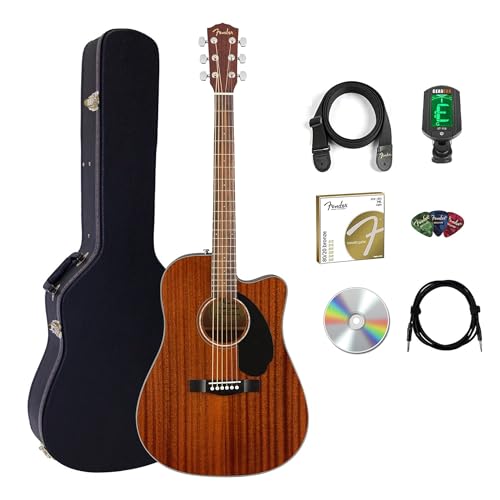
- CUTAWAY DREADNOUGHT BODY: Designed with a single-cutaway dreadnought body, offering robust sound and easy access to higher frets for versatile playing styles
- PREMIUM ELECTRONICS: Equipped with a Fishman classic design pickup and preamp system, providing clear, amplified sound and precise tonal control for live or studio performance
The Fender CD-60SCE is a fantastic entry-level to intermediate option for those who want a complete package. Unlike the Epiphone, which focuses on premium solid woods and vintage specs, this Fender bundle includes everything a beginner needs: a hard case, tuner, strap, and more. Tonal-wise, it features a solid mahogany top, which provides a warmer, darker sound compared to the bright “snap” of the Epiphone’s spruce top. This is an excellent choice for someone who wants a “ready-to-go” kit and prefers the look of all-mahogany, but it lacks the harmonic complexity and professional “aged” finish of the Hummingbird.
2. Yamaha APX600 OBB Acoustic-Electric Guitar

- Thin-line cutaway Body design for exceptional playability
- 25" Scale Length and narrower string spacing for Enhanced comfort
The Yamaha APX600 is a completely different beast. While the Epiphone Inspired By Gibson Hummingbird Acoustic-Electric is a large, square-shouldered dreadnought designed for massive unplugged resonance, the Yamaha is a “thin-line” acoustic. It is designed primarily for the stage, with a body that is much thinner and more comfortable for smaller players or electric guitarists. It won’t have the same acoustic volume or “thump” as the Epiphone, but its electronics and feedback resistance make it a great tool for performers who play with a full band. Choose the Yamaha if ergonomics and stage convenience are your top priorities over traditional acoustic tone.
3. Fender CD-60SCE 12-String Acoustic Guitar

- One right-handed Fender CD-60SCE-12 12-string Dreadnought Acoustic Guitar
- Dreadnought Body: This guitar's dreadnought body shape resonates with a bold and rich bass tone, great for playing country, folk or bluegrass

If you love the “chime” and “jangle” of a 12-string, this version of the Fender CD-60SCE is a budget-friendly way to get that sound. While the 6-string Hummingbird is versatile for almost any genre, a 12-string offers a specific, chorused texture that is beautiful for folk and classic rock. However, a 12-string is much harder to play and maintain than the 6-string Epiphone. If you are looking for your primary, “everyday” guitar, the Epiphone Inspired By Gibson Hummingbird Acoustic-Electric is far more practical. The 12-string is better suited as a secondary instrument for specific tonal colors.
Final Verdict: Is the Epiphone Hummingbird Right for You?
After putting the Epiphone Inspired By Gibson Hummingbird Acoustic-Electric through its paces, we can confidently say it is one of the best values in the acoustic world today. It successfully captures the soul of the legendary Gibson Hummingbird, offering all-solid wood construction, high-end Fishman electronics, and a stunning “aged” aesthetic that makes it feel like a heritage piece. While the lack of a case and the large dreadnought size might be minor hurdles for some, the tonal payoff and ease of playability provided by the 24.75″ scale length more than compensate. It’s a professional-grade instrument masquerading at a mid-tier price point.
If you are a singer-songwriter looking for a guitar that sounds as good as it looks, or a serious hobbyist wanting to upgrade to a “forever” guitar without the Gibson price tag, this is your winner. The resonance of the solid spruce and mahogany will only get better over time, making this a true investment in your musical journey. Don’t wait to add this icon to your collection—click here to secure your Epiphone Inspired By Gibson Hummingbird today and start experiencing the legendary “thump” for yourself.
Last update on 2026-04-04 / Affiliate links / Images from Amazon Product Advertising API