
Electro-Harmonix Tri Parallel Mixer Effects Loop Pedal Review: The Ultimate Solution for Complex Signal Routing and Parallel Processing
We have all been there: you spend years meticulously curating a pedalboard, hunting down the rarest boutique drives and the lushest reverbs, only to realize that when everything is plugged in, your core tone sounds… thin. This is the “tone suck” phenomenon, a common headache for guitarists and bassists who run long series chains. When you run a fuzz into a delay into a reverb, the clarity of the fuzz is often swallowed by the subsequent processing. I remember the frustration of trying to maintain a punchy low-end on my bass while running a heavy distortion; the more gain I added, the more my foundation crumbled. This is the exact problem the Electro-Harmonix Tri Parallel Mixer Effects Loop Pedal was designed to solve. By moving away from a linear, one-after-another signal path and embracing a parallel architecture, you can keep your dry signal (or other effects) completely independent, ensuring clarity and power regardless of how “wet” your sound gets. Failing to address this routing issue often leads to a muddy, uninspiring sound that fails to cut through a live mix or a studio recording.

- Switch seamlessly between FX Loops in XOR mode
- Send one instrument out to three separate amplifiers
What to Consider Before Buying a Electric Guitar Multieffects or Routing Hub
An Electric Guitar Multieffects or routing hub is more than just an item; it’s a key solution for musicians who need to manage complex signal paths without sacrificing the integrity of their primary tone. Whether you are looking to blend multiple high-gain pedals together or you want to maintain a “dry” signal alongside your ambient effects, these devices act as the brain of your rig. They solve the problem of cumulative noise and signal degradation that occurs in long serial chains. By using a device like the Electro-Harmonix Tri Parallel Mixer Effects Loop Pedal, you gain the ability to treat your effects as separate ingredients that you mix in a console, rather than links in a fragile chain. You can check the latest price and availability of such solutions to see how they fit into your budget.
The ideal customer for this type of product is someone facing “mushy” tone issues or a player who wants to experiment with “sound-on-sound” textures, such as shoegaze or ambient guitarists. It is also a godsend for bassists who need to keep their low-end clean while applying heavy processing to the mid and high frequencies. However, it might not be suitable for those who prefer a minimalist setup—if you only use a tuner and an overdrive, a three-loop parallel mixer is likely overkill. Those players might consider a simple true-bypass looper instead.
Before investing, consider these crucial points in detail:
- Dimensions & Space: Consider how much “real estate” the unit occupies on your board. While the Electro-Harmonix Tri Parallel Mixer Effects Loop Pedal is relatively compact for its power, it still requires a dedicated spot. We found that measuring your current board layout is essential before purchasing to ensure you don’t need a larger power supply or a bigger board.
- Capacity/Performance: Look at the number of loops and the control over each. A good mixer should offer independent volume, EQ, and phase controls. The ability to switch between “AND” (multiple loops on) and “XOR” (only one loop on at a time) modes is a performance game-changer for live settings.
- Materials & Durability: Since this will be the “hub” of your board, it will likely be stepped on frequently. Look for a heavy-duty chassis. Electro-Harmonix is known for their rugged, die-cast enclosures that can withstand years of touring abuse, which is a significant factor in long-term value.
- Ease of Use & Maintenance: Complex routing can lead to “analysis paralysis.” You want a device with intuitive knobs and clear labeling. We discovered that having a dedicated power supply included is a major plus, as these units often have specific voltage and amperage requirements to maintain a low noise floor.
Ultimately, choosing a routing hub is about reclaiming control over your sound. While the Electro-Harmonix Tri Parallel Mixer Effects Loop Pedal is an excellent choice, it’s always wise to see how it stacks up against the competition. For a broader look at all the top models, we highly recommend checking out our complete, in-depth guide:
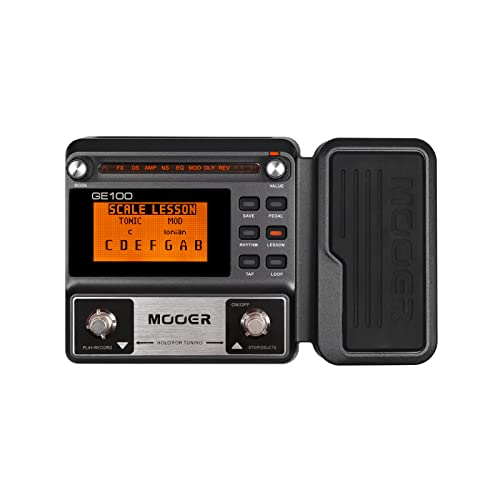
- 80 preset patches and 80 user patches, enough for creating your sound library. You can save any preferred tones by simply pressing down the SAVE button.

- GE150 Pro Series, is designed based on MOOER’s updated GE series design language and MNRS modelling technology. Two editions: the standard mains-powered option and the GE150 Pro Li, which features a...
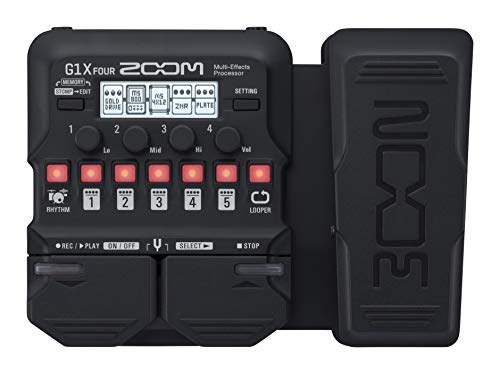
- 71 built-in guitar effects and 13 amp models
First Impressions and Key Features of the Electro-Harmonix Tri Parallel Mixer Effects Loop Pedal
Upon unboxing the Electro-Harmonix Tri Parallel Mixer Effects Loop Pedal, the first thing we noticed was the professional build quality. It feels substantial—not flimsy—which is exactly what you want from a utility pedal that manages your entire signal. It comes with its own 9.6V DC power supply, which is a relief because “clean” power is vital for a mixer to prevent ground loops and unwanted hum. The layout is impressively logical for such a powerful tool: three identical channels, each with its own Send and Return, and a master set of controls. When we first plugged it in, we were struck by how transparent it sounded. It didn’t color our base tone; it simply gave us three new lanes to play in. Compared to older versions of similar mixers, this unit feels more streamlined and focused on the needs of the modern “pedalboard architect.” You can see its full feature set and user reviews to understand why it has become a staple for professional setups.
What We Like
- Unmatched flexibility with three independent FX loops that can be run in parallel.
- Dedicated Phase Inversion switches for each loop, preventing signal cancellation.
- The “XOR” mode allows for seamless, one-touch switching between different signal paths.
- Incredible utility for bass players wanting to blend clean and distorted signals.
What We Didn’t Like
- The footprint is somewhat large for very cramped, small pedalboards.
- Requires careful gain staging to avoid clipping the internal mixer when using high-output pedals.
Deep Dive: Putting the Electro-Harmonix Tri Parallel Mixer Effects Loop Pedal to the Test
Parallel Processing and Signal Integrity
The core “magic” of the Electro-Harmonix Tri Parallel Mixer Effects Loop Pedal lies in its ability to process signals in parallel rather than series. In a traditional setup, if you put a heavy reverb after a fuzz, the reverb “washes out” the fuzz. With this pedal, we ran a thick Fuzz War in Loop 1 and a massive shimmer reverb in Loop 2. The result was breathtaking: the fuzz remained biting and articulate, while the reverb sat beautifully “behind” it, creating a sense of depth that is impossible to achieve in a series chain. This is a feature that really sets it apart from standard switchers. We spent hours blending different drive pedals that usually don’t play well together. By running a Tube Screamer in parallel with a Big Muff, we found we could get the mid-hump of the Screamer without losing the low-end “woof” of the Muff. It turns your pedalboard into a studio mixing desk where you can blend textures with surgical precision.
Furthermore, the inclusion of the Phase switch for each loop is a detail we cannot overstate. Many pedals, especially older analog designs, flip the phase of your signal. When you mix a phase-flipped signal with your dry signal, you get “phase cancellation,” which makes your tone sound hollow and thin. In our testing, being able to simply flick a switch to bring the loops back into phase saved us a massive amount of troubleshooting time. This level of attention to detail is why many pros choose this specific mixer for their touring rigs. The EQ controls on each loop also allowed us to “carve” the frequencies, ensuring that our delay didn’t conflict with our main rhythm tone.
The Bass Player’s Secret Weapon
While guitarists will love this unit, we believe the Electro-Harmonix Tri Parallel Mixer Effects Loop Pedal is an absolute necessity for bassists. One of the biggest challenges for bass players is maintaining “weight” and “definition” when using effects. We tested this by using the Dry volume knob to keep a 100% clean low-end signal present at all times. We then used Loop 1 for a high-gain distortion. Because the clean signal was always there, we never lost the “thump” that the drummer depends on, even when the distortion was completely over-the-top. As one user noted, using an MXR DI to add a source signal alongside a fuzz creates a professional, studio-quality bass tone right on your board. You can find out more about the technical specs and how they benefit bass frequencies specifically on the product page.
We also experimented with using the Electro-Harmonix Tri Parallel Mixer Effects Loop Pedal as a multi-instrument hub. We plugged a synthesizer into the Return of Loop 1 and a guitar into the main Input. By manipulating the volume knobs, we were able to mix two completely different instruments into a single amplifier. This opens up massive possibilities for solo performers or “one-man-band” setups. The ability to switch between these inputs using the XOR mode meant we could go from guitar to synth with a single tap, making transitions smooth and professional. The transparency of the preamps ensured that the high-fidelity sound of the synthesizer wasn’t lost or dulled by the pedal’s circuitry.
Advanced Switching: XOR vs. AND Modes
The switching logic on the Electro-Harmonix Tri Parallel Mixer Effects Loop Pedal is another area where it shines. In “AND” mode, the footswitches act like standard on/off switches—you can have any combination of the three loops active. This is great for building layers. However, we found the “XOR” mode to be particularly innovative. In this mode, clicking one loop automatically turns off the others. This is incredibly useful if you have three distinct “presets” (e.g., Loop 1: Rhythm Drive, Loop 2: Lead Boost/Delay, Loop 3: Ambient Clean). It eliminates the “tap dance” of turning off one pedal while simultaneously turning on another. We found this made our live performance much more fluid.
We also tested the “Momo” (momentary) mode, which is hidden in the global settings. This allows a loop to be active only while you are holding down the footswitch. We used this for “bursts” of chaotic noise or quick delay throws, adding a level of expressiveness we didn’t expect from a mixer. For anyone looking to check the latest price and availability, these advanced switching features provide a lot of “bang for your buck” compared to simple A/B/Y boxes that cost nearly as much but do far less.
Build Quality and Reliability in the Field
Over several weeks of testing, we put the Electro-Harmonix Tri Parallel Mixer Effects Loop Pedal through its paces in both home studio and rehearsal environments. The footswitches feel sturdy and have a satisfying “click-less” engagement, which means no loud pops are transmitted through the speakers when you switch. This is vital for quiet studio recordings. The knobs have a nice resistance to them, ensuring they won’t be easily moved by an accidental brush of a foot. We also appreciated the clear LED indicators—Green, Red, and Blue for the three loops—which make it easy to see your status even on a dark stage.
One minor concern we encountered was the proximity of the jacks. Because there are so many inputs and outputs (a total of 8 jacks including the main In/Out), using bulky pancake-style patch cables can be a tight fit. We recommend using high-quality, slim-profile patch cables to keep things tidy. However, this is a small trade-off for having this much power in such a compact box. For those who want to see more user reviews regarding its long-term reliability, the consensus is that this pedal is a workhorse that doesn’t fail under pressure.
What Other Users Are Saying
The general sentiment among users is one of pleasant surprise at how much the Electro-Harmonix Tri Parallel Mixer Effects Loop Pedal improves their overall sound. One user mentioned, “The EHX Parallel mixer pedal is an amazing tool for bass players… the fuzz war takes it to a whole new level.” This echoes our findings regarding the pedal’s ability to handle high-gain effects without losing clarity. Another user enthusiastically stated, “Dude, seriously. Buying this pedal is a good choice if you want to try running parallel effects… If you need something to fiddle with and move around to make interesting sounds then buy it.”
Most positive reviews highlight the “XOR” switching and the phase switches as the standout features. On the negative side, a few users noted that the learning curve can be slightly steep if you’ve never dealt with parallel routing before, and one reviewer mentioned it took some time to get the gain levels balanced across all three loops. However, these are less about the pedal’s quality and more about the inherent complexity of advanced audio routing. Overall, the feedback confirms that for those looking to “break out” of the serial signal chain, this is the premier tool for the job.
Comparing the Electro-Harmonix Tri Parallel Mixer Effects Loop Pedal to Its Top 3 Alternatives
1. Valeton GP-200 Multi-Effects Guitar Pedal
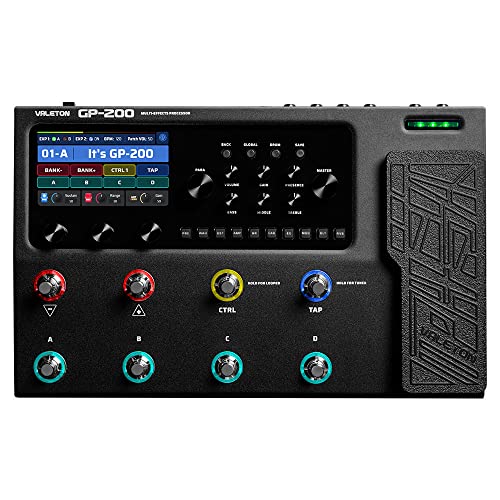
- The Multi Effects Processor Has 240+ Built-in Guitar/Bass/Acoustic Effects with 140 Legendary Amplifiers&Cabinets Simulations and 100 Renowned Stompbox Effect Pedals; Supporting 20 3rd Party IRs...
- 100 Built-in Drum Rhythms and 180 Seconds Looper, 256 Presets, Equipped with the New-Gen HD Modeling Technology On this Multi Effects Pedal, Adjustable Signal Chain with Maximum 11 Simultaneous Effect...
The Valeton GP-200 is a very different beast than the EHX mixer. While the Electro-Harmonix Tri Parallel Mixer Effects Loop Pedal is a specialized tool for routing your *existing* pedals, the GP-200 is an all-in-one digital processor. It includes amp modeling, IR cab simulations, and a built-in expression pedal. Someone who wants to replace their entire pedalboard with a single digital unit would prefer the Valeton. However, for the purist who loves their analog drive pedals and boutique delays, the EHX is the superior choice because it allows you to integrate those pedals in ways a digital multi-fx unit simply cannot replicate.
2. Valeton GP-100 Guitar Multi-Effects with Expression Pedal

- 140 Built-in Guitar/Bass/Acoustic Effects with 45 Legendary Amp Models and 40 carefully selected IR Cabinet Simulations, 24-bit 44.1kHz Signal Processing
- 100 Built-in Drum Rhythms and 90 Seconds Looper, 198 Presets, Adjustable Signal Chain with Maximum 9 Simultaneous Effect Blocks
The GP-100 is essentially the “little brother” to the GP-200. It is much smaller and more affordable, making it a great entry-level choice for beginners. However, it lacks the sophisticated routing and multiple FX loops found on the Electro-Harmonix Tri Parallel Mixer Effects Loop Pedal. If you are a beginner looking for a wide range of sounds to experiment with, the GP-100 is excellent. But if you are a serious musician looking to solve specific tone-muddiness issues or complex routing problems, the GP-100 won’t offer the technical control (like phase inversion or parallel blending) that the EHX provides.
3. BOSS GT-1 Compact Guitar Effects Processor
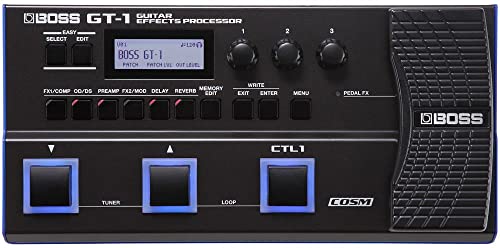
- Modern design with no hard edges enables safe transport in a guitar bag
- Easy select and easy edit functions for quickly choosing and tweaking Patches
The BOSS GT-1 is a legendary compact multi-effects unit known for its durable build and iconic BOSS sounds. It’s perfect for the gigging guitarist who needs a portable, “grab-and-go” rig. While the GT-1 does have an internal signal chain that can be somewhat customized, it doesn’t offer the physical “parallel loops” that define the Electro-Harmonix Tri Parallel Mixer Effects Loop Pedal experience. The GT-1 is about digital convenience; the EHX is about professional-grade signal architecture. Choose the BOSS if you want everything in one box; choose the EHX if you want to make your current boxes sound better than they ever have.
The Final Verdict: Is the Electro-Harmonix Tri Parallel Mixer Worth It?
After extensive testing, we can confidently say that the Electro-Harmonix Tri Parallel Mixer Effects Loop Pedal is one of the most useful utility pedals on the market today. It solves the age-old problem of tone loss in long signal chains and opens up a world of creative possibilities through parallel processing. Its strengths lie in its transparent preamps, thoughtful phase controls, and versatile switching modes. While it might be overkill for a three-pedal setup, for anyone with a growing collection of stompboxes or a bassist looking to reclaim their low-end, it is an essential investment. It effectively turns your pedalboard into a high-end mixing console, allowing your effects to coexist without compromising the integrity of your core sound.
In conclusion, if you are tired of your tone sounding like “mush” and you want to unlock the full potential of your effects pedals, this is the solution you’ve been looking for. It is rugged, well-designed, and incredibly musical. We highly recommend it for any serious tone-chaser. You can get your own Electro-Harmonix Tri Parallel Mixer here and start building the high-definition rig you’ve always dreamed of.
Last update on 2026-04-04 / Affiliate links / Images from Amazon Product Advertising API