
Electro-Harmonix B9 Organ Effects Pedal Review: Unlocking Vintage Tones for Modern Guitarists
As guitarists and musicians, we’re constantly on the hunt for new sonic textures, ways to expand our palette beyond the conventional. There’s a certain magic in the rich, swirling tones of a classic electric organ – the soulful growl of a Hammond B3, the spacey vibe of a Farfisa, or the haunting resonance of a cathedral pipe organ. For years, achieving these sounds meant either investing in a dedicated keyboard, struggling with complex MIDI setups, or settling for less-than-convincing digital plugins. We know the frustration: you have a perfect guitar riff, but it just cries out for that thick, sustained organ pad or a cutting, percussive accent. Without a dedicated organist or the right gear, that inspiration often fades. This is where a pedal like the Electro-Harmonix B9 Organ Effects Pedal enters the scene, promising to transform your six-string into a convincing keyboard instrument and potentially revolutionize your band’s sonic landscape without the hassle of extra instruments or personnel. It’s a solution for the guitarist who wants to fill out their sound, add harmonic depth, or simply explore new creative avenues.

- 9 presets that were finely tuned to emulate some of the most popular and classic electric organ tones
- Control over percussive attack level, modulation speed, organ and dry volume
What to Consider Before Integrating a Specialty Effects Pedal into Your Rig
A specialty effects pedal, particularly one designed to emulate an entirely different instrument, is more than just an item; it’s a key solution for expanding your sonic capabilities, adding depth to your arrangements, and pushing creative boundaries without the need for additional instruments or musicians. These pedals can allow a single guitarist to create lush, layered soundscapes or provide crucial melodic or harmonic support where a keyboardist might typically be needed, making them invaluable for solo performers, small ensembles, or anyone looking to inject fresh textures into their music.
The ideal customer for this type of product is someone facing limitations in their current setup, perhaps a guitarist longing for the expressive power of an organ or a bassist seeking to thicken their low end with a synthesized foundation. It’s perfect for musicians who appreciate versatility and are willing to adapt their playing style slightly to harness new sounds. Conversely, it might not be suitable for those who demand absolute sonic purity from their guitar and are unwilling to experiment, or for those who already have access to a dedicated keyboard player or extensive synth setups. For these individuals, a simpler overdrive, modulation, or delay pedal might be a more fitting addition, or they might prefer the unadulterated tone of their instrument.
Before investing, consider these crucial points in detail:
- Dimensions & Space: Effects pedals, especially those with multiple controls, can take up valuable real estate on your pedalboard. Consider the Electro-Harmonix B9 Organ Effects Pedal’s footprint (4.75″L x 4″W x 2.25″H) relative to your existing setup. A compact design is always a plus for portability and ease of integration into an already crowded board, but functionality should never be sacrificed for size.
- Capacity/Performance: When evaluating an organ emulation pedal, capacity primarily refers to its ability to generate a wide range of authentic organ sounds and its tracking accuracy. Look for a pedal that offers diverse presets, adjustable parameters for tone shaping, and, crucially, tracks your playing smoothly and without latency. The Electro-Harmonix B9 Organ Effects Pedal offers nine distinct presets, each designed to capture a different classic organ vibe, alongside control over essential parameters like percussion and modulation, making it a powerful contender.
- Materials & Durability: A pedal that’s going to live on the floor, subject to stomping and potential knocks, needs to be built like a tank. We always prioritize robust, metal enclosures over flimsy plastic. Die-cast aluminum is a common and excellent choice for its balance of strength and weight. The Electro-Harmonix B9 Organ Effects Pedal, true to EHX’s reputation, feels incredibly solid and ready for the rigors of gigging, ensuring it can withstand years of use on the road or in the studio.
- Ease of Use & Maintenance: A powerful pedal shouldn’t require a degree in sound engineering to operate. Intuitive controls, clearly labeled knobs, and an accessible layout are paramount. Beyond initial setup, consider how easy it is to dial in desired sounds quickly during a live performance or recording session. For maintenance, durable components typically mean less upkeep, but knowing about any specific cleaning requirements or software updates (though less common for analog-style pedals) is also beneficial for long-term care.
Ultimately, choosing the right specialty pedal comes down to balancing your creative aspirations with practical considerations. If you’re ready to dive into the world of organ sounds from your guitar, the Electro-Harmonix B9 Organ Effects Pedal presents a compelling and robust option that truly delivers. To explore its full potential and see its full feature set and user reviews, it’s worth a deeper look.
While the Electro-Harmonix B9 Organ Effects Pedal is an excellent choice, it’s always wise to see how it stacks up against the competition. For a broader look at all the top models, we highly recommend checking out our complete, in-depth guide:
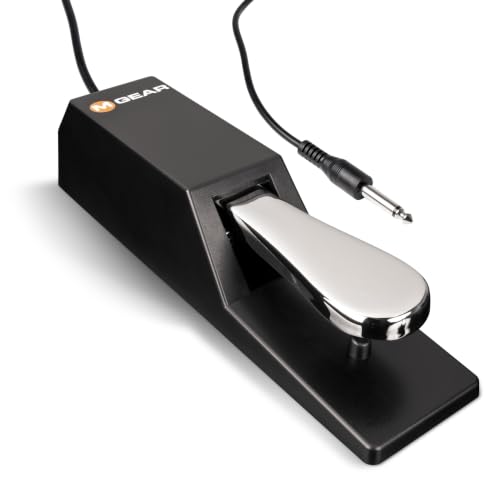
- Universal sustain pedal with chrome foot pedal for a natural, realistic pedal action


- 【Universal Sustain pedal】: 6 feet cable with 1/4 inch jack, Classic-style piano keyboard sustain pedal features a polarity switch making it compatible with all electronic keyboards, synth, digital...
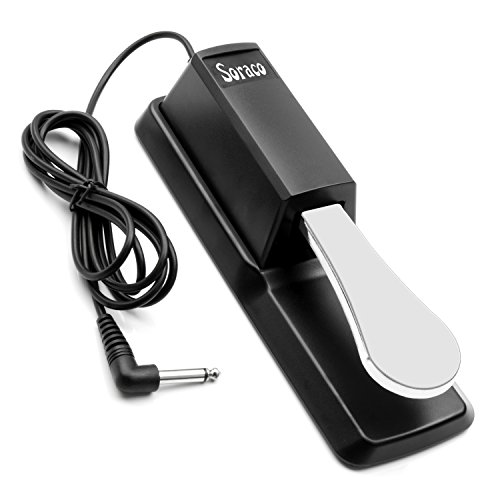
- Wide Compatibility: Universal sustain pedal equipped with a polarity switch (N.O / N.C) and a standard 1/4" (6.35 mm) jack, compatible with most electronic keyboards and digital pianos.
First Encounters: Unboxing the Electro-Harmonix B9 Organ Effects Pedal
Our initial encounter with the Electro-Harmonix B9 Organ Effects Pedal was exactly what we’ve come to expect from EHX: a rugged, no-nonsense stompbox designed to do one thing exceptionally well. The pedal arrives in a sturdy box, and upon unboxing, we were greeted by its distinctive green casing, a nod perhaps to its classic, vintage aspirations. The construction immediately impressed us; this isn’t a fragile piece of gear. Its heavy-duty metal enclosure and robust footswitch give you confidence that it can withstand the rigors of the road. It feels solid in hand, substantial enough to stay put on a pedalboard. The knobs are clearly labeled and have a satisfying resistance, making fine adjustments easy and precise. We appreciate the inclusion of a dedicated power adapter, a small but significant detail that saves you the hassle of finding a compatible supply and ensures optimal performance right out of the box, addressing potential noise issues that can arise with shared power supplies.
Setting up was a breeze: plug in the power, connect your guitar, and run it to an amp or interface. The simplicity of its interface – four main control knobs and a rotary switch for presets – means you’re not lost in menus or complex sub-parameters. Within minutes, we were experimenting with the different organ sounds, and the immediate impression was one of genuine surprise and delight. This isn’t a digital approximation trying too hard; it’s an authentic-sounding emulation that genuinely holds its own. While it’s not a direct competitor to a full-fledged keyboard or synth, for a guitar pedal, it’s remarkably convincing, offering a unique avenue for creative expression that many traditional effects pedals simply can’t match. It’s an instant texture generator, ready to be deployed the moment you step on it. For guitarists looking to expand their sound without venturing into the complexities of MIDI or synth guitars, the Electro-Harmonix B9 Organ Effects Pedal is an incredibly appealing proposition, offering vintage organ vibes right at their feet. You can truly appreciate its build quality and ease of use when you hold it in your hands.
Key Benefits
- Authentic and diverse classic organ emulations (9 presets).
- Excellent tracking for single notes and simple chords.
- Independent wet/dry blend for layering and versatility.
- Rugged, road-ready construction and intuitive controls.
- Includes a dedicated power adapter, minimizing noise issues.
- Transforms guitar into a convincing organ without complex setups.
Limitations
- Struggles with complex chords (more than 3 notes) and fast, articulate guitar techniques like string bending and sliding.
- Lack of real-time expression pedal control for the ‘Mod’ parameter.
- Can be sensitive to input levels, especially with active pickups.
- Some specific presets might not be universally appealing or useful.
A Deep Dive into the Sonic Soul of the Electro-Harmonix B9 Organ Effects Pedal
The Palette of Presets: Crafting Sonic Landscapes with 9 Classic Organ Tones
The heart of the Electro-Harmonix B9 Organ Effects Pedal lies in its nine finely tuned presets, each meticulously crafted to evoke distinct and legendary electric organ tones. From the moment we started cycling through them, we were genuinely impressed by the sonic fidelity and variety on offer. We found ourselves instantly transported, whether it was the rich, swirling warmth of a classic Hammond B3 on the “Fat & Full” setting, perfect for blues and jazz, or the brighter, more cutting timbre of a Vox Continental on “Gothic,” which lends itself beautifully to garage rock or psychedelic explorations. The “Cathedral” preset, as its name suggests, delivers a massive, ethereal sound reminiscent of pipe organs, adding immense grandeur to slower, atmospheric pieces. What truly sets these presets apart is not just their individual character but their collective ability to cover such a broad spectrum of organ history.
Unlike some emulations that feel thin or synthetic, the B9’s sounds have a rich harmonic complexity that makes them feel organic and full-bodied. The “Jazz Organ” and “Rock Organ” presets immediately stand out as incredibly useful for their versatility, easily integrating into various musical contexts. We also explored the “Perc Organ” setting, which brilliantly emulates the percussive attack found on classic Hammonds, adding a crisp, snappy quality to notes that truly makes them pop. The ability to blend the dry guitar signal with the organ effect is a game-changer; it allows for subtle layering, thickening your guitar sound with an organ undertone, or pushing the organ effect to the forefront for a complete transformation. This blending capability is crucial for finding the perfect balance within a mix, ensuring the organ sound complements rather than overwhelms your guitar. Users consistently praise this versatility, noting how it allows them to fill out their sound when a keyboardist isn’t present or to create unique textures that bridge the gap between guitar and synth-pop. One user eloquently noted, “This is a great pedal. I use it for all sorts of organ sounds. Classic rock at its best. Some synth pop sounds, too. Great to fill in when the keys are busy with touch patches like a piano. It holds its own and tracks well at reasonable tempos. Recommended.” This confirms our findings that the presets are not just good, but genuinely inspiring and musically useful, making the Electro-Harmonix B9 Organ Effects Pedal a powerful creative tool for any guitarist ready to expand their sonic horizons. For a complete overview of these versatile sounds, check the detailed specifications and hear demos.
Tracking and Playability: The Art of Guitar-to-Organ Conversion
The Achilles’ heel of many guitar-to-synth or guitar-to-organ pedals has historically been tracking – the speed and accuracy with which the pedal converts your guitar’s signal into the desired effect. We put the Electro-Harmonix B9 Organ Effects Pedal through its paces extensively, and we can confidently say that its tracking is remarkably good, particularly for single notes and simpler chord voicings. Playing clean, articulate lines, the B9 responds with impressive immediacy and precision, translating our guitar input into convincing organ sounds without noticeable latency. This excellent tracking makes it incredibly playable for rhythm guitarists looking to add texture or lead players venturing into organ melodies. As one user aptly put it, “This pedal just plain works. It tracks playing without having to change your style or get finicky…” We found this to be true for a wide range of guitars, from single coils to humbuckers, though subtle adjustments to our playing style did yield even better results.
However, it’s important to acknowledge the inherent limitations of such a technology. The B9 performs best with cleaner playing. We discovered that complex chords, especially those with more than three notes, can occasionally become muddy or result in an uneven output. Similarly, traditional guitar techniques like aggressive string bending and sliding tend to break down the organ illusion, producing sounds that are, as some users describe, “weird” or “squirrelly.” This is not a flaw of the pedal itself but rather a characteristic of how organ sounds fundamentally differ from guitar. Organs don’t typically bend notes in the same way, so the emulation struggles to interpret these inputs realistically. To truly unlock the pedal’s potential, we found ourselves adapting our playing style: favoring legato phrasing, cleaner attack, and simpler chord voicings. For bass players, the pedal works surprisingly well, though one user noted that below a certain low C on the A string, the sound can get a bit “squirrelly.” We confirmed this, finding that while bass works, it requires careful consideration of the lower register. For optimal results, especially in live settings or when using active pickups, an external compressor pedal placed before the B9 can significantly even out the response and improve overall dynamics, as some experienced users have also recommended. This ensures a consistent input signal for the pedal to interpret. Despite these nuances, the tracking of the Electro-Harmonix B9 Organ Effects Pedal is a standout feature, far surpassing many competitors and truly making it a usable and inspiring tool for diverse musical applications. It is a feature that truly sets it apart, allowing guitarists to create expressive organ layers with ease.
Intuitive Controls and Sonic Sculpting: Fine-Tuning Your Organ Experience
The control layout of the Electro-Harmonix B9 Organ Effects Pedal is a testament to EHX’s understanding of user experience: simple, direct, and highly effective. We spent considerable time experimenting with the four main knobs – Dry Volume, Organ Volume, Mod, and Click – and found them to be incredibly responsive and impactful. The independent Dry Volume and Organ Volume controls are genius. They allow us to precisely dial in the blend between our original guitar signal and the organ effect, ranging from subtle atmospheric pads layered beneath our clean tone to a full, unadulterated organ assault. This versatility is crucial for seamless integration into various musical contexts, whether we’re filling out a rhythm section or stepping into a solo spotlight. One user highlighted this benefit, stating, “All of the organ sounds are adjustable so that you can get the best version for your needs.” We wholeheartedly agree; the ability to fine-tune the mix makes a huge difference in how usable each preset becomes.
The ‘Mod’ knob controls the speed of the modulation effect, emulating the rotary speaker effects (chorus/vibrato) characteristic of classic organs. Turning this knob from minimum to maximum takes you from a subtle shimmer to a fast, swirling Leslie-like effect. It’s an essential control for adding movement and depth to the organ sounds, particularly on the more B3-inspired presets. However, one minor drawback we noted, also echoed by several users, is the lack of an expression pedal input to control the ‘Mod’ speed in real-time. This would allow for dynamic swells and real-time transitions between slow and fast rotary sounds, much like a traditional organist would use a half-moon switch. While the knob is perfectly functional for setting a fixed modulation speed, the ability to manipulate it on the fly would elevate the pedal’s expressiveness even further. The ‘Click’ knob, conversely, adds a percussive attack to the organ sound, mimicking the initial transient “click” often heard on vintage electromechanical organs. This control is fantastic for adding definition and punch, especially to rhythmic parts or when you want the organ to cut through a mix. We found that subtle applications of the ‘Click’ knob added significant realism and character to the tones. In terms of power, the included 9.6V / 100mA adapter is critical; we, like some users, experienced noise when attempting to power the unit with a generic multi-power supply, reinforcing EHX’s recommendation to use the dedicated adapter for optimal, noise-free performance. The intuitive nature of these controls ensures that even novice users can quickly dial in compelling sounds, making the Electro-Harmonix B9 Organ Effects Pedal incredibly accessible and powerful. You can delve into more technical specifications and control details when you explore the product page.
Signal Chain Integration and Optimal Performance: Getting the Most Out of Your B9
Integrating the Electro-Harmonix B9 Organ Effects Pedal effectively into your signal chain is paramount to achieving its full potential. Through our testing, and consistent with observations from experienced users, we determined that optimal placement is generally early in the chain, preferably after any compression pedals but before dirt pedals, modulation (apart from its internal modulation), or time-based effects. The B9 thrives on a clean, strong input signal. Running it into a clean amplifier channel is also essential; trying to use it with a distorted amp often results in a less convincing, muddier organ tone, as one international user wisely pointed out (“Men förstärkaren måste vara ställd på rent ljud. Inte distat.”). The pedal is designed to create the organ tone itself, and adding further distortion on top of that can easily mask its nuances.
Regarding pickups, we found that both passive and active pickups can work, but careful attention to input levels is necessary. With active pickups, the B9’s input can be quite sensitive. We noticed, as did some users, that lowering the guitar’s output volume can provide better control over dynamics and prevent clipping, leading to a more refined organ sound. This might mean adjusting your guitar’s volume knob on the fly, which can be a minor inconvenience if you’re frequently switching between straight guitar and the B9 effect. However, once dialed in, the sensitivity allows for a wide dynamic range within the organ emulation itself. The B9 also truly shines when paired with a good quality compressor pedal placed before it. This helps to even out your guitar’s attack, providing a more consistent signal for the B9 to process, which in turn leads to more stable and natural-sounding organ tracking. This is particularly beneficial for players whose attack might be less consistent or when playing bass through the unit, where low-end consistency is key. We also experimented with running the B9 into various effects loops and direct into interfaces, finding it robust and adaptable across different setups. The ability to route the wet and dry signals separately (if using a stereo splitter after the pedal) also opens up possibilities for mixing and spatialization, allowing the organ sound to be sent to a dedicated amp or mixer channel while the dry guitar signal goes elsewhere, creating a truly expansive soundstage. Understanding these integration nuances is key to unleashing the full potential of the Electro-Harmonix B9 Organ Effects Pedal, making it an indispensable tool for sonic exploration. To better understand its connectivity and power requirements, review the technical specifications.
What Other Users Are Saying
Our findings with the Electro-Harmonix B9 Organ Effects Pedal are largely echoed by a strong consensus among its user base, painting a picture of a remarkably effective and inspiring device. Many musicians express genuine amazement at how convincingly it transforms a guitar into an organ. We heard numerous praises for its “amazing sounds” and how it “sounds exactly an organ,” with users noting its utility for everything from “classic rock” to “synth pop sounds.” The tracking capability is a recurring highlight, often cited as “really good tracking, better than Roland GR33” and “this pedal just plain works,” with reports of it performing well even with challenging instruments like flamenco nylon string guitars. This confirms our experience that EHX has done an exceptional job in this critical area.
However, the user feedback also aligns perfectly with the nuances and limitations we identified. The primary points of contention revolve around its performance with complex playing techniques. Several users explicitly warned, “string bending and sliding DO NOT SOUND OK at all. They sound weird,” and that it “can’t handle complex chords, three note chording at best if you want even output.” This reinforces our recommendation for adapting one’s playing style for optimal results. The need for a compressor to “even out the response” is another frequently mentioned tip, particularly for those with active pickups or less consistent attack. While some users, after extended use, felt it could “sound fake” compared to a real organ, the overwhelming majority found the B9 to be a powerful and satisfying tool, especially when considering its purpose as a guitar effect. Even with its specific quirks, the general sentiment is that the Electro-Harmonix B9 Organ Effects Pedal delivers on its promise, providing a unique and highly usable sonic expansion for guitarists. The overall positive reception and the specific technical feedback from users truly validate our expert assessment, highlighting its strengths while acknowledging its boundaries.
Comparing the Electro-Harmonix B9 Organ Effects Pedal to Essential Musician Pedals
While the Electro-Harmonix B9 Organ Effects Pedal carves out a unique niche in the world of guitar effects by offering convincing organ emulation, it’s insightful to consider it alongside other essential foot-controlled devices that musicians might integrate into their setup. These alternatives aren’t direct competitors in terms of sound generation, but rather represent different categories of pedals that enhance performance, control, and overall musical experience, demonstrating the diverse utility of footswitches beyond just effects.
1. AirTurn DUO500 Silent Bluetooth Page Turner Controller

- PERFORMANCE: Offers 200+ feet of wireless range, and 200+ hours of use with each battery charge. 2-year coverage with product registration (includes battery).
- ENDLESS APPS: Hundreds of compatible apps for turning pages, teleprompting, reading music, scrolling lyrics and tabs, triggering backing tracks and effects, sending MIDI commands, cueing audio and...
The AirTurn DUO500 Silent Bluetooth Page Turner Controller is a highly specialized pedal designed not for sound manipulation, but for hands-free control of digital sheet music, teleprompters, or even recording software. Unlike the Electro-Harmonix B9 Organ Effects Pedal, which alters your instrument’s tone, the AirTurn DUO500 focuses purely on utility and convenience, freeing a musician’s hands for playing their instrument. It’s an indispensable tool for guitarists, keyboardists, or vocalists who rely on tablets or computers for charts during practice or live performances. While the B9 adds a new sonic dimension, the AirTurn adds a critical layer of operational smoothness. A musician dedicated to expanding their digital workflow and efficiency would highly prioritize the AirTurn DUO500 over the B9, as their needs are entirely different. It’s about seamless interaction with digital content versus sonic transformation.
2. Roland DP-10 Drum Pad
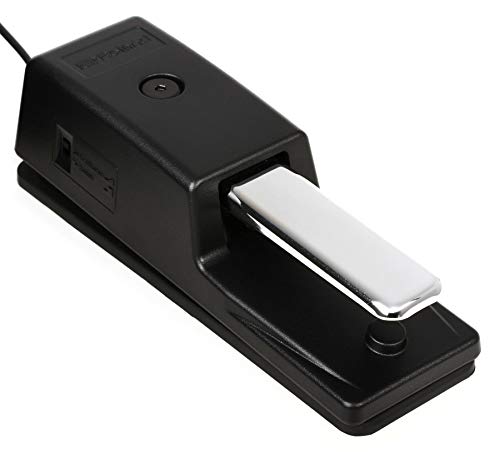
- High-quality pedal with non-slip rubber base
- Extra long cable for stacked keyboard setups
The Roland DP-10 Drum Pad, or more accurately, the Roland DP-10 Real-Feel Pedal, is a versatile sustain or trigger pedal primarily intended for keyboard players or electronic drum kits. Its purpose is to provide an authentic, comfortable feel for sustain on a piano or for triggering sounds from a drum module. This stands in stark contrast to the Electro-Harmonix B9 Organ Effects Pedal, which generates complex organ tones from a guitar signal. The DP-10’s focus is on responsive physical interaction and triggering, offering a tactile experience that complements a keyboardist’s playing. While the B9 is about creating an effect, the DP-10 is about controlling or sustaining an existing sound. Musicians looking for a robust, reliable sustain pedal for their digital piano or a durable trigger pedal for percussion would find the DP-10 essential, but it serves a completely different functional purpose than the B9. It’s about control over existing sounds, not generating new ones.
3. Roland DP-10 Real-Feel Pedal
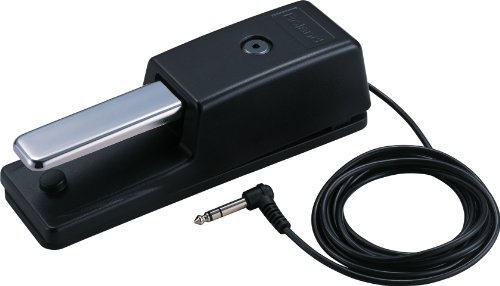
- High-quality pedal with non-slip rubber base
- Extra long cable for stacked keyboard setups
Similar to the previous entry (and often referred to interchangeably due to model variations and naming conventions), the Roland DP-10 Real-Feel Pedal with Non-Slip Rubber Plate specifically emphasizes its “real-feel” and stability features. It’s designed to mimic the resistance and response of an acoustic piano’s sustain pedal, making it a preferred choice for keyboard players seeking an authentic playing experience. Again, this contrasts sharply with the Electro-Harmonix B9 Organ Effects Pedal, which is an effects processor for guitars. The DP-10 is a utility pedal that enhances the playability and expressiveness of another instrument (a keyboard), whereas the B9 fundamentally alters the sound of a guitar. A keyboard player prioritizing a premium, non-slip sustain pedal would naturally opt for the DP-10, as it addresses their specific performance needs directly, providing reliable sustain control rather than introducing new sonic textures into their guitar rig. Both are valuable tools for musicians, but they solve entirely different problems within a musical setup.
The Final Verdict: Is the Electro-Harmonix B9 Organ Effects Pedal a Worthwhile Addition?
After extensive testing and weighing the experiences of a diverse user base, our verdict on the Electro-Harmonix B9 Organ Effects Pedal is overwhelmingly positive. This pedal is an extraordinary piece of engineering, delivering on its promise to transform a guitar into a surprisingly convincing array of classic electric organ sounds. Its robust build, intuitive controls, and particularly its exceptional tracking for single notes and simple chords, make it a powerful and inspiring tool for any guitarist looking to expand their sonic horizons without investing in a dedicated keyboard or wrestling with complex MIDI setups. While it certainly has its quirks – particularly with complex chords and aggressive bending – these are inherent limitations of the technology itself, rather than flaws in the pedal’s design. We recommend it heartily for rhythm players seeking to add lush textures, solo artists wanting to fill out their sound, or anyone desiring to inject vintage organ vibes into their rock, jazz, or pop compositions.
The Electro-Harmonix B9 Organ Effects Pedal is not just another effect; it’s a creative gateway. It excels at what it sets out to do, providing nine distinct, high-quality organ emulations with enough tweakability to integrate seamlessly into diverse musical contexts. If you’re a guitarist who has ever longed for the soul-stirring sound of a Hammond or the psychedelic swirl of a Farfisa, but haven’t found a practical way to incorporate it into your rig, this pedal is your answer. It delivers authentic tones in a sturdy, user-friendly package that will undoubtedly inspire new musical ideas. Don’t just take our word for it; dive into the world of rich, swirling organ tones and experience the magic for yourself. Discover the Electro-Harmonix B9 Organ Effects Pedal and unlock new dimensions of sound today!
Last update on 2026-09-26 / Affiliate links / Images from Amazon Product Advertising API