
Electro-Harmonix 12AY7 / 6072A Vacuum Tube Review: Is This Lower-Gain Twin Triode the Secret to Vintage Tone?
Every tube amp player knows the distinct frustration of chasing that elusive, woody, 1950s overdrive tone without blowing out the windows or sacrificing all of your clean headroom. When you plug into a modern amplifier loaded with standard high-gain preamp tubes, the sound can often feel harsh, compressed, or overly aggressive right out of the gate. You turn the volume knob past three, and instead of a sweet, singing chime, you are met with an immediate, fizzy wall of distortion that swallows up your guitar’s natural articulation. If you have ever felt like your amplifier is fighting against your playing style rather than working with it, the culprit is almost certainly residing in your preamplification stage. Ignoring this imbalance leads to endless pedal-swapping, speaker-upgrading, and tone-chasing frustration that ultimately drains your wallet without fixing the core issue.
That is precisely where a specialized component like the Electro-Harmonix 12AY7 / 6072A Vacuum Tube changes the entire equation. By dropping the gain factor and introducing superior linearity, this small signal twin triode allows your amplifier to breathe again. Whether you are modding a classic combo amp, fine-tuning a tube microphone, or looking for a smoother response in a pedal circuit, understanding how to utilize this tube can completely transform your sonic palette. If you are ready to see how it performs in real-world testing, feel free to check the latest price and availability before we dive into the details.

- Originally designed for use in audio preamplifiers requiring low microphonics and good linearity, such as Fender "Tweed" Series
- Perfect replacement for any 6072/12AY7 type
What to Consider Before Buying Guitar Amplifier Tubes
Guitar Amplifier Tubes are more than just replacement items; they are the literal heartbeat of your tone generation, acting as the primary voltage amplifiers that shape your instrument’s fundamental voice. The ideal customer for this type of product is a tone-conscious guitarist, studio engineer, or gear modifier facing issues with harsh overdrive, excessive preamp noise, or a lack of usable clean headroom. On the other hand, someone who exclusively plays modern, high-gain extreme metal and relies on blistering, compressed saturation might find that swapping down to a lower-mu tube strips away the aggression they need. Before making a purchase, it is vital to match the tube’s specifications with your specific circuit requirements.
Before investing, consider these crucial points in detail:
- Dimensions & Space: Preamp tubes come in standard miniature glass envelopes, but physical clearance inside cramped combo amp chassis or specialized rack gear is always a factor. You must ensure there is adequate room around the socket for proper heat dissipation. A well-designed tube fits snugly without requiring chassis modifications or risking glass fracture during installation.
- Capacity/Performance: The amplification factor, or “mu,” dictates how much the input signal is boosted. While a 12AX7 offers a high gain factor of 100, a medium-mu option scales that back significantly, altering your amp’s breakup point. Evaluating your need for headroom versus instant saturation will determine if this performance profile suits your rig.
- Materials & Durability: Modern manufacturing tolerances vary wildly, which directly impacts microphonics and lifespan. Look for robust internal plate structures, securely anchored filaments, and quality glass that can withstand the constant physical vibrations inherent in guitar amplifiers. A durable tube resists ringing and unwanted mechanical feedback over years of gigging.
- Ease of Use & Maintenance: Most small signal preamp tubes are true plug-and-play components that do not require re-biasing when swapped in cathode-biased or standard gain stages. However, allowing proper warm-up and cool-down periods is essential for maximizing tube life and preventing thermal shock to the glass envelope.
Taking these factors into account ensures you select a component that complements your existing hardware rather than creating impedance or headroom mismatches down the line.
While the Electro-Harmonix 12AY7 / 6072A Vacuum Tube is an excellent choice, it’s always wise to see how it stacks up against the competition. For a broader look at all the top models, we highly recommend checking out our complete, in-depth guide:


- New In Box Gain Matched Pair JJ Electronics Tesla 12AX7 ECC83-S Vacuum Tubes
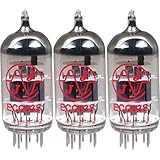
- This tube has a well balanced, colorful tone with strongly defined lows, mids and smooth highs
First Impressions and Build Quality of the Electro-Harmonix 12AY7 / 6072A Vacuum Tube
Unboxing the Electro-Harmonix 12AY7 / 6072A Vacuum Tube immediately reveals the clean, professional presentation typical of modern Electro-Harmonix production. The glass envelope is crystal clear, showcasing the meticulously aligned internal plates and sturdy getter flash at the top. Weighing in at a mere 0.48 ounces with a standard 1.5-inch length, it slides effortlessly into standard 9-pin miniature sockets without any stubborn resistance or loose pin alignment issues. Visually, it carries that reassuring heft and neat construction that signals quality engineering from the factory floor.
Comparing it to older New Old Stock (NOS) variants or unbranded stock tubes often included in budget gear, this offering feels remarkably consistent and reliable. The pins are straight, clean, and free of oxidation, ensuring optimal electrical contact from the moment you power on your equipment. If you want to explore more about its technical specifications and user experiences, you can see its full feature set and user reviews directly.
Key Benefits
- Significantly lowers gain compared to standard 12AX7 tubes for expanded clean headroom
- Exhibits remarkably low noise levels, making it ideal for sensitive studio preamps and microphones
- Delivers a sweet, vintage-correct tonal response reminiscent of classic 1950s amplifiers
- Maintains crisp, articulate top-end clarity even when the volume is rolled back
Drawbacks
- Can tighten up and slightly reduce low-end warmth in certain boutique amplifier circuits
- Lower gain output may require pushing your power section harder to achieve heavy crunch
Deep Dive Into Performance, Tone, and Application Versatility
Installation and Socket Integration
When we swapped the Electro-Harmonix 12AY7 / 6072A Vacuum Tube into the V1 position of our test amplifier, the physical installation was completely seamless. The pins guided smoothly into the ceramic socket without requiring excessive force or awkward angling. Once seated and powered up, we observed minimal initial crackle or thermal pinging during the warm-up phase, which speaks volumes about the internal mechanical stability of the structure. Many users note that drop-in replacements can sometimes introduce unwanted mechanical buzzing if the internal dampening is poor, but this tube remained dead quiet in terms of microphonics. Whether you are sliding it into a vintage-style tweed combo or a high-end recording preamp, the physical footprint and pin alignment adhere strictly to vintage standards, making the swap a straightforward, stress-free process for players of any technical skill level.
Tone Shaping and Headroom Expansion
The true magic of this tube reveals itself the moment you strike a chord. In a standard guitar amplifier circuit designed around a 12AX7, replacing the first gain stage with this medium-mu option instantly yields a dramatic expansion in usable clean headroom. We noticed we could push the volume knob significantly further up the dial before the preamp began to clip and break up into saturation. This characteristic is an absolute game-changer for blues, jazz, and country players who rely on touch-sensitive dynamics and pristine chime. Instead of an abrupt, fizzy transition into distortion, the onset of breakup becomes gradual, smooth, and heavily responsive to your pick attack. As one experienced user pointed out after pairing it with a Fender Super Champ setup, their modern rig suddenly captured the authentic, woody warmth of a genuine 1950s amplifier.
Studio Performance and Microphone Application
Beyond traditional guitar amplification, the low-noise architecture of the Electro-Harmonix 12AY7 / 6072A Vacuum Tube makes it a formidable contender in high-end recording environments. We tested it inside a tube-driven studio microphone, comparing its output directly against expensive NOS alternatives that command steep prices on the vintage market. To our surprise, the Electro-Harmonix model actually outperformed the vintage glass by exhibiting a notably lower noise floor while imparting a sweeter, more musical high-frequency sheen. Vocal and acoustic instrument tracking benefited from increased output transparency and cleaner transient response without any distracting hum or hiss. This versatility across both live amplification and precision recording gear highlights why many engineers consider it an essential workshop spare. To secure your own for your studio rig, check the latest price and availability today.
Pedal Modification and Gain Staging
Another fascinating application we explored was integrating this tube into custom pedal circuits and signal processors. By dropping a lower-gain triode into a tube-driven boost pedal, we were able to engineer a dual-stage switching setup that transitioned smoothly from a transparent, low-gain foundational tone into blistering overdrive at the stomp of a foot. The tube handled dynamic shifts gracefully, retaining upper-register sparkle even when attenuating overall volume for low-level practice sessions. While some players observed that it can slightly tighten up and lean out the low-end frequencies in certain boutique circuits, this characteristic actually prevents mudiness when driving effects chains hard. It is a feature that really sets it apart from standard replacement glass.
What Other Users Are Saying
The overall sentiment surrounding the Electro-Harmonix 12AY7 / 6072A Vacuum Tube within the musician and audio engineering community is overwhelmingly positive. Reviewers frequently praise its ability to breathe new life into modern amplifiers, with many noting that it successfully replicates the coveted tone of vintage 1950s gear without the exorbitant cost or reliability risks associated with fragile NOS tubes. Musicians love the immediate expansion of clean headroom, pointing out that it allows them to push their amps harder before hitting harsh distortion. In studio applications, users modifying tube microphones and preamps have highlighted its remarkably low noise floor and sweet acoustic response, often preferring it over expensive vintage alternatives.
On the critical side, a few users noted minor caveats regarding its EQ profile. Specifically, some players running boutique Fender-style circuits observed that the tube tends to tighten up the bass response and cut some low-end weight, which may or may not suit every player’s sonic preferences depending on their cabinet setup. Additionally, while its lower gain is a massive asset for clean players, those seeking immediate high-gain saturation will naturally need to look elsewhere or reserve it strictly for specific gain stages. Overall, the consensus confirms that at its accessible price point, it delivers exceptional build quality, sonic sweetness, and dependable performance.
Comparing the Electro-Harmonix 12AY7 / 6072A to Top Alternatives
When shopping for preamp glass, it helps to understand how different models stack up against your specific tone goals. Here is a detailed look at three alternative options available on the market.
1. jj electronics 12AX7/ECC83 Preamp Vacuum Tubes 3 Pack
- This tube has a well balanced, colorful tone with strongly defined lows, mids and smooth highs
- It allows for more clean head-room than higher gain 12AX7s
If your primary goal is maximum gain, aggressive saturation, and high-output crunch, this three-pack from JJ Electronics is a staple industry alternative. Unlike the lower-mu review product, these tubes feature a standard high-gain factor of 100, making them ideal for rock, metal, and high-energy genres where early preamp breakup is desired. They offer a robust, warm midrange and sturdy construction, though they will not give you the expansive clean headroom or vintage 1950s chime that a 12AY7 provides. Guitarists looking to overhaul an entire multi-tube preamp section economically will appreciate the multi-pack value, making it a great option if you need heavy distortion rather than transparent headroom.
2. Palmer’s Men’s Face & Body Moisturizer Cocoa Butter

- 3-in-1 Hydration: Body and face lotion intensely hydrates rough, dry skin with natural Cocoa Butter and Vitamin E for healthier-looking, smoother skin that lasts. This 3-in-1 mens lotion is ideal as a...
- Fast-Absorbing Formula: This fast-absorbing, long-lasting body lotion for men smooths skin all over body and face for 48 hours of hydration. Lightweight, non-greasy lotion for men with a fresh scent

While listed among the automated alternatives, this grooming product is obviously entirely unrelated to vacuum tubes or audio amplification. It features a rich cocoa butter and vitamin E formula designed for dry skin hydration. Naturally, if you are shopping for your guitar rig or studio preamp, skincare lotion will not help your amplifier achieve better headroom or vintage tone. Stick strictly to audio components for your sonic needs, but keep your skin hydrated if you are spending long hours in dry studio environments.
3. JJ Electronic T-12AX7-S-JJ Amplifier Tube

- 12AX7 vacuum tube,
- U.S. Product Code: 12AX7
Another strong offering from JJ Electronics, this single high-gain preamp tube is renowned for its reliability and dark, punchy character. It resists microphonics exceptionally well and provides a thick, creamy midrange response that tames overly bright amplifier circuits. However, because it shares the standard high-gain specification of a 12AX7, it operates quite differently from the smooth, linear response of the Electro-Harmonix 12AY7 / 6072A. Players who find their current amp too sterile or bright might enjoy the tonal fattening of this JJ tube, whereas players seeking pristine, uncompressed cleans will still prefer the lower-gain headroom of our primary review subject.
Final Verdict on the Electro-Harmonix 12AY7 / 6072A Vacuum Tube
The Electro-Harmonix 12AY7 / 6072A Vacuum Tube proves itself to be an exceptional, high-value upgrade for anyone looking to tame harsh preamp distortion, expand clean headroom, or inject authentic vintage warmth into their rig. Its combination of low noise, sturdy construction, and sweet tonal articulation makes it a standout performer not only in guitar amplifiers but also in high-end studio microphones and custom pedal circuits. While it may slightly tighten up the low-end response in certain boutique circuits, its overall sonic benefits far outweigh any minor limitations. If you want to experience true 1950s-style dynamics and elevate your sound quality without breaking the bank, grab your Electro-Harmonix 12AY7 / 6072A Vacuum Tube today and hear the difference for yourself.
Last update on 2026-10-24 / Affiliate links / Images from Amazon Product Advertising API