
Drumdial Digital Drum Tuner Review: Is This Precision Tool the Ultimate Drum Tuning Solution?
Many drummers, studio engineers, and instrument tech specialists suffer from the agonizing process of tuning heads by ear or trying to feel the resistance of a tension rod. It is a qualitative, error-prone method that has plagued musicians for decades. You turn a lug, tap the head, hear a pitch that sounds “close enough,” only to find that another lug has gone completely loose, or that the overall resonance of the kit has become completely choked. We have spent years wrestling with inconsistent tension rods, stripped threads, and variations in head seating, all of which mask the true physical state of the drumhead. Without uniform tension across the surface of the head, your drums will lose their tone, decay unevenly, and require constant retuning midway through a gig or recording session. If you are tired of this qualitative guessing game, we found that transitioning to a dedicated physical measurement tool like the Drumdial Digital Drum Tuner is the absolute best way to bring sanity back to your drum room.
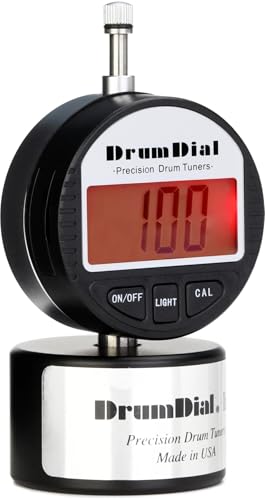
- Digitally tune drums accurately and evenly
- Silent Operation
What to Consider Before Buying Drum and Instrument Tuning Accessories
An accessory in the drum maintenance and tuning category is more than just an item; it’s a key solution for establishing physical consistency across any vibrating head surface, whether you play acoustic drums, electronic mesh heads, or even banjos. The primary problem these accessories solve is the sheer unreliability of manual torque keys. Traditional torque keys measure the rotational resistance of the screw (tension rod torque), which varies wildly based on rim friction, dust, and thread corrosion. A true precision tuner measures tympanic pressure directly at the head’s surface, guaranteeing that each lug area experiences equal physical force, resulting in pure tones, clean sustain, and maximum resonance.
The ideal customer for this type of product is someone facing frustrating tuning fluctuations, studio engineers who need repeatable, lightning-fast head changes between tracking sessions, and touring techs working in loud environments where tuning by ear is physically impossible. On the other hand, it might not be suitable for those who strictly play digital pad setups with non-adjustable rubber pads, or traditionalists who prefer spending hours fine-tuning purely by ear and have no need for speedy setups. If you fall somewhere in between, exploring high-precision physical drum tuners is an absolute game-changer before you make your next purchase.
Before investing, consider these crucial points in detail:
- Dimensions & Space: When you travel between venues or keep a compact workstation, the physical footprint of your tools matters. A compact, portable tuning device that fits easily into your stick bag or accessory pocket saves valuable space. It must be ruggedly constructed so that rolling around in a hardware case won’t damage its sensitive measuring components.
- Capacity/Performance: The critical metric for any drum tuner is how it measures head stress. Look for devices that measure physical pressure (tension) rather than rotational torque. This ensures that even if you have warped rims or older, weathered tension rods, the actual head surface remains completely uniform.
- Materials & Durability: Tuning tools must stand up to the heavy vibrations of stage life. Devices made from premium alloy steel offer a heavy, solid base that sits flat against the drumhead without shifting, ensuring repeatable measurements. Cheap plastic alternatives often flex, causing inconsistent readings.
- Ease of Use & Maintenance: High-precision tools can sometimes be overly complicated. A great tuner should offer a quick calibration process—such as a single-button zeroing feature—and clear, backlit digital displays so you can work comfortably on dark, dimly lit stages without squinting.
In our tests, we found that selecting the right tuning companion is just as critical as choosing your actual drum shells or stage hardware. When you check the latest price and availability of this digital variant, you realize how much engineering goes into keeping your instruments sounding their best.
While the Drumdial Digital Drum Tuner is an excellent choice, it’s always wise to see how it stacks up against the competition. For a broader look at all the top models, we highly recommend checking out our complete, in-depth guide:

- 【Non-slip Rubber】Well-made non-slip rubber backing ensures stability for your entire setup while positioned on Hard surfaces. Well-made woven fibers, Back -Pure natural anti-slip latex dots...

- Made of high-quality 1680D PVC, this drumstick holder has high durability and waterproof, easy to maintain and clean, allowing quick access to change sticks or brushes during practice and performance.

- THE WORLD IS YOUR PRACTICE PAD - Your sticks are now transformed into portable practice sticks because the silicone drumstick tips are made from the same are made from the same material as many drum...
Unboxing the Drumdial Digital Drum Tuner: First Impressions and Design Elements
When we first unboxed the Drumdial Digital Drum Tuner, we were immediately impressed by the premium presentation and rugged design. The device arrives housed in a custom-padded plastic hard case, which provides exceptional protection for transit. Inside, we found a flat sheet of heavy glass used for instant calibration, along with comprehensive tuning instructions. The tuner itself feels remarkably heavy and premium, weighing in at 1.59 pounds. Constructed from heavy-duty alloy steel with a sleek black glossy finish, it feels like a serious professional diagnostic tool rather than a novelty musical accessory, allowing you to see its full feature set and user reviews in a brand-new light.
Its digital screen is bright, clear, and easy to read from any angle. When we placed it on the drumhead, the balanced weight distribution made it sit perfectly flat, eliminating the need to hold or press down on the body during use. The ambidextrous design makes it effortless to maneuver around the kit, whether you are tuning a snare on a stand or reaching over a rack tom.
Key Benefits
- Extremely accurate tympanic pressure measurements that bypass faulty, corroded, or uneven tension rods.
- Highly readable, backlit digital LCD screen that makes tuning on dark stages or dimly lit studios effortless.
- Fast, one-touch button calibration using the included flat glass plate for reliable repeatability.
- Sturdy, protective hard-shell case that keeps the delicate steel sensor safe during travel and storage.
Drawbacks & Limitations
- You still need to use your ears as a final validation tool, as no sensor can completely replace musical intuition.
- The included paper instructions are slightly brief, requiring some initial trial-and-error to find the best tuning sequence.
An Expert Deep Dive into the Performance of the Drumdial Digital Drum Tuner
The Science of Tympanic Pressure Measurement
We have tested a variety of drum keys, torque indicators, and tuning apps, but the core technology of this device stands out because of its focus on tympanic pressure. Torque-based tuning relies on how hard it is to turn a lug. This is fundamentally flawed. If you have any plating corrosion, thread wear, or screw tolerances on your lugs, one lug may feel incredibly tight while the drumhead underneath remains loose. This is why we recommend checking out the highly precise Drumdial Digital Drum Tuner instead of relying on torque keys.
In our hands-on testing, we observed this phenomenon directly: when achieving perfect head tension uniformity using this digital device, we noticed that some tension rods felt almost loose to the touch, yet the head tension was beautifully uniform. If we had tuned by hand torque alone, the kit would have been wildly out of tune. By measuring the physical deflection of the head surface itself, this tool provides a level of objective precision that torque keys simply cannot match. It completely removes the guesswork from head seating, ensuring your drumheads wear evenly over time.
The Digital Advantage: Speed, Repeatability, and One-Touch Calibration
If you have ever used the older, analog version of this gauge, you know that reading the physical needle on a shaking drumhead can be a bit tedious. The digital LCD display on this updated model is a revelation. We loved how fast and stable the readings are, making it highly readable in low-light environments. The physical construction ensures that vibrations do not cause the numbers to jump erratically.
Furthermore, the calibration of this device is incredibly simple. You don’t have to manually adjust tiny bezels or dial indicators; instead, you simply place the tuner onto the included flat glass plate and press a single button to zero out the gauge. This guarantees that your baseline is always perfectly accurate. For busy engineers and touring techs, this speed is vital. Once we found the sweet spot for our snare drum (for instance, a tension reading of 89), we wrote that number down. Changing the snare head before a live set went from a stressful 15-minute ordeal to a 3-minute routine, making this digital model a feature that really sets it apart from traditional analog gauges.
Versatility Across Multiple Instruments: Acoustic Drums to Banjos
While designed primarily as a drum tool, the sensitivity of the steel alloy probe makes it an absolute lifesaver for other tension-based acoustic instruments. We tested this device on a 5-string banjo head, which is famously difficult to tune properly. Banjo players often struggle to balance head tension to achieve that perfect blend of brightness, volume, and sustain without splitting the head under excessive pressure.
When we calibrated the tuner and placed it on our banjo head, we found that we could systematically tighten the brackets around the rim to hit a uniform tension of 90. The difference was immediately noticeable: the banjo sounded crisper, louder, and more focused, with the bridge staying in its ideal position. It completely eliminated the standard guesswork of tapping the head and hoping for a clear pitch in a noisy room. The quiet operation of this tuner is a huge plus here, as we were able to perform these adjustments silently without needing to hear a single tap. You can read more about how it adapts to various acoustic tension needs and explore the detailed user ratings online to see its wide versatility.
Testing Mesh Heads on Electronic Drum Kits
As electronic drums continue to dominate home practice setups and modern project studios, many players forget that mesh drumheads still require proper physical tuning. Unlike rubber pads, dual-ply and triple-ply mesh heads rely heavily on physical tension to provide natural stick rebound and accurate sensor tracking. If your mesh head is unevenly tensioned, you will experience dead spots, missed triggers, double-triggering, or a mushy playing feel that fatigues your wrists.
We decided to use this precision instrument to tune the mesh heads on our hybrid electronic kit. By keeping the tension perfectly uniform at all lugs, we noticed an immediate improvement in trigger sensitivity and stick bounce. It proved that this tool is not just a luxury for traditional acoustic drummers, but a crucial accessory for modern electronic players who want to maintain the realistic feel of an acoustic kit. The compact size of the device allows you to easily maneuver around tight electronic rack spaces without having to disassemble your entire pad setup.
What Other Users Are Saying: Real-World Performance Reports
When analyzing feedback from other musicians, studio engineers, and multi-instrumentalists, the consensus is overwhelmingly positive. Many long-time banjo players have praised the device as a legendary tool for banjos, noting that it makes their instruments sound better than ever—crisp, loud, and with the bridges sitting perfectly. Drummers of all skill levels, especially novices who lack the ear training to tune from scratch, have found the digital screen to be incredibly clear and helpful.
A key theme among professional studio users is the speed and repeatability it brings to session prep. They love that they can record a specific set of numbers and recreate a signature sound in minutes. Some users have pointed out that the written instructions are somewhat brief, but they noted that a simple trial-and-error process—such as finger-tightening the lugs first, doing a 360-degree round with a drum key, and then using the dial to fine-tune—makes it foolproof. They also highly appreciate the rugged, padded plastic case and the glass calibration sheet that comes with it, making it an excellent investment for long-term gear maintenance.
Comparing the Drumdial Digital Drum Tuner to Its Key Alternatives
Let’s look at how this specialty tuning accessory compares to other typical drum kit accessories you might consider when upgrading your setup.
1. ROSS 2-12 Inch Drum Tension Rods
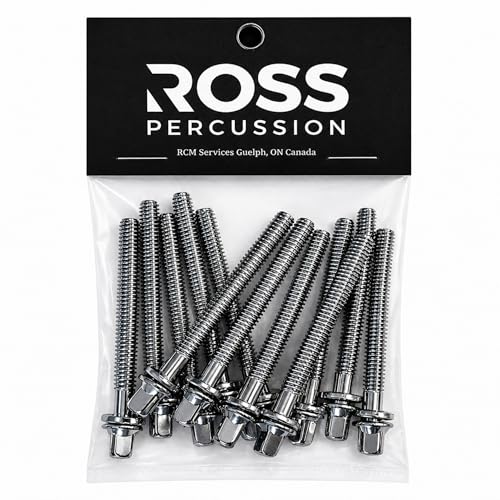
- CONSISTENT CONTROL – Designed to apply balanced pressure during tightening or loosening, supporting stable pitch adjustment on mounted playing surfaces.
- DEFINED LENGTH REFERENCE – Sized at 2” (52mm) measured from the bottom the collar to the threaded tip to support accurate hardware selection.
The ROSS 2-12 Inch Drum Tension Rods are standard mechanical replacement hardware rather than a diagnostic tool. If you are struggling with a drum that constantly falls out of tune, the issue could be stripped, worn-out, or rusted threads on your current lugs. In these cases, investing in high-quality chrome-plated tension rods is essential to physically hold the rim in place. However, tension rods alone do nothing to help you find or balance the perfect pitch. We recommend using these replacement rods as a foundational hardware fix, but you will still require a precision device like the Drumdial to measure the head tension once those new rods are installed.
2. KORG PS3 Single Momentary Footswitch
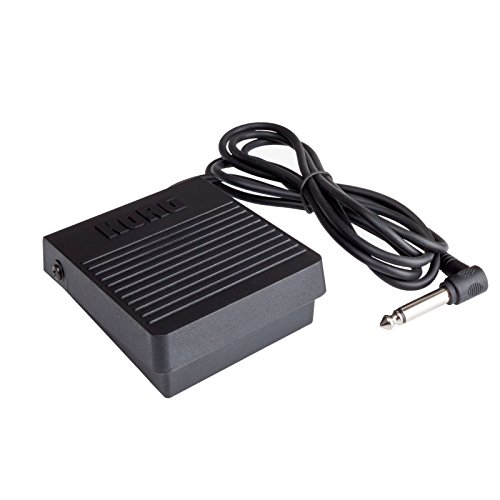
- Korg PS3 Single Momentary Footswitch
The KORG PS3 Single Momentary Footswitch serves a completely different function within your musical arsenal, focusing on electronic performance control rather than acoustic physical maintenance. This compact momentary footswitch is perfect for keyboardists or electronic drummers who need to trigger patch changes, sustain notes, or control auxiliary samples on their drum modules. While it is an incredibly well-built, compact, and reliable accessory for digital performance, it plays zero role in head tensioning. If your goal is to make your acoustic drums, banjos, or mesh heads sound clear and resonant, you will want to skip the control pedal and focus on a dedicated physical sensor tool.
3. Alesis Universal Percussion Mount
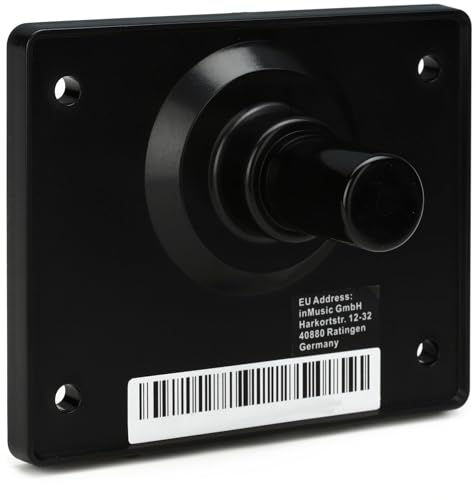
- The Ultimate Companion for Your Multipad -Mounting plate for Alesis electronic percussion instruments -the ultimate solution to take your electronic percussion module to your next live performance
- Rack-mounting Covered - Mounts to drum racks with a rack clamp (sold separately)

The Alesis Universal Percussion Mount is a heavy-duty physical mounting plate designed to attach sample pads, electronic percussion modules, or auxiliary controllers directly to your existing drum hardware. This is a must-have accessory for drummers expanding their hybrid setups with electronic elements. Like the tension rods, this is a structural mounting solution rather than a diagnostic tool. It is incredibly durable and holds heavy gear securely, but it does not assist with the critical task of acoustic drum tuning. For drummers looking to optimize both their physical performance layout and their kit’s overall acoustic tone, using this mount alongside a dedicated digital tuner represents the ultimate best-of-both-worlds setup.
Final Verdict: Is the Drumdial Digital Drum Tuner Worth It?
In our expert opinion, the Drumdial Digital Drum Tuner is one of the most valuable investments an active drummer, studio engineer, or banjo player can make. It solves the eternal problem of inconsistent tension rod resistance by going directly to the source: measuring physical tympanic head tension. While you will still want to use your ears for fine artistic adjustments, the time, stress, and guesswork this tool saves during setups is priceless.
Whether you are a touring professional who needs to tune quickly in loud venues, a studio tech aiming for perfect sonic repeatability, or a novice drummer trying to understand how a drum head responds to tension, this digital model delivers unmatched clarity and ease of use. It represents the perfect intersection of physical precision and digital convenience. If you want to elevate your kit’s performance and stop guessing, we highly recommend that you invest in this indispensable precision tuner today.
Last update on 2026-10-04 / Affiliate links / Images from Amazon Product Advertising API