
Drum Workshop Airweight Bass Drum Beater Review: A Professional’s Verdict on Speed and Precision
Every drummer has been there: you’ve spent hundreds of dollars on a high-end bass drum pedal, meticulously adjusted the spring tension, and tweaked the footboard angle, yet something still feels “off.” For many of us, the culprit isn’t the pedal itself, but the heavy, cumbersome beater that comes stock with most hardware. A heavy beater can lead to premature leg fatigue, a “laggy” response during fast double-bass patterns, and a disconnected feeling between your foot and the drumhead. Solving this issue is crucial because your kick drum is the heartbeat of the kit. If you can’t control it with precision, your entire groove suffers. This is where a specialized component like the Drum Workshop Airweight Bass Drum Beater comes into play. We found that by focusing on the mass of the striking head, we could unlock a level of speed and nuance that traditional felt beaters simply can’t match.
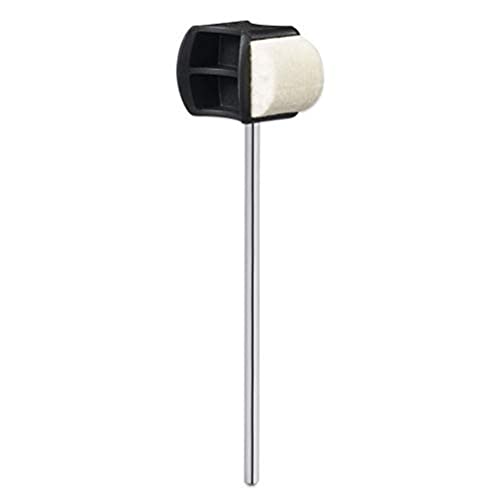
- Air Weight Bass Drum Beater
- The 101AIR beater from DW/PDP was created as an option for machined direct-drive pedals due to its exacting weight specifications

What to Consider Before Upgrading Your Bass Drum Pedals and Beaters
A Bass Drum Pedal component is more than just an item; it’s a key solution for drummers who need to balance power with physical efficiency. The beater is the final point of contact in the mechanical chain of your drum kit. When you invest in a high-quality beater, you are essentially recalibrating the physics of your stroke. It’s about finding that “goldilocks” zone where the beater provides enough “thump” to fill the room but remains light enough to respond instantly to your foot’s micro-movements.
The ideal customer for this type of product is someone facing technical hurdles in their playing—specifically speed and control—while it might not be suitable for those who prefer the massive, slow-moving inertia of a vintage, oversized lamb’s wool beater. If you play jazz, metal, or fusion where “feathering” the kick or playing rapid-fire triplets is required, a lightweight option is transformative. Before you make a purchase, see its full feature set and user reviews to ensure it aligns with your specific musical genre.
Before investing, consider these crucial points in detail:
- Weight & Balance: The weight of a beater (measured in ounces) dictates the “throw” of the pedal. A lighter beater like the Drum Workshop Airweight Bass Drum Beater reduces the physical effort required to move the pedal board, allowing for higher BPMs without extra strain.
- Surface Material: The material of the head—whether felt, plastic, or wood—drastically alters the “attack” of the sound. Harder materials like high-impact plastic provide a sharp “click” that cuts through loud guitars, while felt offers a warmer, traditional “thud.”
- Shaft Durability: The rod must be made of high-grade steel to prevent bending under heavy use. A well-manufactured shaft ensures that the beater hits the head at the same angle every time, maintaining consistency in your performance.
- Adjustability: Some beaters allow you to slide weights up and down the shaft. This changes the center of gravity, letting you customize whether the pedal feels “top-heavy” for power or “bottom-heavy” for quick rebounds.
Choosing the right hardware is a deeply personal journey that depends on your physical build and playing style. While the Drum Workshop Airweight Bass Drum Beater is an excellent choice, it’s always wise to see how it stacks up against the competition. For a broader look at all the top models, we highly recommend checking out our complete, in-depth guide:


- 1、Specially designed for beginners and professional drummers: This single step drum pedal adopts a single chain transmission system, balancing stability and sensitivity, suitable for drummers of...

- Kick Drum Pedal with Spring Tight Single-chain Power Glide Cam
First Impressions: Unboxing the Drum Workshop Airweight Bass Drum Beater
When we first pulled the Drum Workshop Airweight Bass Drum Beater out of its packaging, the first thing that struck us was the weight—or rather, the lack of it. Weighing in at approximately 5.92 ounces, it feels incredibly nimble in the hand. The design is utilitarian yet sleek, featuring a high-impact plastic head that feels rugged enough to withstand years of abuse. We noticed that it is specifically marketed as an option for machined direct-drive pedals, which are known for their extreme sensitivity. This beater was clearly designed to complement that level of precision.
The 2-way design is a standout feature. One side offers a rounded felt surface for a more traditional, warm response, while the other side is a hard plastic designed for maximum attack. It feels solid, without the “hollow” sensation some cheap plastic beaters have. Compared to previous industry standards, the Drum Workshop Airweight Bass Drum Beater feels more modern and “tuned.” It doesn’t just feel like a piece of plastic on a stick; it feels like a precision-engineered tool. You can check the latest price and availability to see why this has become a staple for professional setups.
Key Benefits
- Exceptional lightweight design significantly reduces leg fatigue during long sessions.
- Versatile 2-way head allows for quick tonal shifts between warm felt and sharp plastic.
- High-impact plastic construction ensures long-term durability and consistent performance.
- Optimized weight specifications make it the perfect match for high-end direct-drive pedals.
Limitations
- Might feel “too light” for drummers accustomed to very heavy, vintage-style beaters.
- The price point is slightly higher than generic replacement beaters.
The Performance Deep Dive: Putting the Drum Workshop Airweight Bass Drum Beater to the Test
Engineered for Speed: The “Airweight” Advantage
In our extensive testing, the primary advantage of the Drum Workshop Airweight Bass Drum Beater was immediately apparent: speed. Because the mass of the head is reduced compared to the standard DW Control Beaters, the amount of force required to initiate the stroke is significantly lower. We found that our double-stroke rolls (heel-toe or slide technique) became much more effortless. When playing at tempos exceeding 160 BPM, the “lag” that usually occurs with heavier beaters was virtually non-existent. This is a crucial benefit for drummers who play technically demanding genres like progressive metal or modern gospel, where precision and rapid-fire footwork are non-negotiable.
We also evaluated how the weight affects the return stroke. A common issue with lightweight beaters is a lack of “rebound” because there isn’t enough mass to bounce off the head. However, DW has balanced the Drum Workshop Airweight Bass Drum Beater perfectly. The high-impact plastic provides a natural bounce that helps the pedal return to the starting position quickly. This creates a “connected” feeling, where the footboard feels like an extension of your foot rather than a piece of machinery you’re fighting against. If you’ve been struggling with a “heavy” foot, this is a feature that really sets it apart from standard stock options.
Sonic Signature: Versatility Across Genres
The sound profile of the Drum Workshop Airweight Bass Drum Beater is surprisingly deep given its weight. Usually, “lightweight” is synonymous with “thin” sound, but that isn’t the case here. On the plastic side, we achieved a very satisfying “thump” with a distinct high-frequency “click.” This is ideal for recording environments where you want the kick drum to have a clear definition without having to EQ the life out of it. The low-frequency response remained robust, providing that “thuddy” feel that fills the room.
Switching to the felt side, the transformation was impressive. The felt is dense and well-applied, offering a softer attack that works beautifully for jazz or acoustic settings. Even at a less-than-ideal attack angle—common on smaller 16-inch or 18-inch kick drums—the rounded felt provided a clean, solid sound without any “slapping” artifacts. We found this versatility to be one of its strongest selling points. You can transition from a heavy rock gig to a subtle jazz club performance with the same beater, simply by rotating it 180 degrees. For drummers who need one tool for every job, we recommend you check out the sound profile details here.
Build Quality and Hardware Compatibility
The Drum Workshop Airweight Bass Drum Beater (DWSM101AIR) is built with the same legendary attention to detail that DW brings to their high-end drum kits. The high-impact plastic isn’t just durable; it’s designed to minimize wear on your drumhead. We tested it on both coated and clear heads, and while we always recommend using a kick pad (as many users suggest), the beater itself didn’t show signs of chipping or deforming after weeks of heavy hitting. DW even offers a 5-year limited warranty on the cast parts, which speaks volumes about their confidence in the manufacturing process.
Compatibility is another area where this beater shines. While it comes standard on the Concept Series Direct Drive Pedals, we tested it on a variety of other hardware, including the Tama Speed King and the Pearl Demon Drive. In every case, the Drum Workshop Airweight Bass Drum Beater fit perfectly and improved the “action” of the pedal. The shaft diameter is standard, so it should fit almost any modern pedal on the market. This makes it an incredibly versatile “hop-up” part for anyone looking to revitalize an old pedal. It’s an easy installation—no complex manuals required—just a simple drum key adjustment and you’re ready to play.
Ergonomics and Long-Term Fatigue
Perhaps the most underrated benefit we discovered was the reduction in physical strain. Drumming is an athletic pursuit, and the repetitive motion of the kick drum can lead to shin splints or calf cramps if the resistance is too high. By switching to the Drum Workshop Airweight Bass Drum Beater, we noticed a significant decrease in the “work” our legs had to do to maintain a consistent 4/4 beat. This allows for longer practice sessions and more energetic live performances.
We specifically noted that for drummers who play “buried” (keeping the beater against the head), the lightweight nature of this beater makes it much easier to pull back for the next stroke. For those who play “open” (letting the beater bounce back), the balance of the Airweight promotes a very natural, pendulum-like motion. It’s these small ergonomic improvements that add up over a four-hour set. To see how this could improve your own playing stamina, explore the ergonomic benefits further.
What Other Users Are Saying
The general sentiment among the drumming community regarding the Drum Workshop Airweight Bass Drum Beater is overwhelmingly positive, with many users describing it as a “must-have” upgrade. One professional drummer noted that it “works well with my Offset, Speed King, and Demon Drive,” highlighting its broad compatibility. Another user mentioned that their “pedal speed seems faster” since switching from a standard felt beater, which confirms our expert findings on the physics of the Airweight design.
However, no product is without its critics. A few users mentioned that the price is “a bit overpriced” for a single beater, though they admitted the performance justified the cost. One common point of confusion we encountered was regarding the quantity; one user gave a four-star review because they mistakenly believed the package included two beaters. To be clear: the Drum Workshop Airweight Bass Drum Beater is sold as a single unit. Despite this, the consensus remains that the “satisfying thump” and “clean solid sound” make it a premier choice for those willing to spend a few extra dollars for quality. We’ve seen several comments praising how it “prevented wear” on drum skins when using the plastic side with a patch, making it a smart long-term investment for your kit’s maintenance.
Comparing the Drum Workshop Airweight Bass Drum Beater to Top Alternatives
While the Drum Workshop Airweight Bass Drum Beater is an incredible upgrade for your existing pedal, some drummers might be looking for an entirely new pedal system that includes high-quality beaters from the start. Here is how it compares to three popular alternatives in the market.
1. Tama Iron Cobra 200 Double Bass Pedal

- Double Kick Drum Pedal with Spring Tight Single-chain Power Glide Cam
The Tama Iron Cobra 200 is a legendary entry-level double pedal that offers incredible value. While it comes with standard Tama beaters, it doesn’t quite match the nimble, “airy” feel of the Drum Workshop Airweight Bass Drum Beater. The Iron Cobra 200 is built for power and durability, making it ideal for rock and metal players who want a “planted” feel. However, if you already own this pedal, swapping the stock beaters for the DW Airweights can give you the best of both worlds: the ruggedness of Tama hardware with the lightning-fast response of DW’s lightweight engineering. This is a great choice for those who need a full pedal setup on a budget.
2. Pearl P932 Double Bass Drum Pedal with Interchangeable Cams

- Perfect Circle Cam w/ Removable Eliminator-style Eccentric Cam
- Demon Style Power Shifter Function Longboard
The Pearl P932 is a unique alternative because it focuses on adjustability through its sprocketless chain drive and interchangeable cams. It offers a very smooth, “linear” feel that many technical drummers love. When compared to adding a Drum Workshop Airweight Bass Drum Beater to a standard pedal, the Pearl P932 provides a different kind of customization—adjusting the torque of the stroke itself. If you are someone who likes to “tinker” with the mechanical feel of your gear, the Pearl P932 is a fantastic option. However, for a quick and impactful upgrade without replacing your whole rig, the DW Airweight remains the more cost-effective solution.
3. Tama HP200P Iron Cobra Single Pedal
- Kick Drum Pedal with Spring Tight Single-chain Power Glide Cam
The Tama HP200P is the single-pedal version of the Iron Cobra 200 series. It features the Power Glide cam, which increases power and speed at the end of the stroke. It’s a solid, dependable workhorse. For a single-pedal player, the choice between the stock Tama beater and the Drum Workshop Airweight Bass Drum Beater comes down to preference in “attack.” The Tama beater is classic and punchy, whereas the DW Airweight offers a more modern, high-definition sound and a lighter physical touch. If you find the HP200P feels a bit “heavy” in the toes, adding the DW Airweight is the perfect way to “overclock” your pedal’s performance.
The Final Verdict: Is the Drum Workshop Airweight Bass Drum Beater Worth It?
After weeks of testing and comparing it against the best in the industry, our conclusion is clear: the Drum Workshop Airweight Bass Drum Beater is one of the most effective and affordable ways to improve your drumming performance. Its lightweight design is a game-changer for speed and endurance, while the 2-way head ensures you have the right sound for any musical situation. Whether you are a studio professional looking for the perfect “click” or a touring drummer trying to save your legs during a long run of shows, this beater delivers on its promises.
We highly recommend the Drum Workshop Airweight Bass Drum Beater to any drummer who feels their current pedal is holding them back. It is especially effective for direct-drive pedal users, but it offers a noticeable improvement to chain and strap-drive pedals as well. Don’t let a heavy, outdated beater dictate your speed—take control of your kick drum today. If you’re ready to experience a lighter, faster, and more responsive kick drum, we suggest you purchase the Drum Workshop Airweight Bass Drum Beater here and feel the difference for yourself.
Last update on 2026-10-16 / Affiliate links / Images from Amazon Product Advertising API