
Dreamtop Guitar Radius Gauge Set Review: The Affordable Key to Perfect String Action
I remember the first time I tried to set up my own Stratocaster. I had the hex keys, a tuner, and a lot of misplaced confidence. I adjusted the bridge saddles by eye, thinking I could just follow the curve of the neck. Half an hour later, the high E was choking out on every bend, and the D string felt like it was miles away from the fretboard. It was a mess. That’s the moment I realized that “eyeballing it” is the enemy of playability. To get that buttery-smooth action, you need precision, specifically when it comes to matching your bridge saddles to the radius of your fretboard. This is where a tool like the Dreamtop Guitar Radius Gauge Set becomes an absolute game-changer for the DIY musician. Without these measurements, you’re essentially guessing, and guessing leads to uneven string tension and inconsistent performance.
The problem isn’t just about buzz; it’s about the physical relationship between your hands and the instrument. When the arc of your strings doesn’t match the arc of your frets, your muscle memory takes a hit. You might find yourself fighting the guitar rather than playing it. Many players shy away from doing their own work because they fear the technicality of it, but having the right tools—like those found when you see its full feature set and user reviews—demystifies the process and puts the power back in your hands. Investing in a dedicated gauge set saves you from the recurring costs of professional setups and ensures your instrument is always tailored to your specific touch.
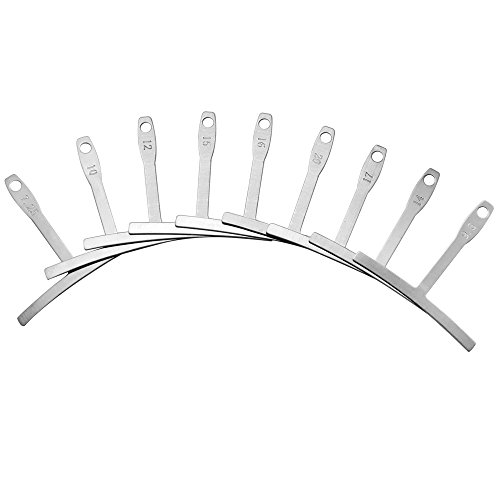
- 【Usage Range】All kinds of electric guitar, electric bass, acoustic guitar, acoustic guitar, electric box guitar fretboard measured in radians, and radians to adjust the strings piano code
- 【Accurate Measurement】Fast, accurate bridge saddle adjustment,obtain accurate measurements of your instrument's fretboard radius,saddle radius nut radius from either the top or the bottom radius...
What to Consider Before Buying Guitar Setup Tools
A guitar tool is more than just an item; it’s a key solution for maintaining the longevity and playability of your instrument. Whether you are a bedroom hobbyist or a gigging professional, the ability to diagnose and fix minor setup issues is invaluable. These tools solve the problem of “fighting the instrument” by allowing for micro-adjustments that a standard ruler simply can’t handle. The main benefit is consistency; once you find your preferred radius and height, you can replicate it across every guitar in your collection, ensuring a unified feel no matter which instrument you pick up.
The ideal customer for this type of product is someone facing high action, fret buzz, or a general lack of comfort during play, while it might not be suitable for those who prefer to leave all technical work to a certified master luthier and have the budget to do so. However, for most of us, the Dreamtop Guitar Radius Gauge Set offers a middle ground of professional-grade accuracy without the professional-grade price tag. If you are looking for a complete overhaul of a vintage instrument, you might consider professional shop tools, but for routine maintenance and setup, these are perfect.
Before investing, consider these crucial points in detail:
- Accuracy & Range: It is vital to ensure the gauges cover the specific radius of your instrument. Most modern guitars range from 9.5″ to 12″, while vintage models go as low as 7.25″. A good set should cover the full spectrum to remain versatile across different brands like Fender, Gibson, and Ibanez.
- Material & Build Quality: Look for stainless steel construction. Plastic gauges can warp over time or be easily nicked by metal strings, leading to inaccurate readings. Steel ensures that the arc remains true even after years of being tossed in a toolbox.
- Ease of Use (Understring vs. Overstring): Not all gauges are created equal. The ability to slide a gauge under the strings at the bridge is a massive time-saver, as it allows you to check the radius while the guitar is under tension, which is the only way to get a truly accurate setup.
- Edge Finishing: Mass-produced metal tools can sometimes have “burrs” or sharp edges from the stamping process. While this doesn’t affect the accuracy of the measurement, it can scratch your hardware or fretboard if you aren’t careful, so checking for a smooth finish is a must.
Understanding these factors will help you choose a tool that doesn’t just sit in your drawer but actually improves your relationship with your guitar. Transitioning from a novice to someone who understands the geometry of their instrument is a rewarding journey.
While the Dreamtop Guitar Radius Gauge Set is an excellent choice for geometry and setup, it’s always wise to see how it stacks up against the competition. For a broader look at all the top models and how to improve your overall playing experience, we highly recommend checking out our complete, in-depth guide:

- Comprehensive Tool Set: This guitar tool kit comes with Hex Wrenches, Files, Screwdriver, Steel Ruler, String Action Ruler, Guitar String Winder Cutter Pin Puller, Nut Bridge Saddle Grooves Sanding...
- ALL-IN-ONE GUITAR STRING WINDER TOOL - The ergonomic and high-quality design of the D'Addario Accessories Pro-Winder makes string changes quicker and easier than ever before with its built-in...


- RELIABLE TUNING, NO MATTER WHERE YOU PLAY: By sensing vibrations directly from the instrument, tuning stays accurate in loud venues, quiet practice rooms, and everything in between, so you can focus...
First Impressions and Key Features of the Dreamtop Guitar Radius Gauge Set
When the Dreamtop Guitar Radius Gauge Set arrived, my first thought was about the sheer utility of the package. It’s a 9-piece set made of stainless steel, covering everything from a vintage 7.25″ radius to a very flat 20″ radius found on modern shred machines. The unboxing experience was straightforward—no flashy packaging, just the tools themselves. They have a weighty, substantial feel that immediately suggests durability. Unlike some thinner, flimsy alternatives, these gauges don’t bend under light pressure, which is critical for maintaining an accurate arc.
The “T-shaped” design is the standout feature here. This allows you to measure from above the strings or, more importantly, from underneath. Most of us have used the standard “notched” gauges before, but these understring gauges are far more intuitive for bridge saddle height adjustments. You can check the latest price and availability and see that for the cost, getting a full set of nine is a significant value compared to buying individual gauges from high-end luthier supply houses. My initial concern was the edge finish, as I’d heard reports of sharpness, but upon inspection, mine were relatively clean, though I could see where a quick hit with some fine sandpaper might improve the “hand feel.”
Key Benefits
- Comprehensive 9-piece set covering all common radii from 7.25″ to 20″.
- Highly durable stainless steel construction that resists bending and wear.
- Etched markings for long-term visibility (won’t rub off like printed ink).
- Versatile T-shape design allows for both understring and overstring measurements.
Drawbacks
- Edges can be sharp straight out of the box and may require light sanding.
- The T-section is quite wide, which may cause clearance issues on some bridge plates (like vintage Telecasters).
Deep Dive: Putting the Dreamtop Guitar Radius Gauge Set to the Test
Over the last few weeks, I’ve put the Dreamtop Guitar Radius Gauge Set through its paces on everything from a vintage-spec Telecaster to a modern Ibanez with a 15.75″ radius. The primary goal of any radius gauge is to ensure the strings follow the curve of the fretboard. If your fretboard has a 9.5″ radius and your strings are set flat, the middle strings (D and G) will be too close to the frets, while the outer strings (E and E) will be too high. This set aims to fix that imbalance with surgical precision.
Accuracy and Measurement Consistency
The most important factor for any measuring tool is accuracy. To test the Dreamtop Guitar Radius Gauge Set, I compared them against a high-end set I’ve owned for years. Using a digital caliper and a known-radius fretboard, I found that the Dreamtop gauges are remarkably spot-on. The 9.5″ gauge matched my Fender neck perfectly, with no daylight visible between the gauge and the frets. This confirmed my suspicion that you don’t need to spend forty dollars to get a tool that is mathematically correct. We found that the laser-cutting process used for these stainless steel plates is incredibly consistent across the entire 9-piece range.
One detail I particularly appreciated was the etched labeling. In a dark workshop or a cluttered toolbag, being able to quickly identify the 12″ gauge from the 10″ gauge is vital. Because the numbers are etched into the steel rather than printed on the surface, they won’t fade or wear away after years of being handled with sweaty or oily hands. This longevity is a feature that really sets it apart from plastic alternatives. For anyone serious about their setup, the reliability of these markings ensures that this is a “buy once” kind of tool.
The Utility of the Understring Design
The “T-shape” of the Dreamtop Guitar Radius Gauge Set is where the real magic happens during a setup. Traditionally, you would have to remove strings or use notched gauges that fit over the strings to check the radius. With these, you can simply slide the gauge under the strings right at the bridge. This allows you to adjust your individual saddle heights while the guitar is fully tuned. It’s an iterative process: adjust the screw, check the gauge, adjust again. Being able to do this under tension is the only way to account for how the neck bows under the pull of the strings.
During my testing on a Les Paul with a Tune-o-matic bridge, the process was seamless. The gauge sat comfortably on the bridge, and I could clearly see which saddles needed to be filed or adjusted. However, as some users have noted, the width of the gauge can be a double-edged sword. On my vintage Telecaster with a “ashtray” style bridge, the wide wings of the gauge occasionally hit the sides of the bridge plate. It’s not a dealbreaker—you can still angle the gauge to get a reading—but it’s something to be aware of if you primarily work on guitars with very recessed or walled-in bridges. Despite this, the ability to measure radius from below or above gives you a level of flexibility that standard gauges just can’t match.
Build Quality and Professional-Grade Durability
When you’re dealing with metal tools on a finished instrument, build quality isn’t just about how long the tool lasts; it’s about the safety of your guitar. The Dreamtop Guitar Radius Gauge Set is made of thick stainless steel. It feels rugged and professional. I wasn’t worried about the gauges bending in my gig bag, which is a common issue with thinner aluminum tools. They are substantial enough to stay flat, which is the whole point of a radius gauge. If the tool itself is warped, your measurements are useless. These stayed perfectly true throughout my testing.
However, we must address the “sharp edge” issue mentioned in several user reviews. My set arrived with slightly “crisp” edges. While they didn’t cut me, I could see how they might scratch a delicate nitrocellulose finish if I were careless. Taking a cue from some experienced users, I spent five minutes with some 600-grit sandpaper and a bit of steel wool to chamfer the edges. After this quick “burnishing,” they felt like a premium boutique tool. If you’re a DIY enthusiast, this minor bit of maintenance shouldn’t scare you away. In fact, it’s a small price to pay for a tool that performs as well as ones costing four times as much. You can get that professional feel with just a tiny bit of elbow grease.
Versatility Across Instruments
One of the most impressive aspects of this set is its versatility. While marketed primarily for guitar, these gauges are equally effective for four, five, and six-string basses. The range of 7.25″ to 20″ covers almost every mass-produced stringed instrument on the market today. I used the 7.25″ gauge to reset the bridge on a vintage-style P-bass and then immediately switched to the 16″ gauge for a modern acoustic-electric setup. The gauges handled both with ease.
For acoustic players, these are particularly useful for checking saddle curvature. Often, acoustic saddles are one solid piece of bone or plastic. To lower the action while maintaining the radius, you have to sand the bottom of the saddle perfectly flat, but you also need to make sure the top curve matches the fretboard. By using the Dreamtop Guitar Radius Gauge Set, you can verify the neck radius and then use the same gauge to check your work as you reshape the top of the saddle. It turns a “best guess” job into a precision task. This level of utility makes it an essential luthier tool for anyone’s maintenance bench.
What Other Users Are Saying
The general consensus among the community is that the Dreamtop Guitar Radius Gauge Set represents an incredible value, though it requires a “maker’s touch” to reach its full potential. Many users have echoed my findings regarding the accuracy. One user noted that they compared the 9.5″ gauge to their Fender neck and found it to be a “perfect match,” confirming that the manufacturing tolerances are high where it matters most. Another user praised the speed of shipping and the fact that these are a much more “economical choice” compared to boutique brands.
However, the feedback isn’t without its warnings. The most common complaint involves the sharpness of the stamped metal. One user mentioned they actually cut their finger and had to use steel wool to smooth the edges. Another noted that the width of the gauges made them difficult to use on certain bridge types, specifically Telecasters with bridge plates. Despite these minor grievances, most users agree that “they do the job” and are a “good purchase” for anyone willing to spend five minutes on finishing. It seems the prevailing sentiment is that for the price of a couple of sets of strings, you’re getting a tool that provides professional-level results.
Comparing the Dreamtop Guitar Radius Gauge Set to Top Alternatives
While the Dreamtop set is a fantastic dedicated tool for radius work, a complete workbench requires a few other specialized items. Here is how it compares to other essential setup tools on the market.
1. StewMac Fret End Dressing File
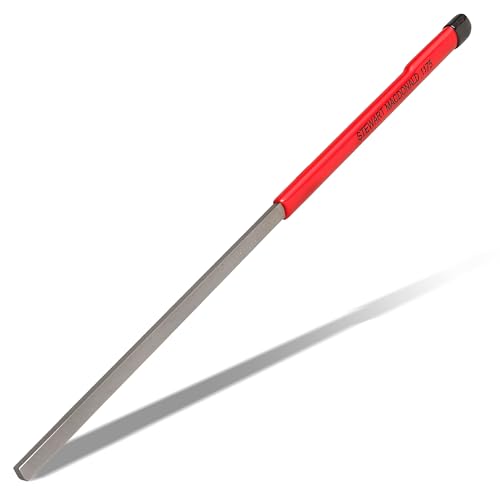
- STEWMAC ORIGINAL DESIGN: Get the Original Fret End Dressing File that's trusted by luthiers worldwide
- SAFE EDGE DESIGN: The StewMac Fret End Dressing File's Smooth, non-marring ground "safe" edges safely glide on the fingerboard while the fine-toothed sides round the fret for a buttery smooth neck
While the Dreamtop Guitar Radius Gauge Set helps you set the arc of your strings, the StewMac Fret End Dressing File is what you use once those strings are off to handle “fret sprout.” Unlike the Dreamtop gauges, which are for measurement, this is a precision cutting tool. If you find that the Dreamtop gauges reveal your frets are level but your fingers are getting snagged on the sides of the neck, this StewMac file is the professional choice for rounding and smoothing those sharp fret ends. It’s a more specialized and expensive tool, but for those moving from simple setups into actual fretwork, it’s the gold standard. Someone who is already comfortable sanding the edges of their Dreamtop gauges will find this file to be a natural next step in their luthier journey.
2. MusicNomad 26 pc. Guitar Tech Set

- Most comprehensive tool set to make key adjustments on your electric guitar, acoustic guitar and bass guitar
- Ergonomic large handle with universal 1/4" adapter
If the Dreamtop Guitar Radius Gauge Set is a scalpel, the MusicNomad 26 pc. Guitar Tech Set is the entire surgical theater. This set includes all the screwdrivers and wrenches you need to actually turn the screws that the Dreamtop gauges tell you to move. We recommend this for the player who has nothing and wants a “one and done” kit for their bench. While it doesn’t include specific radius gauges, it provides the mechanical means to act on the measurements you take. It’s a great companion to the Dreamtop set, ensuring you have the right-sized bit for those tiny, easily-stripped bridge saddle screws.
3. MusicNomad Precision Nut Height Slotting Gauge Tool

- Gauge Includes the 3 Most Common Nut Height Measurements (.016", .018", .020") for Electric, Acoustic, Classical & Bass Guitars. Plus 3 additional sizes (.012”, .014”, .022”) to accommodate a...
- Precision, Smooth Stainless Steel without the Annoying, Messy Oil Found on Traditional Feeler Gauge Sets
The Dreamtop Guitar Radius Gauge Set handles the bridge end of the guitar, but the MusicNomad Precision Nut Height Slotting Gauge Tool is designed for the other end: the nut. Nut height is arguably even more important for playability than bridge height. This tool measures the distance between the string and the first fret with extreme accuracy. While the Dreamtop set tells you if your arc is correct, the MusicNomad tool tells you if your nut slots are cut too deep or too shallow. Together, these two tools provide a complete picture of your guitar’s geometry, allowing for a professional-grade setup from headstock to tailpiece.
Final Verdict: Is the Dreamtop Guitar Radius Gauge Set Worth It?
After extensive testing and comparison, the Dreamtop Guitar Radius Gauge Set is an absolute “must-have” for any guitarist who wants to take control of their instrument’s playability. Its primary strength lies in its accuracy and the durability of its stainless steel construction. While the edges may require a moment of your time to smooth out, the precision you gain in your setups is worth every penny. It bridges the gap between guessing and knowing, allowing you to achieve that perfect, buzz-free action that makes a guitar feel like an extension of your body rather than a piece of wood and wire.
I recommend this set specifically to DIY players and intermediate hobbyists who are tired of paying for setups and want to learn the craft themselves. It’s also a great secondary set for pros who want something reliable to keep in their gig bag. If you’re ready to stop struggling with uneven strings and want to finally dial in your favorite instrument, you should pick up this gauge set today and start your journey toward the perfect setup. Your fingers (and your wallet) will thank you.
Last update on 2026-10-16 / Affiliate links / Images from Amazon Product Advertising API