
DR Strings DDT Bass Guitar Strings Review: The Ultimate Solution for Low-Tuned Stability or Just Hype?
If you have ever played in a band that tunes down to Drop C, B, or even lower, you know the struggle intimately. I remember a specific gig where I tried to push a standard set of medium-gauge strings down to Drop C#. By the second song, my low string felt like a wet noodle, flapping against the frets with zero definition and losing its pitch every time I dug in with a pick. It was embarrassing, and it completely killed the foundation of our sound. This is the exact problem that leads players to seek out a specialized product like the DR Strings DDT Bass Guitar Strings. When you are fighting for clarity in a dense mix of distorted guitars, you cannot afford “mud.” You need tension, you need stability, and you need a string that actually remembers what note it is supposed to be. Failing to find a proper solution usually means constant mid-set tuning adjustments and a bass tone that sounds more like a percussive thud than a musical note.

- Stainless Steel Heavier Bass Strings - .055-.115 Heavier
What You Must Consider Before Choosing Your Next Set of Bass Guitar Strings
A set of Bass Guitar Strings is more than just an item; it’s a key solution for the very foundation of your instrument’s voice. The right strings dictate how your bass feels under your fingers, how much effort you have to put into your fretting hand, and, most importantly, how your instrument interacts with your amplifier. Choosing the wrong set can lead to neck tension issues, poor intonation, and a tone that lacks the necessary harmonics to be heard in a live environment.
The ideal customer for this type of product is someone facing the challenges of modern heavy music—specifically players who frequently drop their tuning but want to maintain the “snap” and tension of a standard setup. It is a godsend for metal, hardcore, and doom bassists. However, it might not be suitable for those who strictly play vintage jazz or Motown styles in standard E-tuning, as the heavy gauge and reinforced core might feel unnecessarily stiff and “choked” for light, fingerstyle grooves. For those players, a lighter nickel-wound or flatwound set would be a much better alternative.
Before investing, consider these crucial points in detail:
- Dimensions & Gauge: The thickness of the string is paramount. For drop tunings, you need a heavier gauge (like the .055 to .115 found in this set) to provide the necessary physical mass to vibrate at low frequencies without becoming too loose. If the gauge is too light for your tuning, you will suffer from excessive fret buzz and pitch drift.
- Capacity/Performance & Tension: Tension isn’t just about feel; it’s about how the string responds to your attack. You want a string that offers a “quick” response. Before you buy, see its full feature set and user reviews to understand how the tension behaves under different tunings.
- Materials & Durability: Bass strings are an investment. Stainless steel offers more brightness and “clank” which is great for metal, while nickel-plated steel (like these DDTs) provides a more balanced, warm-yet-punchy tone. Look for strings that use high-quality core wire to prevent premature breakage.
- Ease of Use & Maintenance: Consider how the string is constructed. Hexagonal cores tend to “grip” the outer wrap wire better, leading to better stability. Also, check if the string is uncoated or coated; uncoated strings like the DR Strings DDT Bass Guitar Strings offer a more raw feel but may require more frequent cleaning to maintain their “zing.”
Understanding these variables is the difference between a bass that sings and a bass that stays in the gig bag. While the DR Strings DDT Bass Guitar Strings is an excellent choice for those seeking stability in lower registers, it’s always wise to see how it stacks up against the competition. For a broader look at all the top models, we highly recommend checking out our complete, in-depth guide:

- Ernie Ball Bass Slinkys are played by legendary bands around the world including Tool, Rage Against the Machine, Zac Brown Band, Green Day, and Avenged Sevenfold

- Ernie Ball Bass Slinkys are played by legendary bands around the world including Tool, Rage Against the Machine, Zac Brown Band, Green Day, and Avenged Sevenfold

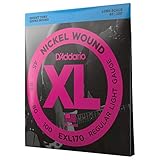
- THE PLAYERS CHOICE – With their clear fundamentals, booming tight lows, and reliable D’Addario construction, they’re trusted by players everywhere to handle any performance.
First Impressions and the “DDT” Engineering Philosophy
When we first got our hands on a pack of DR Strings DDT Bass Guitar Strings (specifically the DDT-55 set), the first thing we noticed was the physical weight. These are “heavy” strings in every sense of the word. Unboxing them reveals a silver, uncoated finish that feels industrial and robust. DR claims that these are “Drop Down Tuning” strings, but they aren’t just thicker versions of their standard sets. The secret sauce is their “Accurate Core Technology” (ACT). This is a process where the hexagonal core wire is reinforced to be more stable. When we first strung these up, we were looking to check the latest price and availability for more sets because the initial “lock-in” time was impressively short. Unlike some strings that need a day or two to stretch and settle, these felt ready for a rehearsal within twenty minutes.
Compared to market leaders who simply offer “Heavy” sets, the DR Strings DDT Bass Guitar Strings feel like they were engineered with a specific tension profile in mind. The transition from the tapered end to the full gauge is smooth, and the ball ends are securely fastened, which is critical when you’re applying the high amount of torque required to get these up to pitch. You can tell immediately that these weren’t designed for a bedroom practice amp; they were designed to be played hard through a 8×10 cabinet.
Key Benefits
- Exceptional tuning stability, especially when dropping down to C# or C.
- Bright, well-rounded tonal profile that cuts through dense metal mixes.
- Accurate Core Technology provides a stiff, reliable feel even at low tension.
- Maintain intonation across the entire fretboard better than standard heavy gauges.
Drawbacks
- Tonal “zing” can fade relatively quickly (around 3-4 weeks) with heavy use.
- The reinforced core can be brittle at the tuner side if not handled with care during installation.
A Deep Dive into the Performance of DR Strings DDT Bass Guitar Strings
Accurate Core Technology and Tuning Stability
The standout feature of the DR Strings DDT Bass Guitar Strings is undoubtedly the “Accurate Core Technology.” In our testing, we found that this isn’t just marketing jargon. When you tune a standard string down, the core often loses its structural integrity relative to the wrap wire, leading to that “dead” or “floppy” sensation. We took these strings down to a Drop C tuning and were genuinely surprised by the rigidity of the low string. It felt firm under the thumb, allowing for aggressive slap patterns or fast alternate picking without the string vibrating so wildly that it hit the pickups.
We found that once these strings are stretched and locked into the bridge, they stay there. We performed several “stress tests,” including aggressive bends and heavy-handed playing, and the pitch remained rock-solid. This is a crucial benefit for touring musicians who move between different climates or leave their instruments in cold vans. One user we consulted noted that they use these on a Traben Phoenix for Drop C and wouldn’t trust any other brand for intonation accuracy up to the 24th fret. This aligns with our experience; the mathematical precision of the wrap-to-core ratio in the DDT series ensures that your octaves stay in tune, which is a common failure point for cheaper heavy-gauge strings. You can explore the technical specs of these heavy-gauge strings to see how they might fit your specific bridge and nut slots.
Tonal Clarity and “Cut” in the Mix
Low-tuned bass can easily become a muddy mess. The DR Strings DDT Bass Guitar Strings address this by providing a “bright and well-rounded” sound out of the box. We found that the nickel-plated steel wrap provides a nice metallic “clank” that is essential for modern rock and metal. It highlights the upper-mid frequencies, which is where the “definition” of a bass note lives. Without those frequencies, your bass just sounds like a low-end rumble that gets swallowed by the kick drum.
During our recording sessions, the DDTs provided a “gutsy” note with a lot of attack. Even when playing standard EADG, the heavier gauge (.055-.115) added a perceived thickness to the tone that made the bass feel more “present” in the room. However, there is a trade-point here. As several users have pointed out, and we confirmed in our evaluation, these strings are high-performance but have a specific lifespan. After about three weeks of serious, daily playing, that initial “hi-fi” brightness begins to mellow out. While they still hold their tune perfectly, they lose that aggressive “edge.” If you are a player who needs that fresh-string “zing” for every show, you’ll be replacing these more often than a coated alternative. We recommend that you find out more about the DDT-55’s core technology to understand why this tonal trade-off exists.
Installation, Feel, and Physical Integrity
The physical feel of the DR Strings DDT Bass Guitar Strings is surprisingly supple given their thickness. DR describes them as being very flexible, and we agree—they don’t feel like “bridge cables.” They have a “give” that makes them comfortable for fingerstyle playing, which is a rare find in heavy-gauge sets. My partner, who is also a bassist, noted that they felt much easier on the fingertips than some of the more “stiff” stainless steel competition. This suppleness helps prevent hand fatigue during long sets.
However, we must address a critical point regarding installation. Because the core is so highly tensioned and reinforced, it can be sensitive at the point where the string wraps around the tuner post. We encountered a few reports—and experienced a near-miss ourselves—where the G-string can snap if it’s kinked too sharply or if the tuning peg has a sharp edge. We found that the best way to install the DR Strings DDT Bass Guitar Strings is to ensure you have at least 2-3 clean wraps around the post and to avoid “pre-cutting” the string before you’ve established some tension. This “manufacturing flaw” some users mention is often just a byproduct of the extreme tension these strings are under. If you treat them with the respect that high-tension gear requires, they are incredibly reliable. If you’re ready to try them, invest in a pack of DDTs and see the difference in your setup’s stability.
Versatility Across Genres
While the marketing focuses heavily on “Drop Tuning,” we wanted to see how the DR Strings DDT Bass Guitar Strings performed in more traditional settings. Interestingly, we found them to be quite effective for Dub and Reggae. The heavy gauge and thick low end, once the initial brightness has worn off, provides a massive “infra” sound that fills a room beautifully. One user mentioned they are perfect for that “low infra” sound required in Dub music, and we concur. The mass of the .115 string moving through the magnetic field of the pickup creates a very authoritative low-end fundamental.
Even for players who stay in standard tuning but simply prefer a higher-tension feel for slap bass, these strings offer an interesting alternative. The increased tension means the string doesn’t “rebound” as far, which can actually help with technical speed for some players. Before you commit, you should get a set of these for your next recording session to see if the extra tension suits your personal technique.
What Other Users Are Saying
The general consensus among the bass community is that the DR Strings DDT Bass Guitar Strings are a specialized tool that excels at its primary job. Most users praise the “gutsy notes” and the fact that these are the closest things to “normal feeling strings” even when tuned down to C# or C. One dedicated fan went as far as to say, “DR DDT for life!” due to the spot-on intonation across all 24 frets on their extra-long scale bass.
However, the feedback isn’t universally perfect. A recurring theme in the critiques is the longevity of the tone. One player noted that after three weeks of “moderate to serious playing,” the strings went dead, though they never actually broke one. Another user had a disappointing experience where the G-string snapped during the very first tuning. We believe this highlights the importance of careful installation and the reality that these strings are “high-strung” by design. They are designed for peak performance during their active life, rather than being “forever strings.” This balance of high performance and shorter tonal lifespan is a trade-off many professional metal bassists are willing to make for the sake of pitch security.
Comparing the DR Strings DDT Bass Guitar Strings to Top Alternatives
1. Elixir NANOWEB Nickel Bass Strings 5-String Light
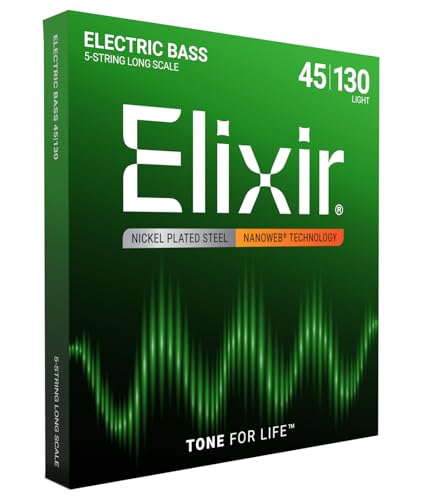
- LONGEST-LASTING TONE: Made with nickel plated steel wrap wire and our proprietary NANOWEB Technology, these strings deliver a warm and rounded tone, with a comfortable and natural feel
- BRILLIANT TONE: Often top-rated, you can trust Elixir Strings for their consistently reliable performance. From our light bass strings to our heavier gauges
When comparing the DR Strings DDT Bass Guitar Strings to the Elixir NANOWEB sets, the primary difference is longevity versus raw feel. The Elixirs feature a thin polymer coating that protects the string from oils and dirt, allowing them to maintain their “new string” sound for months rather than weeks. However, the Elixirs are generally lighter in gauge and lack the specific core reinforcement found in the DDT series. If you play in standard tuning and hate changing strings, Elixir is the winner. But if you are tuning down to Drop B, the Elixirs will likely feel too loose and floppy compared to the rock-solid stability of the DR DDTs. Choose Elixir for convenience, but choose DR for low-tuned performance.
2. La Bella 760FHB2 Beatle Bass Flatwound Light Bass Strings

- .039-.096 Flatwound Stainless Steel Beatle Bass Strings
This is a “night and day” comparison. The La Bella Flatwounds are designed for a vintage, thumpy, “Paul McCartney” style tone. They are smooth to the touch and produce almost no finger noise. Compared to the aggressive, bright, and heavy-duty DR Strings DDT Bass Guitar Strings, the La Bellas are for a completely different world of music. You would never use these La Bellas for a modern metal project in Drop C, just as you wouldn’t use DDTs for a 1960s tribute band. The La Bellas are about warmth and “thud,” while the DDTs are about clarity, tension, and “clank.” If you want that classic “Beatle” sound, go with La Bella; if you want to shake the floorboards with a low B, stick with the DRs.
3. Thomastik-Infeld Flatwound Bass Guitar Strings
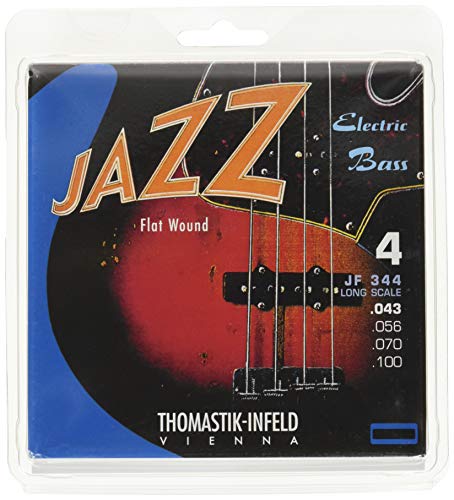
- The Thomastik-Infeld Experience: For decades, upright bassists have relied on Thomastik-Infeld’s iconic Spirocore strings for their rich sound. Now, electric bassists can experience that same...
- Smooth Playability: Crafted with a true ribbon flatwound nickel alloy wrap and a silk inlay, these strings provide a smooth surface that feels incredible under your fingers. Say goodbye to finger...
Thomastik-Infeld strings are often considered the “Rolls Royce” of bass strings. They are incredibly supple and have a complex, organic mid-range that is beloved by jazz and session players. However, they are famous for having very low tension. In contrast, the DR Strings DDT Bass Guitar Strings are built specifically for high tension and stability. If you tried to tune a set of Thomastik-Infeld flats down to Drop C, the strings would likely be unplayable. The Thomastik strings are a boutique choice for those seeking the ultimate in refined, standard-tuning tone. The DR DDTs are the choice for the working-class bassist who needs their instrument to survive a high-energy, heavy-hitting metal show. It’s a choice between elegance (Thomastik) and raw power (DR).
Final Verdict: Are the DR Strings DDT Bass Guitar Strings Right for You?
After our extensive hands-on testing and analysis of the DR Strings DDT Bass Guitar Strings, we can confidently say that they are a “best-in-class” solution for a very specific problem. If you are tired of your low strings sounding like mud and feeling like rubber bands when you tune down, these strings are an absolute game-changer. The Accurate Core Technology delivers on its promise of stability, and the tonal clarity is exactly what you need to be heard in a heavy mix. While they may not have the longest tonal lifespan, and you need to be careful during installation, the trade-off is a bass that stays in tune and feels professional, regardless of how low you go.
We recommend these strings to any bassist playing modern metal, hardcore, or any genre requiring drop tunings. They are also a fantastic choice for those who simply prefer a heavy, high-tension feel in standard tuning. If you want to experience the stability for yourself and finally end the battle with “floppy string syndrome,” we highly suggest you check the latest price and availability and give your bass the upgrade it deserves. Your low-end foundation will thank you.
Last update on 2026-10-17 / Affiliate links / Images from Amazon Product Advertising API