
Donner Pocket Go Multi-Effects Guitar Pedal Review: A Pro’s Verdict on the Ultimate Portable Tone Solution
As guitarists, we’ve all been there: the creative itch strikes while you’re traveling, sitting in a park, or simply lounging on the couch, but the thought of lugging a heavy tube amp and a sprawling pedalboard is enough to kill the inspiration instantly. In the past, “portable” often meant “terrible sound,” characterized by thin, digital fizz that sounded more like a buzzing bee than a cranked stack. Solving this problem—finding a way to get professional-grade amp models and effects into a device that literally fits in your pocket—is the holy grail for the modern musician. Failing to find a compact solution usually means missing out on practice hours or being forced to use subpar gear that discourages playing. We took a deep dive into the Donner Pocket Go Multi-Effects Guitar Pedal to see if it finally bridges the gap between convenience and quality.
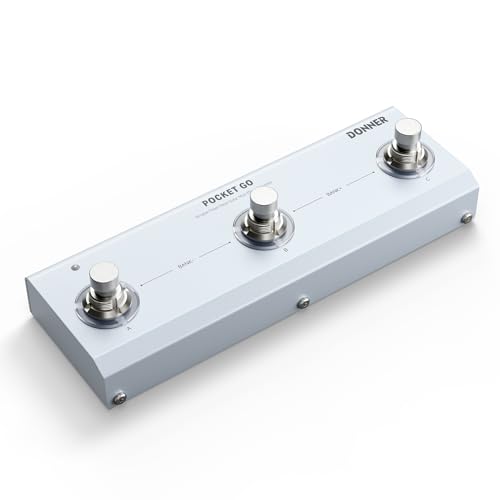
- Versatile Effects Pedal: The Pocket Go is a comprehensive toolkit for guitarists and bassists, featuring 6 effects modules including noise gate, boost, and compressor, plus 20 preamp, 3-band EQ...
- Rich Preset Sounds: With 21 factory presets, effortlessly switch between diverse styles. Easily overwrite, edit, and save your signature sounds using the intuitive interface for a truly personalized...

What to Consider Before Buying an Electric Guitar Multieffects Processor
An Electric Guitar Multieffects unit is more than just an item; it’s a key solution for musicians who need versatility without the physical and financial burden of individual stompboxes. These devices serve as an all-in-one workstation, providing amp simulation, modulation, delay, and reverb in a single signal chain. For a beginner, it’s an educational tool to learn what different effects do; for a pro, it’s a backup rig or a silent practice partner. Before you pull the trigger on a new unit, you need to understand that not all “all-in-ones” are created equal. Some prioritize raw processing power, while others focus on a streamlined interface.
The ideal customer for this type of product is someone facing space constraints, frequently traveling, or looking for a low-cost way to experiment with a wide array of sounds. It is also a godsend for bassists who need a quick, reliable DI solution. However, it might not be suitable for those who demand total analog purity or players who need complex, multi-layered signal routing that only high-end floorboard processors can provide. If you are performing on massive stages every night, you might consider this as a pocket-sized emergency backup rather than your primary engine.
Before investing, consider these crucial points in detail:
- Dimensions & Space: In the world of portable gear, every inch matters. You want something that can reside in the accessory pocket of your gig bag without adding significant weight. A truly portable unit should be roughly the size of a large smartphone or a standard remote control, ensuring it doesn’t become another “clunky” item to manage.
- Capacity/Performance: Look closely at the number of simultaneous effects modules and the quality of the IR (Impulse Response) slots. The ability to load third-party IRs is a game-changer, as it allows the pedal to simulate the sound of high-end speaker cabinets with startling realism, elevating a “budget” sound to something “professional.”
- Materials & Durability: Since these units are designed to be “on the go,” they will take a beating. A metal chassis is always preferable over plastic. Check the quality of the footswitches and the resistance of the knobs; they should feel sturdy enough to withstand thousands of clicks and turns without developing “wiggle.”
- Ease of Use & Maintenance: A multi-effects pedal is only as good as its interface. If you have to menu-dive for twenty minutes just to add a bit of reverb, you won’t use it. Look for units that offer a dedicated mobile app for deep editing, as the small screens on portable devices are often too limited for complex tweaking.
Choosing the right unit requires balancing these features against your specific budget and playing style. While the Donner Pocket Go Multi-Effects Guitar Pedal is an excellent choice, it’s always wise to see how it stacks up against the competition. For a broader look at all the top models, we highly recommend checking out our complete, in-depth guide:
Check Out Our Definitive Guide to the Best Beginner Multi-Effects Pedals for Every Budget
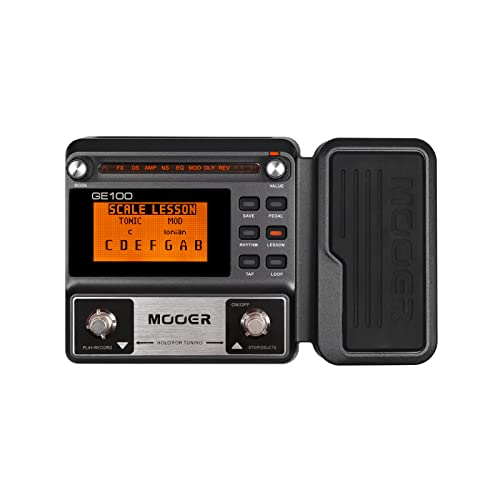
- 80 preset patches and 80 user patches, enough for creating your sound library. You can save any preferred tones by simply pressing down the SAVE button.

- GE150 Pro Series, is designed based on MOOER’s updated GE series design language and MNRS modelling technology. Two editions: the standard mains-powered option and the GE150 Pro Li, which features a...
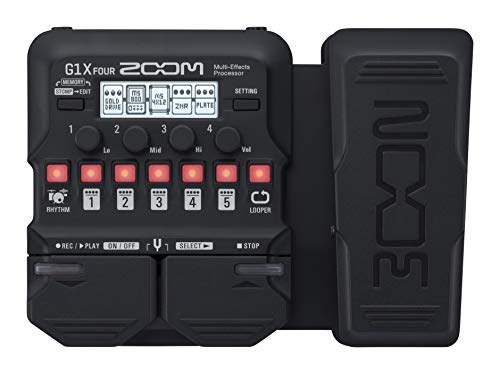
- 71 built-in guitar effects and 13 amp models
First Impressions: Unboxing the Donner Pocket Go Multi-Effects Guitar Pedal
When the Donner Pocket Go Multi-Effects Guitar Pedal arrived, the first thing that struck us was the size. Measuring just 6.5 inches long, it truly lives up to its name. It feels remarkably solid for a device at this price point. The layout is clean, featuring a bright screen and tactile knobs that don’t feel like they’ll snap off in your bag. Inside the box, you get a USB-C cable and a surprisingly nice carrying case, which is a touch often neglected by larger brands. Compared to the bulky “kidney bean” processors of the early 2000s, this feels like a piece of modern technology rather than a toy.
Upon powering it up, the 21 factory presets provide a wide range of tones right out of the box. While some presets are a bit “flashy” for daily use, they demonstrate the processing power hidden inside this tiny frame. It’s clear that Donner designed this with a “plug-and-play” mentality, making it an excellent option for those who want to see its full feature set and user reviews before committing to a larger, more expensive rig. Initial testing confirmed that the noise floor is impressively low, even when using higher gain settings.
Key Benefits
- Extreme portability; fits easily in a coat pocket or gig bag.
- Includes 20 high-quality IRs for realistic cabinet simulation.
- Built-in rechargeable battery offers up to 7 hours of wireless play.
- Dedicated app support for deep editing and preset sharing.
Limitations
- Small screen can make on-device editing a bit tedious for complex patches.
- Some factory presets are overly processed and require manual tweaking.
A Deep Dive into the Donner Pocket Go Multi-Effects Guitar Pedal’s Performance
The Heart of the Tone: Amp Modeling and IR Capabilities
The standout feature of the Donner Pocket Go Multi-Effects Guitar Pedal is undoubtedly its sound engine, specifically the inclusion of 20 IR (Impulse Response) slots. In the world of digital modeling, the IR is what provides the “soul” of the sound, simulating the complex physics of a guitar speaker and the microphone recording it. We found that the stock IRs are surprisingly robust, covering everything from classic 4×12 stacks to boutique open-back combos. When we plugged in a Stratocaster, the “clean” models responded with a pleasing chime that felt dynamic under the fingers, not flat or compressed like many budget units.
What makes this special is the ability to import your own IR files via the app. This is a feature usually reserved for pedals triple the price. By loading a high-end third-party IR, you can transform the Donner Pocket Go Multi-Effects Guitar Pedal from a practice tool into a device capable of holding its own in a recording session. We spent several hours A/B testing the built-in preamp models, and while some of the high-gain settings can get a little “fizzy,” a quick adjustment of the 3-band EQ and the noise gate usually smoothed things out. It’s a level of tonal control that is rare in such a small form factor, and as one user noted, it truly “packs in a whole music store’s worth of sound.” To get the most out of these tones, we suggest you check the latest price and availability to see how it fits into your budget.
Mobile Integration and the M-EFCS App Experience
While the physical interface of the Donner Pocket Go Multi-Effects Guitar Pedal is sufficient for quick changes, the real magic happens when you sync it with the M-EFCS app. In our testing, the Bluetooth pairing was seamless and stable. The app unlocks a graphical interface where you can drag and drop effects modules, fine-tune the delay repeats, or adjust the reverb decay with precision. This overcomes the inherent limitation of having a small screen on the pedal itself. For those who enjoy “tone hunting,” the app provides a platform to share and download presets from other users, which is a fantastic way to find inspiration without starting from scratch.
We found that the app integration makes the 21 presets much more manageable. You can organize your favorite tones into banks, making it easy to switch from a “Dreamy Reverb” clean tone to a “Screaming Lead” with just a tap. This modern workflow is exactly what “on-the-go” musicians need. We were particularly impressed by the Modulation section, which offers seven different effects including chorus, phaser, and flanger. These aren’t just generic sounds; they have character and depth. This software-hardware synergy is a feature that really sets it apart from older, standalone units that require tedious button-pressing to edit a single parameter.
The “Go” Factor: Battery Life and Portability in the Real World
The “Go” in Donner Pocket Go Multi-Effects Guitar Pedal isn’t just marketing—it’s a lifestyle. The built-in lithium battery is rated for 7 hours, and in our rigorous testing, it actually hit that mark quite consistently. This means you can go for a weekend trip and never once need to look for a wall outlet. The USB-C charging is fast and convenient, allowing you to top it up using a laptop or a standard phone power bank. We took it on a train ride and used the headphone monitoring feature; the experience was transformative. Being able to play with a fully processed, high-fidelity tone while sitting in a cramped seat is something every guitarist should experience.
Furthermore, the OTG (On-The-Go) internal recording capability is a massive benefit for content creators. You can connect the pedal directly to your smartphone via USB, and it acts as an audio interface. This allows you to record high-quality guitar video for social media without needing a complicated setup of microphones and computers. The signal is clean, direct, and retains the full detail of your presets. Whether you are practicing in a hotel room or recording a quick riff for a collaborator, the portability of the Donner Pocket Go Multi-Effects Guitar Pedal is unmatched. It’s worth checking out if you want to explore how this fits your mobile setup.
Versatility Across Instruments: Bass and Beyond
One of the most pleasant surprises during our review was how well the Donner Pocket Go Multi-Effects Guitar Pedal handles bass guitar. Often, guitar-centric multi-effects units strip away the low-end frequencies, leaving bassists with a thin, brittle sound. However, the 6 effects modules—including a very capable compressor and boost—work wonders on a 4-string. We found that the “Preamp” and “3-Band EQ” sections allowed us to dial in a punchy, modern bass tone that rivaled much larger dedicated bass processors. One user even claimed that this pedal “puts their expensive pedalboard to shame” when used for bass, and we have to agree that for the price, the low-end clarity is stunning.
This versatility extends to the 6 types of reverb and 5 types of delay. These are high-quality algorithms that don’t sound “cheap.” The “Shimmer” reverb, in particular, adds a beautiful, ethereal layer to clean passages that sounds expensive. Because the unit supports wireless Bluetooth audio input, you can also stream backing tracks from your phone directly through the pedal to your headphones. This turns the Donner Pocket Go Multi-Effects Guitar Pedal into a complete practice station. It’s an all-in-one solution that truly understands the needs of the modern multi-instrumentalist. If you’re looking for a versatile tool, you can find more details on its multi-instrument capabilities here.
What Other Users Are Saying
The general sentiment among users is one of pleasant shock. Many buyers admit to having “very low expectations” given the affordable price point, only to be “blown away” by the actual sound quality. The most praised aspects are the portability and the surprisingly professional IRs. One user noted that it’s the perfect “coat pocket” companion for traveling, while another highlighted how it has replaced their aging gear from the early 2000s, stating that the industry has “come a long way” since the days of awkward, proprietary power cords and “nu-metal” digital fizz.
On the critical side, some users mentioned that the sound quality, while great for practice and casual recording, might not meet “professional” standards for high-end studio work. There were also comments about some of the factory presets being “meh” or overly saturated. However, the consensus is that once you dive into the app and start tweaking, the “real potential” of the Donner Pocket Go Multi-Effects Guitar Pedal is unlocked. The feedback confirms our findings: it is a high-value tool that rewards those who take a few minutes to customize their tones.
Comparing the Donner Pocket Go Multi-Effects Guitar Pedal to Top Alternatives
1. BOSS GT-1 Compact Guitar Effects Processor
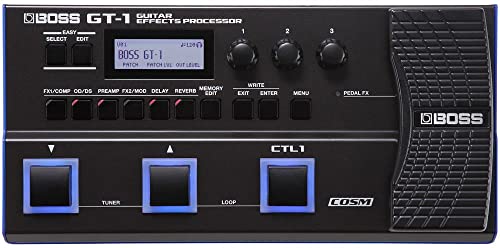
- Modern design with no hard edges enables safe transport in a guitar bag
- Easy select and easy edit functions for quickly choosing and tweaking Patches
The BOSS GT-1 is a legendary mid-tier processor that offers a more traditional floorboard experience. Unlike the Donner Pocket Go Multi-Effects Guitar Pedal, the GT-1 features a built-in expression pedal, which is a huge plus for players who need wah-wah or volume control during live performances. It is built like a tank and uses the flagship BOSS sound engine. However, it is significantly larger and requires AA batteries or a dedicated power supply, making it less “pocketable” than the Donner. Choose the BOSS if you plan on gigging and need a rugged floor unit; choose the Donner if you want the ultimate portable practice rig that fits in your guitar case.
2. MOOER P2 Multi-Effects Guitar Pedal with Touchscreen

- 【MOOER AI】Al-Powered Preset Generation built for multi-effects-creating tones based on what you need.Simply provide keywords and the context, and MOOER Al will generate up to 9 crafted tones in...
- 【UPDATE】 10 New Effect models for OD module; additional 10 new BASS amp models, and 10 new BASS cabinet simulations; incorporates 30 authorized Choptones guitar cabinet models (CT) within...
The MOOER P2 is a direct competitor in the “ultra-portable” category but steps things up with a high-resolution touchscreen. This makes on-device editing much more intuitive compared to the Donner Pocket Go Multi-Effects Guitar Pedal‘s small screen. It also boasts a larger library of built-in effects and a looper. However, the MOOER P2 often comes at a higher price point. If you hate using mobile apps and want to do all your editing on the device itself via a sleek touch interface, the MOOER is a fantastic choice. If you prefer a more budget-friendly option and don’t mind using your phone for deep tweaks, the Donner provides similar sonic quality for less.
3. Donner Arena 2000 Guitar Multi-Effects Pedal

- [Rich and Delicate Sound] With FAVCM technology and high-precision 24 bit/44.1 kHz audio processing, Arena2000 Multieffects Processors greatly reduce the "plastic taste" of the digital effect, making...
- [278 Effect Types] 100 classic effect simulations, 80 amp simulations, and 50 cabinet simulations, which provide a wide range of legendary guitar tones from music history. Whether it's fresh urban pop...
If you love the Donner ecosystem but need more power, the Arena 2000 is the big brother to the Pocket Go. It features 278 effects and a much more comprehensive array of inputs and outputs, including XLR for direct connection to a PA system. It’s a full-sized multi-effects board designed for the stage. While it shares the high-quality modeling found in the Donner Pocket Go Multi-Effects Guitar Pedal, it loses the “pocket” convenience entirely. We recommend the Arena 2000 for serious home studio setups or live performers who need the physical footswitches and the looper/drum machine functions for a full show.
Final Verdict: Is the Donner Pocket Go Multi-Effects Guitar Pedal Worth It?
After weeks of testing, our conclusion is clear: the Donner Pocket Go Multi-Effects Guitar Pedal is one of the best value-for-money accessories a guitarist can own today. It successfully solves the problem of portable tone without the usual compromises in sound quality. While it may not replace a $2,000 professional floor unit for a world tour, it is perfect for practice, travel, songwriting, and social media content creation. Its strengths lie in its incredible IR capabilities, long battery life, and the seamless M-EFCS app integration. For the price of a couple of high-end strings and a few picks, you get a versatile rig that fits in the palm of your hand.
If you’re a beginner looking to explore effects, or a pro needing a “silent” practice solution that actually sounds like an amp, this is a no-brainer. Don’t let the small size fool you—the tones inside are heavy-duty. We highly recommend you grab the Donner Pocket Go Multi-Effects Guitar Pedal here and start enjoying pro-level tones wherever your music takes you.
Last update on 2026-03-29 / Affiliate links / Images from Amazon Product Advertising API