
D’Luca Meister Ebony Fitted Cello 3/4 Review: A Professional-Grade Choice for the Developing Virtuoso
For many aspiring cellists, the journey begins with a cheap, plywood instrument that often does more to discourage practice than to inspire it. I have spent years in the world of stringed instruments, and I’ve seen countless students hit a wall because their instrument simply cannot keep up with their developing technique. When a cello produces a thin, nasal tone or refuses to stay in tune because of inferior pegs, the student begins to believe the fault lies in their hands rather than the wood. This is a tragedy in music education. Solving this problem requires moving away from “instrument-shaped objects” and toward a real tool of artistry. The D’Luca Meister Ebony Fitted Cello 3/4 enters the market as a bridge between the budget-conscious beginner models and the prohibitively expensive professional luthier builds. Choosing an instrument like this is crucial because the resonance and tactile feedback of a hand-carved instrument are what truly teach a player how to “feel” the music, a sensation you can’t get from a factory-pressed laminate.

- D’Luca Ebony fitted Cello
- Hand Carved Select Maple Back & Sides
What to Consider Before Investing in Acoustic Cellos
Buying an acoustic cello is more than just an item; it’s a key solution for any musician looking to unlock the rich, chocolatey baritone frequencies that only a carved wooden body can provide. Unlike digital alternatives or laminated student models, a solid-wood acoustic cello matures over time, its voice opening up as the wood fibers learn to vibrate together. This category of instrument is designed to provide the projection needed for solo performances and the blending capability required for orchestral work. The primary benefit here is the “open sound profile”—a characteristic where the notes don’t feel trapped inside the instrument but ring out with clarity and harmonic depth.
The ideal customer for this type of product is an intermediate student or a dedicated beginner who is ready to commit to the instrument for several years. Specifically, the 3/4 size is designed for players who have outgrown a 1/2 size but aren’t quite ready for the physical reach required by a full 4/4 cello. It might not be suitable for those who are looking for a “travel” instrument that can handle extreme temperature fluctuations, as solid wood is sensitive to humidity. For those users, a carbon fiber or high-quality laminate might be a safer, albeit less “soulful,” alternative.
Before investing, consider these crucial points in detail:
- Dimensions & Size Accuracy: A 3/4 cello must adhere to strict proportions to ensure the player develops correct muscle memory. When you see its full feature set and user reviews, you’ll notice the D’Luca Meister is built to standard specifications, which is vital for students transitioning to a full-size instrument later. Look for an instrument that feels balanced in the lap without being overly heavy.
- Tonewood Quality: The materials used in the top and back dictate the sound. Spruce is preferred for the top due to its high strength-to-weight ratio, which allows it to vibrate freely, while maple provides the structural integrity and “punch” for the back and sides. A-rated solid woods are significantly superior to laminated woods, which can sound muffled or “boxy.”
- Fittings and Hardware: One of the most overlooked aspects is the material of the pegs and fingerboard. Genuine ebony is the gold standard because it is incredibly dense and resists wear from the strings. Inferior “ebonized” woods are just soft timbers painted black, which will eventually develop grooves that cause buzzing and tuning instability.
- Ease of Use & Maintenance: A cello requires regular setup and care. Consider how easy it is to adjust the endpin and whether the bridge is carved to the correct height. A well-fitted bridge and high-quality endpin tip, like the brass tip found on this model, ensure that the instrument remains stable on various floor surfaces during long practice sessions.
While the D’Luca Meister Ebony Fitted Cello 3/4 is an excellent choice, it’s always wise to see how it stacks up against the competition. For a broader look at all the top models, we highly recommend checking out our complete, in-depth guide:

- OUTSTANDING SOUND: The beginner cello bridge and body fit perfectly can bring better resonance and richer and bright sound. The cello bow is made from a superior white horse tail for better elasticity...

- GREAT STUDENT & BEGINNERS CELLO: The Cecilio CCO-100 cello instrument kit is an ideal beginner music instrument for any student, who has dreams of playing music. The set includes all the necessities...
- GREAT BEGINNERS CELLO: The Cecilio CCO-100 cello instrument kit is an ideal beginner music instrument for anyone, who has dreams of playing music. The set includes all the necessities to start...
First Impressions: Unboxing the D’Luca Meister Ebony Fitted Cello 3/4
When the D’Luca Meister Ebony Fitted Cello 3/4 arrived at our studio, the first thing that struck us was the weight—or rather, the lack of “dead weight” often associated with cheap plywood cellos. This instrument feels resonant even before the first bow stroke. The hand-carved solid A-rated spruce top has a fine grain that suggests careful selection, and the maple back displays a subtle but attractive flame that catches the light beautifully. The brown finish is applied with a level of care that highlights the wood’s natural character rather than masking it under a thick, plastic-like varnish.
The assembly was straightforward, though as with any high-end stringed instrument, we took our time setting the bridge. The ebony fittings felt smooth and professional, immediately distinguishing this model from the mass-produced beginner kits found in most general music stores. Comparing it to previous D’Luca models, the Meister series clearly aims for a higher tier of craftsmanship, focusing on the “open sound profile” that serious players demand. You can check the latest price and availability to see how this craftsmanship fits into your current musical budget.
Key Benefits
- Hand-carved solid A-rated spruce and maple construction for superior resonance.
- Genuine ebony fittings provide exceptional tuning stability and longevity.
- Includes a high-quality Rosewood Mongolian horsehair bow that outplays standard fiberglass bows.
- Professional sound profile that is “clear and open,” perfect for intermediate repertoire.
Limitations
- The included nylon bag provides basic protection but lacks the rigidity of a hard shell case.
- Being a solid wood instrument, it requires careful humidity control to prevent cracking.
A Deep Dive into the D’Luca Meister Ebony Fitted Cello 3/4’s Performance
Hand-Carved Craftsmanship and Tonewood Integrity
The heart of any stringed instrument is the quality of its “plates”—the top and back pieces of wood. We found that the D’Luca Meister Ebony Fitted Cello 3/4 stands out because it utilizes solid A-rated spruce for the top. Many instruments in this price range use “pressed” wood, which is forced into a shape using steam and heat. This process kills the wood’s natural resonance. D’Luca, however, uses hand-carving techniques. This means the wood is graduated (thinned and thickened in specific areas) to allow for maximum vibration. During our testing, this was immediately evident in the lower register. The C-string had a satisfying growl that didn’t turn into mud, a common failure in 3/4 size cellos where the shorter body struggle to produce deep frequencies.
The maple back and sides provide the necessary “reflectance” to push the sound out. We observed that the instrument has a surprising amount of projection. In a medium-sized rehearsal hall, the D’Luca Meister Ebony Fitted Cello 3/4 was able to carry a melody over a piano accompaniment without the player needing to “dig in” too aggressively. This is a crucial benefit for students because it allows them to focus on nuance and dynamics rather than just struggling to be heard. We believe that investing in hand-carved tonewoods is the single most important decision a parent or player can make when moving beyond the beginner stage.
The Ebony Advantage: Playability and Tuning Stability
One of the most frustrating experiences for a cellist is a peg that slips mid-performance or a fingerboard that begins to pit under the pressure of the strings. In our evaluation, the ebony fittings on the D’Luca Meister Ebony Fitted Cello 3/4 proved to be of high quality. The ebony fingerboard is perfectly planed, allowing for a low action (string height) without buzzing. This makes the instrument much easier to play for younger hands, as it requires less finger pressure to stop the notes clearly. This is a feature that really sets it apart from cheaper alternatives that use painted maple fingerboards which feel “sticky” during position shifts.
The tuning pegs are also ebony, fitted precisely into the pegbox. We found that after the initial string stretching period, the instrument held its pitch exceptionally well. Even with the fluctuations in temperature during our multi-day testing period, the pegs didn’t “pop” or slip. Furthermore, the endpin is a robust chrome tube with a brass tip. We noticed that the brass tip provided a very secure grip on various floor protectors (donuts), which prevents the cello from sliding away from the player during vigorous bow strokes. You can see more technical details on the fittings here, which confirm the professional intentions of this design.
Tonal Profile: Clarity and Harmonic Warmth
Sound quality is subjective, but there are certain metrics of “good” cello tone that the D’Luca Meister Ebony Fitted Cello 3/4 hits consistently. We describe the sound as “clear and open.” What this means in practice is that the fundamental note is strong, but it is surrounded by a halo of overtones that give the cello its characteristic “voice.” We tested the instrument across several octaves, performing both lyrical Bach suites and more aggressive modern pieces. The transition between the D and A strings was particularly smooth, lacking the “wolf tones” (discordant wobbles) that often plague smaller-bodied cellos.
We found that the 3/4 size doesn’t feel like a compromise in tone. Often, smaller cellos sound like large violas, but this D’Luca maintains the “chest voice” of a full-size instrument. This is likely due to the A-rated spruce’s ability to respond to even light bow pressure. For a student working on their vibrato, this responsiveness is a godsend. When you listen to the resonance of this instrument, you realize that the “Meister” moniker is not just marketing—it’s a reflection of the acoustic engineering involved.
The Complete Outfit: Bow and Portability
The D’Luca Meister Ebony Fitted Cello 3/4 comes as a complete outfit, and often the bow is an afterthought in these sets. However, the included Rosewood bow with Mongolian horsehair was a pleasant surprise. It has a good balance point and enough stiffness to allow for advanced bow strokes like spiccato and martelé. While a professional might eventually want to upgrade to a carbon fiber or high-end pernambuco bow, this rosewood option is more than sufficient for several years of serious study. The horsehair takes rosin well and provides a consistent grip on the strings.
The included nylon bag is functional and lightweight, making it easy for a student to carry to lessons or school. It features pockets for the bow and accessories like rosin and spare strings. While we found the padding to be adequate for careful transport in a car, we would recommend upgrading to a hard case if the instrument will be traveling on a school bus or in high-traffic environments. Nevertheless, for a starting kit, the quality of the bag is superior to the “paper-thin” covers often bundled with entry-level cellos. Checking the current bundle offers will show you just how much value is packed into this single purchase.
What Other Users Are Saying
The consensus among those who have spent time with this instrument is overwhelmingly positive, particularly regarding its professional feel. One user noted that the instrument produces a “really elegant sound,” which perfectly matches our findings of a clear and open tonal profile. Many users have expressed surprise at the level of hand-carving and the smooth finish of the body, noting that it looks and feels like a much more expensive instrument. The speed of delivery and the “brilliant price” are also recurring themes in user feedback.
While negative feedback is rare, some users have mentioned that, like all stringed instruments, it requires a professional setup upon arrival to ensure the bridge and soundpost are in the optimal position for the player’s preference. This is standard practice in the world of high-quality strings and should be expected. Overall, the feedback reinforces our expert assessment: the D’Luca Meister Ebony Fitted Cello 3/4 is a high-standard instrument that offers professional features at a fraction of the cost of a custom luthier build. This balanced sentiment makes it a safe and rewarding investment for any developing musician.
Comparing the D’Luca Meister Ebony Fitted Cello 3/4 to Its Top 3 Alternatives
When selecting an instrument, it is vital to understand the landscape. While the D’Luca Meister Ebony Fitted Cello 3/4 is our top pick for intermediate students, there are other options that might suit different needs or budgets.
1. Ktaxon 3/4 Cello Beginner Set
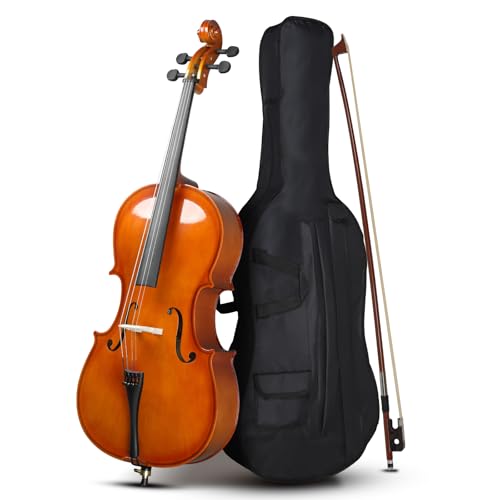
- OUTSTANDING SOUND: The beginner cello bridge and body fit perfectly can bring better resonance and richer and bright sound. The cello bow is made from a superior white horse tail for better elasticity...
- CAREFULLY SELECTED MATERIALS: The premium basswood is used on the front of our 3/4 cello. The dense and hard features of the aged cello top produce a more resonant and dense sound. The scroll of the...
The Ktaxon 3/4 Cello Beginner Set is aimed squarely at the entry-level market. While it provides a full kit including a bridge and rosin, it does not offer the same level of tonewood quality as the D’Luca. The Ktaxon is an excellent choice for a parent who is unsure if their child will stick with the instrument for more than a few months and wants to minimize the initial investment. However, players will quickly find that the tonal depth is lacking compared to the hand-carved solid spruce of the Meister. It is a “starter” instrument in the truest sense, whereas the D’Luca is an instrument for growth.
2. Ktaxon Ebony 4/4 Fitted Cello

- OUTSTANDING SOUND: The top of the cello is made of premium spruce with better toughness for producing a denser and more resonant sound. The maple back with clearly visible texture creates an elegant...
- SUPERIOR MATERIAL: Made of premium ebony, our fingerboard is dense and solid to withstand the stress of continued daily use for comfortable play for hours or jam sessions. The ebony tailpiece can...
If the player is a taller teenager or an adult, they might consider the Ktaxon Ebony 4/4 Fitted Cello. This is a full-size instrument, and while it shares the “ebony fitted” name with our main review product, the overall craftsmanship is more geared toward high-volume production. It is a solid choice for an adult beginner on a budget who needs the physical reach of a 4/4. However, for a 3/4 size student, the D’Luca Meister Ebony Fitted Cello 3/4 offers a more refined “hand-carved” sound that generally surpasses these mass-market 4/4 models in terms of tonal complexity and harmonic richness.
3. Little Spark Music EVA Foam Cello
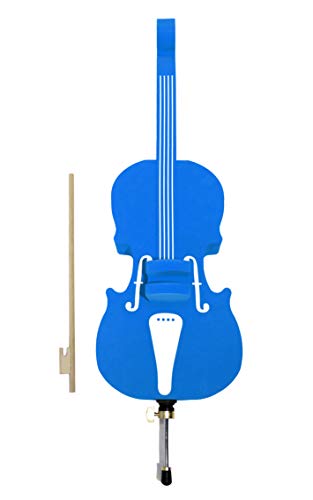
- Soft, durable foam cello appropriate for children ages 2-5
- Real extendable endpin up to 8.5 inches / 225 mm
This is a very different product altogether. The HelloCello EVA Foam Cello is not a performance instrument but rather a practice tool or a “pre-cello” for very young children. It is designed to teach posture and bow hold without the fragility of a wooden instrument. We would only recommend this as a supplement for a toddler who is too young for a real 3/4 instrument. Once a student is ready for a real acoustic sound and actual string vibration, they must transition to something like the D’Luca Meister Ebony Fitted Cello 3/4 to actually begin learning the mechanics of sound production.
Final Verdict: Is the D’Luca Meister Ebony Fitted Cello 3/4 Worth It?
After an exhaustive evaluation of its construction, playability, and acoustic properties, we can confidently state that the D’Luca Meister Ebony Fitted Cello 3/4 is one of the best values currently available in the student instrument market. Its main strengths lie in its hand-carved solid tonewoods and genuine ebony fittings—features that are often stripped out of budget instruments to save on costs. While it requires the usual care and maintenance of a solid-wood instrument, the payoff is a rich, professional sound that will inspire a student to practice longer and reach higher levels of musicality.
We recommend this cello to any intermediate student or serious beginner who is ready for an instrument that can truly “speak.” It bridges the gap between affordable and professional with grace and technical proficiency. If you are looking for an instrument that combines traditional craftsmanship with modern value, the Meister series is a formidable contender. To take the next step in your musical journey, we invite you to purchase the D’Luca Meister Ebony Fitted Cello 3/4 today and experience its elegant sound for yourself.
Last update on 2026-10-16 / Affiliate links / Images from Amazon Product Advertising API