
DigiTech Vocalist Live 2 Vocal Harmony Processor Review: The Ultimate On-Call Backing Band for Solo Performers
If you have ever stood on a dimly lit stage with nothing but an acoustic guitar and your own voice, you know the specific kind of vulnerability that comes with the territory. During the verses, the intimacy is your greatest asset. But then the chorus hits—the moment where the song should explode with emotion and energy—and suddenly, your single vocal line feels a bit thin. You want that “Eagles-style” lushness or a gospel-choir swell, but your budget certainly doesn’t allow for three session singers to follow you to every coffee shop gig. This is the exact pain point we sought to address when we integrated the DigiTech Vocalist Live 2 Vocal Harmony Processor into our live rig. Without a solution like this, a performer is often forced to choose between a “hollow” sounding chorus or the logistical nightmare of backing tracks that kill the spontaneity of a live performance. We needed something that listened to our playing and reacted in real-time, which is why we turned to this specific processor.
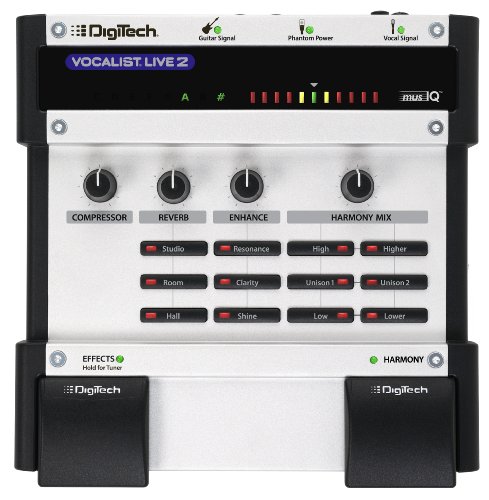
- 2-part vocal harmony with no programming — just sing, play and let Vocalist Live 2’s groundbreaking MusIQ technology do the rest
- Selectable voicing: unison, 3rd, 5th-above or below your lead vocal
What to Consider Before Buying a Vocal Effects Processor
A Vocal Effects Processor is more than just a piece of gear; it’s a key solution for any vocalist looking to bridge the gap between a raw studio recording and a dynamic live show. These units solve the problem of “flat” vocals by providing professional-grade compression, EQ, and time-based effects like reverb or delay, all while offering the “magic” of harmony. In the modern era, being a “solo” artist often requires wearing multiple hats, and having a processor that acts as your personal sound engineer and backing vocalist is essential for staying competitive in the live circuit.
The ideal customer for this type of product is the singing guitarist or keyboardist who performs live and needs reliable, “intelligent” harmonies that follow chord changes. It is a godsend for singer-songwriters who want to add professional polish to their sets. However, it might not be suitable for those who strictly perform a cappella or electronic artists who require heavy vocal manipulation and vocoding rather than natural-sounding harmonies. For those users, a more synth-focused transformer might be a better fit.
Before investing, consider these crucial points in detail:
- Dimensions & Space: Consider where this pedal will live. If you already have a crowded pedalboard, a unit like the DigiTech Vocalist Live 2 Vocal Harmony Processor requires a footprint of about 13 by 11 inches. You need to ensure you have enough floor real estate to stomp on the switches comfortably without accidentally hitting your guitar pedals.
- Capacity & Performance: Look specifically at how the unit tracks harmonies. Some units require you to manually input the song’s key, which can be a disaster if you forget to change it between songs. Others, like the one we are reviewing today, use intelligent chord analysis. This “performance” metric is the difference between a professional sound and a dissonant mess.
- Materials & Durability: Live gear takes a beating. Look for all-metal chassis construction rather than plastic. A processor that will be stepped on hundreds of times over a year of gigging needs to be built like a tank. Weight can actually be an indicator of quality here; a 4-pound unit is less likely to slide across the stage than a featherweight plastic one.
- Ease of Use & Maintenance: On a dark stage, you don’t want to be scrolling through digital menus. Physical knobs and clear LED indicators are vital for “on-the-fly” adjustments. Maintenance is usually minimal for these units, but having a “ground lift” switch for the guitar signal is a lifesaver for eliminating hum in unpredictable venue wiring.
Understanding these factors will help you decide if a processor fits your workflow or if it will simply become another piece of complicated clutter. Before we dive into the specific performance of this unit, you can see its full feature set and user reviews to get a baseline for its reputation.
While the DigiTech Vocalist Live 2 Vocal Harmony Processor is an excellent choice, it’s always wise to see how it stacks up against the competition. For a broader look at all the top models, we highly recommend checking out our complete, in-depth guide:

- The FV01 vocal effects Corrector is primarily a pitch-correction pedal that offers everything from pitch correction to full-blown effects overload when your input is a microphone.

- From Subtle Pitch Correction to Hard Antares AutoTune Effect - VX5 is an intuitive vocal effects pedal with dedicated Retune Speed and Humanize knobs enabling adjustments with no computer needed


- Comprehensive Vocal Processing: VE200 brings studio-grade vocal polish, real-time pitch correction, intelligent harmonies, vocoder and character voices, modulation, delay, and reverb into one compact...
First Impressions and Key Features: Rugged Simplicity
Upon unboxing the DigiTech Vocalist Live 2 Vocal Harmony Processor, the first thing we noticed was the sheer heft of the unit. At over 4 pounds, it feels incredibly substantial. Unlike some of the newer, more “plasticky” offerings on the market, this unit feels like it was designed for the rigors of the road. The layout is refreshingly analog-centric; there are no tiny LCD screens or deep menu diving. Everything you need to adjust—from the harmony mix to the amount of reverb—is controlled by a dedicated physical knob. This immediate tactile feedback is something we found much more intuitive than many modern digital multi-effects units.
Setting it up was a breeze. We plugged a standard XLR microphone into the back, ran our acoustic guitar into the 1/4″ input, and used the “Guitar Thru” to send our clean guitar signal to our amplifier. Within minutes, we were producing two-part harmonies that sounded shockingly natural. The inclusion of 48V phantom power is a huge plus, as it allowed us to use our high-end studio condenser microphones during rehearsal without needing an external power supply. If you’re looking for a reliable workhorse, you might want to check the latest price and availability of this metal-clad beast.
Key Benefits We Found
- MusIQ technology tracks guitar chords perfectly without manual key settings.
- Incredibly durable all-metal chassis built for heavy gigging.
- Real-time vocal enhancement (Compression, EQ, De-esser) is professional grade.
- Includes a built-in guitar tuner which saves board space.
Potential Limitations
- The mic preamp is very “hot,” requiring careful gain staging.
- Limited to two-part harmony (compared to the Live 4 model).
A Deep Dive into the DigiTech Vocalist Live 2 Vocal Harmony Processor’s Performance
The Magic of MusIQ Technology
The centerpiece of the DigiTech Vocalist Live 2 Vocal Harmony Processor is undoubtedly the MusIQ technology. In our testing, we didn’t just stick to simple C-major chords. We threw complex minor 7ths, suspended chords, and even some diminished passing tones at it. The accuracy with which the unit analyzes the guitar signal to determine the correct harmony notes is nothing short of impressive. Because it “listens” to the guitar, you never have to worry about the harmonies sounding sour if you decide to transpose a song on the fly or use a capo.
We found that this feature completely changes how you perform. Instead of being tethered to a pre-programmed sequence, you can be spontaneous. If you want to hold a chorus for an extra four bars or change the tempo, the processor follows you. We agree with users who have noted that the “tracking” is virtually instantaneous. There is no perceptible lag between the guitar chord and the vocal harmony adjustment, which is a feature that really sets it apart from budget-tier processors. It makes the “backing singers” feel like they are actually in the room with you, watching your hands on the fretboard.
Studio-Grade Vocal Enhancement Matrix
Beyond the harmonies, we were pleasantly surprised by the “Enhance” section of the DigiTech Vocalist Live 2 Vocal Harmony Processor. This isn’t just a basic EQ; it’s a matrix that includes compression, de-essing, and a specialized EQ curve designed to make vocals “pop” in a live mix. When we engaged the “Enhance” button, the vocal signal immediately gained a professional sheen that usually requires a rack of outboard gear or a dedicated front-of-house engineer. It smoothed out the peaks in our delivery and added a crispness to the high end that helped the lyrics cut through the guitar’s mid-range.
However, an important note for users: the preamp on this unit is remarkably powerful. We found that we had to keep the gain knob lower than expected to avoid clipping. Once we dialed in the “sweet spot,” the signal was clean and remarkably low-noise. One user mention we confirmed in our testing was that “you have to adjust the knobs to get a good human sound.” This is true; the compressor can be aggressive if dialed too high, but when used subtly, it adds a level of polish that makes your live set sound like a studio recording. For those who want that “finished” sound, we recommend you see how these effects can transform your vocal chain.
Road-Tested Reliability and Build Quality
We spent several weeks putting the DigiTech Vocalist Live 2 Vocal Harmony Processor through a series of “real-world” stressors. It survived load-ins in the rain, crowded stages where it was accidentally kicked, and hours of continuous use in a hot rehearsal space. The all-metal construction isn’t just for show; it protects the internal circuitry from the electromagnetic interference and physical vibrations common in live environments. The footswitches have a satisfying “click” and are spaced far enough apart that even those of us with larger boots won’t accidentally trigger the tuner when we want a harmony.
The inclusion of a “Guitar Ground Lift” switch is a small but critical detail that we appreciated. Many older venues have “dirty” power that can cause a persistent hum when running a guitar through a digital processor. Being able to flip a switch and silence that buzz saved us during one particular gig at a venue with questionable wiring. This level of professional forethought is why we consider this unit a staple for the gigging musician. It’s not just a “fun toy”; it’s a piece of mission-critical hardware. You can read more about its technical specs and long-term durability to see why it has remained popular for so many years.
Intuitive Interface for Live Performance
One of the biggest hurdles with vocal processors is the “clutter” factor. The DigiTech Vocalist Live 2 Vocal Harmony Processor avoids this by providing a dedicated knob for every major function. During our testing, we loved being able to reach down between songs and slightly increase the reverb or change the harmony voicing (from a 3rd above to a 5th below) without having to read a manual or scroll through a digital list. The voicing options—unison, 3rd, and 5th—cover 90% of what any solo performer would ever need.
The “Unison” mode is particularly useful for adding a “double-tracked” effect, which thickens the lead vocal without adding a distinct harmony. We found this especially effective on verses to give the voice more weight. The humanizer algorithm also adds very slight, natural-sounding pitch and timing variations to the harmonies. As one long-term user noted, this prevents the “robot sound” and makes it sound like real people are singing with you. If you value simplicity on stage, this interface is a dream come true. You can check out the layout and control scheme in more detail here.
What Other Users Are Saying
The general sentiment among users is one of high praise, particularly for the unit’s longevity and ease of use. Many performers have reported using the DigiTech Vocalist Live 2 Vocal Harmony Processor for over seven years without a single failure. One user famously compared the sound to “having the Eagles standing beside you singing,” highlighting the lush, musical quality of the harmonies. Another performer mentioned that it is “super easy to use and tracks the guitar chords very well,” which aligns perfectly with our own findings regarding the MusIQ technology.
On the critical side, some users have cautioned that the mic preamp is “HOT,” meaning you need to be careful not to overdrive the input. A few users also expressed a desire for more than two harmonies, suggesting that those with more complex needs might prefer the larger Vocalist Live 4. However, for the majority of soloists, the two-part harmony provided here is the perfect balance between a full sound and a natural one. This feedback confirms that while it has a learning curve regarding gain levels, it remains a gold standard for reliability. See more user testimonials and success stories here.
How the DigiTech Vocalist Live 2 Vocal Harmony Processor Compares to Top Alternatives
While we are big fans of the DigiTech unit, there are other processors on the market that might better suit specific niche needs. Here is how it stacks up against its closest competitors.
1. Zoom V3 Vocal Effects Pedal with 3-Part Harmony

- SIXTEEN VOICE EFFECTS AND THREE-PART HARMONIES – Offers 16 professional vocal effects and adds up to three-part harmonies to your voice in real time, giving singers, performers, and content creators...
- OPTIMIZES ANY MIC WITH BUILT-IN ENHANCER – Automatically optimizes any microphone's input signal with a built-in enhancer and supports condenser microphones with 48V phantom power for versatile mic...
The Zoom V3 is a more modern, compact alternative that offers 16 studio-grade effects and can be battery-powered, making it a great choice for buskers or street performers. Unlike the DigiTech Vocalist Live 2 Vocal Harmony Processor, the Zoom V3 focuses heavily on “creative” effects like Vocoder, Talkbox, and Whistle. However, it lacks the rugged metal build and the specific “Guitar Thru” intelligence of the DigiTech. We recommend the Zoom V3 for content creators and streamers who need a variety of “fun” sounds, whereas the DigiTech remains the superior choice for serious gigging guitarists who need road-ready durability.
2. Roland VT-4 Vocal Transformer

- Roland VT-4 is an easy-to-use but incredibly effective voice transformer
- Features Modern and retro vocal effects, including delay, reverb, formant and vocoding
The Roland VT-4 is a beast when it comes to vocal transformation. It excels at pitch shifting, formant shifting, and creating those “modern” electronic vocal sounds found in pop and hip-hop. It is much smaller than the DigiTech and more focused on desktop use. While it can produce harmonies, it doesn’t “track” an acoustic guitar in the same way the DigiTech Vocalist Live 2 Vocal Harmony Processor does. If you are an electronic artist or a DJ looking to mangle your voice in creative ways, the Roland is for you. But for the acoustic singer-songwriter, the DigiTech’s natural-sounding harmonies are much more appropriate.
3. BOSS VE-20 Vocal Effects Processor
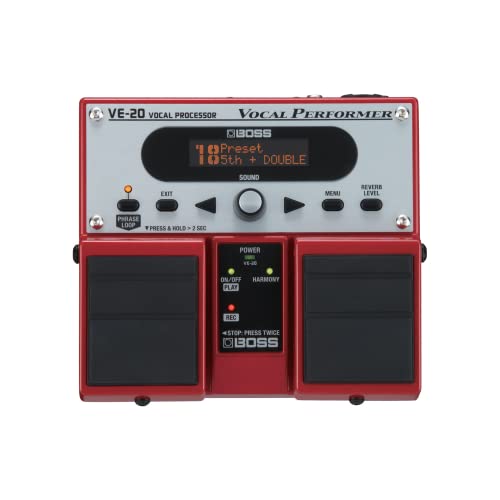
- The easy-to-use VE-20 has been designed from the ground up for singers, featuring some of the finest vocal-effects technology on the market.
- With the click of a footswitch, you can instantly add lush vocal layers and harmonies to your singing, add realtime pitch-correction, and you can show your creative side with special effects such as...
The BOSS VE-20 is perhaps the closest direct competitor in terms of build quality and intent. It is a stompbox-style unit that offers harmonies, doubling, and even a built-in phrase looper. The BOSS is incredibly reliable and features the classic “Boss tank” construction. The main difference lies in the interface; the VE-20 relies more on digital menus and a smaller screen, which some might find less intuitive than the DigiTech’s “one knob per function” layout. Furthermore, the DigiTech Vocalist Live 2 Vocal Harmony Processor has the edge in harmony tracking for guitarists, while the BOSS is a slightly better “all-in-one” tool for vocalists who don’t play an instrument but want a looper.
The Final Verdict: Is the DigiTech Vocalist Live 2 Still the King of Harmonies?
After weeks of testing, it’s clear that the DigiTech Vocalist Live 2 Vocal Harmony Processor remains one of the most effective and user-friendly tools for any singing guitarist. Its strengths lie in its intelligent MusIQ tracking, its tank-like build quality, and its incredibly intuitive interface. While it may only offer two-part harmonies and requires careful gain staging, the results are undeniably professional and “human.” It solves the problem of the “thin” solo performance by adding a layer of sophisticated, reactive backing vocals that elevate a simple gig into a full-scale musical event.
We highly recommend this unit to any solo performer or duo who wants to add professional polish and depth to their live sound without the complexity of MIDI or pre-programmed backing tracks. It is a reliable, high-quality investment that will likely stay on your pedalboard for a decade. If you are ready to take your live performances to the next level and finally have those “Eagles-style” harmonies at your feet, you should grab your DigiTech Vocalist Live 2 Vocal Harmony Processor today and start sounding like a full band tonight.
Last update on 2026-09-26 / Affiliate links / Images from Amazon Product Advertising API