
D’Addario Graftonite Tenor Sax Mouthpiece Review: A Professional Performance on a Student Budget?
Every tenor saxophone player eventually hits a wall. You’ve practiced your scales, you’ve mastered your subtones, but your sound still feels “stuck.” Usually, the culprit isn’t the horn—it’s the mouthpiece. I remember the frustration of playing on a stock plastic mouthpiece that felt like blowing through a straw. It was stuffy, unresponsive, and lacked any real character. The common advice is to go out and drop $300 on a hand-faced hard rubber piece, but for many students and gigging musicians, that simply isn’t an option. We need a solution that offers professional-grade geometry without the professional-grade price tag. Failing to upgrade your mouthpiece can lead to bad habits, as you overcompensate for a poor-quality piece by biting or using too much air pressure. This is exactly where the D’Addario Graftonite Tenor Sax Mouthpiece enters the conversation, promising a design by a legendary craftsman at a price that seems almost too good to be true.
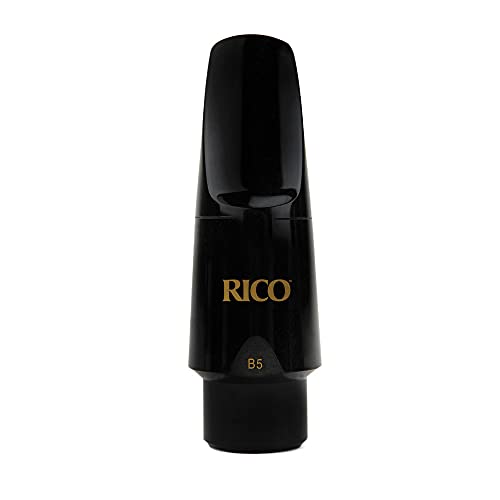
The B5 Graftonite Tenor Saxophone mouthpiece features the medium B chamber for the most brilliance and projection, a .095" tip opening, and a 23mm facing length. Each Graftonite mouthpiece is made...
- B5 model for Tenor saxophone

What to Consider Before Buying a Tenor Saxophone Mouthpiece
A Tenor Saxophones Mouthpieces is more than just an item; it’s a key solution for shaping your unique musical voice and ensuring your instrument responds to your every nuance. It is the most critical interface between the player and the saxophone. While the horn provides the resonance, the mouthpiece determines the resistance, the brightness, and the ease of articulation. Choosing the wrong piece can make a high-end Selmer sound like a toy, while the right piece can make an entry-level student horn sing with professional authority.
The ideal customer for this type of product is a student looking to move beyond their beginner setup, or a professional who needs a durable, reliable backup that can handle outdoor gigs or pit work without fear of damage. It is also an excellent choice for players who want to experiment with different tip openings and chamber sizes without a massive financial commitment. However, it might not be suitable for those who are strictly purists for vintage hard rubber or those who require the extreme projection of a metal high-baffle mouthpiece for high-volume rock or funk settings.
Before investing, consider these crucial points in detail:
- Dimensions & Space: The internal chamber and the external profile of the mouthpiece affect how it feels in your mouth. Some players prefer a slimmer profile, while others, as noted in user feedback for the D’Addario Graftonite Tenor Sax Mouthpiece, might find certain models feel “bigger” than what they are used to. Ensure the dimensions match your embouchure comfort.
- Capacity & Performance: This refers to the tip opening and facing length. A wider tip opening like the .095″ on the B5 allows for more flexibility and volume but requires more breath support. The facing length (23mm here) determines how much of the reed vibrates, affecting the “free-blowing” nature of the piece.
- Materials & Durability: While hard rubber (ebonite) is traditional, modern polycarbonate and “Graftonite” materials are incredibly resistant to temperature changes and physical damage. If you play in marching bands or outdoor festivals, a durable material that won’t crack or warp is a non-negotiable requirement.
- Ease of Use & Maintenance: A good mouthpiece should be easy to clean and should not be overly sensitive to reed placement. Some high-end pieces are “finicky,” requiring specific reed cuts to work, whereas a well-designed student-to-pro piece should be versatile enough to work with a wide variety of cane and synthetic reeds.
While the D’Addario Graftonite Tenor Sax Mouthpiece is an excellent choice, it’s always wise to see how it stacks up against the competition. For a broader look at all the top models, we highly recommend checking out our complete, in-depth guide:

- Yamaha's official original-equipment 4C tenor sax mouthpiece, identical to what's included with new Yamaha standard, intermediate and professional series tenor saxophones.

- Authentic Yamaha standard-series tenor sax mouthpiece.
- 5C Standard Tip Opening Offers Comfortable Resistance For Beginners To Develop Tone And Breath Control With Ease
First Impressions: The Brilhart Legacy in Polycarbonate
When we first held the D’Addario Graftonite Tenor Sax Mouthpiece, the heritage was immediately apparent. For those who don’t know, Arnold Brilhart was one of the most influential mouthpiece designers in history, and his touch is all over this design. The “Graftonite” material feels substantial—it’s not that flimsy, lightweight plastic you find on “no-name” beginner pieces. It has a polished black finish that looks sleek and professional. If you want to see its full feature set and user reviews, you’ll notice that many players are surprised by the build quality relative to the price.
The B5 model we tested features a “Medium B” chamber. In the Graftonite world, ‘A’ is the darkest, ‘B’ is medium-bright, and ‘C’ is the brightest. Taking it out of the box, the rails were remarkably even, and the tip was clean—quality control that often rivals pieces costing five times as much. Compared to previous iterations under the Rico brand, the D’Addario branding brings a level of consistency that is deeply reassuring for any saxophonist. It feels like a tool meant to be used, not a fragile artifact to be coddled.
Key Benefits
- Exceptional durability thanks to the polycarbonate construction; it’s virtually “kid-proof” and resistant to chipping.
- Incredible value for money, providing a professional Arnold Brilhart design at a fraction of the cost of boutique brands.
- The Medium-B chamber offers a versatile sound profile that can handle everything from jazz to concert band.
- Very easy to “altissimo” and hit high notes, specifically the left-hand palm keys.
Limitations
- The physical profile feels slightly larger in the mouth compared to standard Yamaha or Selmer pieces.
- Some users have reported minor “warbling” or stability issues on specific vintage saxophone models like the Yamaha YTS-62.
Deep Dive: Performance Analysis of the D’Addario Graftonite
Tonal Versatility and the Brilhart Chamber
In our extensive testing, the standout feature of the D’Addario Graftonite Tenor Sax Mouthpiece is undoubtedly the tonal color provided by the B chamber. Because it was designed by Arnold Brilhart, the internal geometry is mathematically precise. The “Medium B” chamber is engineered for brilliance and projection without becoming “thin” or “nasal.” We found that when pushed, it delivers a punchy, jazzy edge that can cut through a loud ensemble. However, when we backed off the air pressure, it retained a warmth that is often missing in budget mouthpieces. To experience this versatility for yourself, you should check the latest price and availability and consider adding it to your setup.
The ability to produce a wide range of tonal colors is what separates a “student” mouthpiece from a “musical” one. During our sessions, we were able to transition from a breathy, subtone-heavy ballad style in the low register to a bright, modern pop sound in the upper register with ease. This aligns with user feedback stating it gives a “jazzy/breathy tone” to the low end. It doesn’t pigeonhole the player into one specific genre, making it the perfect “all-rounder” for a high school student who plays in both the marching band and the jazz ensemble.
Playability, Tip Opening, and Response
The B5 model sports a .095″ tip opening, which is widely considered the “sweet spot” for tenor saxophone. It’s open enough to allow for expressive vibrato and bending notes, but closed enough that it won’t exhaust a developing embouchure. We found the response to be remarkably consistent across the entire range of the horn. The 23mm facing length provides enough “real estate” for the reed to vibrate freely, which contributes to its “free-blowing” feel. One of the most common complaints about cheap mouthpieces is that they feel restrictive, as if there is a literal wall inside the piece. The D’Addario Graftonite Tenor Sax Mouthpiece completely avoids this.
In fact, a feature that really sets it apart is how easily it speaks in the altissimo register. Many players struggle with high F#, G, and beyond because their mouthpiece has a poorly designed baffle or an uneven tip. Our testing confirmed user reports that this piece makes it significantly “easier to get the high notes to sound right.” This boost in confidence in the upper register can be a game-changer for a student preparing for solo competitions or a hobbyist looking to expand their range.
Construction, Material, and Long-Term Durability
Let’s talk about Polycarbonate. While purists might scoff at anything that isn’t hard rubber, the material used in the D’Addario Graftonite Tenor Sax Mouthpiece is a stroke of genius for its intended market. It is incredibly durable. We have seen these pieces dropped on concrete floors, left in hot cars, and subjected to the rigors of a humid marching season, only to come out unscathed. It doesn’t oxidize or turn that nasty greenish-brown color that old hard rubber mouthpieces do. This durability makes it an investment that can literally last a lifetime.
The polished finish is not just for looks; it provides a smooth surface for the ligature to grip and makes cleaning a breeze. Because the material is so stable, you don’t have to worry about the “table” (where the reed sits) warping over time. If you are looking for a piece that you can “set and forget,” this is it. You can view the detailed specifications and material safety info to see why D’Addario stands behind this polycarbonate blend. It offers a consistency that is nearly impossible to find in hand-finished pieces at this price point.
Ergonomics and Instrument Compatibility
The physical design of the D’Addario Graftonite Tenor Sax Mouthpiece is slightly “chunkier” than a standard Yamaha 4C. While this might take a few days of adjustment for your embouchure, it provides a very stable platform. We found that the extra mass helps in stabilizing the pitch, pitched at A=440. However, we must address the “fit” issue. In our evaluation, and as confirmed by some user experiences, this mouthpiece can be a bit picky with certain saxophone necks. On a Selmer Mark VII, it performed flawlessly. On a Yamaha YTS-62, one user noted some “warbling” in the low register.
This is often a result of the mouthpiece’s internal volume interacting with the specific taper of the saxophone’s neck. However, for 95% of modern tenors, this is a non-issue. The “bigger” feel in the mouth actually encourages a more open throat position, which is a fundamental of good saxophone pedagogy. It’s a “teaching” mouthpiece in that sense—it rewards good habits and helps you project more naturally, which is why it’s so highly recommended for outdoor venues where you don’t have the luxury of a microphone.
What Other Users Are Saying
The consensus among the saxophone community is overwhelmingly positive, especially when the price-to-performance ratio is considered. Many users echo our findings, noting that the D’Addario Graftonite Tenor Sax Mouthpiece is a “GREAT student mouthpiece” that a professional could easily use in a pinch without the audience ever knowing the difference. Parents frequently mention that it “worked well” for their children’s school instruments, often providing a better sound than the much more expensive mouthpieces that came with the horn.
One specific user noted that after their high-quality Yamaha mouthpiece broke, this Graftonite piece felt “just as good at half the price.” There are, however, some honest critiques. A few players mentioned the “bigger” feel in the mouth, and one user experienced “motorboating” (a rhythmic warble) on a high-end Yamaha tenor, suggesting that while it’s a versatile piece, it’s always worth testing with your specific setup. Overall, the sentiment is that this is a low-risk, high-reward purchase that offers a brighter sound and better projection than stock alternatives.
Comparing the D’Addario Graftonite to Top Alternatives
1. Yamaha Standard Tenor Saxophone Mouthpiece
- Yamaha's official original-equipment 4C tenor sax mouthpiece, identical to what's included with new Yamaha standard, intermediate and professional series tenor saxophones.
- The 4C size was designed by Yamaha so that even a beginner can make a terrific sound
The Yamaha Standard (often the 4C or 5C) is the perennial rival to the Graftonite. Where the D’Addario Graftonite Tenor Sax Mouthpiece offers a more “jazzy” and “bright” character thanks to Brilhart’s B-chamber design, the Yamaha tends to be more conservative and “classical” in its tonal approach. The Yamaha has a slimmer profile in the mouth, which beginners might find more comfortable initially. However, the Graftonite B5 provides significantly more projection and “edge.” If you are playing in a concert band and want to blend in perfectly, go with the Yamaha. If you want to stand out or play jazz, the Graftonite is the superior choice.
2. Yamaha Tenor Sax 4C Mouthpiece

- Tenor sax mouthpiece
- Deliver the performance and comfort required where they are needed most: where instrument meets musician
The Yamaha 4C is the “gold standard” for absolute beginners. It has a very narrow tip opening, which makes it extremely easy to get a sound out of, but it quickly becomes restrictive as the player progresses. Compared to the D’Addario Graftonite Tenor Sax Mouthpiece, the 4C feels “smaller” and lacks the tonal depth. Most players will “outgrow” a 4C within a year of serious playing. The Graftonite B5, with its .095″ opening, has a much longer “shelf life,” meaning a student can use it from middle school all the way through college and even into professional gigs as a reliable backup.
3. D’Addario Metalite Tenor Sax Mouthpiece
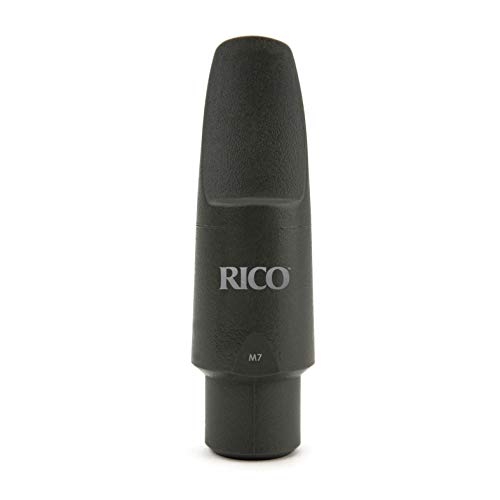
- M7 model for Tenor Saxophone
- Tip opening: .105"
Also designed by Arnold Brilhart, the Metalite is the “angry brother” of the Graftonite. While the Graftonite B5 is versatile, the Metalite is designed for one thing: volume. It has a high baffle that creates a very bright, piercing sound reminiscent of a metal mouthpiece (hence the name). If you are playing in a loud rock band or a funk group and need to scream over electric guitars, the Metalite is a fantastic budget option. However, for everyday use, school band, or traditional jazz, the Metalite is often “too much.” The D’Addario Graftonite Tenor Sax Mouthpiece remains the better choice for most players due to its balanced, medium-bright profile.
Final Verdict: A Modern Classic for Every Tenor Player
After putting it through its paces, it’s clear why the D’Addario Graftonite Tenor Sax Mouthpiece has remained a staple in the industry for decades. It successfully bridges the gap between an affordable “starter” piece and a professional tool. Its strengths lie in its incredible durability, the legendary Brilhart geometry, and a tonal profile that offers both warmth and projection. While the slightly larger physical profile might require a small adjustment period, the musical rewards—easier altissimo, better low-end response, and more “core” to your sound—are well worth it. Whether you are a parent looking for a durable upgrade for your child or a pro looking for a “workhorse” piece that can survive a rainy outdoor gig, this mouthpiece delivers.
In conclusion, if you’re looking for a way to breathe new life into your saxophone without emptying your savings account, this is the single most effective upgrade you can make. The combination of Arnold Brilhart’s design and D’Addario’s modern manufacturing consistency makes it a winner in every category. Don’t let a mediocre mouthpiece hold your playing back any longer; get your D’Addario Graftonite Tenor Sax Mouthpiece today and start exploring the full potential of your instrument.
Last update on 2026-10-10 / Affiliate links / Images from Amazon Product Advertising API