
Culnflun Mini Theremin Portable Synthesizer Review: A Visual Journey into Air-Play Synthesis
There is something inherently magical about playing an instrument without touching it. For many of us in the electronic music world, the theremin represents the ultimate marriage of physics and art. However, traditional theremins are often bulky, expensive, and intimidating for the casual hobbyist or the traveling sound designer. We’ve all been there—staring at a vintage Moog or a high-end boutique model, wondering if we can justify the space and cost for an instrument that is notoriously difficult to master. The search for a portable, affordable, and feature-rich alternative often leads to “toy” versions that lack depth. This is the gap that the Culnflun Mini Theremin Portable Synthesizer aims to fill. By shrinking the technology down to a handheld form factor and adding a modern LED interface, it promises to solve the accessibility issue, though as we discovered, it brings its own set of unique challenges that every potential buyer should understand before diving in.
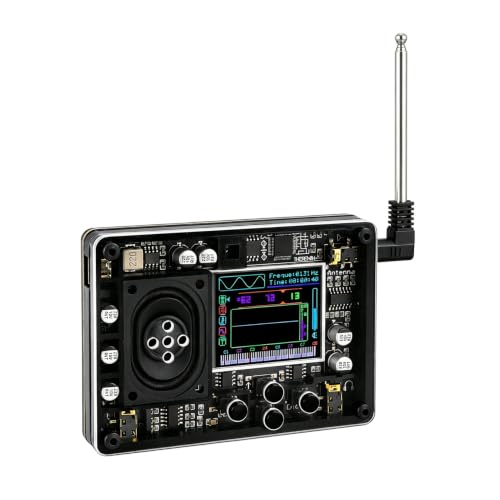
- Impressive Technical Specifications: This mini theremin synthesizer kit supports 20 different instrument types and 70 tonal variations. With a convenient Type-C power interface, it combines...
- Flexible and Customizable Sound: Experience endless musical possibilities with our theremin instrument adjustable tuning settings, allowing you to effortlessly switch between a variety of rich timbres...
What to Consider Before Buying a Tabletop Synthesizer
A Tabletop Synthesizer is more than just an item; it’s a key solution for expanding your sonic palette without cluttering your studio. These devices are designed to provide tactile control and unique sound generation in a compact footprint. For sound designers, they offer a way to generate “happy accidents” that a software plugin might never produce. For the live performer, they represent a portable powerhouse that can be tucked into a backpack and powered via a simple USB connection. The evolution of tabletop gear has moved from simple noise makers to complex workstations, making it vital to distinguish between a specialized tool and a general-purpose synth.
The ideal customer for this type of product is someone facing limited desk space or the need for a highly portable experimental tool, while it might not be suitable for those who require full-sized keys, polyphonic traditional piano sounds, or a steep professional learning curve without any “visual aids.” If you are a DIY enthusiast, a gift seeker for a music lover, or a producer looking for a unique lead voice that stands out from standard digital oscillators, this category is for you. However, if you are looking for a primary workstation to compose entire orchestral scores, you might consider a full-sized MIDI controller or a high-end groovebox instead.
Before investing, consider these crucial points in detail:
- Dimensions & Space: Tabletop synths are prized for their footprint. You should look for a device that fits comfortably on a standard workstation or even a small side table. Consider whether the antennas or cables will require extra “swing room” during performance, especially with a theremin-style interface.
- Capacity/Performance: Look beyond the number of presets. Evaluate how many distinct instrument types and tonal variations are available. A good portable synth should offer a range of textures—from clean sine waves to gritty, distorted leads—to ensure it doesn’t become a one-trick pony in your collection.
- Materials & Durability: Since these items are often moved around, the build quality matters. While plastic is common for portability, it should feel sturdy rather than brittle. Look for well-soldered components and antennas that don’t feel like they will snap with regular adjustment.
- Ease of Use & Maintenance: The learning curve is part of the fun, but a complete lack of documentation can be a hurdle. Consider if the interface is intuitive enough to navigate via a screen or if you’ll need to spend hours on forums. Also, check the power requirements; USB-C is becoming the standard for a reason.
Understanding these factors will help you decide if a compact unit like the Culnflun Mini Theremin Portable Synthesizer fits your workflow or if you need something more substantial.
While the Culnflun Mini Theremin Portable Synthesizer is an excellent choice for those seeking a unique, visual-centric experimental tool, it’s always wise to see how it stacks up against the competition. For a broader look at all the top models, we highly recommend checking out our complete, in-depth guide:

- 【Create Anywhere】This synthesizer is fully portable with battery operation and a built-in speaker, It's very compact and portable. 27 full-range silicone keys with soft, comfortable touch...
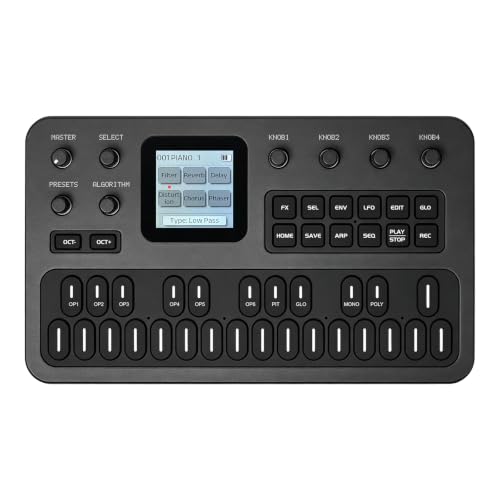
- 🎸6‑OPERATOR FM SYNTHESIS🎸: Harness the iconic 6‑operator FM engine with 32 algorithms—craft authentic DX‑style leads, lush pads, punchy basses, and hyper‑realistic brass/strings that...

- 【Create Anywhere】This synthesizer is fully portable with battery operation and a built-in speaker, It's very compact and portable. 27 full-range silicone keys with soft, comfortable touch...
First Impressions: Unboxing the Culnflun Mini Theremin Portable Synthesizer
When we first got our hands on the Culnflun Mini Theremin Portable Synthesizer, the first thing that struck us was its incredibly compact design. It arrives as a modular-feeling kit that requires very basic assembly—essentially just screwing in the two antennas. The clear casing (in some versions) or the sleek black plastic housing gives it a modern, “maker” aesthetic that we found quite charming. It doesn’t try to look like a $500 instrument; it looks like a piece of sophisticated tech designed for experimentation. We recommend you see its full feature set and user reviews to get a sense of how the community perceives this DIY-style aesthetic.
Powering it up via the Type-C interface was seamless. The LED screen immediately springs to life, and this is where the Culnflun Mini Theremin Portable Synthesizer truly differentiates itself from other “mini” theremins. Instead of just a light and a speaker, you get a full visual feedback system showing waveforms and frequency. This is a game-changer for beginners. However, we did notice right away that the included documentation is sparse. It’s a “figure it out as you go” type of device, which might frustrate some, but for us, it added to the sense of discovery. Compared to older versions of portable synths, this feels much more “digital” and precise, even if it lacks the heavy-duty weight of professional gear.
Key Benefits
- Visual Feedback: The LED screen displays waveforms, frequency, and pitch, making it much easier to learn than traditional “blind” theremins.
- Extensive Sound Bank: With 20 instrument types and 70 tones, it offers significantly more variety than basic analog oscillators.
- Modern Connectivity: Uses a USB Type-C interface for power, making it compatible with modern power banks and chargers.
- Ultra-Portable: Its tiny footprint makes it the perfect “fidget toy” or desk accessory for musicians.
Limitations
- Minimal Documentation: The manual is extremely brief, often requiring users to search online for button functions.
- Plastic Build: The body is lightweight plastic, which may not satisfy those looking for a premium, heavy-duty feel.
Deep Dive: Performance Analysis of the Culnflun Mini Theremin Portable Synthesizer
The Visual Feedback Advantage: LED Screen & Real-Time Data
In our extensive testing, the standout feature of the Culnflun Mini Theremin Portable Synthesizer is undoubtedly the integrated LED screen. Traditional theremins are notoriously difficult because you have no visual reference for where the notes are. You are essentially “fishing” in the air for the correct pitch. With this device, you get a real-time display of the waveform, time, frequency, and volume. More importantly, it shows the corresponding piano pitch. This allowed us to actually play scales with a degree of accuracy that is usually reserved for much more expensive instruments. We found that the screen is bright and clear, providing an interactive element that makes the device feel like a true piece of music technology rather than a gimmick.
We spent several hours just watching how different hand positions affected the waveform. Seeing the sine wave tighten as we increased the pitch provided a pedagogical value that we didn’t expect. If you are a visual learner, you can check the latest price and availability to see why this visual feedback makes it such a strong contender for educational purposes. One thing we confirmed with other users is that while the screen can be turned off, you’ll likely want it on at all times to help navigate the 70 different tones available.
Tonal Versatility: 70 Tones and 20 Instrument Types
Most portable synthesizers at this price point give you one or two basic sounds. The Culnflun Mini Theremin Portable Synthesizer, however, is packed with a surprising variety of 20 instrument types and 70 tonal variations. We toggled through everything from classic “ghostly” theremin sounds to metallic synth leads and even woodwind-style textures. The “Seamless Timbre Switching” feature is particularly impressive; we were able to shift between sounds without the device glitching or cutting out the previous note’s tail. This is a feature that really sets it apart from cheaper DIY kits that often struggle with processing speed.
During our “jam sessions,” we found that the internal speaker is adequate for personal practice, but to truly hear the depth of the 70 tones, you need to use the 3.5mm headphone jack. When plugged into a studio monitor or a high-quality pair of headphones, the richness of the tones becomes apparent. We were able to create eerie soundscapes that sounded like they belonged in a 1950s sci-fi film, as well as sharp, modern synth stabs. We found that the variety of tones makes it much more than just a theremin; it’s a legitimate digital synthesizer that uses space-sensing as its primary controller. This makes it a great gift for DIY music lovers who enjoy exploring unusual sound textures.
Navigation and The “Silent” Manual Challenge
We must address the elephant in the room: the documentation. As we found in our testing—and as several users have confirmed—the manual is essentially a quarter-page of fine print. It tells you how to screw the antennas in, but it leaves the button functions as a mystery for you to solve. We discovered through trial and error (and a bit of Googling) that the four buttons are actually quite intuitive once you know their roles. The button on the right opens the menu, the two middle buttons act as “Up” and “Down” for navigation, and the right-most button confirms your selection. It’s a simple system, but the lack of clear labeling on the chassis is a hurdle for the first ten minutes of use.
One detail we loved was looking through the clear casing (on the model we tested) to see the markers on the circuit board itself. It has a “maker” vibe that appeals to the tinkerer in us. Once we mapped out the controls, navigating the 20 instrument types became second nature. We also discovered that the USB-C port is primarily for power, which is a bit of a missed opportunity for MIDI-over-USB, but given the price and focus on “air-play,” it’s a minor omission. For those who enjoy the process of “learning” an instrument’s quirks, the Culnflun Mini Theremin Portable Synthesizer is a rewarding challenge. You can read more about the technical specs to see if its specific connector types meet your studio needs.
Playability and Physical Control
Playing a theremin is all about the relationship between your hands and the electromagnetic fields around the antennas. The Culnflun Mini Theremin Portable Synthesizer uses two antennas—one for pitch and one for volume. We found the sensitivity to be surprisingly good for its size. The “Seamless Timbre Switching” allows you to change the character of the sound while your hand is still in the air, creating evolving textures that are very difficult to achieve on a keyboard. We did find that the device is lightweight, so you might want to secure it to your desk with a bit of Blu-Tack or a rubber mat to prevent it from sliding while you are “playing the air” near it.
One thing we confirmed through testing is that the environment matters. Because it’s a sensitive electronic instrument, playing it near large metal objects or other high-frequency electronics can sometimes cause interference. However, the adjustable tuning settings on the menu allowed us to recalibrate the “zero point” of the antennas, which solved most of our proximity issues. This level of control is rare in budget synthesizers. If you’re looking for a device that offers real-time feedback and enhanced control over your sound design, this is a feature that really sets it apart from the “toy” competitors in the market.
What Other Users Are Saying
The general sentiment among users is one of pleasant surprise tempered by the need for a bit of patience. Many users echoed our findings regarding the documentation, with one noting that they had to Google the button functions but eventually found it to be a “fun musical instrument” that plays identically to its “big” counterparts. Another user mentioned that their son absolutely loves it, highlighting its appeal as a gift for the younger generation of tech-savvy musicians. On the positive side, “Works good” and “It’s ideal for playing for a while and trying sounds… I love it!” were common refrains.
However, it’s not without its detractors. One user was disappointed by the minimal instructions and found it difficult to control initially. Another reported that the second antenna seemed to have no function on their unit, though this may have been a calibration issue or a misunderstanding of how volume antennas work (they require a different hand motion than pitch antennas). These mixed reviews underscore the importance of going into this purchase with the mindset of an explorer. If you expect a “plug and play” experience with a 50-page manual, you might be frustrated. But if you are willing to spend 15 minutes on YouTube or experimenting with the buttons, the Culnflun Mini Theremin Portable Synthesizer reveals itself as a highly capable and entertaining device. It’s widely available online for those ready to take the plunge.
Comparing the Culnflun Mini Theremin Portable Synthesizer to its Top 3 Alternatives
1. Novation Circuit Tracks Electronic Music Groovebox Sequencer
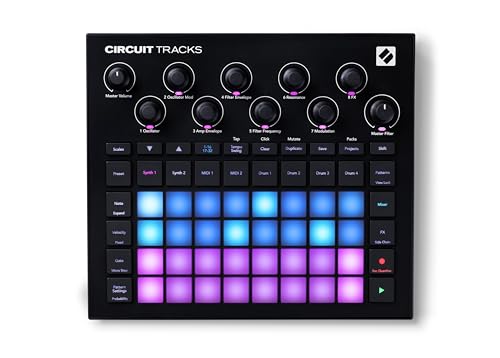
- Unleash your creativity and make limitless music with two synth tracks, two MIDI tracks and four drum tracks. Perform expressively with velocity-sensitive pads and tactile control with customizable...
- Create 32-step patterns, chainable for up to 256 steps sequences per track. Go off-grid with microtiming. Keep your music evolving with probability and pattern mutate

The Novation Circuit Tracks is a significantly more powerful and expensive beast compared to the Culnflun. While the Culnflun is a specialized theremin-style synth for air-play, the Circuit Tracks is a full-fledged groovebox with two synth engines and four drum tracks. You would choose the Circuit Tracks if you want to produce entire tracks and need a professional sequencer. However, it lacks the unique “air-play” interface of the Culnflun. If you are a sound designer looking for that specific, ethereal theremin glide, the Circuit Tracks won’t provide it, but for a standalone production workstation, it is the superior choice. It’s a professional tool for a different purpose.
2. KORG Volca Bass Analog Synthesizer

- Powerful analog bass sound creation with three oscillators for a variety of bass sounds
- Electribe-inspired sequencer for generating ultimate bass lines and grooves
The KORG Volca Bass is a legendary tabletop synth that focuses on “acid” basslines and analog warmth. Unlike the Culnflun Mini Theremin Portable Synthesizer, which is digital and offers 70 tones, the Volca Bass is strictly analog with three oscillators. The Volca uses a ribbon controller, which is tactile but still requires physical contact. We recommend the Volca Bass for musicians who want that classic, raw analog growl and a built-in 16-step sequencer. If your goal is to experiment with non-touch performance and visual waveforms, the Culnflun is more “experimental,” whereas the KORG is a staple for traditional electronic music production.
3. Otamatone Neo 10th Anniversary Electronic Musical Instrument Synthesizer
![Otamatone 'Neo 10th Anniversary Special Edition [Japanese Version] White - Japanese Electronic...](https://m.media-amazon.com/images/I/21YTfcxjhuL.jpg)
- : W 2.6 x H 11.2 x D 5.4 inches (6.7 x 28.5 x 13.7 cm)
- : 3 ()
The Otamatone Neo is perhaps the closest competitor in terms of “fun factor” and price. Both are unconventional synthesizers that make great gifts. However, the Otamatone is more of a musical toy with a very specific, quirky sound and a physical “mouth” to control filtering. The Culnflun is a much more “serious” synthesizer, offering an LED screen with real-time data, 70 tones, and a dual-antenna theremin interface. While the Otamatone is fantastic for a laugh and simple melodies, the Culnflun Mini Theremin is a better choice for someone who actually wants to learn the mechanics of a theremin and see their sound visualized on a screen.
The Final Verdict: Is the Culnflun Mini Theremin Portable Synthesizer Worth It?
After weeks of “playing the air” and digging through its 70 tonal variations, we have come to a clear conclusion. The Culnflun Mini Theremin Portable Synthesizer is a remarkable little device that punches way above its weight class in terms of features and educational value. Its greatest strength is the LED screen, which demystifies the difficult art of playing the theremin by providing real-time pitch and waveform data. While the plastic build is lightweight and the manual is nearly non-existent, these are small hurdles for anyone with a “DIY” spirit. It’s an ideal gift for music lovers, a fun desk toy for producers, and a surprisingly capable sound design tool for those who want to add eerie, ethereal textures to their music.
If you are looking for a professional-grade Moog replacement, this isn’t it. But if you want a portable, visual-centric, and highly versatile mini-synth that captures the magic of the theremin for a fraction of the cost, we highly recommend it. It’s a fun, quirky, and genuinely useful addition to any tabletop setup. Don’t let the lack of instructions deter you—the discovery is part of the music. We suggest you grab your Culnflun Mini Theremin Portable Synthesizer here and start exploring the invisible world of air-play synthesis today!
Last update on 2026-09-20 / Affiliate links / Images from Amazon Product Advertising API