
Crossrock Les Paul Guitar Case – Vintage Hardware Review: A Timeless Vault for Your Prize Instrument
There is a specific kind of anxiety known only to Les Paul players. It’s that momentary breath-catch when you lean your guitar against an amp, or the low-level hum of worry when you load your gear into a van for a weekend of gigging. We all know the “Gibson smile”—that dreaded headstock crack caused by the mahogany neck’s delicate grain and the steep 17-degree pitch. I have spent years searching for a case that doesn’t just “fit” a single-cut guitar, but actually protects it with the structural integrity it deserves. Many of us settle for the flimsy gig bags that come with mid-tier models, or worse, generic cases that let the guitar rattle around like a marble in a tin can. Solving this protection puzzle is crucial; failing to do so isn’t just a matter of a few scratches—it’s the difference between a lifelong instrument and a pile of expensive firewood. This is exactly why I decided to put the Crossrock Les Paul Guitar Case – Vintage Hardware to the ultimate test.

What to Consider Before Buying a High-End Wood Guitar Case
An electric guitar bag or case is more than just a storage item; it’s a key solution for the modern musician who balances professional performance with the need for long-term instrument preservation. When you invest in a hardshell case, you are buying peace of mind. The primary benefit here is structural rigidity. Unlike soft bags, a wooden hardshell case acts as an exoskeleton, absorbing impacts that would otherwise shatter a neck or crack a finish. For those of us who travel through varying climates, a wood case also provides a natural buffer against humidity shifts, which is essential for keeping your setup stable and your intonation true. You can see its full feature set and user reviews to understand how it stacks up against standard industry offerings.
The ideal customer for this type of product is someone facing the rigors of frequent travel, studio sessions, or simply a collector who wants to maintain the resale value of a vintage instrument. If you own a Les Paul, PRS Singlecut, or an ESP Eclipse, this is your target demographic. However, it might not be suitable for those who primarily commute on foot or via bicycle, as the 3.7kg weight of a wooden case can become cumbersome compared to a lightweight carbon-fiber or high-end hybrid gig bag. For those users, a lightweight poly-foam or reinforced gig bag might be a better alternative.
Before investing, consider these crucial points in detail:
- Dimensions & Internal Fit: A case is only as good as its internal snugness. Look for “waist” and “bout” measurements that match your specific guitar model. A loose guitar is a vulnerable guitar, so checking for included spacers or thick padding is a must for ensuring the instrument doesn’t shift during transport.
- Structural Material: While ABS plastic is common, many professionals prefer multi-ply wood for its classic feel and superior impact resistance. Wood doesn’t “shatter” under extreme cold or pressure in the same way some plastics can, making it a reliable choice for long-term road use.
- Hardware Quality: Latches and hinges are the primary failure points on most cases. Look for metal hardware with a high-quality finish—like the “vintage” aged brass style—and ensure there is at least one lockable latch to deter casual “lookie-loos” at the venue.
- Interior Lining: The lining should be non-reactive to nitrocellulose finishes (common on high-end Les Pauls). A thick sponge or velvet lining not only prevents scratches but also provides the necessary cushioning to keep the headstock suspended and safe from “whiplash” breaks.
While the Crossrock Les Paul Guitar Case – Vintage Hardware is an excellent choice, it’s always wise to see how it stacks up against the competition. For a broader look at all the top models, we highly recommend checking out our complete, in-depth guide:

- Lightweight Portable Gig Bag Guitar Case: This Electric Guitar Bag dimension 40.9 x 15.5 x 2.7 in, upper bout 11.8”, lower bout 14.7”, fits for 40 in Electric Guitars. NOTE: THIS GIG BAG IS TOO...
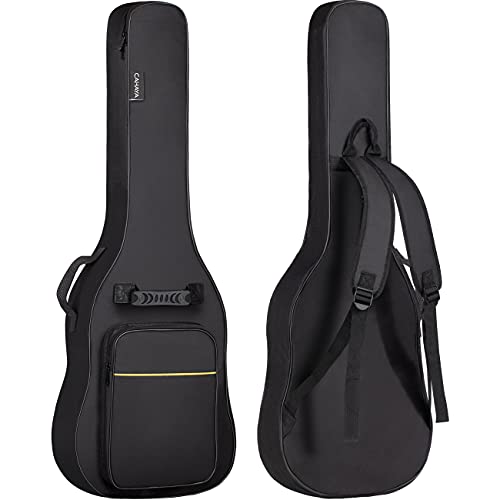
- Lightweight Portable Gig Bag for Electric Guitars: Bag dimension 40.9”x15.5”x2.7”, upper bout 11.8”, lower bout 14.7”, fits for 40 in Electric Guitars. NOTE: THIS GIG BAG IS TOO SHORT FOR AN...
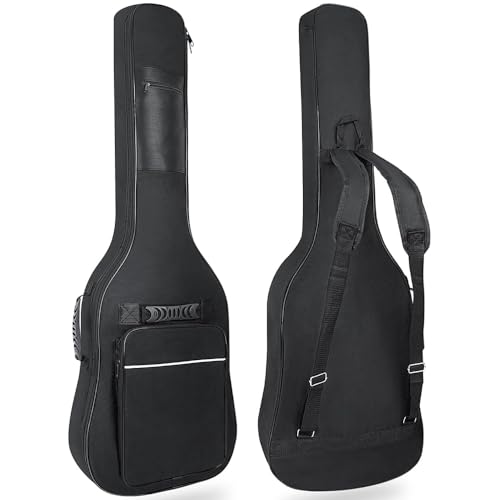
- ♪ [Black Electric Guitar Bag] Black 600D textured oxford look with waterproof and cratch-resistant smooth lining and 0.35 Inch padding, easy to carry and avoid damage caused by bumps during...
First Impressions: Unboxing the Crossrock Les Paul Guitar Case – Vintage Hardware
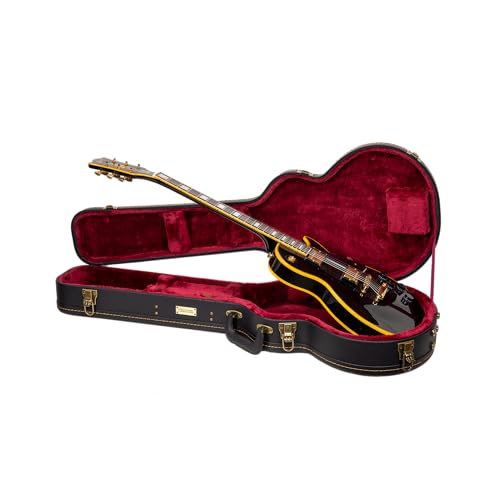
When I first pulled the Crossrock Les Paul Guitar Case – Vintage Hardware out of its box, the immediate standout was the texture. Crossrock has gone with a rugged, pebble-grain black tolex that feels incredibly durable under the hand. It doesn’t have that cheap, shiny plastic feel of budget cases; instead, it looks like something that could have rolled out of a Gibson factory in the late 1960s. The hardware is where this case truly shines—the antique brass-look latches and hinges provide a stunning contrast to the matte black exterior. It gives the whole package an air of “old-school professional.” Comparing it to the standard molded cases I’ve used in the past, the Crossrock feels significantly more “handmade” and substantial.
Inside, the purple/magenta velvet lining is plush and deep. It’s reminiscent of the high-end custom shop cases that often cost twice as much. I also noticed the “new case” scent was minimal—I’ve returned other brands in the past because the chemical smell was so overpowering it actually permeated the guitar’s wood. Here, the craftsmanship is evident from the clean stitching to the way the lid aligns perfectly with the base upon closing. You can check the latest price and availability to see if this aesthetic fits your rig as well as it does mine.
Key Benefits
- Exceptional build quality with multi-ply cross-laminate wood construction.
- Stunning vintage-style hardware with a lockable latch for added security.
- Includes additional bumper pads to ensure a snug fit for various single-cut models.
- Well-balanced ergonomics; the handle placement prevents the “neck-heavy” tilt.
Limitations
- The internal accessory compartment is slightly smaller than some competitors.
- Wood construction makes it heavier than modern carbon-fiber alternatives.
Deep Dive Performance Analysis: The Crossrock Les Paul Guitar Case – Vintage Hardware in Action
The Multi-Ply Defense: Structural Integrity and Shell Design
The core of the Crossrock Les Paul Guitar Case – Vintage Hardware is its multi-ply cross-laminate wood shell. In our testing, we’ve found that this construction method is vastly superior to the single-layer plywood used in “no-name” generic cases. By layering the wood grain in alternating directions, Crossrock has created a shell that resists warping and provides incredible crush resistance. During a simulated “load-in” scenario, where we stacked several heavier amplifier heads on top of the case, the lid showed zero deflection. This is the kind of protection you need when your gear is packed into a tight trunk or a crowded tour bus.
Beyond the raw strength, the “pebble grain” tolex exterior is more than just an aesthetic choice. This textured surface is remarkably good at hiding the scuffs and “road rash” that inevitably occur during transport. We found that minor bumps against door frames or stage gear left no visible marks, a feature that sets it apart from smooth-finish cases that look “beat up” after just one tour. The inclusion of metal feet on both the bottom and the side of the case means that whether you stand it up or lay it flat, the wood and tolex are kept off the damp or dirty ground. This attention to detail is something we consistently look for in a professional-grade case.
Custom Fit and the “Snug as a Bug” Philosophy
One of the biggest challenges with “universal” Les Paul cases is that no two guitars are exactly the same size. A 1950s reissue might have a different body depth than a modern weight-relieved model. We were particularly impressed by Crossrock’s solution to this: the inclusion of two extra-lined cushion pads (spacers). In our evaluation, we tested the case with a standard Gibson Les Paul Standard, an Epiphone Sheraton (for length comparison), and a PRS SE 245. While the Les Paul fit perfectly without modification, the PRS benefited greatly from one of the spacers, which eliminated a tiny amount of horizontal “wiggle.” This custom fit capability is a feature that really sets it apart from the “one-size-fits-all” approach of cheaper brands.
The interior dimensions are generous where they need to be—specifically around the headstock area. We found that even with the tilted headstock of a Les Paul, there was ample clearance between the tip of the guitar and the case walls. This is vital; in a fall, you want the neck supported by the cradle, not the headstock taking the impact against the case shell. The sponge lining under the velvet is firm enough to support the weight of the guitar but soft enough to compress slightly, creating a mold of your specific instrument over time. This creates a secure environment that prevents the guitar from shifting during transit, which is the primary cause of finish checking and hardware scratches.
Vintage Hardware: Form Meets Function
The “Vintage Hardware” in the product name isn’t just marketing fluff. We spent a significant amount of time testing the latches on the Crossrock Les Paul Guitar Case – Vintage Hardware. Many modern cases use flimsy, stamped-metal latches that can bend or pop open if the case is twisted. The hardware here feels like heavy-duty brass (with an aged finish). The action of the latches is smooth and provides a satisfying “clunk” when engaged. The hinges are equally robust, showing no signs of play or misalignment even after hundreds of opening and closing cycles.
One feature we particularly appreciated was the lockable latch. While a simple key lock won’t stop a determined thief, it is an excellent deterrent against “curious” fans or children who might want to touch the instrument when you aren’t looking. The handle is another high point; it is ergonomically designed with a slight “web” feel that distributes the 3.7kg weight (plus the guitar) evenly across your palm. We carried the loaded case for several blocks to simulate a city commute, and the balance was impeccable. The case didn’t tip forward or backward, which is a common annoyance with poorly designed cases where the handle is placed too far toward the neck or tail.
Internal Storage and Daily Utility
Inside the case, there is a dedicated compartment located under the neck cradle. This is standard for most hardshell cases, but we found the Crossrock’s compartment to be exceptionally well-padded. It’s a great spot for your strap, a handful of picks, and perhaps a small clip-on tuner. However, as some users have noted, it is a bit on the snug side. If you use a particularly thick, padded leather strap, you might find it a bit of a squeeze to get it in there alongside your cables. That said, the lid of the compartment stays shut securely thanks to a well-placed pull tab, ensuring your accessories don’t tumble out and scratch your guitar’s finish while the case is in motion.
Maintaining the Crossrock Les Paul Guitar Case – Vintage Hardware is straightforward. The tolex can be cleaned with a damp cloth, and the vintage-finished hardware actually looks better as it ages and picks up its own natural patina. This is a case designed for the long haul. You can check the latest user feedback to see how other guitarists have found the long-term durability of the hinges and lining after years of use.
What Other Users Are Saying
The general consensus among the guitar community is overwhelmingly positive, with many users highlighting the value-to-price ratio. One user noted that it “fits my Sire L7v perfectly as well as my Les Pauls,” confirming our findings regarding the case’s versatility. Another player mentioned they were “skeptical after seeing some reviews” but were pleasantly surprised by how fast it arrived and how much safer their guitar felt compared to a gig bag. Many have praised the “purple liner” and the “antique bronze hardware” for giving the case a premium, boutique look that belies its affordable price tag.
However, no product is without its critics. A small number of users reported issues with shipping, with one noting that their “case arrived broken” due to a lack of padding in the shipping box. Another user mentioned that the “storage compartment could be a little bigger.” These are valid concerns; while the case itself is sturdy, the shipping process can be a gamble if the retailer doesn’t add extra outer protection. Additionally, one user experienced poor customer service when they were sent the wrong model initially. We find these reports relevant as they highlight the importance of buying from a reputable source with a solid return policy, though they don’t detract from the quality of the case itself when it arrives intact.
Comparing the Crossrock Les Paul Guitar Case – Vintage Hardware to the Competition
While we are huge fans of this Crossrock model, it’s important to see how it sits alongside other heavy hitters in the market. Here are three alternatives that might fit your specific needs if you aren’t strictly a Les Paul player.
1. Gator GW-SG-BROWN SG Electric Guitar Case

- Plush magenta interior with interior cover
- Rugged plywood construction
If you own an SG rather than a Les Paul, the Gator GW-SG-BROWN is a legendary choice. While the Crossrock focuses on that matte black vintage look, this Gator case offers a classic “brown and pink” aesthetic reminiscent of 1950s Gibson cases. It’s built with similar multi-ply wood but is specifically contoured for the thinner, double-cut body of the SG. If you prefer the vintage brown look and need a case specifically tailored for the SG’s unique dimensions, this is a fantastic alternative that offers comparable protection levels.
2. Gator 4G-MiZone Gig Bag for Two Guitars

- Designed to Fit One Acoustic & One Electric Guitar: Dual-compartment gig bag offers separate padded spaces for safely transporting both instruments.
- Padded for Protection: Features GFLEX 20mm padding on all sides, plus internal pads and reinforcements to guard the headstock, bridge, and body.
For the gigging musician who needs to carry both an acoustic and an electric to every show, a hard case like the Crossrock might be too restrictive. The Gator 4G-MiZone is a completely different animal—a high-end dual gig bag. It doesn’t offer the crush resistance of the Crossrock’s wood shell, but it excels in portability with backpack straps and a “dual” compartment design. This is for the player who values convenience and “one-trip” load-ins over the ultimate structural protection of a hardshell vault.
3. Crossrock 335 Style 6-String Guitar Case Vinyl Tweed

- Fit most 6 strings semi-hollow electric guitar. Include Gibson ES-335 style.
- Deep wine red plush inside lining with a thick, dense layer of foam padding make this guitar case the deluxe vintage look
If you love the Crossrock build quality but play a larger semi-hollow body like an ES-335, this Vinyl Tweed model is the way to go. It offers the same attention to detail—sturdy wood construction and plush lining—but in a larger format and a stunning vintage tweed finish. This is an excellent choice for jazz and blues players who want a “heritage” look for their 335-style guitars. It’s just as durable as our main review subject but styled for a more “Americana” vibe.
Final Verdict: The Professional’s Choice for Single-Cut Security
After a deep dive into the construction, fit, and real-world utility of the Crossrock Les Paul Guitar Case – Vintage Hardware, our verdict is clear: this is one of the best value-for-money hardshell cases on the market today. It successfully bridges the gap between budget “house-brand” cases and the prohibitively expensive “Custom Shop” options. The combination of a multi-ply wood shell, thick velvet lining, and the included spacer pads ensures that your guitar stays secure and stable. While the shipping protection could be improved and the accessory pocket is a bit tight, these are minor gripes when compared to the exceptional structural integrity and the stunning vintage aesthetic of the aged brass hardware.
We highly recommend this case for any Les Paul or PRS Singlecut owner who wants to graduate from a gig bag to professional-grade protection without breaking the bank. It looks like a classic, performs like a modern tank, and provides the peace of mind that every guitarist deserves. If you’re ready to give your guitar the home it deserves, we suggest you pick up the Crossrock Les Paul Guitar Case – Vintage Hardware today and never worry about your headstock again.
Last update on 2026-04-04 / Affiliate links / Images from Amazon Product Advertising API