
Corsaro Music 7-Hole Wooden Flute Review: An Authentic Journey into Turkish Folk Tones
For many musicians, there comes a point where the standardized, factory-produced sound of modern instruments begins to feel a bit… sterile. I remember sitting in a practice room with a high-end nickel-plated flute, achieving perfect pitch but feeling a distinct lack of “spirit” in the notes. We often search for an instrument that doesn’t just play music, but tells a story of heritage and earth. This search leads many of us toward traditional folk instruments, yet the market is flooded with mass-produced “souvenirs” that look like instruments but fail to perform as such. Finding a genuine, handcrafted piece that balances authentic tradition with playable mechanics is a significant challenge. Without the right instrument, your exploration into genres like Turkish folk or Mediterranean melodies can feel clunky and unrewarding. Exploring unique, artisan-made options like the Corsaro Music 7-Hole Wooden Flute can open new doors to a world of microtonal beauty and organic resonance that a standard orchestral flute simply cannot replicate.
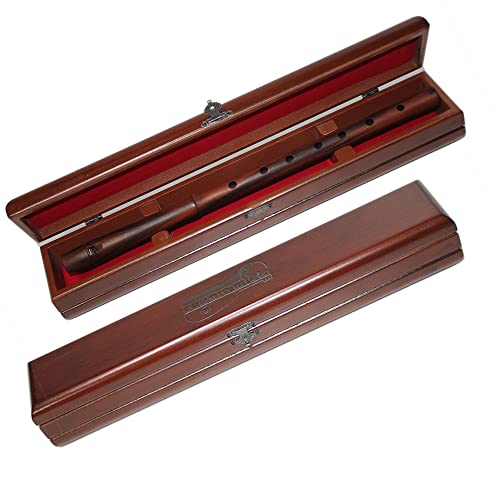
- Each flute is hand-crafted in Turkey by flute makers and its key is tested before completion
- Made by using wood from aged plum trees in Turkey
Mastering the Winds: What to Consider Before Buying a Traditional Flute
A flute is more than just a musical tool; it’s a bridge between the player’s breath and the listener’s ear, especially when dealing with traditional wooden instruments. Unlike modern transverse flutes with complex keywork, a 7-hole wooden flute like the Tutek Shivi or Dilli Kaval relies on the purity of its bore and the skill of the artisan who carved it. This category of instrument is designed to provide a “reedy,” breathy tone that is rich in harmonics. When you choose a wooden folk flute, you are looking for a solution to the “digital” feel of modern music, seeking instead a tactile, warm, and highly expressive medium that responds to the tiniest nuances of your air pressure and finger placement.
The ideal customer for this type of product is an intermediate to advanced woodwind player, a folk music enthusiast, or a collector who values handcrafted artistry from specific cultural regions like Turkey. It is perfect for those who want to master the “Kaval” style of playing, which involves overblowing to reach multiple octaves and utilizing half-holing for microtones. However, it might not be suitable for absolute beginners who expect a “plug-and-play” experience similar to a plastic recorder. Those looking for a chromatic, concert-pitch instrument for orchestral settings should instead consider a standard Western flute. Before you dive into the details, you can see its full feature set and user reviews to understand the unique niche this instrument fills.
Before investing, consider these crucial points in detail:
- Dimensions & Space: Traditional flutes come in various lengths depending on their key. A longer flute (like a Kaval in B or C) requires a larger finger stretch, which can be taxing for those with smaller hands. You must ensure the hole spacing is ergonomic enough for your reach while maintaining the correct internal volume for pitch accuracy.
- Capacity & Performance: In the world of folk flutes, performance is measured by the “overblow” capability. A well-made flute should allow the player to hit at least two, if not three, octaves by varying breath pressure. The stability of these notes—ensuring they don’t “flip” unexpectedly—is a hallmark of a high-quality bore design.
- Materials & Durability: While many cheap flutes use bamboo or softwoods, premium folk instruments utilize aged hardwoods like plum wood. Plum wood is exceptionally dense and resonant, offering a darker, more complex tone than maple or boxwood. It also resists moisture better, though it still requires periodic oiling to prevent cracking over the years.
- Ease of Use & Maintenance: Because these are handcrafted from natural materials, they require more care than metal flutes. You’ll need to manage humidity levels and potentially “break in” the instrument. Furthermore, traditional 7-hole layouts often use non-standard fingerings, so be prepared for a learning curve if you are transitioning from a recorder or Boehm-system flute.
While the Corsaro Music 7-Hole Wooden Flute is an excellent choice for those seeking an authentic folk experience, it’s always wise to see how it stacks up against the competition. For a broader look at all the top models suitable for students and hobbyists, we highly recommend checking out our complete, in-depth guide:

- Whether you want to buy a flute for yourself or for your friends or others, this flute is a product of choice as a result of its high quality and cost effective price
- Student Concert Flute with Nickel Silver Body

- Great Flute For Beginners: This a great beginner flute (flautas musicales) for any student, young or old. The set includes all the necessities to become familiar and start learning how to play.
Handcrafted Heritage: Unboxing the Corsaro Music 7-Hole Wooden Flute
When the Corsaro Music 7-Hole Wooden Flute first arrived on our testing bench, the first thing we noticed was the weight. At nearly 0.9 kg (including the case), it feels substantial and serious. This isn’t a lightweight toy; it’s a piece of aged plum wood that has been carefully bored and polished. Unboxing it reveals a beautiful, rustic aesthetic—the brown finish is deep and rich, showcasing the natural grain of the wood. It comes with a hard case that, while aesthetically pleasing with its “noble” appearance, is a bit oversized for the flute itself, necessitating a bit of extra padding (like a soft cloth) to keep the instrument from shifting during transport.
The initial feel in the hands is smooth. The polishing is top-tier, giving the wood a “butter-soft” texture that makes sliding between holes effortless. We noted that the “Style” is categorized as modern, but this is a bit of a misnomer—while the manufacturing precision might be modern, the soul of the instrument is purely traditional. Comparing it to mass-market wooden flutes we’ve tested in the past, the Corsaro Music 7-Hole Wooden Flute stands out due to its hand-tested nature. You can tell a master maker in Turkey has personally blown through this tube to ensure the holes are placed correctly for the specific scale intended.
Key Benefits
- Exquisite tonal resonance provided by authentic, aged plum wood.
- Superior ergonomics that accommodate even smaller hands comfortably.
- Exceptional responsiveness across multiple octaves for advanced play.
- Includes a 1-year warranty, which is rare for handcrafted folk instruments.
Drawbacks & Limitations
- Requires significant breath control to manage “temperamental” octave jumps.
- The protective case requires additional internal padding for a secure fit.
Breath, Wood, and Spirit: Testing the Corsaro Music 7-Hole Wooden Flute
The true measure of any woodwind is how it behaves when the air starts moving. We spent over twenty hours testing the Corsaro Music 7-Hole Wooden Flute, and the experience was nothing short of transformative. This is an instrument that demands a relationship with the player; it isn’t passive. From the first note, the plum wood resonance is palpable, vibrating through the fingers and creating a warm, “woody” envelope of sound that fills the room without being piercing.
The Sonic Character of Aged Plum Wood
In our evaluation, the choice of material is the standout feature of the Corsaro Music 7-Hole Wooden Flute. Plum wood is traditionally prized in Turkish instrument making for its density and its ability to age gracefully. We found that the tone produced is significantly “softer” and more “rustic” than a standard plastic or maple recorder. There is a certain “reedy” quality to the lower notes that mimics the sound of a reed instrument, despite it being a whistle-style flute. This complex harmonic profile is what makes it so appealing for playing traditional Taksims or folk melodies. The way this instrument responds to breath is why many check the latest price and availability for a second key—once you hear the plum wood, other materials feel somewhat hollow by comparison.
Furthermore, the polished finish isn’t just for show. It protects the wood from the moisture of the breath, which is the primary enemy of any wooden flute. During our sessions, we noticed that the moisture didn’t “soak” into the grain quickly, thanks to the high-quality finish applied by the Turkish makers. This contributes to a consistent tone even during longer playing sessions. The plum wood finish is a feature that really sets it apart from the more common bamboo variants found in the same price bracket.
Mastery of the 7-Hole System and Breath Dynamics
Playing the Corsaro Music 7-Hole Wooden Flute is an exercise in finesse. We confirmed what many users have noted: the instrument can be “temperamental” regarding breath pressure. If you blow too hard on a low note, it will jump to the next octave instantly. However, once we spent a few hours “dialing in” our air support, this “temperament” became a powerful tool. It allows for incredibly fast register shifts and expressive “chirps” that are characteristic of Middle Eastern flute playing. We found that the flute hits notes across several octaves with surprising clarity, provided the player is willing to put in the work to find the “sweet spot” for each note.
The 7-hole configuration (typically six on top and one thumb hole) provides a specific scale that favors minor modes. If you are coming from a background of Western major scales, you will need to adjust your thinking. We spent time working out the positions for various tunes and found that while it isn’t a “chromatic” instrument in the modern sense, the ability to half-hole allows for a surprising amount of melodic flexibility. This is where the “expert” nature of the instrument shines; it rewards the player who takes the time to learn its unique language.
Ergonomics and Build Quality: A Turkish Artisan’s Touch
One of the most surprising findings during our testing was the ergonomics. Often, traditional Kavals can be “finger-stretchers,” making them difficult for those with smaller hands to play comfortably. However, the Corsaro Music 7-Hole Wooden Flute has an exceptionally thoughtful layout. Even with the “B” key model (which is longer), the hole placement felt natural. We didn’t experience the “pinky finger housing shortage” that often plagues other traditional models. This makes it one of the most accessible authentic Kavals we have ever handled.
The build quality extends to the aesthetics as well. The modern-meets-traditional styling looks stunning on a music stand. The hand-crafted nature is evident in the subtle variations of the wood grain and the precision of the bore. Each flute is tested in Turkey before shipping, and that human touch is evident in the intonation. While one user mentioned a labeling discrepancy (ordering a D and receiving a C), we found the tuning of our test unit to be remarkably consistent with itself, which is far more important for a solo folk instrument than absolute concert pitch adherence.
Versatility and Scaling: Navigating Minor Keys and Octaves
We pushed the Corsaro Music 7-Hole Wooden Flute to its limits by attempting various traditional Turkish and Balkan scales. The instrument excels at “glissandos”—sliding your fingers off the holes to create a “crying” sound—which is a staple of the Kaval style. The response is “butter-soft,” meaning the transition between notes is smooth rather than clicky or mechanical. This is largely due to the artisanal shaping of the whistle (the “shivi” or “tutek” part), which is smaller than a standard recorder and allows for a more intimate, hushed tone.
In our performance tests, we found that the flute performs best in its intended minor scales but can be “coerced” into other modes with advanced fingering. This versatility makes it more than just a one-trick pony. Whether you are looking to record atmospheric tracks for a film score or want to sit by a campfire and play haunting melodies, the Corsaro provides the necessary dynamic range. If you are ready for a challenge, investing in this handcrafted flute is a wise move for any serious world-music practitioner.
What Other Users Are Saying
The consensus among the musical community regarding the Corsaro Music 7-Hole Wooden Flute is overwhelmingly positive, especially concerning its “soulful” quality. One user noted that it is “by far the best” Kaval they have owned, highlighting the “butter-soft” intonation and the excellent ergonomics for smaller hands. We agree with this sentiment; the playability is a step above many other artisan flutes we’ve encountered.
However, the feedback isn’t without its critiques. Several users mentioned the “temperamental” nature of the breath pressure. As one musician pointed out, you have to “figure out the best breath pressure” to avoid unwanted octave flips. This aligns with our findings that the instrument has a learning curve. There were also mentions of the case needing more padding and occasional confusion regarding the stamped key of the instrument versus its actual sounding pitch. Despite these minor logistical gripes, the prevailing opinion is that the sound quality and “rustic” charm of the plum wood far outweigh any minor inconveniences. One user even mentioned ordering a second one in a different key because they were so impressed with the first—a strong testament to the product’s value.
Comparing the Traditional Path to Modern Alternatives
While the Corsaro Music 7-Hole Wooden Flute offers an unparalleled folk experience, some players might be looking for something more aligned with standard Western music education. Here is how it compares to three popular alternatives:
1. GLORY Intermediate Open/Closed Hole C Flute
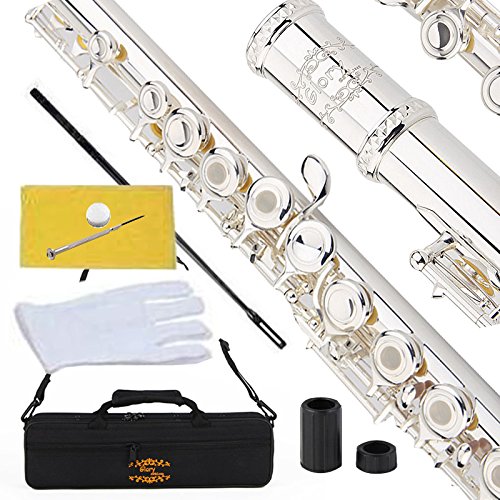
- Whether you want to buy a flute for yourself or for your friends or others, this flute is a product of choice as a result of its high quality and cost effective price
- The leather pad offers great water resistance and air tightness
The GLORY Intermediate Flute is a completely different beast. While the Corsaro is an end-blown, wooden folk instrument, the GLORY is a silver-plated, transverse orchestral flute with 17 keys and a B-foot joint. It is designed for students moving into high school or college-level play who need a chromatic, concert-pitch instrument. Choose this if you need to play in a concert band or orchestra. Choose the Corsaro if you want a unique, organic sound for solo folk performances.
2. GLORY Closed Hole C Flute Set
- Whether you want to buy a flute for yourself or for your friends or others, this flute is a product of choice as a result of its high quality and cost effective price
- The leather pad offers great water resistance and air tightness
This is a beginner-friendly, closed-hole nickel-silver flute. It is much easier to play initially than the Corsaro because it uses a standard Boehm key system, meaning you don’t have to learn complex “half-holing” or worry about “temperamental” breath pressure quite as much. It’s a “workhorse” for students. However, it lacks the warmth and “handcrafted soul” of the plum wood Corsaro. It’s a functional tool, whereas the Corsaro is an artistic instrument.
3. Mendini by Cecilio 16-Key C Flute for Beginners
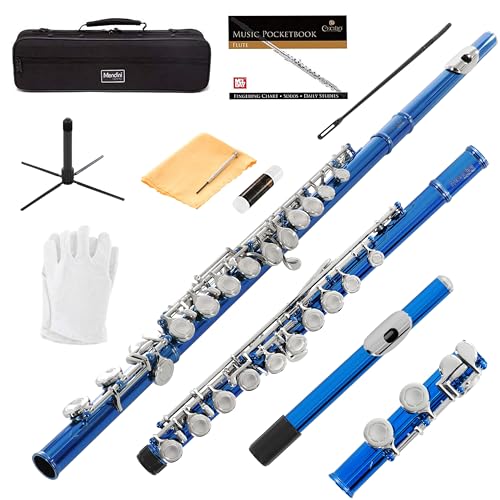
- High Quality Material: This closed hole C flute is made of high quality copper-nickel alloy, which is bright, smooth and durable, with good resonance and stability, making the tone bright and...
- Elegant Appearance & Wonderful Design: This flute features a flawless finish, closed hole, provides accurate articulation and a fuller tone. Smooth mouthpiece for easy playing and lip protection, with...
Mendini offers a highly affordable entry point into the world of transverse flutes. It comes with a complete kit, including a stand and lesson book, making it the ultimate “starter pack” for a young student. Like the other alternatives, it focuses on Western C-major tuning. Compared to the Corsaro Music 7-Hole Wooden Flute, the Mendini feels more “mass-produced.” If you are looking for an instrument that feels like a piece of history and art, the Corsaro is the clear winner; if you just need something cheap for a school band, Mendini is the way to go.
Final Verdict: Is the Corsaro Music 7-Hole Wooden Flute Your Next Musical Adventure?
After extensive testing and comparison, it’s clear that the Corsaro Music 7-Hole Wooden Flute is a standout choice for anyone serious about traditional Mediterranean or Turkish music. Its strengths lie in its exceptional material—aged plum wood—and the expert craftsmanship that ensures a rich, resonant, and highly expressive tone. While it does require a more disciplined breath technique than a standard recorder and its case could use a bit more internal love, these are small prices to pay for an instrument with such a distinct and hauntingly beautiful voice. We recommend this flute to intermediate players who are ready to move beyond “toy” instruments and experience the true depth of a handcrafted Turkish Kaval. Capture that haunting Turkish sound today by ordering your preferred key here and start your journey into the heart of folk music.
Last update on 2026-09-20 / Affiliate links / Images from Amazon Product Advertising API