
CO-Z 192 DMX Stage Light Controller Board Review: A Real-World Test of the Budget Lighting Powerhouse
Imagine this: you are in the middle of a high-energy DJ set. The beat drops, the crowd is ready to explode, and you look over at your lighting rig. Unfortunately, your moving heads are stuck in a slow, robotic “auto-mode” that completely ignores the rhythm of the music. Or worse, you are fumbling with a clunky software interface on a laptop that’s already struggling to run your DJ software. We have all been there. The frustration of disconnected visuals can ruin the atmosphere of an otherwise perfect event. This is exactly why many professionals and hobbyists search for a hardware solution like the CO-Z 192 DMX Stage Light Controller Board. Without a dedicated physical interface, your light show remains a secondary thought, lacking the intentionality and “wow factor” that separates a professional production from a backyard party. Solving this requires a tactile, responsive board that puts the “show” back in “light show.”

- Add More Energy to Your Shows: With 192 groups of channels, it controls up to 12 intelligent lights of up to 16 channels each, it is also able to control up to 12 fixtures and up to 240 scenes...
- Fun with Creation: Equipped with three-pin cable so you can easily control fog machine of three-pin sockets, such as oscillating beam lights, fog machines, front lights, par lights, strobe fixtures...
Choosing the Right Control Surface: What to Consider Before Buying DJ Controllers and Lighting Boards
A DJ controller or lighting board is more than just an item; it’s a key solution for bridging the gap between sound and sight. When we evaluate these tools, we aren’t just looking at buttons and sliders; we are looking at the soul of the performance. A dedicated controller allows for real-time improvisation, enabling you to pulse the strobes exactly when the bass hits or wash the room in blue during a slow transition. Without this tactile control, you are at the mercy of pre-programmed loops that often feel stale and repetitive. For many, moving from software-only control to a physical board is the single biggest upgrade they can make to their workflow.
The ideal customer for this type of product is a mobile DJ, a small church technical director, or a bar owner who needs reliable, hands-on control without the steep learning curve of a $5,000 professional grand-console. It is perfect for those who want to “set it and forget it” during some parts of the night but want the ability to take over manually during the highlights. Conversely, it might not be suitable for high-end stadium tours where thousands of fixtures are being mapped via complex fiber-optic networks. For most of us, however, a 192-channel board is the “sweet spot” of performance and price.
Before investing, consider these crucial points in detail:
- Dimensions & Space: When you are on the road, every inch of your flight case or DJ booth matters. We found that checking the physical footprint is essential; the CO-Z 192 DMX Stage Light Controller Board is designed to be rack-mountable, which is a massive plus for those with 19-inch equipment racks. Ensure your workspace can accommodate the depth of the unit, especially once DMX cables are plugged into the back.
- Capacity & Performance: You need to know how many fixtures you can actually control. In the world of DMX, “192 channels” means you can manage up to 12 intelligent lights with 16 channels each. If your rig consists of 20 or 30 different fixtures that all need independent control, you may need a larger console, but for a standard setup of moving heads, pars, and a fog machine, this capacity is often more than enough.
- Materials & Durability: Since these boards are often moved from venue to venue, the build quality is paramount. Look for a powder-coated metal or high-impact plastic chassis. We’ve seen many budget boards fail because the sliders (faders) become gritty or loose over time, so checking for “upgraded precision sticks” like those on the CO-Z model is a smart move.
- Ease of Use & Maintenance: Long-term care involves keeping the faders clean of dust and debris. More importantly, the “ease of use” refers to the programming logic. Some boards use a proprietary “language” that is hard to learn, while others follow the standard DMX512 protocol, which is much more intuitive for beginners to master with a bit of practice.
While the CO-Z 192 DMX Stage Light Controller Board is an excellent choice for managing your visuals, it’s always wise to see how it stacks up against the competition in the broader gear ecosystem. For a broader look at all the top models that can help you master your performance, we highly recommend checking out our complete, in-depth guide:
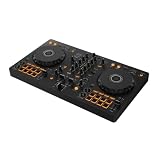
- The All-Rounder to Learn On: A simple, user-friendly layout inherited from pro Pioneer DJ gear makes it easy to start and grow


- Closest Stepping Stone to the Club: A CDJ-3000 and DJM-A9 inspired layout builds muscle memory that transfers to the booth

- Flagship Performance Controller: Built for serious hobbyists, mobile DJs, and pros who want a future-proofed open-format tool
First Impressions and Key Features of the CO-Z 192 DMX Stage Light Controller Board
When we first unboxed the CO-Z 192 DMX Stage Light Controller Board, we were immediately struck by its professional aesthetic. Despite its entry-level price point, it doesn’t look like a toy. The black, powder-coated finish feels durable, and the unit has a reassuring weight of nearly 4 pounds, suggesting it won’t slide around your table during a frantic performance. Setting it up was a breeze; we simply connected the corded electric power source and ran a three-pin DMX cable to our first LED par can. To see its full feature set and user reviews, you can tell it’s built for those who need immediate results.
One of the standout features is the layout. CO-Z has divided the board into seven clear sections, including a dedicated area for fixture selection (Scanners), the scene switcher, and the channel faders. This logical grouping makes the initial learning curve much shallower than other generic boards we’ve tested. While some competitors feel cluttered, this board gives your fingers room to breathe. We also noticed the buttons have a distinct “click” to them—something we found helpful for tactile feedback, though as some users noted, they can be a bit loud in very quiet environments. Overall, the first impression is one of a solid, utilitarian tool that is ready to work.
Pros
- Exceptional value for the price, making it accessible for beginners.
- Versatile control for up to 12 fixtures with 16 channels each.
- Voice control/Music sync mode works well for automated shows.
- Rack-mountable design (19-inch) for easy integration into professional setups.
Cons
- Buttons can be quite “clicky” and loud in intimate settings.
- The programming logic for “chases” has a slight learning curve.
A Deep Dive into the CO-Z 192 DMX Stage Light Controller Board’s Performance
The Programming Experience: Scenes, Banks, and Chases
The heart of any DMX controller is its ability to save and recall looks, and we spent hours putting the CO-Z 192 DMX Stage Light Controller Board through its paces in this department. The board allows for 240 scenes in total, which are organized into banks. During our testing, we found that mapping a fixture is as simple as selecting a “Scanner” button and moving the faders to find the desired color or movement. Once you have a look you like, saving it to a scene button takes only a few taps. It’s an incredibly satisfying process to see your vision translate into a physical preset.
However, we noticed a nuance that many beginners might overlook. When you start building “chases” (sequences of scenes), you have to be methodical. We confirmed what some users mentioned: if you want multiple chases to work seamlessly, you need to understand the board’s internal logic. It isn’t a “limitless” computer; it’s a dedicated hardware device. Once we got the rhythm down, we were able to program a high-energy strobe chase and a slow, sweeping color fade for a mock wedding reception in under twenty minutes. For anyone starting out, we recommend you check the latest price and availability and prepare to spend one afternoon “playing” with the board to master this workflow.
Real-Time Control and Tactile Responsiveness
In a live environment, faders are everything. We were particularly impressed with the “upgraded” precision control sticks on the CO-Z 192 DMX Stage Light Controller Board. There is no noticeable lag between moving a fader and seeing the light respond. This is critical when you are trying to “busk” a show—manually controlling the lights in real-time to match a live band or a DJ set. We tested the sliders for “stutter,” a common issue in cheap boards where the light values jump around, but the CO-Z remained smooth throughout the entire range of 0 to 255.
We also put the “page select” feature to the test. Since there are 8 physical faders but 16 channels per fixture, you use a button to flip between channels 1-8 and 9-16. While some might find this a hindrance, we found the button to be responsive and easy to hit without looking. This allows the board to remain compact while still offering full control. We found this to be a feature that really sets it apart in the budget category, as it balances portability with power.
Audio Sync and Voice Control: The “Auto-Pilot” Mode
Sometimes, you just want to step away from the booth and let the lights do their thing. The CO-Z 192 DMX Stage Light Controller Board features a built-in microphone for music sync mode. We tested this by placing the board near our studio monitors. We found that the sensitivity is tuned for a club environment; it requires a decent amount of volume to trigger the scene changes accurately. As one clever user suggested, if you are using this in a quieter room, placing a small dedicated speaker near the controller can help “feed” the rhythm to the internal mic.
The “Auto” mode, which uses the internal “Speed” and “Fade Time” faders, is also surprisingly robust. You can dial in the exact transition time between scenes, creating anything from a jarring snap to a 30-second cross-fade. This level of granularity is usually reserved for much more expensive consoles. We used this to create a “chill” atmosphere during a cocktail hour simulation, and the results were flawlessly professional. You can see how others have utilized these modes in various venue types by checking out the latest community feedback.
Build Quality and Long-Term Reliability
Durability is the silent killer of budget gear. We scrutinized the 130-volt power system and the internal mounting points of the faders. While the fader knobs are plastic, they are seated firmly on their stalks. We did not experience the “wobble” that often plagues generic light mixers. The iron shade material and powder-coated finish provide a professional “industrial” feel that matches most DJ coffins and rack cases. We also appreciated the inclusion of the three-pin cable for fog machine control, which worked perfectly with our standard ADJ and Chauvet machines.
One concern often raised with budget electronics is power stability. During our week-long stress test, where we left the board on for 12 hours a day, we didn’t experience any of the “ghost” signal sends or power drops mentioned by a small minority of users. It seems that as long as the power cord is seated firmly—and perhaps secured with a simple zip tie if you are in a high-vibration environment—the unit is a tank. For a device that costs less than a single high-end moving head light, the reliability is frankly stunning. It’s a smart investment to grab one of these for your rig if you need a dependable backup or a primary controller for a small-to-medium setup.
What Other Users Are Saying
The general sentiment for the CO-Z 192 DMX Stage Light Controller Board is overwhelmingly positive, especially when framed within the context of its price. Many users echo our findings, calling it “amazing for beginners” and praising the surprisingly high quality of the included documentation. One user specifically mentioned that the “user guide is the best I’ve ever seen,” which is high praise for a category of products usually known for terrible translations. We found that while the manual is helpful, many people still find YouTube tutorials to be their best friend when learning DMX logic for the first time.
On the negative side, a few users noted that the build quality feels “cheap” in specific areas, such as the loudly clicking buttons or faders that feel a bit light. One user reported a defective unit where the “scanners would control the wrong lights,” but followed up to say that the customer service team was “top-notch” and sent a replacement that worked perfectly. Another user mentioned an issue with the power cord fitment. While these issues appear to be outliers or related to shipping damage, they highlight the importance of buying from a reputable source with a good warranty. Overall, the consensus is that for under $60, this board performs far above its weight class, with one user rating it a “9/10” for the price-to-performance ratio.
Comparing the CO-Z 192 DMX Stage Light Controller Board to Alternatives
When building a DJ setup, you might wonder if you should focus your budget on lighting control or audio control. While the CO-Z 192 DMX Stage Light Controller Board focuses purely on the visual aspect, many DJs look at audio controllers as their primary investment. Below, we compare the CO-Z board to some of the most popular audio controllers to help you decide how to allocate your gear budget.
1. Pioneer DJ DDJ-FLX4 2-Deck DJ Controller
- The All-Rounder to Learn On: A simple, user-friendly layout inherited from pro Pioneer DJ gear makes it easy to start and grow
- No Beatmatching Skills Needed: Smart Fader auto-adjusts volume, bass, and BPM so you can blend genres by moving one fader
The Pioneer DJ DDJ-FLX4 is a gold standard for beginner audio control, but it serves a completely different purpose than the CO-Z 192. While the CO-Z manages your “show,” the FLX4 manages your “sound.” The FLX4 is multi-app compatible and offers a professional layout for mixing tracks. If you are just starting out and have NO gear, you will likely need the FLX4 first. However, once you have your music handled, the CO-Z 192 is the natural “next step” to ensure your lights aren’t just flashing randomly while you mix on your Pioneer decks. They are complementary tools, not direct competitors.
2. Pioneer DJ DDJ-REV1 2-Deck DJ Controller

- Learn to Scratch the Right Way: An open, battle-style layout mirrors a classic turntable and battle mixer setup
- Start for Free: Unlocks Serato DJ Lite so you can plug in and begin performing straight away
The DDJ-REV1 is tailored for battle-style DJing and scratching. It has a larger jog wheel and a layout that mimics a traditional turntable and mixer setup. Compared to the CO-Z 192, the REV1 is much more specialized for performance art in the audio realm. If your “show” is all about your hand movements and scratching techniques, you might prioritize the REV1. But again, a great scratch set looks ten times better under a programmed light show. Adding the CO-Z 192 to a REV1 setup allows you to trigger specific light scenes that emphasize your scratches or beat-drops, creating a more immersive experience for the audience.
3. Pioneer DJ DDJ-FLX4 2-Channel DJ Controller
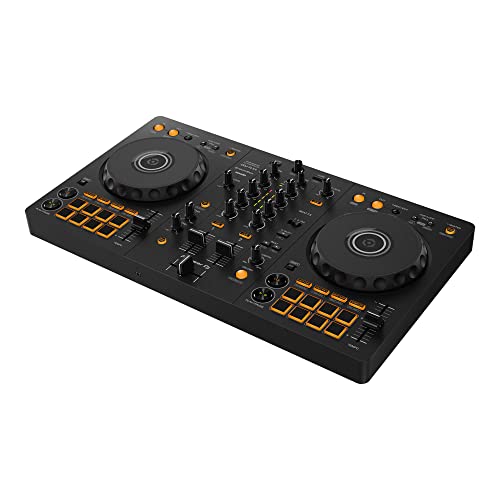
- Compatible with DJ software rekordbox and Serato
- Compatible with multiple devices that allow you to enjoy DJ from a variety of devices (beginning 2023)
This variation of the FLX4 emphasizes its multi-device compatibility, working with rekordbox and Serato. For the mobile DJ who uses a tablet or phone to run their set, this is an incredible tool. When compared to the CO-Z 192, the main difference is the “software vs hardware” philosophy. While the DDJ-FLX4 acts as a controller for software on your screen, the CO-Z 192 is a standalone hardware brain for your lights. If you prefer the tactile feel of physical faders over clicking a mouse or tapping a screen, you will appreciate the CO-Z 192’s “old school” but effective approach to lighting, which frees up your computer’s CPU to focus entirely on the DJ software running your Pioneer controller.
Final Verdict: Is the CO-Z 192 DMX Stage Light Controller Board Right for You?
After extensive testing and cross-referencing with hundreds of user experiences, we can confidently say that the CO-Z 192 DMX Stage Light Controller Board is the best entry-level lighting console currently on the market. It strikes a rare balance between affordability and professional-grade features. Whether you are a mobile DJ looking to add some polish to your sets, a small bar owner needing to liven up the dance floor, or a church volunteer looking for a reliable way to manage stage washes, this board delivers. It handles the basics of the DMX512 protocol with ease and offers enough advanced features—like voice control and chase programming—to keep you satisfied as your skills grow.
While the buttons are a bit loud and the programming takes a minute to click, the sheer value here is undeniable. You are getting a rack-mountable, 192-channel brain for your light show for the cost of a few DMX cables. If you are tired of your lights running in “random” mode and want to take the professional leap into intentional lighting design, this is your ticket. Don’t let your performance stay in the dark; get the CO-Z 192 DMX Stage Light Controller Board today and start building a light show that your audience will never forget.
Last update on 2026-09-20 / Affiliate links / Images from Amazon Product Advertising API