
Choroi Pentatonic Glockenspiel Review: A Masterpiece of Waldorf-Inspired Sound or Just a Child’s Toy?
When we first began looking into musical instruments for early childhood development, we were struck by a common problem: most “children’s instruments” sound like, well, toys. They are often made of thin, tinny metal or hollow plastic, producing a jarring, discordant noise that can actually discourage a child’s natural ear for music. For parents, homeschoolers, and music educators, the struggle is real—we want to foster a love for melody without the headache of constant dissonance. The quest for a pure, ethereal sound led us to explore the world of pentatonic instruments. We needed something that felt “inviting,” an instrument where no “wrong” notes exist, allowing a child to explore rhythm and tone with total confidence. This is where we discovered the Choroi Pentatonic Glockenspiel. If you fail to provide a high-quality auditory environment for a developing child, you risk missing a critical window for pitch recognition and soulful musical expression. The complications of a “bad-sounding” toy aren’t just auditory; they are developmental.
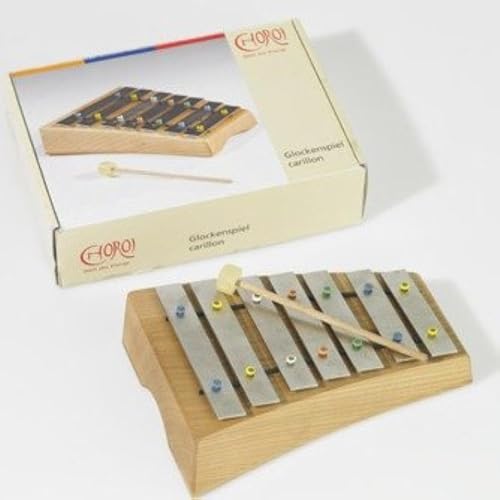
- Made in Sweden by Choroi
- Cherry Wood with 7 Steel Plates and Mallet
What to Consider Before Investing in High-End Glockenspiels
A Glockenspiel is more than just an item; it’s a key solution for bridging the gap between play and formal musical education. Unlike a standard 12-note chromatic xylophone, a pentatonic version like the Choroi Pentatonic Glockenspiel is designed to create a “dreamy” atmosphere where every note harmonizes with the next. This category of instrument is designed to soothe and inspire rather than just make noise. Before you see its full feature set and user reviews, it’s vital to understand what makes this category unique.
The ideal customer for this type of product is someone facing the challenge of introducing music to toddlers, preschoolers, or early elementary students—especially those following Waldorf or Montessori philosophies. It’s also a wonderful tool for music therapists who need a “safe” melodic landscape. However, it might not be suitable for those who are looking for a professional orchestral bell kit for high school band, as the range is intentionally limited to seven notes. If you need a full three-octave range for complex classical pieces, you may want to look at a standard percussion kit instead.
Before investing, consider these crucial points in detail:
- Dimensions & Space: The physical footprint of a glockenspiel matters more than you think. A compact 8-inch model like the Choroi Pentatonic Glockenspiel is ideal for small laps and desks. It needs to be portable enough for a child to carry, yet substantial enough to feel like a “real” instrument. Large bell kits require stands and storage space, which might not be practical for a home environment.
- Capacity/Performance: In the world of glockenspiels, “capacity” refers to the note range. A 7-note pentatonic scale (d”-e”-g”-a”-b”-d”’-e”’) offers enough variety for hundreds of folk songs and lullabies without the complexity of sharps and flats. Look for instruments that offer a clear, sustained ring rather than a short, dead “thud” when struck.
- Materials & Durability: The marriage of wood and metal is classic. Cherry wood is often preferred for its warmth and resonance, whereas cheaper models use pine or plywood which can dampen the sound. The steel bars should be thick enough to resist bending and should be finished in a way that prevents rust or chipping over years of use.
- Ease of Use & Maintenance: For children, the instrument must be intuitive. This means the notes should be clearly labeled and the bars should be easily replaceable if a rubber grommet or peg goes missing. Long-term care usually involves a simple wipe-down with a soft cloth and ensuring the wood doesn’t dry out in extreme climates.
Understanding these variables will help you determine if a specialized instrument like this fits your specific educational or recreational goals. While the Choroi Pentatonic Glockenspiel is an excellent choice, it’s always wise to see how it stacks up against the competition. For a broader look at all the top models, we highly recommend checking out our complete, in-depth guide:

- PROFESSIONAL XYLOPHONE: This full-size soprano glockenspiel xylophone boasts 27 notes range (G2-A5), each key color coded for easy guidance. Featuring classic white and black bars, the music xylophone...

- 【Syllable Cognition】The xylophone has two rows of keys and 32 notes, with clear sound quality. Each aluminum tone bar is professionally tuned and marked note. When struck with a Drum Stick, it can...

- Professional 32 Note Xylophone: The professional 32 note xylophone boasts a range from G5 to C8, comprising 30 distinct notes organized into two rows: one for semitones and the other for whole tones...
Unboxing and First Impressions: The Choroi Pentatonic Glockenspiel Experience
When we first held the Choroi Pentatonic Glockenspiel, the first thing we noticed was the weight. Despite its small size, it feels incredibly solid. The cherry wood base has a smooth, satiny finish that speaks to its European craftsmanship. Unlike mass-produced percussion kits that arrive in cardboard boxes with plastic inserts, the Choroi feels like a heritage piece. It comes with a single mallet, which is carefully balanced to draw out the overtones of the steel plates. We found that the visual simplicity—just seven gleaming bars on a beautiful wood block—immediately invites play. There’s no assembly required; you simply lift it out and strike a note. The sound is remarkably clear, with a long sustain that we usually only hear in much larger professional instruments. It’s a striking contrast to the market leaders in the “toy” sector, which often prioritize bright colors over tonal quality. You can check the latest price and availability here to see how it fits your budget for a high-quality musical tool.
Key Benefits
- Exquisite cherry wood construction provides a warm, resonant foundation.
- Pentatonic tuning ensures a harmonious experience for beginners.
- High-quality steel bars offer a clear, bell-like tone with long sustain.
- Compact and portable, perfect for small children and homeschool settings.
Drawbacks
- Uses German notation (“H” instead of “B”), which can confuse US-based music teachers.
- The included mallet may be too soft for those wanting a very bright, loud sound.
A Deep Dive into the Choroi Pentatonic Glockenspiel’s Performance
The Power of the Pentatonic Scale in Early Education
We found that the most striking feature of the Choroi Pentatonic Glockenspiel is its specific tuning. In our testing, the pentatonic scale (five notes per octave, though this model includes seven total notes across two octaves) creates a “safe” melodic environment. For a child, the fear of making a mistake can be a significant barrier to creativity. Because this instrument removes the “half-steps” (the notes that usually create tension), any sequence of notes played sounds pleasing and harmonious. We observed that this encourages children to play longer and experiment more freely with rhythm.
When we compared this to a standard diatonic scale, the difference in the child’s focus was palpable. On a standard scale, they often hunt for a specific melody and get frustrated. On the Choroi, they enter a “flow state.” This makes it an ideal companion for the soft, open tones of a harp or a lyre. One user noted that it works beautifully for Scottish folk songs like “Auld Lang Syne,” which are naturally written in this scale. If you are looking for a way to introduce music that feels more like a meditative journey than a rigid lesson, this specific tuning is a feature that really sets it apart.
Material Resonance: Cherry Wood and Steel Symphony
The craftsmanship of the Choroi Pentatonic Glockenspiel is where the “Expert Voice” truly shines. Most budget glockenspiels use aluminum bars, which can sound thin and decay quickly. The steel bars used here are of a different caliber. When struck, the note doesn’t just stop; it rings out, allowing the child to hear the “after-sound.” This sustain is critical for developing a sense of pitch and listening. The cherry wood base isn’t just for looks, either. We found that the density of the cherry provides a much warmer resonance than the cheaper plywood bases found on standard educational kits.
The bars are mounted on small rubber grommets that allow them to vibrate freely. We noticed that even with heavy-handed play from a toddler, the bars stay in place and don’t rattle against the wood. This level of detail ensures that the instrument remains “in tune” with itself, maintaining a professional standard even in a nursery setting. To maintain this quality, we recommend keeping it in a stable environment away from extreme humidity, which can affect the wood’s tension. For those who appreciate the tactile beauty of a well-made wooden instrument, you can view more detailed photos of the craftsmanship here.
The “H” Enigma: Navigating European Musical Notation
One of the most discussed aspects of the Choroi Pentatonic Glockenspiel is the engraving on the steel bars. Many users in North America are surprised to find the notes engraved as D, E, G, A, H, D, E. In the German musical tradition (where Choroi originated), the note we call “B-natural” is referred to as “H,” while “B” is reserved for “B-flat.” We found that while this might initially confuse a teacher accustomed to American notation, it serves as a wonderful teaching moment about the global nature of music.
However, we must address the concern that this is a “defect.” It is absolutely not. It is a cultural standard. If you are using this with students who are strictly learning to read American sheet music, you may need to explain that “H equals B.” One user expressed frustration that this might confuse their first-grade homeschool group, but we found that most children adapt to symbols quickly. If the engraving is a dealbreaker for you, you might consider another brand, but you would be sacrificing the superior tonal quality that Choroi offers. You can see the engraving for yourself in the user photos to decide if it works for your curriculum.
The Mallet Mystery: Striking the Right Balance
The Choroi Pentatonic Glockenspiel comes with a single mallet. In our evaluation, the mallet is designed to produce a soft, ethereal tone that doesn’t overwhelm the ears—perfect for a quiet classroom or a bedroom. However, we did notice that for some users, the sound might be *too* soft. If you are looking for that bright, crystalline “ping” that cuts through a room, you may want to follow the lead of other users and purchase a pair of harder wooden mallets.
We tested it with both the included mallet and a standard hard-wood mallet. The included mallet is better for lullabies and gentle play, while the wooden mallets brought out a much louder, “brighter” sound that felt more like a traditional glockenspiel. This versatility is a plus, not a minus. It allows the instrument to grow with the child’s needs. Whether you want a whisper or a shout, the steel plates respond beautifully to the velocity of the strike. To get the most out of your purchase, consider checking the recommended accessories to find the perfect mallet for your sound preference.
What Other Users Are Saying
The general sentiment surrounding the Choroi Pentatonic Glockenspiel is overwhelmingly positive regarding its build quality and sound, though there is a clear divide on the notation issue. We found that users who understand the Waldorf or European origins of the instrument are thrilled. One user described it as “well crafted,” noting that no matter which notes you hit, it “always sounds good and harmonizes.” They specifically mentioned using it for songs like “Amazing Grace” and “Hallelujah,” which fit perfectly within the G pentatonic scale.
On the other hand, some users were caught off guard by the “H” notation. One reviewer mentioned they were “hoping they just got a defective item” before realizing the H-for-B substitution was standard for the brand. This highlights the importance of doing your research before buying specialized European instruments. Despite this, even the critical reviewers admit the instrument is “over a hundred dollars” for a reason—the quality of the steel and wood is undeniable. Most users conclude that the sound quality far outweighs the minor inconvenience of the engraving once you understand the context.
Comparing the Choroi Pentatonic Glockenspiel to its Top 3 Alternatives
While we love the Choroi for its specific niche, it’s a premium instrument. If you are looking for something more “school band” oriented or more budget-friendly, these alternatives might suit you better.
1. Giantex 30-Note Percussion Glockenspiel Bell Kit

- A Whole Set of Equipment: This xylophone kit includes an electroplated stand, a music stand, an 8" practice pad, a pair of bell mallets, a pair of wooden drumsticks and a carrying bag . All the items...
- Suitable for Beginners to Practice: If you are a beginner, this percussion glockenspiel bell kit is specially designed for you. It has two rows of keys with 30 notes (range: G5-C8) and an 8" practice...
The Giantex 30-Note kit is a completely different animal than the Choroi. While the Choroi is a 7-note boutique instrument for early childhood, the Giantex is a full-scale student bell kit designed for school band members. It comes with a stand, a practice pad, and a carrying bag. If your goal is to learn complex classical music or perform in a middle school band, the Giantex is the logical choice. However, it lacks the warmth and “soul” of the Choroi’s cherry wood construction. It is made for volume and range, not necessarily for the “ethereal” play sought by Waldorf educators.
2. Mendini by Cecilio Beginner Glockenspiel Bell Kit with Stand & Mallets

- DESIGNED FOR BEGINNERS: Suitable for students to learn & practice. If you are a beginner, this percussion glockenspiel bell kit made for you. It has two rows of keys, 30 notes (range: G5-C...
- MADE WITH EXCELLENCE IN MIND: 2.5 degree octave range, f5-c8 aluminum keys for durability & excellent tones (A-442HZ pitch). Each note is marked to provide an easier learning curve..
The Mendini by Cecilio is another comprehensive student kit. It’s highly popular for beginners because of its price point and the inclusion of a muted drum practice pad. We found that this is a great “utility” purchase for a child starting percussion lessons. Compared to the Choroi Pentatonic Glockenspiel, the Mendini is much more utilitarian and “industrial” in its design. It uses a standard chromatic layout. While it offers more notes, the tonal quality of the aluminum bars is significantly sharper and “tinny” compared to the rich resonance of the Choroi’s steel plates.
3. Pearl PK910C 32-Note Glockenspiel Bell Kit with Case & Mallets

- 2.5 octave range (f5-c8) aluminum tone bars For effective practice. High impact plastic frame sides for improved durability
- Pkbc-9 nylon backpack style carrying case with reflective stripe and built-in wide-set roller blade wheels, and heavy duty multi-stop height adjustable retractable handle for comfort
Pearl is a heavyweight in the percussion world, and the PK910C is a professional-grade student kit. This is for the serious student who needs an instrument that can withstand daily transport to and from school. It features 32 notes and a very high-quality rolling case. If you have a teenager joining an ensemble, this is the gold standard. However, for a 4-year-old at home, the Pearl kit would be overwhelming and physically cumbersome. The Choroi Pentatonic Glockenspiel wins for intimacy, ease of use for small children, and its specialized pentatonic tuning that the Pearl kit lacks.
Final Verdict: Is the Choroi Pentatonic Glockenspiel Worth It?
After our extensive evaluation, we can confidently say that the Choroi Pentatonic Glockenspiel is the “Stradivarius” of children’s glockenspiels. Its strengths lie in its incredible tonal purity, its heritage-quality cherry wood base, and its “mistake-proof” pentatonic tuning. While the German “H” notation and the single, soft mallet might be minor hurdles for some, they are easily overcome by the sheer joy of the sound this instrument produces. We recommend this wholeheartedly for homeschooling parents, Waldorf educators, and anyone who wants to give a child a gift that sounds like a real musical instrument rather than a plastic toy. If you want to foster a deep, soulful connection to music from an early age, this is a phenomenal investment. Don’t settle for discordant noise—choose a masterpiece that will last for generations. Click here to bring the harmonious sound of the Choroi Pentatonic Glockenspiel into your home today.
Last update on 2026-07-23 / Affiliate links / Images from Amazon Product Advertising API