
CELESTION Vintage 30 Guitar Speaker Review: Is It Still the Undisputed Heavyweight Champion of Tone?
Every guitarist has encountered that frustrating moment: you buy a high-end tube amplifier or a versatile modeling combo, step on your favorite overdrive pedal, and instead of a wall of articulate tone, you are met with an abrasive top-end fizz, flat dynamics, or a muddy lower-midrange response. You tweak the EQ knobs endlessly, swap preamp tubes, and adjust your pedalboard, yet the core voice of your rig remains uninspiring. In most cases, the culprit isn’t your guitar, your pedals, or even your amplifier chassis—it is the stock speaker resting inside your cabinet. The speaker is the final mechanical transducer translating your electrical signals into sound waves, and a budget speaker will severely choke even the most expensive amplifier. When we set out to eliminate these sonic bottlenecks in our studio test bench, we turned to an industry icon: the CELESTION Vintage 30 Guitar Speaker. Before you decide to sell an amp you aren’t completely happy with, you might want to check the latest price and availability for this legendary driver to see if a simple speaker swap can revive your setup.

- The World’s best-selling premium guitar speaker
- Classic Celestion tone, perfectly suited to many different playing styles and genres
What to Consider Before Buying a Guitar Amplifier Speaker
A guitar amplifier speaker is more than just a replacement part; it is a primary sound-shaping component that alters frequency response, efficiency, dynamic feel, and volume ceiling. Swapping a speaker alters how your amplifier’s power section interacts with a reactive load, fundamentally changing how fast the amp breaks up and how single notes cut through a dense band mix. When evaluating a transducer like the CELESTION Vintage 30 Guitar Speaker for your amp configuration, you must analyze how mechanical stiffness, voice coil design, magnet composition, and power ratings mesh with your electrical output.
The ideal customer for this type of high-output ceramic speaker is a player who demands maximum clarity under overdrive, aggressive vocal midrange presence, tight low-end tracking for palm-muted riffs, and high sensitivity to squeeze massive volume out of moderate-wattage amplifiers. It excels in hard rock, metal, modern blues, and session work where sitting clearly in a studio mix is essential. Conversely, it might not be the ideal match for jazz players seeking a completely flat, ultra-dark frequency response, or purists who want early 1960s low-wattage American speaker cone breakup at low sound pressure levels. Players seeking ultra-soft vintage Alnico compression might instead consider low-wattage vintage-style drivers or hemp-cone alternatives.
Before investing, consider these crucial points in detail:
- Dimensions & Space: A 12-inch speaker requires an enclosure with sufficient baffle diameter and mounting clearance. You must check the depth of your cabinet, as the heavy ceramic magnet structure on the CELESTION Vintage 30 Guitar Speaker measures 5.3 inches deep and weighs a substantial 10.4 pounds. Smaller combos or shallow cabinets must have enough rear cabinet depth so the magnet does not collide with vacuum tubes or transformer bell covers.
- Capacity & Performance: Matching impedance (8 Ohm vs 16 Ohm) and continuous power handling is mandatory to prevent voice coil burn-out. Rated conservatively at 60 Watts nominal power with a peak handling capacity up to 120 Watts, this speaker matches well with single 1×12 combos up to 50W, or wired in pairs (2×12) and quartets (4×12) for high-wattage 100W valve heads. Furthermore, its exceptionally high 100dB sensitivity rating means it turns amplifier output into acoustic volume far more efficiently than standard 95dB or 97dB speakers.
- Materials & Durability: The construction of the cone material, dust cap, surround, and voice coil determines longevity under high heat and vibration. The CELESTION Vintage 30 Guitar Speaker utilizes a heavy ceramic magnet, high-temperature copper voice coil windings, and a specially formulated paper cone designed to manage heat and intense mechanical stress without warp or mechanical strain over decades of touring.
- Ease of Use & Maintenance: Installing a replacement speaker requires minor mechanical skill—mounting nuts, a standard screwdriver or socket wrench, and proper wiring connections (soldering or push-on spade connectors). Long-term maintenance is negligible, though players must factor in a mandatory “break-in period,” during which the stiff factory suspension gradually softens to unlock the speaker’s true low-end depth and smooth top-end extension.
While the CELESTION Vintage 30 Guitar Speaker is an exceptional choice for modern and classic rock tones, it is always wise to evaluate how it compares against competing designs across different price points and tonal profiles. For a comprehensive look at top-tier high-gain and aggressive musical options, we strongly suggest reading our complete guide:
- The World’s best-selling premium guitar speaker
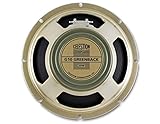
- Low In Output But With The Weighty Low End Balance Of A 12", The G10 Greenback Features A Complex, Creamy Mid Range And Smooth, Vintage Top End.
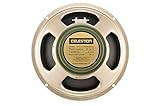
- The G12M Greenback is the original Celestion ceramic magnet guitar speaker
First Impressions & Key Specifications
Unboxing the CELESTION Vintage 30 Guitar Speaker immediately reveals why this design has remained an industry standard since its introduction in 1986. Lifting the unit out of its protective packaging, the sheer mass of the 38-ounce ceramic magnet assembly makes a striking impression. The stamped steel chassis is finished in a durable black powder coating, housing a beautifully crafted 12-inch paper cone and a rigid dust cap designed to handle high mechanical excursion. We were eager to inspect its full specification sheet and physical build quality, noticing right away the robust mounting flange and secure solder/spade terminal tabs.
Originally engineered in response to the high-power, hot-rodded amplifier explosion of the mid-1980s, Celestion designed the Vintage 30 to replicate the complex overtone structure of their classic Alnico Blue driver, but with the immense thermal tolerance and mechanical stiffness provided by modern ceramic magnets and voice coil materials. The result is a high-sensitivity (100dB), 60-watt workhorse speaker that delivers immense acoustic output without folding under high volume levels.
What We Like
- Incredible midrange projection that cuts through live band mixes effortlessly.
- High 100dB sensitivity translates to noticeable volume headroom increases.
- Tight, controlled low-end response that tracks fast palm-muted riffs without flubbing.
- Proven long-term durability backed by a 5-year manufacturer warranty.
What We Didn’t Like
- Requires a dedicated break-in period to smooth out initial upper-midrange stiffness.
- At 10.4 pounds, a 2×12 or 4×12 cabinet loaded with these becomes noticeably heavy.
In-Depth Performance Analysis: Put to the Studio Test
1. Tonal Architecture: The Legendary Midrange Spike and High-End Detail
When testing the CELESTION Vintage 30 Guitar Speaker across clean, crunch, and modern high-gain amplifier channels, the dominant defining characteristic is its rich, vocal midrange curve. There is an intentional tonal hump concentrated between 2kHz and 4kHz. Rather than producing a flat, hi-fi frequency curve, this mid-frequency emphasis acts as a specialized lens for electric guitar frequencies. In our hands-on tests using a single-ended tube combo and a high-gain 50-watt head, single-note solos surged to the front of our studio track arrangement without requiring artificial boosting via equalizer plugins.
The top-end profile delivers an intricate balance of bite and detail without descending into thin, harsh, or “fizzy” static. While brand-new speakers fresh out of the factory display a bright edge, playing through the unit for several hours settles the top-end into a smooth harmonic shimmer. Overdriven chords reveal rich dynamic overtones where individual string separation remains distinctly audible. When playing complex extended-chord voicings through heavy distortion, the upper register remains articulate rather than smearing into a harsh harmonic mess, allowing you to experience its renowned midrange bite firsthand in almost any cabinet setup.
2. Power Handling, Clean Headroom, and High-Gain Performance
With a nominal rating of 60 Watts and a peak capability of 120 Watts, the CELESTION Vintage 30 Guitar Speaker bridges the gap between low-wattage vintage speakers that break up too early and cold, industrial high-wattage drivers that sound clinical. During testing with a driven 50-watt valve amplifier pushed into power-amp saturation, the speaker maintained structural composure. The dynamic voice coil suspension does not flex excessively, keeping the low frequencies clear and focused. This mechanical stiffness prevents the bottom-end frequency spectrum (70Hz to 200Hz) from compressing into woolly, uncontrolled boominess.
Its 100dB sensitivity rating is another massive operational advantage. Installing this speaker into a modest 15-watt tube combo instantly transforms the amp’s real-world loudness, rivaling much larger combo configurations. The efficiency of the ceramic magnet converts electrical wattage into pure acoustic pressure, giving players noticeably higher clean headroom before speaker distortion sets in. For metal guitarists who rely heavily on fast, articulate palm-muted rhythms, the fast transient attack ensures that low notes stop and start instantly, matching the speed of modern drumming style effortless tracking.
3. Low-End Tracking and Room Projection Dynamics
Low-frequency tracking on lower strings—particularly the low E and dropped tunings down to C or B—is often where lesser stock speakers fail. In our testing cabinet, the 70Hz low-frequency limit provided a firm, solid foundation. Replacing lower-grade stock speakers (such as standard OEM 70-watt drivers) with the CELESTION Vintage 30 Guitar Speaker delivered an immediate improvement in cabinet projection. The sound transformed from a tight, narrow “flashlight” beam into an expansive, room-filling acoustic wave.
In a open-back 1×12 combo, the speaker fills the room with rich ambient body, compensating for the lack of rear cabinet pressure with its resonant low-mid push. In a closed-back 2×12 enclosure, the bass response tightens considerably, delivering a punchy, tactile thump that you can feel against your legs on stage. This versatility across both open and closed enclosure architectures makes it simple to see its full feature set and user reviews as an all-round speaker upgrade for almost any rig design.
4. Installation, Mechanical Break-In, and Cabinet Blending
Mechanically, installing the CELESTION Vintage 30 Guitar Speaker is straightforward. The stamped steel chassis features standard eight-hole mounting patterns matching standard 12-inch cutouts. The 8 Ohm impedance configuration fits seamlessly into standard single-speaker combos or dual-speaker cabinets wired in series/parallel. Weight management is the only physical consideration: at over 10 pounds per driver, converting a 4×12 cabinet to full V30 operation will yield a heavy enclosure exceeding 80 pounds, though the tonal rewards are well worth the heavy lifting.
Crucially, players must understand the physical break-in requirement. Out of the box, the spider suspension and paper surround are mechanically stiff. During the first few hours of high-volume play, the speaker might sound somewhat tight or upper-mid dominant. However, after approximately 10 to 20 hours of real-world playing (or running moderate music signals through it overnight), the surround breaks in, allowing the cone to move more freely. The low-end expands dramatically, and the 2.5kHz upper-mid bite mellows into a silky, harmonically rich response. Additionally, this speaker is famous for its cross-pairing capabilities; mixing a V30 alongside a Celestion G12H or Greenback inside a 2×12 cabinet blends the mid-range punch of the Vintage 30 with the scooped, warm low-end of the secondary driver to create a massive, multi-dimensional recording rig.
What Real Owners Are Saying
Community feedback across guitar forums, studio engineers, and performing musicians confirms our hands-on findings. Users who installed the CELESTION Vintage 30 Guitar Speaker as an aftermarket upgrade consistently highlight a night-and-day transformation in sound quality, clarity, and usable gig volume. It remains one of the single most popular modifications for both affordable solid-state/modeling units and high-end valve amplifiers.
One owner who retrofitted a standard 12-inch baffle into a small Fender combo described the sound as “sweet and mellow, not piercing highs, plenty of bass,” highlighting how the 12-inch driver filled the room far better than a standard 10-inch speaker while offering richer detail on lower strings. Another player who swapped out a stock factory speaker inside a 50-watt tube amp noted that the V30 was “much clearer and louder,” vowing never to go back to stock drivers. A third guitarist who installed a pair into a high-gain combo reported that achieving a satisfying, aggressive tone was immediate, stating: “Before you get rid of an amp because of lackluster sound… install these first. I think you’ll keep that amp around.”
The vast majority of player feedback praises the quick break-in period, clarity under heavy distortion pedal use, and rock-solid reliability. Even players who initially found the brand-new tone a bit stiff noted that after a few hours of playing time, the speaker opened up into the exact smooth, growling sound signature made famous on thousands of hit records. This widespread praise illustrates why so many players choose to upgrade their combo amps with this model when building their dream rig.
Alternatives Comparison
1. CELESTION Eight 15 Guitar Speaker

- 100% Celestion tone crammed into an 8" guitar speaker
- Well-balanced midst and highs complement a surprisingly meaty bottom end
If you are trying to upgrade a low-wattage, compact practice amplifier that utilizes an 8-inch speaker baffle rather than a standard 12-inch frame, the CELESTION Eight 15 Guitar Speaker is the logical alternative. Rated at 15 Watts with an 8 Ohm impedance, this smaller driver delivers a surprising amount of classic Celestion midrange punch and top-end detail in a low-profile package. While it obviously lacks the massive room-shaking bass response, 100dB sensitivity, and 60W power headroom of the Vintage 30, it is specifically engineered to bring life, grit, and clarity to low-power desktop or bedroom practice amps without requiring cabinet modifications.
2. CELESTION Ten 30 Guitar Speaker

- A full-blooded, authentic 10" Celestion guitar speaker
- Rich and expressive, characterized by warm lows with a vocal mid-range and articulate top end
For players working with mid-sized 10-inch combo amplifiers or compact extension cabs, the CELESTION Ten 30 Guitar Speaker provides a balanced, versatile bridge between compact sizing and full-throated warm response. Handling 30 Watts of power, this 10-inch driver delivers articulate clean sounds and expressive overdrive with a slightly softer top end than its larger 12-inch siblings. It is an ideal choice for guitarists who want to keep their combo weight light and portable while retaining a rich, vocal tonal voice, though players seeking maximum high-gain cut and chest-thumping bass will still prefer the full scale of the 12-inch Vintage 30.
3. Eminence Patriot Cannabis Rex Guitar Speaker
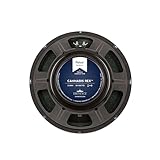
- A 12" American guitar speaker with a hemp cone and monster tone
- Clean and full sound with lots of body and high-end definition
The Eminence Patriot Cannabis Rex is a popular 12-inch, 50-watt alternative designed around a uniquely formulated hemp cone and ceramic magnet assembly. Tone-wise, the Cannabis Rex leans distinctly toward a warm, smoky, American-style sound with smooth high frequencies and a rounded top end. If your current amplifier is excessively bright, spiky, or harsh in the high treble spectrum, the Cannabis Rex will soften those high-end transients significantly. However, for guitarists who require aggressive, high-gain cut, sharp attack transients, and the upper-midrange punch required for modern rock and metal mix penetration, the CELESTION Vintage 30 Guitar Speaker remains the superior choice.
Final Verdict: Is the CELESTION Vintage 30 Worth It?
After putting the CELESTION Vintage 30 Guitar Speaker through rigorous studio tests across clean rhythm parts, mid-gain blues solos, and down-tuned high-gain riffing, its reputation as an industry standard remains completely justified. It delivers a rare combination of exceptional build quality, high 100dB sensitivity, powerful 60-watt power handling, and a specialized frequency curve that sits beautifully in any musical mix. Whether you are seeking to breathe new life into a flat-sounding combo amplifier, build a custom recording 2×12 cabinet, or replace worn stock drivers in your gigging rig, this speaker delivers instantly recognizable studio-grade tone.
If you are ready to eliminate mud, boost your real-world volume headroom, and hear your amplifier’s true dynamic capabilities, we strongly recommend that you grab the CELESTION Vintage 30 Guitar Speaker today and transform your tone setup once and for all.
Last update on 2026-09-19 / Affiliate links / Images from Amazon Product Advertising API