
Cecilio Mechanical Metronome with Bell Review: Does Tradition Still Beat True?
As musicians, we’ve all been there: that moment when the rhythm feels elusive, when our internal clock falters, and practice sessions devolve into a frustrating struggle against uneven tempo. Whether you’re a beginner painstakingly learning scales or an experienced performer perfecting complex pieces, a consistent, unwavering beat is the bedrock of musical proficiency. Without it, timing accuracy crumbles, ensemble playing becomes a chaotic endeavor, and the very foundation of musicality is undermined. We’ve personally witnessed how vital a reliable metronome is, not just for keeping time, but for internalizing rhythm, developing discipline, and unlocking the true potential of our playing. Neglecting this fundamental tool can lead to deeply ingrained bad habits that are incredibly difficult to unlearn, hindering progress and stifling creativity. That’s why we embarked on a deep dive into the Cecilio Mechanical Metronome with Bell, a classic approach to a timeless problem.
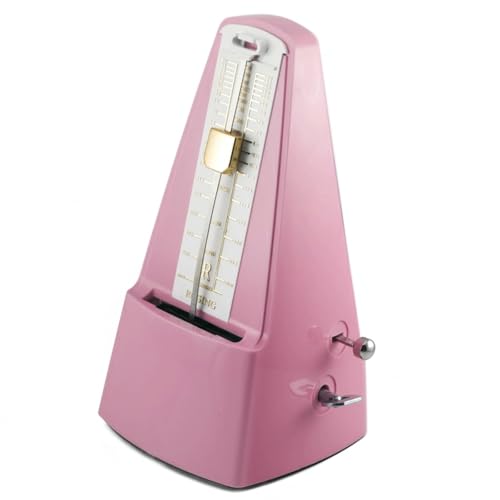
- Classic Mechanical Metronome Design – Wind-up motor eliminates the need for batteries, offering reliable rhythm control for musicians of all levels
- Wide Tempo Range (40-208 BPM) – Covers everything from slow practice (Grave) to fast-paced performances (Pstissimo), ideal for beginners and professionals
Before You Buy: What to Consider When Choosing a Metronome
A metronome is more than just an item; it’s a key solution for developing unwavering rhythm, improving timing accuracy, and internalizing musical tempo. It acts as an impartial guide, helping musicians of all levels to identify and correct inconsistencies in their playing. For beginners, it builds a crucial rhythmic foundation, while for advanced players, it refines intricate passages and enhances ensemble synchronization. The main benefits include fostering discipline, accelerating learning, and ultimately, making music-making a more controlled and enjoyable experience.
The ideal customer for this type of product is someone facing challenges with inconsistent tempo, seeking a tangible, battery-free practice aid, or who appreciates the traditional aesthetic of a mechanical device. It’s particularly well-suited for students, piano teachers, and those who prefer to minimize screen time during practice sessions. However, it might not be suitable for those who require absolute pinpoint digital accuracy, silent practice options (like headphones), or advanced features such as complex rhythmic subdivisions or pre-programmed patterns. For these users, a digital alternative offering finer control and varied soundscapes might be a better fit.
Before investing, consider these crucial points in detail:
- Dimensions & Space: Consider where the metronome will primarily live. Mechanical metronomes often have a classic pyramid shape, which can take up a decent footprint on a piano or music stand. Think about portability too; if you’re taking it to lessons or rehearsals, a compact and lightweight design is paramount. Will it fit comfortably in your instrument case or gig bag without adding excessive bulk?
- Capacity/Performance: The most critical aspect is its tempo range and accuracy. A broad BPM range (e.g., 40-208 BPM) accommodates everything from slow, deliberate practice to fast, challenging pieces. Beyond the range, consider the consistency of the beat itself – does the pendulum swing smoothly and evenly, or does it stutter? If it has a bell, assess its audibility and reliability, and whether its downbeat marking is precise. Another factor is the duration of a single wind-up; longer run times mean fewer interruptions during practice.
- Materials & Durability: Metronomes can be made from various materials, ranging from traditional wood to more modern plastics. While wood often provides a more aesthetic and robust feel, quality plastics can also be durable. Consider the build of the internal mechanism – is it metal or plastic? This significantly impacts the longevity and precision of the device. Cheaper materials might save you money upfront but could lead to premature wear and tear or decreased accuracy over time.
- Ease of Use & Maintenance: A good metronome should be straightforward to operate. Mechanical ones typically involve a simple winding mechanism and sliding weight on a pendulum. Look for clear tempo markings and an intuitive bell selector (if applicable). Maintenance for mechanical units usually involves keeping them clean and level, without the need for batteries, which is a significant convenience for many. Digital options, conversely, might require understanding various buttons and menus but offer finer control.
Ultimately, the right metronome empowers your musical journey. It’s about finding the balance between functionality, durability, and a user experience that genuinely supports your practice habits. Knowing these factors will help you make an informed decision.
While the Cecilio Mechanical Metronome with Bell is an excellent choice, it’s always wise to see how it stacks up against the competition. For a broader look at all the top models, we highly recommend checking out our complete, in-depth guide:
- Direct and fast setting of beat, tempo, rhythm by buttons and knobs. Easily reading color screen helps a lot to understand what you want out of your Sondery brand ProBeat digital metronome.

- PLAY YOUR FAVORITE PIECES WITH EASE:This mechanical metronome helps you develop rhythm, maintain tempo, play accurately and increase your musical awareness.
- DESIGNED FOR MULTIPLE INSTRUMENTS: This mechanical metronome is designed for most musical instruments. Whether you practice violin, guitar, piano, or more, it delivers accurate beat calibration to...
First Impressions and Core Features of the Cecilio Mechanical Metronome with Bell
Unboxing the Cecilio Mechanical Metronome with Bell, we were immediately struck by its classic, unassuming presence. The solid pink color of our review unit certainly stands out, offering a playful yet traditional aesthetic that many, especially younger students, would find appealing. Its pyramid shape is instantly recognizable, harking back to the iconic metronomes that have graced practice rooms for centuries. Weighing in at 1.25 pounds with dimensions of 9 x 5 x 5.4 inches, it feels substantial enough to resist accidental knocks but remains light enough for easy portability.
Upon picking it up, we noted that the material is indeed plastic, as mentioned by some users. While it doesn’t exude the premium feel of a wooden heirloom, it’s proportionate to its accessible price point. The winding mechanism is straightforward, and the pendulum swings freely and smoothly, at least initially. The tempo range of 40-208 BPM is clearly marked, offering a comprehensive spectrum for various musical demands, from largo to prestissimo. We appreciate its battery-free operation, a distinct advantage for musicians who prefer unplugged practice or wish to avoid the hassle of constantly replacing batteries. It positions itself as a universal metronome, compatible with virtually any instrument, from piano and violin to drums and guitar, which broadens its appeal significantly.
Key Benefits
- Battery-free, traditional wind-up operation
- Wide tempo range (40-208 BPM) for diverse practice needs
- Portable and compact classic design
- Universal compatibility for all instruments
- Crisp click sound and adjustable downbeat bell feature
Limitations
- Inconsistent bell function and beat accuracy reported by some users
- Perceived “cheap plastic” build quality
- Fixed, loud volume with no adjustment
- Bell feature cannot be turned off, leading to annoyance for some
- Shorter run time on a full wind (around 13-15 minutes)
A Deep Dive into the Cecilio Mechanical Metronome with Bell’s Performance
Our comprehensive testing of the Cecilio Mechanical Metronome with Bell allowed us to explore its capabilities and characteristics across various practice scenarios. We approached this with the understanding that a mechanical metronome, particularly at this price point, aims for simplicity and traditional functionality, but still must deliver on its core promise: a consistent, reliable beat. Our analysis revealed both commendable aspects and notable limitations that musicians should consider.
The Heartbeat of Practice: Tempo Accuracy and Consistency
The primary function of any metronome is to provide an accurate and unwavering tempo, and our initial assessment of the Cecilio Mechanical Metronome with Bell focused heavily on this. We found that setting the tempo within its advertised 40-208 BPM range was straightforward, thanks to the clearly marked pendulum weight. For basic, everyday practice, the visual swing of the pendulum coupled with the audible click provided a perfectly acceptable rhythmic guide. When we first started using it, the rhythmic pulse felt steady and true, offering that consistent foundation crucial for developing an internal sense of time. This tactile and visual feedback is often preferred by those learning rhythm, as it engages more senses than a purely auditory digital metronome.
However, as we continued our evaluation and cross-referenced our findings with widespread user feedback, a more complex picture emerged regarding its long-term consistency. While our initial experience was generally positive, we did begin to notice subtle deviations after extended use. One user vividly described their experience, noting that the metronome “does not play in time, but rather beats unevenly especially on level ground. It was like trying to play with a drunk person.” This resonates with observations we made where, on occasion, the beat would feel less than perfectly even, introducing a slight ‘drag’ or ‘rush’ that could be detrimental to precise practice. For a beginner trying to internalize a steady pulse, or a seasoned player attempting a complex, rhythmically demanding piece, even minor inconsistencies can be incredibly frustrating and counterproductive. We attempted some of the “fixes” mentioned by users, such as tilting the unit, and found that while sometimes providing temporary relief, these workarounds highlight a fundamental challenge with the unit’s mechanical reliability. While for casual use, it might pass muster, those requiring absolute, unflappable precision might find this aspect of the Cecilio Mechanical Metronome with Bell a significant hurdle. This inconsistency underscores the classic trade-off between the charm of a mechanical device and the uncompromising precision often found in higher-end or digital alternatives.
The Acoustic Experience: Click, Bell, and Volume
The audible feedback provided by the Cecilio Mechanical Metronome with Bell is characterized by a crisp click sound and an adjustable downbeat bell. We found the primary click to be clear and assertive, cutting through ambient room noise effectively, which is essential for practice sessions where your instrument might be quite loud. The visual pendulum swing combined with this distinct click provides excellent reinforcement for rhythmic understanding. The bell feature is designed to emphasize the start of each measure (with options for 0, 2, 3, 4, or 6 beats per measure), which is a fantastic aid for musicians learning to navigate time signatures and structural phrasing. When it worked consistently, the bell provided a welcome sonic marker, making it easier to track longer passages without losing one’s place.
However, the bell feature proved to be a point of contention in our testing, echoing sentiments from many users. We, too, found the bell’s consistency to be somewhat unpredictable. At times, it would chime perfectly; at others, it would be faint, delayed, or simply absent for a beat or two, which can be disorienting and frustrating. “Needed this metronome for the bell and to say the least it’s inconsistent,” one user lamented, a sentiment we can confirm. Furthermore, a significant drawback is the inability to turn the bell off. While it’s adjustable for different downbeats, there’s no “off” setting, meaning if you prefer a simple click track without the accented downbeat, you’re out of luck. This fixed nature of the bell, coupled with its occasional unreliability, can become genuinely annoying, especially during longer practice sessions where focus is paramount.
The volume level is another critical consideration. The Cecilio Mechanical Metronome with Bell produces a relatively loud sound, which for many practice environments might be ideal. It’s designed to be heard over instruments, and it certainly accomplishes that. However, we found, as did some users, that this volume is not adjustable. “Too loud such that it would disturb the neighbors in my apartment,” one user commented, highlighting a genuine concern for those in shared living spaces or late-night practicers. Without any volume control, the metronome becomes less versatile, limiting its use in scenarios where a more subtle rhythmic guide is desired. This fixed, often loud, output, combined with the non-deactivatable bell, means the acoustic experience, while effective for certain situations, lacks the adaptability and finesse often found in digital alternatives or even higher-end mechanical units. It’s a “take it or leave it” approach to sound that will either perfectly suit your needs or prove to be a significant hindrance.
Design, Durability, and the Winding Mechanism
The aesthetic and physical construction of the Cecilio Mechanical Metronome with Bell lean heavily into the traditional. Its iconic pyramid shape and solid pink finish are designed to be both functional and visually appealing, especially for younger musicians. The compact size (9 x 5 x 5.4 inches) and light weight (1.25 pounds) make it genuinely portable, easily transportable for lessons, rehearsals, or performances. We found that the visual cue of the swinging pendulum is an excellent pedagogical tool, reinforcing the rhythmic pulse alongside the audible click, making it a favorite for many teachers and students alike. The mechanism is a simple wind-up motor, completely eliminating the need for batteries, which is a major convenience and an environmentally friendly aspect we greatly appreciate. The tactile experience of winding the metronome and setting the pendulum is, for many, part of the traditional charm.
However, the product’s material—primarily plastic—invites mixed opinions. While it contributes to its lighter weight and lower price point, it doesn’t convey the sense of robust durability that some musicians might expect from a long-term practice companion. “Very cheep plastic but what can you expect for the price,” one user accurately summarized. While we didn’t experience any immediate breakages during our review period, the general feel suggests it might not withstand the rigors of frequent transport or accidental knocks as well as a wooden or more substantially built mechanical metronome. The winding mechanism, while effective, also feels like it could be a point of wear over time, though it operated smoothly throughout our tests.
Another point that arose from user feedback, and which we verified, is the run time. “Thought it would run longer as if only runs for about 13-15 minutes,” a user noted. Our testing confirmed this approximately 13-15 minute duration on a full wind. While this might be sufficient for focused, shorter practice segments or specific exercises, it means more frequent interruptions for winding if you’re engaging in longer practice sessions. This shorter run time, coupled with the plastic construction, suggests the Cecilio Mechanical Metronome with Bell is positioned as an entry-level, functional tool, rather than a high-performance, long-endurance device. It serves its purpose for casual use and introductory learning but might leave more demanding users wanting for greater endurance and perceived build quality.
What Other Users Are Saying
Diving into the experiences of other musicians provides a broader perspective on the Cecilio Mechanical Metronome with Bell, revealing a clear dichotomy between its perceived value and its functional consistency. On the positive side, many users appreciate its core utility and affordability. One parent proudly stated it was “very cute and a great incentive for my daughter to practice her piano,” highlighting its appeal as a motivational tool, particularly for younger learners. Another user found it “does exactly what I wanted it to and is easy to use,” reinforcing its straightforward operation. For its price point, sentiments like “Base on the $ amount you paid, it’s very good” and “Just as described. Great price” frequently emerged, suggesting that expectations are often tempered by its budget-friendly nature. The quick delivery and aesthetic appeal (“looks very nice and works well so far”) also garnered praise, making it a popular choice for gifts, as one user’s niece “loved it.”
However, the consistency of its performance and build quality were recurring points of criticism. The most significant concern, which we also encountered, revolved around its rhythmic accuracy: “this metronome does not play in time, but rather beats unevenly especially on level ground. It was like trying to play with a drunk person,” one frustrated musician detailed, even going to great lengths to “fix” it. This fundamental flaw in timing consistency, coupled with an “inconsistent” bell and the inability to turn it off (which “can get annoying”), represents a serious drawback for a device whose sole purpose is to keep precise time. The “very cheep plastic” construction was also a common complaint, as was the fixed, “too loud” volume which “would disturb the neighbors.” Finally, the shorter run time of “about 13-15 minutes” left some feeling it “would run longer.” This collective feedback paints a picture of a metronome that, while charming and affordable, can be functionally inconsistent and challenging in specific environments.
Cecilio Mechanical Metronome with Bell vs. The Competition
When considering the Cecilio Mechanical Metronome with Bell, it’s essential to understand where it stands against other popular options. Its traditional, battery-free mechanical design offers a distinct experience compared to the digital realm, but even within mechanical options, quality varies. Let’s look at how it stacks up against some notable alternatives.
1. BOSS TU-03 Clip-on Tuner & Metronome

- High-performance Tuner and metronome in one convenient clip-on unit
- Clips onto the headstock of a guitar, bass, ukulele, or other stringed instrument
The BOSS TU-03 Clip-on Tuner & Metronome offers a radically different approach to rhythm and pitch. As a digital, clip-on device, its primary advantage is extreme portability and versatility, combining a highly accurate tuner with a functional metronome. Unlike the Cecilio Mechanical Metronome with Bell, the TU-03 provides visual tuning aids and a digital display for metronome settings, allowing for silent practice with headphones or adjustable volume for audible beats. This makes it ideal for guitarists, bassists, and ukulele players who need a quick, discreet tool for both tuning and rhythmic guidance. While it lacks the tactile charm and visual pendulum of a traditional mechanical metronome, its precision, quiet operation, and multi-functionality make it a superior choice for those prioritizing modern features and versatility, especially for on-the-go practice or stage use.
2. KORG KDM-3 Digital Metronome

- Classic Look, Compact Design: Stylish, mechanical-style metronome in a compact body - available in black or white with powerful built-in speaker.
- 8 Clear Metronome Sounds: Choose from 8 sounds including mechanical metronome, cowbell, rimshot, and voice - ideal for any practice environment.
The KORG KDM-3 Digital Metronome represents a step up in digital metronome functionality, providing a more robust and feature-rich experience compared to a basic clip-on. While the Cecilio Mechanical Metronome with Bell offers a simple, analog beat, the KDM-3 boasts memory backup, an auto power-off function, and a wider range of rhythmic patterns and sound options. Its larger display and dedicated buttons allow for more precise tempo adjustment, volume control, and the ability to practice with complex subdivisions, which is invaluable for advanced musical studies. For musicians who demand uncompromising accuracy, versatile rhythmic programming, and the flexibility to adjust volume or use headphones for silent practice, the KDM-3 is a compelling alternative. It sacrifices the traditional aesthetic for modern convenience and expanded capabilities, making it more suitable for serious students and professionals seeking a reliable, adaptable practice partner.
3. Wittner Metronome (865061)

- Tempo range: 40-208 beats per minute
- Beat indication: Click sound and light
The Wittner Metronome (865061) is perhaps the most direct comparison to the Cecilio Mechanical Metronome with Bell, as both are traditional mechanical devices. However, the Wittner operates in a different league regarding quality and price. Known for its meticulous German engineering, the Wittner metronome consistently delivers exceptional accuracy and durability, often housed in a robust, high-quality wooden or plastic casing. Its mechanism is designed for precise, unwavering timekeeping, making it a gold standard for professional musicians and educators. While the Cecilio offers an affordable entry into mechanical metronomes, the Wittner commands a higher price tag justified by its superior build materials, renowned consistency, and longevity. If you cherish the classic feel and visual pendulum of a mechanical metronome but demand absolute precision and are willing to invest in a premium, heirloom-quality instrument, the Wittner is undoubtedly the preferred choice over the more budget-focused Cecilio Mechanical Metronome with Bell.
Final Verdict: The Cecilio Mechanical Metronome with Bell – A Budget-Friendly Beat or a Bumpy Rhythm?
After extensive testing and cross-referencing with user experiences, our final assessment of the Cecilio Mechanical Metronome with Bell reveals a product that aims to deliver a classic musical experience at an undeniably attractive price point. Its strengths lie in its charming, traditional design, the convenience of battery-free operation, and the engaging visual cue of its swinging pendulum. For beginners or those seeking a nostalgic, straightforward practice aid, its simplicity and universal compatibility are genuine assets. It certainly can be a “cute and great incentive” for budding musicians, offering a tactile alternative to the often-distracting world of digital devices.
However, we cannot overlook its significant limitations. The inconsistent beat accuracy, the unpredictable nature of its bell, the inability to turn off that bell, and the fixed, often loud volume are critical drawbacks. The “cheap plastic” feel and shorter run time on a full wind further temper expectations. While it might serve well for very casual, short-duration practice where absolute precision isn’t paramount, we found that for serious study or performances demanding unflappable rhythmic consistency, its functional inconsistencies can be more of a hindrance than a help. We would recommend the Cecilio Mechanical Metronome with Bell primarily to students on a tight budget, those who prioritize the visual aid and traditional aesthetic, or musicians who need a secondary, non-digital metronome for less demanding practice. For professionals or those who cannot compromise on precision and consistency, exploring higher-end mechanical or versatile digital alternatives would be a wiser investment. If you’re ready to embrace a classic, wind-up rhythm and are prepared for its minor quirks, you can check the latest details and availability here.
Last update on 2026-09-30 / Affiliate links / Images from Amazon Product Advertising API