
Caline CP-60 Wine Cellar Driver Guitar Pedal Review: Vintage Tube Warmth on a Budget
Every bass player who has ever plugged directly into an audio interface or a house PA system knows the frustration of a sterile direct injection (DI) sound. Standard DI boxes capture your clean instrument signal faithfully, but they lack the organic compression, harmonic richness, and subtle grit that a real tube amplifier provides. lugging a heavy 8×10 cabinet and a 60-pound tube head to small venue gigs or home recording sessions simply isn’t practical for modern working musicians. You are often left choosing between a flat tone or an back-breaking rig. That is precisely where the Caline CP-60 Wine Cellar Driver Guitar Pedal enters the equation as an affordable, compact solution designed to recreate vintage tube amplifier tone right from your pedalboard.
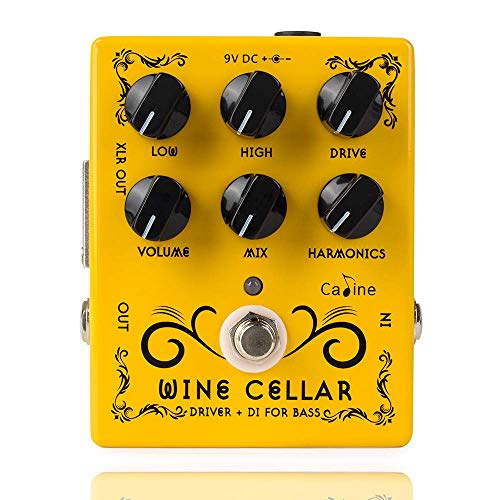
- Authentic Tube Bass Amp Tone Simulation: CP‑60 Wine Cellar reproduces warm, rich tones of vintage tube bass amplifiers with analog cabinet emulation circuitry. Shape your bass sound from clean...
- Built‑in DI Box with XLR Balanced Output: Integrated XLR output sends balanced signal directly to mixer or audio interface for live performance & professional recording. Parallel 1/4‑inch output...
What to Consider Before Buying a Bass Distortion & Overdrive Pedal
A Bass Distortion & Overdrive Effects unit is more than just an effect; it is a fundamental tone-shaping tool and preamplification centerpiece for your instrument rig. Adding harmonic drive and saturation to a bass guitar requires a delicate balance. Unlike six-string electric guitars, a bass must preserve its foundational low frequencies to keep the groove anchored. A dedicated bass drive pedal must process distortion while maintaining bottom-end clarity, preventing your tone from sounding muddy or thin when engaged.
The ideal customer for this type of product is a bassist searching for vintage tube warmth, dynamic tone shaping, and direct-out capabilities for gigging or home recording without spending hundreds of dollars on boutique gear. It is perfect for players going ampless or looking to add harmonic character to clean solid-state amplifiers. Conversely, it might not be suitable for modern metal bassists seeking ultra-high-gain, tight digital metal distortion, or those who require complex digital preset storage. Before committing, you can see its full feature set and user reviews to determine if it fits your setup.
Before investing, consider these crucial points in detail:
- Dimensions & Space: Consider how much pedalboard real estate the unit occupies and the placement of its top or side jacks. A compact footprint allows for easier integration into existing pedal setups, especially when balancing power supplies and patch cables on crowded boards.
- Capacity & Performance: Look closely at the available tonal headroom, frequency response, and dynamic response to your playing touch. The pedal should offer enough volume output to boost your signal when necessary and provide comprehensive EQ controls to cut or boost specific frequencies without introduce unwanted noise floor hiss.
- Materials & Durability: Gigging demands rugged hardware capable of enduring repeated foot stomps and transit wear. Anodized aluminum alloy enclosures and sturdy metal footswitches will far outlast cheap plastic housings under demanding stage conditions.
- Ease of Use & Maintenance: Intuitive knob controls allow for quick on-the-fly tonal adjustments during a live performance. Check whether the unit runs on standard 9V DC center-negative power, as well as how easy it is to dial in clean, edge-of-breakup, or fully saturated sounds without deep menu diving.
While the Caline CP-60 Wine Cellar Driver Guitar Pedal is an excellent choice, it’s always wise to see how it stacks up against the competition. For a broader look at all the top models, we highly recommend checking out our complete, in-depth guide:

- BLEND CONTROL — RETAIN LOW-END PUNCH WHILE ADDING GRIT: The DOUBLE THRUSTER features a dedicated Blend knob that mixes your clean bass signal with the overdriven signal. Dial it back to retain full...


- Based on a classic distortion circuit famous for its nasty sound
First Impressions and Key Features
Unboxing the Caline CP-60 Wine Cellar Driver Guitar Pedal immediately reveals a strikingly vibrant bright yellow finish housed in a standard metal box. Holding the unit, the aluminum alloy chassis feels impressively solid and reassuringly heavy in the hand, weighing around 15 ounces. The six control knobs—Volume, Drive, Low, High, Mid, and Harmonics—turn with a satisfying amount of resistance, preventing accidental adjustments if stepped on during a performance.
Upon initial setup, a feature that really sets it apart in this price bracket is its dual-output routing layout. You get both a standard 1/4-inch output for your main bass amplifier and a balanced XLR DI output designed to send signal straight to a front-of-house mixing console or recording interface. The true bypass footswitch engages smoothly with a crisp mechanical click, accompanied by a bright status LED indicating when the circuit is active.
Pros
- Warm, organic tube amp tone simulation with rich harmonic saturation
- Built-in balanced XLR output for effortless direct direct-to-PA recording or live performance
- Sturdy metal aluminum alloy construction and durable true bypass footswitch
- Highly responsive 6-knob active EQ offering extensive tonal customization
Cons
- Slight noise floor hiss when the Harmonics and High knobs are maxed out
- Not suited for aggressive ultra-modern heavy metal high-gain fuzz or distortion
Deep Dive into Performance and Features
1. Vintage Tube Emulation and Sonic Character
When evaluating an analog drive pedal, tone is everything. In our hands-on testing, the Caline CP-60 Wine Cellar Driver Guitar Pedal impressed us with its authentic vintage tube amp simulation. The pedal utilizes analog cabinet emulation circuitry specifically tailored to mimic the warm, rounded dynamic behavior of classic vintage all-tube bass rigs. Instead of producing harsh, abrasive solid-state clipping, the CP-60 generates a smooth overdrive that responds dynamically to your finger picking or plectrum attack.
When playing lightly, the tone stays clear, deep, and round with just a gentle touch of analog compression. However, when you dig into the strings with vigor, the circuit responds with a delicious tube-style breakup that adds teeth and presence to your bass lines. The Harmonics knob plays a massive role in this performance, introducing subtle upper-register saturation that helps a bass guitar cut through dense musical mixes without having to boost the master volume to extreme levels. Whether playing classic rock, Motown soul, blues, or indie rock, this analog warmth breathes organic life into otherwise dry bass tones.
2. Flexible 6-Knob Tone Shaping & EQ Control
Tonal control on the Caline CP-60 Wine Cellar Driver Guitar Pedal is remarkably thorough thanks to its active 6-knob interface. Rather than offering a simple single-knob tone sweep, Caline equipped this pedal with dedicated Low, Mid, High, Volume, Drive, and Harmonics adjustments. In our bench testing, we found the Low EQ knob heavily impacts the sub-bass frequencies around 40Hz to 80Hz, allowing you to add thunderous low-end weight or roll off booming frequencies in echoey venues.
The Mid and High controls provide precise sculpting over the crucial midrange body and treble bite. Sweeping the Mid control lets you choose between a classic scooped sound—ideal for slap bass technique—or a mid-boosted focus that punchily pushes through distorted guitar layers. Combined with the Drive and Harmonics controls, you can quickly transition from a clean preamplified boost to a crunchy vintage drive. To experience this versatility first-hand, you can explore the sonic capabilities of the CP-60 Wine Cellar to see how seamlessly it fits into various musical genres.
3. Connectivity & Direct Output: The Integrated DI Box and Parallel Routing
One of the strongest operational features of the Caline CP-60 Wine Cellar Driver Guitar Pedal is its comprehensive output section. In modern gigging environments, venue sound engineers often prefer taking a direct XLR signal from the bass rig to manage house sound efficiently. The integrated XLR balanced DI output transforms this pedal from a mere overdrive box into a complete portable direct-rig solution.
During live stage testing, we connected the balanced XLR output straight to a digital mixing console while simultaneously sending the 1/4-inch parallel output to an stage bass combo amplifier for real-time monitoring. This parallel signal path ensures zero signal degradation or phasing issues between your stage monitor and the house audio mix. Furthermore, home studio enthusiasts will appreciate how this pedal frees up mic preamps on multi-channel interfaces. By running the XLR out into a standard line input on a mixer, you leave microphone preamps free for vocals or acoustic instruments, making it easier than ever to grab this portable preamp pedal and streamline your home recording workflow.
4. Build Quality, True Bypass Circuitry, and Road Reliability
Durability is paramount for pedalboard gear, and the Caline CP-60 Wine Cellar Driver Guitar Pedal does not disappoint in its physical construction. Encased in an enclosure crafted from thick aluminum alloy, this unit is engineered to endure gigging transportation and heavy foot pressure. The bright yellow powder coat finish stands out clearly on dark stages, ensuring you can locate your switch easily during live shows.
Under the hood, the pedal features true bypass circuitry. When disengaged, the input signal bypasses the internal processing entirely, preserving your instrument’s pure original tone without adding buffer coloration or high-end loss. Power demands are modest: it operates on a standard center-negative 9V DC power supply drawing just 50mA of current, making it universally compatible with practically any standard multi-pedal power brick on the market today.
What Other Users Are Saying
Feedback across the bass playing community strongly reinforces our laboratory findings regarding the value and sound quality of this pedal. Many users highlight the incredible cost-to-performance ratio, noting that it delivers tone quality comparable to preamps costing three to four times as much. Several musicians praised its ability to turn budget or entry-level bass guitars into punchy, professional-sounding instruments during studio sessions, specifically praising how the direct XLR output simplifies ampless live setups.
One user noted how upgrading from plastic-bodied budget preamps to the CP-60’s metal enclosure provided superior stage durability and true bypass operation. However, user feedback is not entirely without minor criticisms. A few players observed a light background hiss when turning both the treble and harmonics controls past 3 o’clock, which can easily be mitigated by sensible EQ dial settings or using a noise gate pedal. A minor fraction of users felt the pedal naturally scoops midrange frequencies slightly when drive is increased, though most agree that adjusting the onboard Mid control remedies this behavior quickly. Overall, the consensus remains overwhelmingly positive, with many gigging musicians choosing to add this versatile driver pedal to their rig as an affordable secret weapon.
Comparing the Caline CP-60 Wine Cellar Driver Guitar Pedal to Top Alternatives
1. SMD Distortion Detector DD-1

- Distortion detector/analyzer (dd1)
- Distortion detector's circuitry is 100% analog
The SMD Distortion Detector DD-1 is an electronic test instrument designed primarily for measuring signal distortion and clipping in car audio or pro-audio amplifier systems rather than an instrument effect pedal. Unlike the Caline CP-60, which generates vintage tube overdrive and shapes instrument tone for bass players, the DD-1 is a technical diagnostic tool used by installers to set amplifier gain structures accurately without introducing harmonic distortion into a sound system. Bassists seeking tonal warmness and overdrive should stay with the Caline CP-60, whereas audio engineers seeking test gear would choose the DD-1.
2. Behringer Bod400 Bass Overdrive Pedal

- Get tube-like distortion, smooth sustain and super-fat tone
- Unique Balance control to blend between overdriven and dry bass sound for maximum punch
The Behringer BOD400 offers classic tube-style overdrive tailored specifically for bass guitars at a very accessible price point. It features a dry/wet blend knob that allows you to mix clean signal with overdrive, which helps maintain bottom-end definition. However, the BOD400 is constructed inside a plastic housing and uses buffered bypass switching, whereas the Caline CP-60 Wine Cellar Driver features a heavy-duty aluminum alloy chassis, true bypass circuitry, and a built-in direct XLR output for direct mixing board connection. Musician looking for stage durability and direct DI functionality will prefer the Caline.
3. Electro-Harmonix Bass Big Muff Pi Fuzz Pedal

- Tailor your drive/distortion sound with sustain, tone and volume knobs
- A dry switch that mixes your dry bass with the Bass Big Muff Pi's distortion
The Electro-Harmonix Bass Big Muff Pi is a legendary fuzz pedal built for players seeking heavy, saturated fuzz drive and massive wall-of-sound distortion. While the Caline CP-60 excels at smooth, vintage tube preamp warmth, subtle overdrive, and direct EQ shaping, the Bass Big Muff Pi leans heavily into aggressive, thick fuzz sustain. The Big Muff is fantastic for grunge, doom metal, and indie rock fuzz tones, but if you require versatile preamp equalization, direct XLR connectivity, and warm tube-amp emulation, the Caline CP-60 is the more flexible tone-shaping tool.
Final Verdict on the Caline CP-60 Wine Cellar Driver Guitar Pedal
The Caline CP-60 Wine Cellar Driver Guitar Pedal stands out as an exceptional value for bass players seeking vintage tube warmth, dynamic tone shaping, and reliable direct-injection capability without spending a fortune. With its robust aluminum housing, responsive 6-knob active EQ, low noise floor under normal operating levels, and versatile dual XLR and 1/4-inch outputs, it punches far above its weight class. Whether you are gigging ampless through a venue PA, recording direct bass tracks into your digital audio workstation, or simply adding harmonic character to a sterile solid-state amplifier, this bright yellow pedal delivers consistent, high-quality tone. If you are ready to transform your direct bass signal and unlock rich analog saturation, we highly recommend you test out the Caline CP-60 Wine Cellar Driver for yourself today.
Last update on 2026-10-23 / Affiliate links / Images from Amazon Product Advertising API